Hui Inkstone: The Stone That Holds the Soul of Chinese Calligraphy
The Inkstone of Huizhou
In the city of She County, deep in the mountains of Anhui Province, there’s a particular variety of slate that has been prized for over a thousand years. It’s called She inkstone, or sometimes Hui inkstone — the “Hui” coming from the old name of the region, Huizhou. If you buy a high-quality inkstone today, chances are it will come from this region, because the stone found here is simply superior to almost anything else in the world for the purpose of grinding ink.
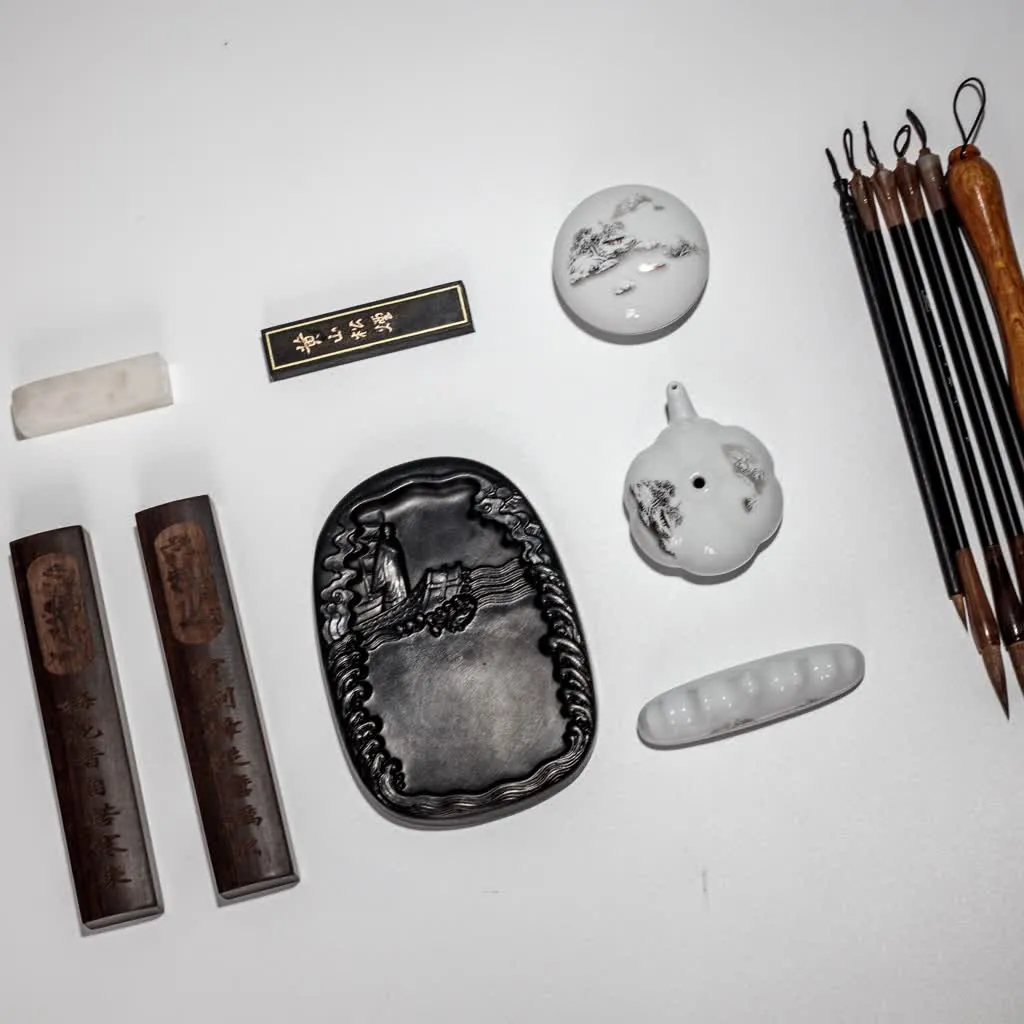
The Chinese call this stone a “mo” (砚) — an inkstone. But that single word doesn’t capture what it really is. An inkstone is not just a tool. In the traditional Chinese scholar’s studio, it was a sacred object, the heart of the “Four Treasures” that every calligrapher and painter needed: the brush, the ink, the paper, and the inkstone. Without the inkstone, none of the other three could function.
So what makes Hui inkstone so special? And why has this seemingly humble object — a piece of slate that you grind against to make ink — played such an outsized role in Chinese culture?
The Geology of Excellence
The story of Hui inkstone begins with geology. The region around She County is home to a rare type of sedimentary rock formed over 1.5 billion years of geological history. This stone has a unique combination of properties: it’s dense enough to hold ink without absorbing it, but porous enough to hold moisture. It grinds ink to a fine, smooth consistency. And when you add water to the ground ink, it doesn’t dry out quickly — the stone keeps the ink moist for hours, even overnight.
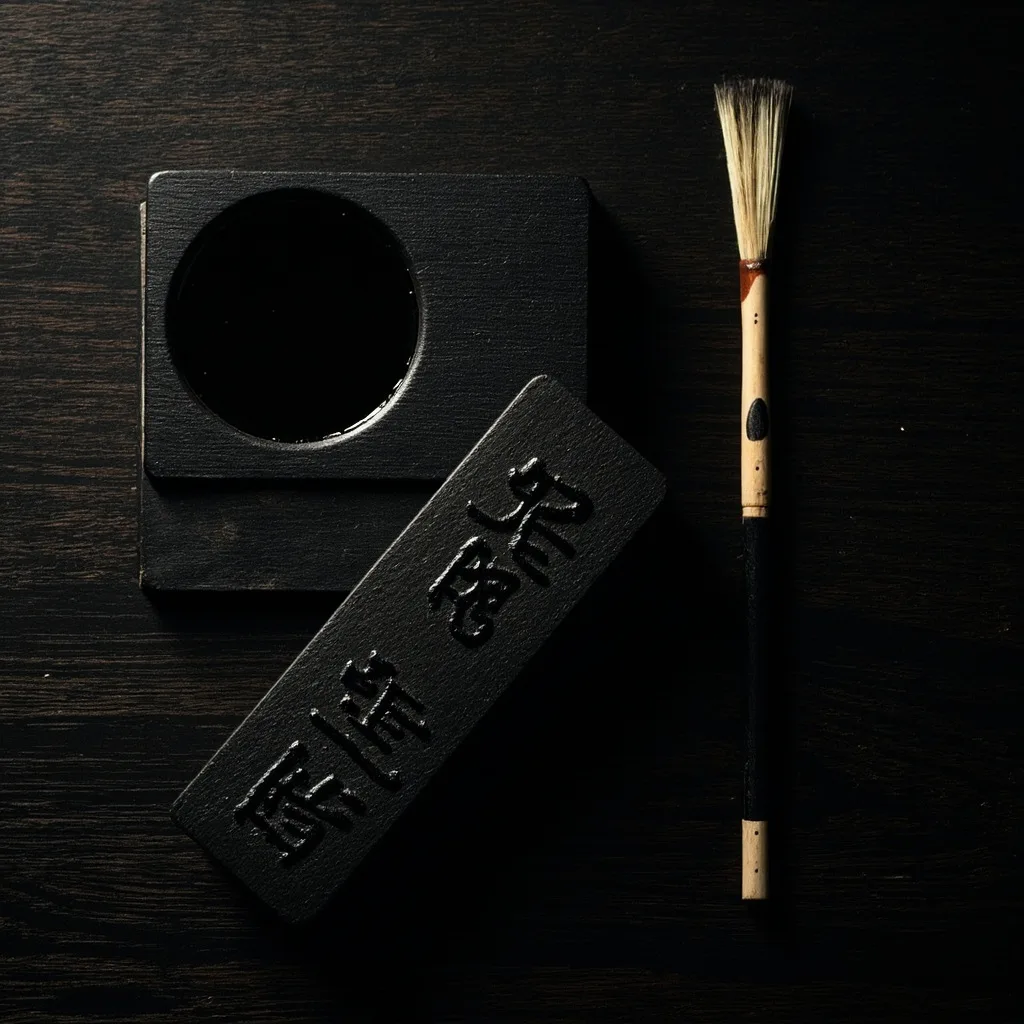
These properties matter because traditional Chinese ink — the kind used for calligraphy and painting — comes in solid sticks. You don’t pour liquid ink from a bottle. Instead, you place a stick of hardened ink on the stone and grind it with a small amount of water, gradually creating a liquid ink of the right consistency. This process is called “grinding the ink” (mo mo), and the quality of the stone affects everything: the fineness of the particles, the smoothness of the stroke, the way the ink holds together on the brush.
The best She inkstones have another quality that’s harder to describe: a kind of inner luster, a depth that comes from the way light interacts with the stone’s layered structure. When you look at a fine Hui inkstone, you can almost see into it — there’s a sense of dimension, of layers, that cheaper stones lack. This is why collectors prize them, and why a single antique She inkstone can sell for tens of thousands of dollars.
The Art of the Inkstone
Not all Hui inkstones are created equal. The finest stones come from a few specific quarry sites, and even within these sites, the quality varies. Master craftsmen spend years learning to evaluate the stone, to identify the pieces that will produce the best ink and the most beautiful objects.
The process of making an inkstone from raw stone is itself an art. A craftsman must study the natural shape of the stone, deciding what design will emerge from its contours. Some inkstones are carved with elaborate scenes — mountains, rivers, pagodas, dragons — while others are left in a more natural state, with just a grinding trough and a lip carved into the stone.
The carving of an inkstone is done with hand tools, using techniques that haven’t changed in centuries. The craftsman uses a small hammer and chisels to chip away at the stone, gradually shaping the grinding trough, the water reservoir, and the decorative elements. This work requires great precision and patience — too much pressure and you’ll crack the stone; too little and you won’t achieve the clean lines that distinguish fine work.
The most respected inkstone carvers are considered artists in their own right. Their signatures — carved into the bottom of the stone — are marks of quality that collectors recognize and value. An inkstone by a master carver might take months to complete, and its price reflects not just the quality of the stone but the skill and time of the person who shaped it.
The Four Treasures and the Scholar’s Studio
In traditional China, the scholar’s studio was a sacred space — a place for study, reflection, and the cultivation of the self. The objects in this space were chosen with care, because they were not just tools but extensions of the scholar’s identity.
The Four Treasures — brush (bi), ink (mo), paper (zhi), and inkstone (yan) — were the essential equipment for any literate person. A scholar might own dozens of brushes, hundreds of sheets of paper, and multiple inkstones for different purposes. But the inkstone was the most personal of these objects. Unlike paper, which was consumed, or brushes, which wore out, an inkstone could last a lifetime — even several lifetimes. A scholar’s inkstone might be passed down from father to son, carrying with it the accumulated associations of generations of use.
This is why inkstones were often given as gifts to mark important occasions: a child’s first day of school, a young man’s entry into official service, a friend’s birthday. To give someone an inkstone was to wish them a life of learning and cultivation. The stone would be with them through all their years of study, absorbing the energy of their practice.
The Poetry of Grinding Ink
There’s something almost meditative about the process of grinding ink on a stone. In a world without ballpoint pens or fountain pens, every piece of writing began with this ritual: placing the ink stick on the stone, adding a few drops of water, and slowly grinding in a circular motion until the water turned black.
The sound of this grinding was familiar to every Chinese scholar — a soft, rhythmic scraping that could be heard in study halls and private chambers throughout the empire. Some writers described it as a kind of music, a daily rhythm that marked the transition from silence to creation.
The quality of the ink mattered enormously. A good ink had a particular blackness, a depth that caught the light differently than cheap substitutes. It flowed smoothly from the brush but held its shape on the paper, creating strokes that were both bold and precise. Achieving this required both a skilled calligrapher and a good inkstone working together.
The best inkstones produced an ink that writers described as “glossy” or “lustrous” — an ink that seemed to glow faintly when it dried, giving the characters a sense of life. This was the ink used for the most important documents: imperial edicts, Buddhist sutras, calligraphy scrolls meant for the emperor himself.
Hui Inkstone in the Global Market
Today, Hui inkstones are both a living craft and a collector’s market. Fine contemporary inkstones from She County sell for hundreds to thousands of dollars, depending on size, quality, and the reputation of the carver. Antique inkstones — some dating back to the Tang and Song dynasties — can command prices in the tens or hundreds of thousands of dollars at auction.
The collectors who buy these stones are not just Chinese. In Japan, Korea, and among Asian art collectors worldwide, Hui inkstones are recognized as masterpieces of material culture. The Japanese call them “susuki” and use them for calligraphy traditions that developed alongside the Chinese tradition they derived from.
For Western collectors, inkstones represent a gateway into Chinese aesthetic culture. They’re beautiful objects, with a presence that transcends their function. A well-made inkstone has the same quality as a fine piece of sculpture — it rewards extended looking, and its beauty deepens over time.
Learning to Use an Inkstone Today
If you’re a calligrapher or painter interested in traditional materials, learning to use an inkstone is a rewarding experience. The process of grinding ink forces you to slow down, to be present, to prepare for writing the way a chef prepares ingredients before cooking. It’s a form of meditation that prepares the mind for creative work.
To get started, you’ll need a few basic items: an inkstone (She County inkstones are available from specialty suppliers, and even mid-quality stones are quite good), an ink stick (traditionally made from pine soot and animal glue, though modern alternatives exist), and a small amount of water. Some practitioners add a few drops of tea to the water, which gives the ink a slightly warmer tone.
The grinding technique takes practice. You’ll want to hold the ink stick at a slight angle and move it in slow, circular motions, adding water as needed. The goal is to produce an ink that’s neither too thick nor too thin — it should flow smoothly from the brush but maintain its body on the paper. A good grinding session takes three to five minutes; rushing produces poor results.
For those not ready to commit to full calligraphy practice, using an inkstone can still be a valuable experience. The act of making ink by hand connects you to a tradition that spans millennia — a tradition of scholars and artists who began every creative session with this same ritual.
The Stone That Outlasts Empires
There’s something poignant about the inkstone as an object. Unlike the brush, which is fragile, or the paper, which decays, the inkstone endures. A She County inkstone made a thousand years ago can still be used today — still produces perfect ink, still holds its beauty.
This durability gave inkstones a symbolic weight in Chinese culture. They were associated with permanence, with the enduring power of learning and art. A calligrapher might use the same inkstone throughout a long career, and when he died, it would pass to his students or children, continuing its work in new hands.
In this sense, the inkstone became a symbol of cultural transmission — the passing of knowledge and tradition from generation to generation, like a torch that never goes out. The stone itself doesn’t change, but the people who use it do. Each generation adds its own marks, its own associations, its own stories to the object’s history.
This is perhaps the deepest meaning of the Hui inkstone: it is a tool for making marks that last, created from a stone that outlasts the marks themselves. We make our ink, we make our strokes, and then we fade — but the stone remains, ready for the next hand, the next life, the next thousand years of marking.
That’s a good metaphor for culture itself: the tools persist, the tradition continues, and each generation inherits both the materials and the means of using them. The inkstone doesn’t care who holds it. It only asks that you grind well, and write true.