There is a particular kind of danger that comes not from hardship or deprivation but from their opposite. Hardship, at least, keeps you alert. It demands effort, forces adaptation, maintains the muscles of attention and purpose that allow a person to respond effectively when circumstances change. Comfort is more subtle. It does not arrive all at once. It accumulates gradually, a series of small indulgences and easy solutions that gradually replace the harder but more vital patterns of purposeful living. By the time the danger becomes visible, the capacity to respond to it has often already been lost.
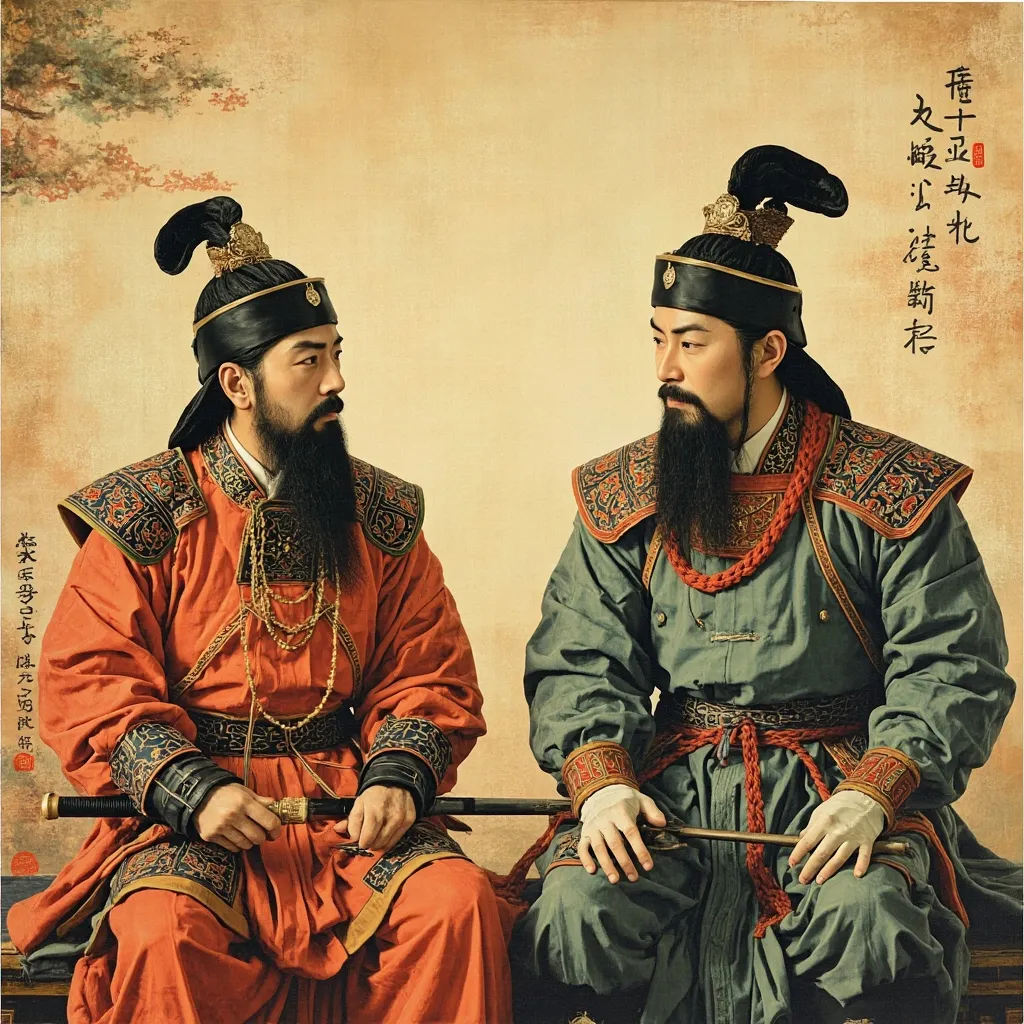
Liu Shan understood this danger, in his own way, after it was already too late. He was the last emperor of the Shu kingdom — the son of Liu Bei, the warlord who had built the Shu state through decades of struggle and sacrifice, and the successor to the throne that Zhuge Liang had given everything to protect and defend. Liu Shan inherited that throne in his early twenties, after Zhuge Liang’s death, and he held it for approximately thirty years before the kingdom fell to its northern enemy, the Cao Wei state, in 263 CE. He was then taken to the Cao Wei capital, given a comfortable title and a generous pension, and installed in a beautiful residence where he spent the remainder of his life.
The story of how Liu Shan adapted to this new life — the story that gave us the idiom 乐不思蜀 — is one of the most frequently cited cautionary tales in Chinese cultural history. It describes, with uncomfortable precision, what happens when a person is removed from the demands of their previous life and placed in an environment where all their material needs are met without effort. The adaptation is complete. The old loyalties, the sense of obligation, the memory of where you came from — all of it gradually fades, replaced by the simple animal satisfaction of being comfortable and unchallenged.
The Fall of Shu
To understand why Liu Shan’s story is considered cautionary rather than simply sad, you need to understand something about the situation he found himself in after the fall of Shu.
The Shu kingdom had been a relatively small state, squeezed between two far more powerful neighbors: Cao Wei to the north and east, and the Wu kingdom to the southeast. It had survived for decades largely because of the strategic brilliance of Zhuge Liang, who had designed and executed the series of northern campaigns that kept the larger Wei state off balance and prevented any decisive attack on Shu’s territory. After Zhuge Liang’s death, the burden of maintaining this equilibrium fell to a succession of capable ministers, but the fundamental weakness of Shu’s position never changed. The kingdom was simply too small, too poor, and too thinly populated to sustain a prolonged military competition with its larger rivals.
The end came in 263 CE, when Cao Wei launched a major invasion with three separate armies converging on Shu’s territory from different directions. The Shu forces, though they fought bravely, were overwhelmed by the sheer scale of the assault. The capital Chengdu fell quickly, and Liu Shan, faced with the imminent destruction of what remained of his forces, made the decision to surrender rather than to fight to the last man. He was taken north to the Cao Wei capital, where the new emperor — a young man named Sima Yan who would soon establish the Jin Dynasty — received him with the ceremonial honors appropriate to a defeated ruler.
The treatment Liu Shan received was remarkably generous by the standards of the era. He was not imprisoned, not executed, not humiliated publicly. He was given the title of Duke of Anle — roughly, “Duke of Peace and Happiness” — and granted a substantial estate with comfortable living quarters, regular income, and all the material comforts that a person of his background could reasonably expect. He was, in other words, given everything he needed to live comfortably for the rest of his days.
The Famous Visit
The story that became the basis for the idiom is said to have occurred after Liu Shan had been living in his comfortable Cao Wei residence for several years. By this point, he had apparently settled into his new life with remarkable ease. He attended the required ceremonies, performed the expected rituals, and received the stipulated payments with appropriate gratitude. He showed no signs of the depression or political scheming that might have been expected from a dethroned monarch who still harbored secret hopes of restoration.
One day, a former Shu official who had been taken north with Liu Shan — a man named旧臣 who had served the Shu court for many years — was granted an audience with the Cao Wei emperor. The emperor, apparently curious about Liu Shan’s state of mind, asked the official whether Liu Shan ever thought about returning to Shu, whether he still mourned the loss of his kingdom, whether there was any trace of the old loyalty remaining.
The official’s answer was both honest and tragic. He said that Liu Shan had adapted so completely to his new life that he no longer thought about Shu at all. The duke was comfortable, entertained, and occupied with the pleasures of his daily existence. He had no reason to think about his former kingdom, and he did not.
The phrase that emerged from this exchange — 乐不思蜀, meaning “so happy he forgot Shu” — entered the Chinese language as a description of a very specific kind of failure of memory and loyalty. It describes the person who, having lost everything, adapts so thoroughly to the replacement environment that the loss itself ceases to matter. The comfort of the present moment overwhelms the obligations of the past.
The Evening Banquet Story
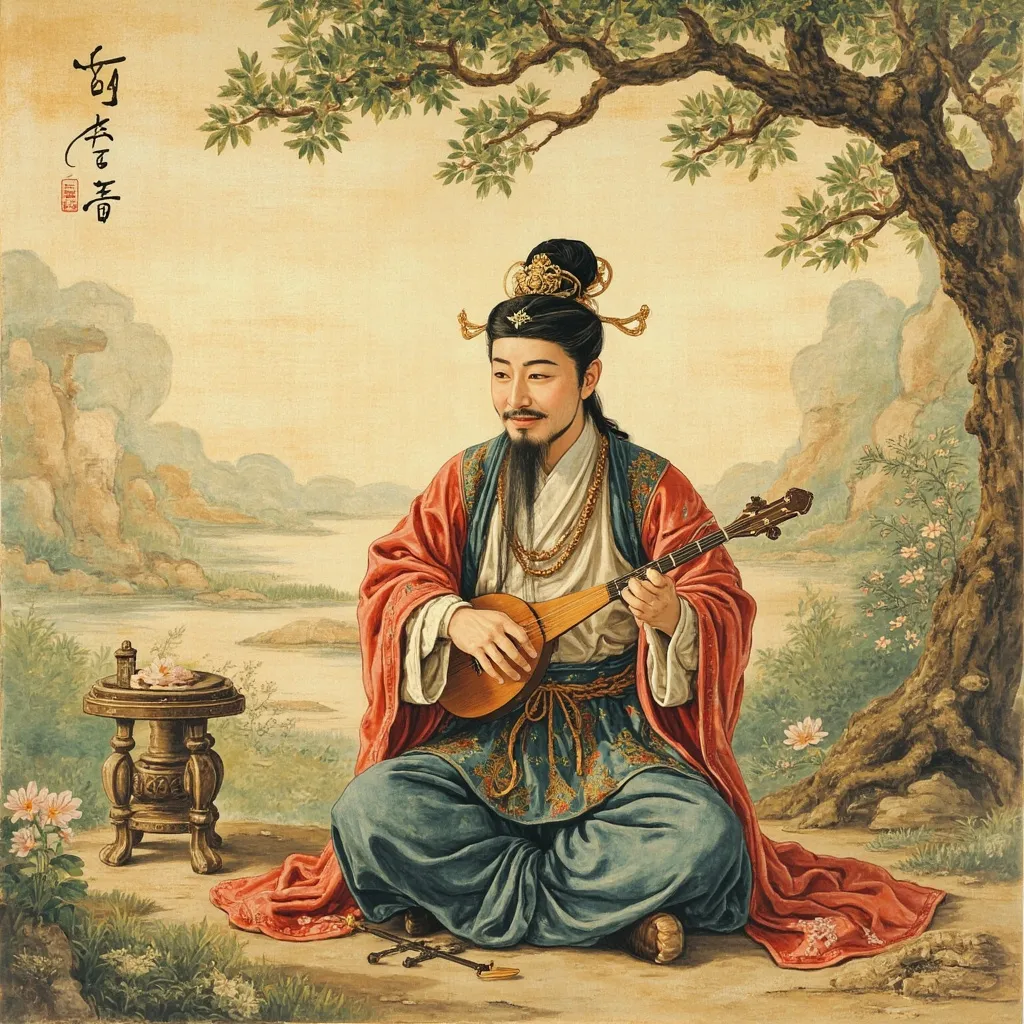
A second, more detailed version of the story adds additional texture to Liu Shan’s characterization. In this account, the Cao Wei emperor — whether genuinely curious or testing Liu Shan’s loyalty through a staged scenario — arranged for a traditional Shu banquet to be held at Liu Shan’s residence. The food, the music, and the general atmosphere were designed to evoke memories of the kingdom that Liu Shan had lost. The intention was to see whether the sight and sound of familiar things would awaken some trace of grief or longing.
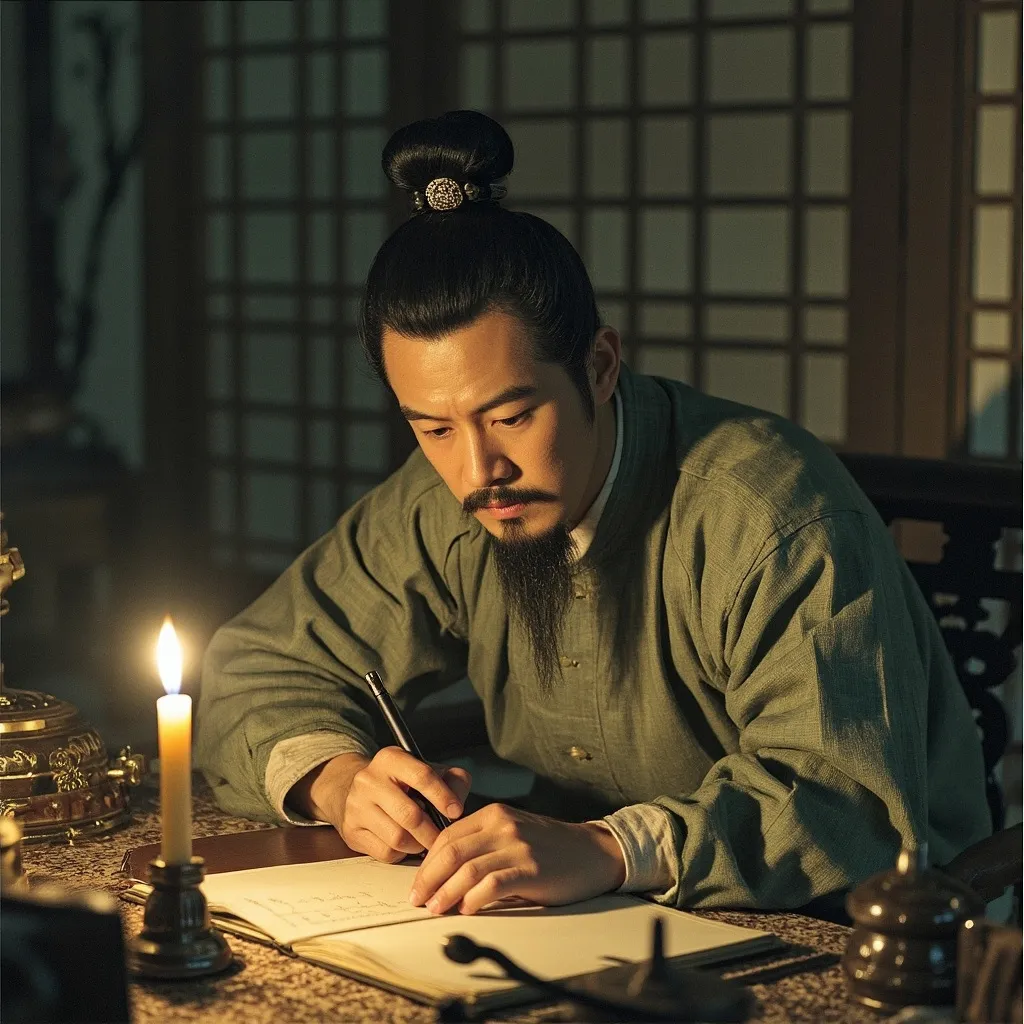
According to the account, Liu Shan sat through the entire banquet without displaying any visible emotion. He ate the food with apparent enjoyment. He listened to the music without tears or visible nostalgia. He participated in the conversation with his hosts as if nothing unusual was happening. At one point, the former Shu official who was present — the same one who had described Liu Shan’s adaptation in the earlier conversation — became so distressed by the emperor’s apparent lack of feeling that he quietly wrote a poem about the fall of Shu and displayed it for Liu Shan during a moment when no one else was watching. The poem’s intent was clear: to remind Liu Shan of what he had lost and what he owed to the memory of his ancestors.
Liu Shan looked at the poem, read it carefully, and then — according to the account — informed the official that he did not need to worry about any hidden grief or suppressed loyalty. He had heard, he said, that in the south there were beautiful gardens and pleasant scenery, and that life there was very comfortable. Why would he think about returning to Shu when his current situation was so agreeable?
The official, the story goes, was devastated by this response. The man who had been the emperor of Shu, who should have felt the weight of his ancestors’ legacy and the obligation to maintain some flicker of resistance or memory, was instead treating his exile as a pleasant holiday.
The Deeper Warning
What makes this story endure — why it has been told and retold for nearly two thousand years — is not the details of Liu Shan’s specific betrayal of his heritage. It is the universal quality of what it describes. The danger of comfort is not unique to deposed emperors. It applies to anyone who, having achieved a certain level of ease, begins to let the demands of the present crowd out the concerns of the past and future.
The phrase 乐不思蜀 is used in Chinese today to describe situations that range from the trivial to the profound. It can describe someone who goes on vacation and becomes so relaxed that they forget their responsibilities at home. It can describe someone who takes a comfortable job and loses the ambition that drove them earlier in life. At its most serious, it describes the person who, having lost their original purpose, adapts to a replacement existence so thoroughly that the loss itself ceases to register as a loss.
The cautionary element is the awareness that this adaptation, while it may feel like happiness, is actually a form of diminishment. Liu Shan was not genuinely happy, in the deep sense of a life well-lived and well-reflected-upon. He was comfortable. There is a difference. Comfort is the absence of pain and the presence of easy pleasures. Happiness, at least as the term was understood by the Confucian-influenced culture that produced this story, requires the exercise of purpose, the fulfillment of obligation, and the maintenance of the relationships and commitments that give life its meaning beyond mere sensation.
The Comfort That Diminishes
The deeper concern embedded in the Liu Shan story is about what happens to a person when they are removed from the conditions that required them to be their best self. Liu Shan, as emperor of Shu, was expected to be wise, dignified, and mindful of his heritage. Those expectations shaped his behavior. He may not have always met them — the historical record suggests he was not a particularly capable ruler — but they existed, and they operated as a kind of framework for his identity.
When that framework was removed, what remained was a person who, given the freedom to simply exist comfortably, chose the easiest available path. He did not grieve because grieving required effort. He did not scheme for restoration because restoration required sacrifice. He simply existed, enjoying the pleasant surroundings that his new situation provided, and allowed the memory of his former life to fade into irrelevance.
This is the danger that the idiom identifies: not that Liu Shan was a bad person, but that comfort allowed him to become less than he might have been. The environment of his exile did not demand his best qualities. It rewarded their absence. And in the absence of any pressure to be more than he currently was, he became exactly what his circumstances allowed: a comfortable, undemanding, unremarkable man who happened to have once been an emperor.
Modern Comforts and the Ancient Warning
The tools of modern life have made the danger that Liu Shan embodied more pervasive than ever. We live in an age of extraordinary comfort — abundant food, climate-controlled environments, entertainment that can occupy every waking moment without effort, and social structures that allow individuals to exist for years without being meaningfully challenged. The ancient warning of 乐不思蜀 applies to this environment as directly as it applied to Liu Shan’s gilded exile.
The products below represent the double-edged nature of modern comfort. Each one offers genuine benefits — relaxation, enjoyment, relief from unnecessary struggle. But each one also represents the kind of easy pleasure that, taken to excess, can gradually replace the more demanding but more fulfilling patterns of purposeful living:
1. Premium Noise-Canceling Headphones — The world is noisy, and these headphones offer genuine relief from unwanted sound. But they also represent the ability to cut yourself off from demands and reminders — the auditory equivalent of Liu Shan’s comfortable walls.
2. Smart TV with Streaming Services — Entertainment on demand, available instantly, requiring nothing more than sitting still and watching. A week-long streaming marathon has the same effect on purpose as Liu Shan’s comfortable exile: the easier option gradually becomes the only option.
3. Premium Cashmere Throw Blanket — Comfort in physical form. There is nothing wrong with warmth and softness, but the person who wraps themselves too thoroughly in comfort may find that they have lost the habit of productive discomfort.
4. Gourmet Snack Selection Box — Easy pleasure in bite-sized form. The accumulation of small indulgences, like Liu Shan’s comfortable lifestyle, can gradually replace the simpler patterns that health and purpose require.
5. E-Reader with Large Screen — The one comfort-oriented item on this list that also supports intellectual engagement. An e-reader can deliver both the easy pleasure of distraction and the more demanding pleasure of learning — the difference depends entirely on what you choose to read.
What We Should Remember
The story of Liu Shan and 乐不思蜀 is not primarily about political loyalty, despite its surface appearance. It is about something more fundamental: the question of what it means to maintain a coherent sense of self when the conditions that shaped that self are removed. Liu Shan was not evil. He was not traitorous in any conscious or malicious sense. He was simply a man who allowed the comfort of his present circumstances to replace the obligations of his past.
This is the trap that the idiom is meant to help us recognize. The present moment is always more compelling than abstract obligations to the past or uncertain commitments to the future. It takes deliberate effort to maintain the thread of identity and purpose that connects who you were to who you are becoming. Without that effort, comfort does what comfort does: it fills the space that purpose would otherwise occupy, and it does it so thoroughly that you may not notice the emptiness until it has become structural.
Liu Shan had once been the Emperor of Shu. He had carried the legacy of Liu Bei, the dream of the Han restoration, the memory of Zhuge Liang’s sacrifice. None of that was required of him in his new life, and all of it gradually faded. He became, in the end, exactly what his comfortable circumstances allowed him to be — and the phrase that describes him reminds us, across nearly two thousand years, that this is a choice we all make, every day, in small ways: whether to remain connected to the purposes that gave us shape, or to let the ease of the present moment slowly erase them from memory.