In 1942, a Buddhist monk died in a small room at Kaiyuan Temple in Quanzhou, Fujian Province. He was 63 years old, and he had spent the previous 24 years of his life as a monk in the Buddhist tradition. Before that, he had been one of the most celebrated figures in Chinese cultural life: a painter, a musician, a poet, a playwright, a calligrapher, and a teacher whose students included some of the most important cultural figures of the 20th century.
His name was Li Shutong, but in his monastic life he was known as Master Hongyi. The contrast between his two lives could hardly be sharper. In the first life, he was a dandy who wore fine Western suits, played piano and violin, wrote popular songs that sold thousands of copies, and moved through the most sophisticated circles of Shanghai and Tokyo. In the second life, he wore simple monk’s robes, lived in modest quarters, devoted himself to Buddhist scholarship and practice, and refused to engage with the worldly cultural pursuits that had made him famous.
Chinese people today regard Master Hongyi as a cultural saint. He represents the possibility of genuine spiritual transformation, the idea that a person can be utterly devoted to worldly success and then set it all aside to pursue something higher. His calligraphy is prized. His Buddhist lectures are studied. His songs from the early period are still sung. And his grave at Kaiyuan Temple is treated as a place of pilgrimage.
Li Shutong’s Early Life
Li Shutong was born in Tianjin in 1880, into a family that was well-connected in Qing Dynasty official circles. His father was a wealthy merchant who had served as a customs official, which meant the family had money and social standing. Li’s childhood was comfortable, and he received a thorough education in both traditional Chinese classics and modern Western subjects as they became available in Chinese schools.
He showed artistic talent early. As a teenager in Tianjin, he was already writing poetry and practicing calligraphy with skill that impressed adults twice his age. His family supported his education and encouraged his development in the arts, which was unusual for the time when most families with means pushed their sons toward the civil service examinations and government careers.
When Li was about nineteen, he traveled to Shanghai, which was then becoming the most cosmopolitan city in East Asia. The foreign concessions gave Shanghai a mixed Chinese-foreign culture that was unlike anything in the interior. Li thrived there. He joined literary societies, performed in theatrical productions, and established himself as a rising figure in Shanghai’s cultural scene. He wrote poetry, composed music, and became known for his elegant prose style.
In 1905, his father died, and Li, following traditional practice, went into a period of mourning. During this period, he became increasingly interested in Buddhism, reading texts and attending lectures. This was not unusual for educated Chinese of his generation — Buddhism was experiencing a revival in the late Qing period, and many intellectuals found its philosophical framework more compelling than the exhausted Confucian orthodoxy that had dominated Chinese thought for centuries.
Li’s interest during this period was intellectual rather than devotional. He continued his cultural work, traveling to Japan in 1906 to study art and music at the Tokyo School of Fine Arts. While in Japan, he helped found a drama society that introduced modern Western-style theater to Chinese audiences. He also continued composing music, and some of the songs he wrote during this period became enormously popular. One of them, “Farewell,” set to a Western tune, is still performed today and is considered a classic of early Chinese popular music.
The Crisis That Changed Everything
Li returned to China in 1910 and took up teaching positions at various schools in Shanghai and elsewhere. He was an unusual teacher — he was fluent in Japanese, knowledgeable about Western music and art, and genuinely passionate about bringing modern cultural education to Chinese students. His classes were popular and his reputation grew.
He married in 1911, and for a few years he seemed to be settling into a conventional life as a cultural figure and family man. But something was eating at him. His journals from this period, which have been preserved, reveal a man who was deeply dissatisfied with his life even as others envied his success. He wrote about the emptiness of worldly achievement, about the approach of death, about the need for something more meaningful than artistic fame or social status.
The precise trigger for his final decision to become a monk is debated. Some accounts say he was profoundly affected by the death of a close friend. Others point to his reading of Buddhist texts and the gradual deepening of his understanding of Buddhist philosophy. Still others suggest that the general chaos and violence of early Republican China — warlordism, political persecution, social disruption — made him feel that worldly life had become impossible for a person of conscience.
What is clear is that in 1918, at age 38, Li Shutong went to the monastery at Hangzhou and was ordained as a Buddhist monk. He took the dharma name Hongyi, which means “supreme one” or “exalted conduct.” His wife and family were shocked and distressed, but Li was resolute. He had decided that his artistic career was over and that he would spend the rest of his life pursuing Buddhist practice and scholarship.
The Monastic Years
Master Hongyi’s first years as a monk were spent at various monasteries in the Yangtze River valley, studying under senior teachers and deepening his knowledge of Buddhist doctrine. He was a serious student who applied the same discipline to Buddhist practice that he had previously applied to art and scholarship. He quickly distinguished himself as someone with genuine insight and scholarly depth.
His teacher at various points was Master Yin Ru, a prominent monk who led the Buddhist reform movement in early 20th century China. This reform movement sought to modernize Buddhist institutions, improve monastic education, and make Buddhist teachings more accessible to ordinary people. Hongyi embraced these reform goals and contributed to them through his own writings and teaching.
Unlike some monks who withdrew from worldly affairs entirely, Hongyi remained engaged with Chinese cultural life in a limited way. He gave lectures on Buddhist philosophy that were attended by scholars and monks alike. He wrote calligraphy for temples and charitable causes, and those who received his work treasured it. He composed Buddhist music, setting scriptures to traditional melodies that could be sung by congregations. He was not visible in the public cultural sphere, but he had not disappeared from it entirely.
In 1931, Hongyi moved to Quanzhou, drawn by the city’s rich Buddhist heritage and the presence of Kaiyuan Temple, one of the oldest Buddhist institutions in Fujian Province. Kaiyuan Temple had been founded in the Kaiyuan era of the Tang Dynasty in 686, giving it over 1,200 years of continuous existence. It had survived the fall of the Tang, the Song, the Yuan, the Ming, and the Qing dynasties. It had weathered wars, natural disasters, and political upheavals. For Hongyi, it represented the kind of enduring spiritual institution that he wanted to be associated with.
He spent his final years at Kaiyuan Temple and in the surrounding region, where he became something of a spiritual celebrity. Chinese people who had admired his artistic work made pilgrimages to see him in his monk’s robes. He received them graciously but always reminded them that his artistic achievements were behind him and that his only concern now was Buddhist practice.
Why This Story Matters to Americans and His Lasting Legacy
The transformation of Li Shutong into Master Hongyi resonates with Americans for reasons that might seem surprising. The most obvious parallel is with figures like Henry David Thoreau, who withdrew from conventional society to pursue a life of principle, or with the various American artists and intellectuals who have abandoned worldly success to join religious communities.
But Hongyi’s story is different in an important way. Thoreau’s withdrawal was temporary and philosophical — he always intended to return to society and write about his experiences. Hongyi’s withdrawal was final and total. He did not write about spiritual transformation; he enacted it in his own life in a way that left no ambiguity about his priorities.
This kind of committed transformation is rare in any culture, and it captures the imagination precisely because most people cannot imagine doing it themselves. Americans who learn about Hongyi often feel a mixture of admiration and discomfort. Admiration for his courage and sincerity. Discomfort because his story raises questions about whether the worldly success we pursue is actually what we claim it is.
There is also something compelling about the way Hongyi reconciled his artistic identity with his monastic one. He did not denounce art or claim that his previous life was wasted. Instead, he argued that art and Buddhism were different paths to the same ultimate truth, and that the discipline and sensitivity he had developed as an artist made him a better monk. This is a sophisticated position that defies the easy opposition between spiritual and worldly pursuits.
For Americans who are interested in Buddhism, Hongyi’s example is instructive. He did not become a monk as an escape from the world or as a way of pursuing individual spiritual advancement in isolation. He became a monk as a form of service, contributing to the reform and renewal of Buddhist institutions in China. His monastic life was oriented outward as well as inward.
Kaiyuan Temple Today
Kaiyuan Temple in Quanzhou is well worth visiting. The temple complex covers a large area and includes buildings from different periods of Chinese history. The main hall, the Daxiong Baodian, houses statues of the Buddha and the major bodhisattvas, and the architecture follows traditional Tang Dynasty design principles even though the current structures date from later periods.
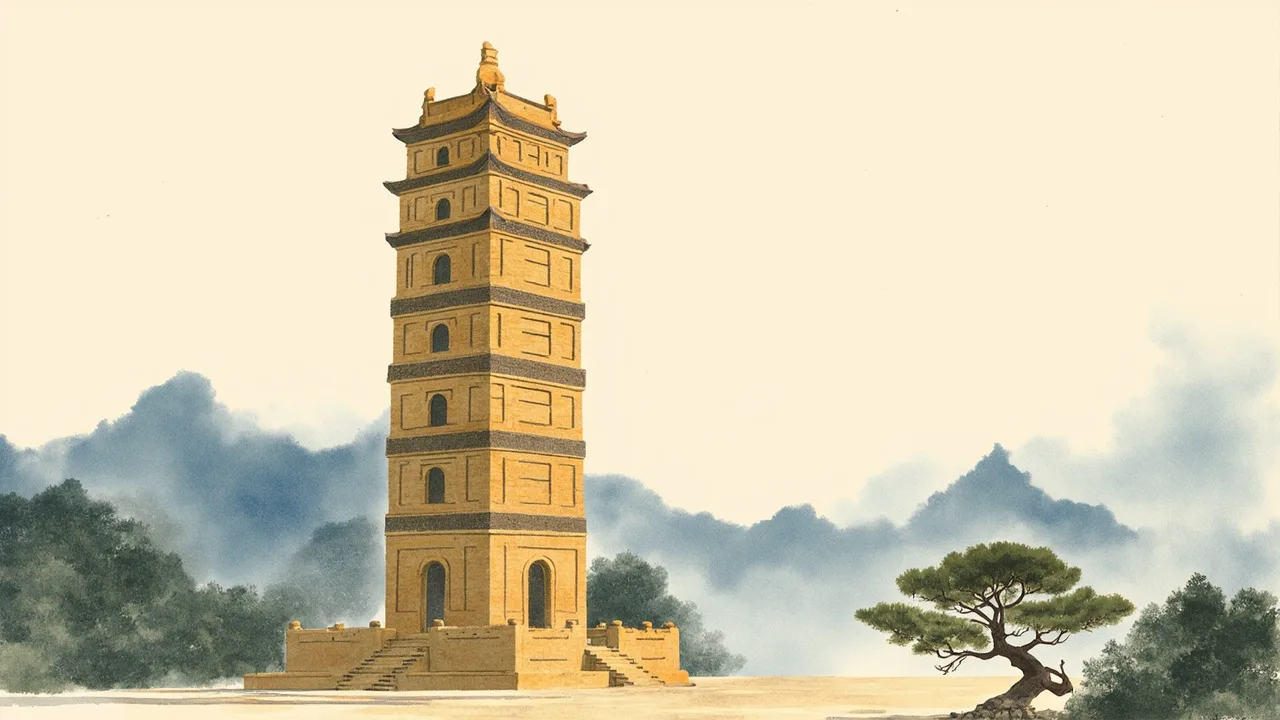
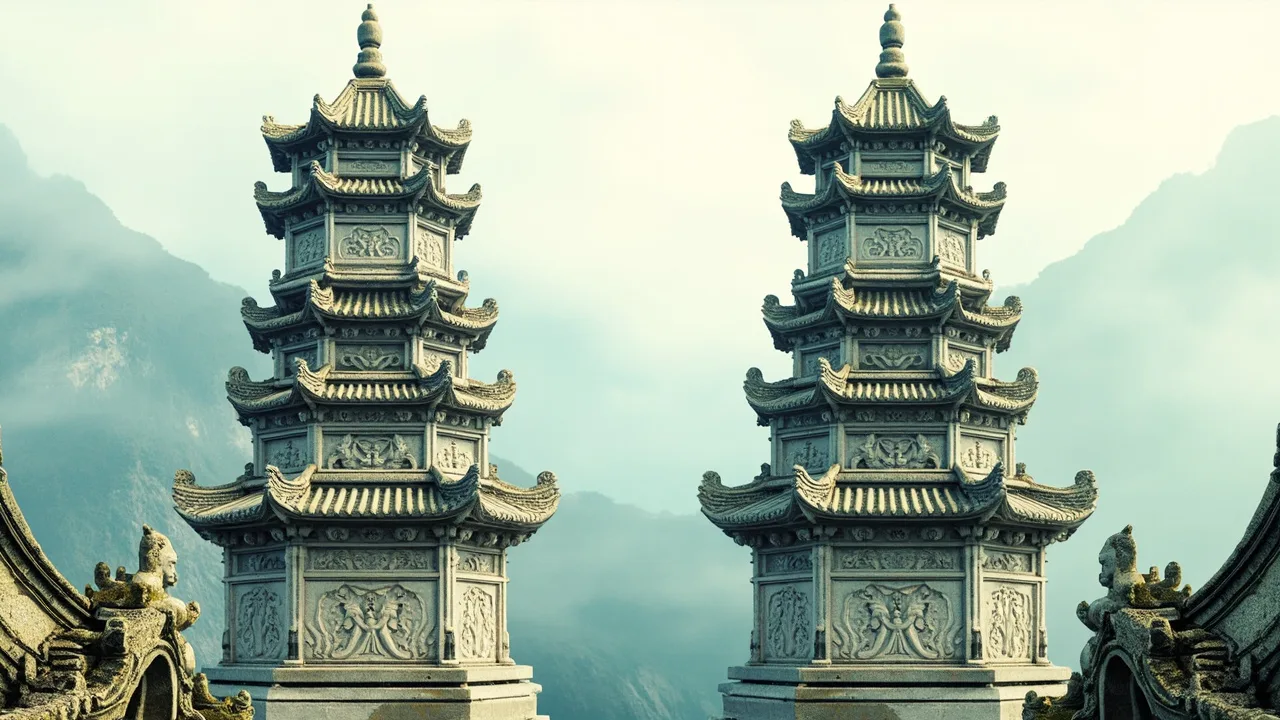
The temple’s most distinctive feature is the twin pagodas that stand in the front courtyard. These nine-story stone pagodas were built in the Song Dynasty, around 1100, and they are considered masterpieces of Song Buddhist architecture. The pagodas are about 50 meters tall, and visitors can climb to the top for a view of the surrounding city. The stone carvings on the pagodas depict Buddhist scenes and figures, and they provide a visual education in Buddhist iconography.
Master Hongyi’s memorial hall is located within the temple complex, and it contains his personal effects, calligraphy, photographs, and biographical displays. The memorial hall was renovated in recent years, and it provides a thorough introduction to his life and significance. His grave is in the temple’s cemetery area, surrounded by trees and quiet.
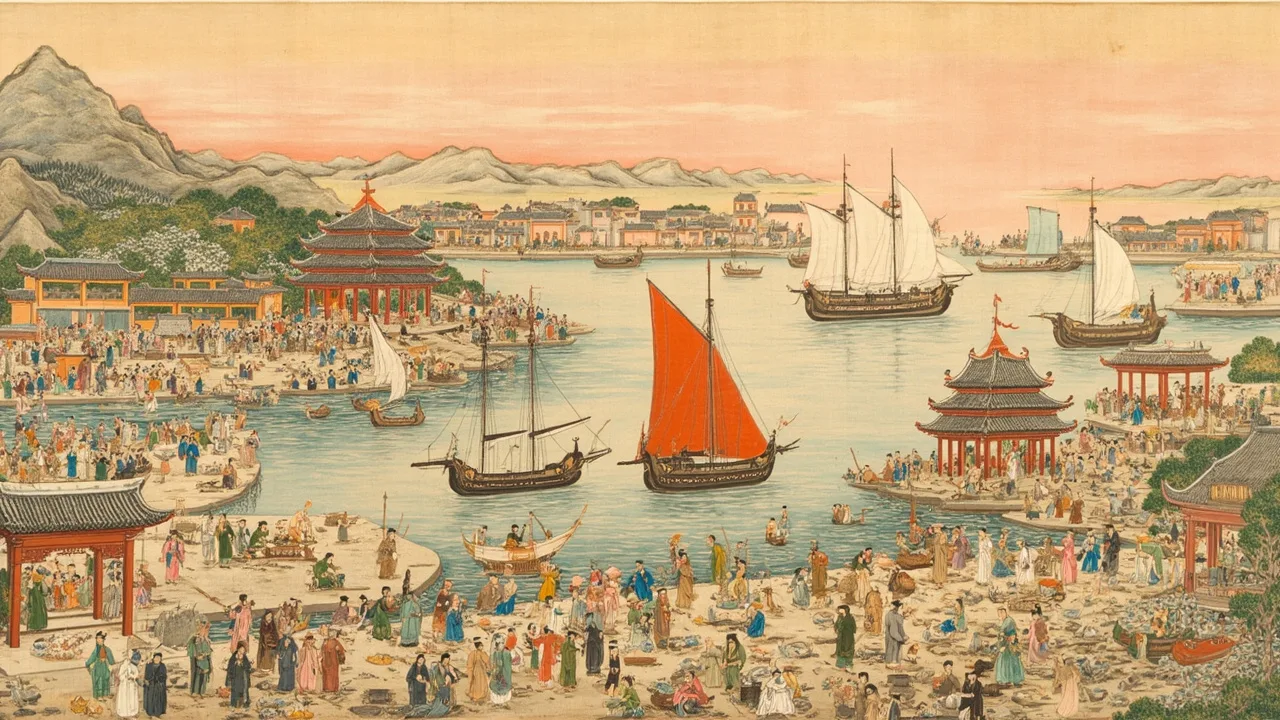
The temple is located in the historical center of Quanzhou, which is itself a UNESCO World Heritage site because of its Maritime Silk Road significance. Visiting Kaiyuan Temple can be combined with visits to the Qingjing Mosque, the old port area, and the various other historical sites that document Quanzhou’s role in global commerce and cultural exchange.
He died in October 1942, during the height of the Second Sino-Japanese War. Japan had occupied much of coastal China, and Quanzhou was under considerable pressure. His death was peaceful, and his final words were reportedly about impermanence and the Buddha’s teachings.
His legacy has only grown since then. He is recognized as one of the most important figures in modern Chinese Buddhism, and his influence on Buddhist practice and scholarship continues to be felt. His calligraphy is collected and his writings are studied. The songs he composed in his earlier life have become part of the standard repertoire of Chinese popular music.
What is perhaps most striking about Hongyi’s legacy is how he has become a symbol of integrity and spiritual seriousness in Chinese culture. In a society that often prioritizes material success above all else, his decision to walk away from fame and comfort stands as a persistent challenge. He demonstrates that another kind of life is possible, even if most people do not choose it.
Americans who find this story compelling might also be interested in the parallel figure of Thomas Merton, the American Trappist monk who was a celebrated writer before entering the monastery and who similarly became a symbol of spiritual seeking in Western culture. Merton’s journey was different in its specifics but similar in its underlying logic: a person from a privileged cultural position chooses to pursue something that the surrounding society does not understand or value, and that choice ultimately enriches both the individual and the culture that produced them.
Understanding Hongyi’s life gives Americans insight into how Chinese culture thinks about the relationship between art and spirituality, between worldly achievement and ultimate meaning. These are not uniquely Chinese questions, but the specific answers that figures like Hongyi developed are distinctly Chinese, and they expand the range of human possibilities that Americans can draw on in their own thinking.
[AFFILIATE: “The Record of Master Hongyi” - Collection of writings and lectures by Master Hongyi on Buddhist practice and philosophy]
[AFFILIATE: Quanzhou Cultural Heritage Walking Tour Map - Detailed guide to Kaiyuan Temple, the twin pagodas, and surrounding historical sites]
[AFFILIATE: Chinese Buddhist Temple Architecture Book - Explains the design and symbolism of temple complexes like Kaiyuan Temple for non-specialist readers]