In the early years of the reign of the Wanli Emperor — 1578 CE, by the reckoning that Chinese scholars used at the time — a fifty-year-old physician in the lake country south of the Yangzi River finally set down his brush. He had been writing the same book, almost every day, for twenty-seven years. The finished manuscript filled 1,892 entries organized into 16 divisions and 60 categories, ran to 1,900,000 Chinese characters, described 1,892 distinct medicinal substances (1,094 plants, 443 animals, 354 minerals and other materials), and illustrated each entry with 1,109 hand-drawn diagrams. The title was Bencao Gangmu (本草纲目), usually translated as The Compendium of Materia Medica, and it is, by almost any measure, the single most ambitious pharmacological encyclopedia ever written by one person in the history of medicine.
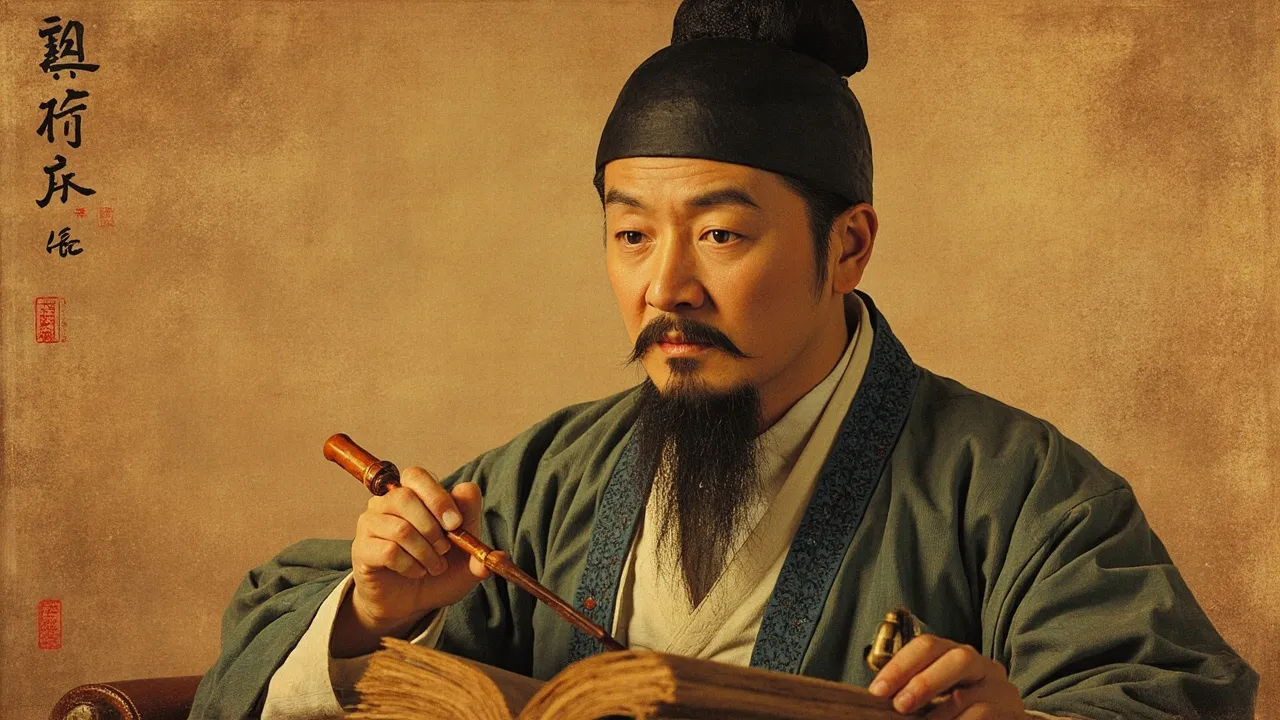
The man who wrote it was Li Shizhen (李时珍, 1518 – 1593 CE), a provincial physician from Qizhou (蕲州), in what is now Hubei province, who had no institutional backing, no royal patronage, and at times, very little money. He wrote most of it alone. He financed most of his own research by practicing medicine in his hometown. He nearly died at least once during fieldwork, when he was bitten by something he was trying to identify. The book itself, when it was finished, was rejected by the imperial court as too detailed and too long, and it sat unpublished for almost a decade before a sympathetic local official arranged a private printing in 1596 CE, three years after Li Shizhen died.
It is still in print. It is still consulted by working herbalists, working physicians, working pharmacologists, and working historians of medicine. Modern Traditional Chinese Medicine (TCM) as a clinical practice is built, in significant part, on the framework Li Shizhen laid down. The Bencao Gangmu has been translated, in whole or in part, into English, French, German, Japanese, Korean, Vietnamese, Russian, and several other languages, and it remains a foundational reference in pharmacological literature worldwide. The full English translation by Porter Smith and Stuart Gatlin appeared in 1871 as part of a wider 19th-century Western effort to make sense of Chinese medicinal knowledge, and the modern Chinese critical edition (人民卫生出版社, the People’s Medical Publishing House edition) is now the standard reference.
This is the story of Li Shizhen, the book he spent half his life writing, and why the book still matters.
The Doctor Who Was Not Yet a Doctor
Li Shizhen was born in 1518 into a family of physicians in Qizhou, Hubei, near the Yangzi. His grandfather had been an itinerant herbal doctor who traveled the mountain villages of the surrounding region; his father, Li Yanwen (李言闻), was a more formally educated physician who had written a few minor medical texts and who tried, with little success, to persuade his son to study for the imperial examinations rather than to follow the family medical tradition. The Li family was poor enough that Li Shizhen’s formal education was intermittent; the family library, modest as it was, gave him a better grounding in pharmacology than in the classical Confucian canon.
He was a sickly child. The traditional biographies mention repeated fevers, what looks like tuberculosis or a chronic respiratory complaint, and near-fatal episodes that left him weak through his teens. The illness did two things for him. First, it kept him out of the grinding schedule of preparation for the imperial exams — a relief in some ways, a disaster in others, since the exams were the only respectable route to a career in Ming-dynasty officialdom. Second, it gave him a personal stake in medicine. He started reading his father’s medical books in his early teens and never really stopped.
His father tried to teach him the family practice, but Li Shizhen quickly outgrew the local tradition. The existing materia medica texts in the Ming dynasty — the standard reference being the Zhenglei Bencao (证类本草) compiled by Tang Shenwei in the late 11th century, with subsequent additions — contained, in Li Shizhen’s later judgment, hundreds of errors: plants described that did not exist, plants that existed but were described wrongly, dosage recommendations that were dangerous, recipes credited to Daoist immortals rather than to clinicians. He started keeping his own notes. By his early twenties, he had begun what would become the Bencao Gangmu.
He attempted the imperial examinations three times between age 14 and age 23 and failed all three. He was not unusual in this — the Ming examination failure rate was staggeringly high, perhaps over 98% of candidates never passed — but it meant that he could not be an official. He settled, finally, on medicine as his profession, apprenticed formally to his father, and at some point in his late twenties or early thirties, began to practice as a physician in his home town.
He married, raised a family, and practiced the trade of a country doctor for about a decade. He became known locally as a careful diagnostician — the kind of doctor who sat with a patient and listened, who prescribed a small number of medicines carefully rather than a large number indiscriminately. His father died in 1543 CE, when Li Shizhen was in his mid-twenties. He took over the family practice.
Then, in 1551 CE, he got the chance that would change his life. The imperial court issued a recommendation for a few skilled provincial physicians to be summoned to the Imperial Medical Academy (太医院) in Beijing as consulting physicians. Li Shizhen was one of the men selected. He was approximately 33 years old. He served at the Imperial Medical Academy for about four years, returning home in 1555 CE.
The Beijing years did two crucial things for him. They gave him access to the imperial medical libraries, which contained many rare medical texts he had never seen before, including some that had been out of circulation for centuries. And they showed him that even the imperial physicians did not have a reliable, up-to-date, comprehensive reference work on the materia medica. The standard texts the court physicians used were essentially the same Tang-Song texts he had grown up with. He came home to Qizhou determined to fix this.
Twenty-Seven Years
Li Shizhen began serious work on the Bencao Gangmu around 1552 CE, when he was about 34. He finished the first complete draft in 1578 CE, at age 60. (He had been working on notes and earlier drafts since his late teens.) The composition period of about 27 years is one of the longest sustained scholarly research projects in the history of medicine.
The work unfolded in four overlapping phases.
1. Reading. Li Shizhen spent the first decade or so reading every medical, pharmacological, alchemical, agricultural, and natural-history text he could get his hands on. The final bibliography of the Bencao Gangmu lists more than 800 separate sources, ranging from canonical medical works like the Shennong Bencao Jing (神农本草经) (a text traditionally attributed to the legendary Divine Farmer but actually compiled around the Han dynasty, probably between the 1st century BCE and the 2nd century CE) to local gazetteers, Daoist longevity manuals, agricultural treatises, and miscellaneous literary works that happened to mention a useful plant or animal. He read all of these carefully, taking notes, and identifying the points on which they disagreed with each other or with his own observations.
2. Fieldwork. This is the part of the project that is most extraordinary to a modern reader. Li Shizhen did not simply compile from books. He went out and looked at the plants and animals himself. He traveled through the mountains, marshes, and riverlands of Hubei, Hunan, Jiangxi, Anhui, and probably further, observing medicinal substances in their living habitats. The traditional biographies — most famously the 《白茅堂集》 by his son Li Jianzhong (李建中) — describe him walking into Liu’an (六安) in Anhui to study the local rhododendron (杜鹃, dujuan), going up the Wushan mountains to observe ginseng (人参) in the wild, traveling to the Dabie mountains to study stone-cure medicines, and following the Yangzi to track the migration patterns of crocodile (鼍, tuo). He grew medicinal plants in his own garden so he could observe them at every stage of their life cycle, from seed to flower to fruit to death. He raised animals in his house — including, by his son’s account, an unusually large captive snake — so he could observe their behavior.
3. Experimentation and clinical observation. Li Shizhen was a practicing physician throughout. The Bencao Gangmu is not a passive compilation. For each substance he recorded, he noted the dose range, the conditions under which it appeared to help, the conditions under which it appeared to do nothing, and the conditions under which it appeared to be actively harmful. Many entries describe in considerable detail the results of treating his own patients over decades. He was not infallible — some of his recommended uses have not held up to modern clinical scrutiny — but his empiricism is striking for a 16th-century writer.
4. Writing. The final draft, completed in 1578, was enormous. Li Shizhen spent the next several years revising it. He died in 1593 CE, three years before the first edition was printed.
What the Book Actually Does
The Bencao Gangmu is not just a long list of plants. It is organized according to a specific intellectual system, which is part of what makes it remarkable.
The book is divided into 16 divisions (部) and 60 categories (类). The divisions are arranged in a deliberate progression: from the inorganic (water, fire, earth, metal, stone) at the beginning, through the vegetable kingdom (herbs, grains, vegetables, fruits, trees) in the middle, to the animal kingdom (insects, fish, reptiles, birds, mammals, humans) at the end. Within each category, the entries are organized roughly from the most fundamental medicinal substances to the most specific.
For each of the 1,892 substances, Li Shizhen provided, in a standardized format:
- Names in both literary and colloquial Chinese, with regional variants where applicable, and an attempt to identify the correct canonical name where the tradition had become confused.
- Description of appearance and habitat, often detailed enough to allow field identification, and accompanied by a hand-drawn illustration (1,109 of these were originally included; the surviving editions vary).
- Source identification, indicating where the substance could be obtained, in what season, and how it should be processed.
- Properties in the four traditional categories: taste (味), nature (性, hot or cold, etc.), channel tropism (归经, which organ systems it acts on), and toxicity (毒性).
- Indications — what the substance was used for in clinical practice, with prescriptions (方, fang) for specific conditions, ranging from simple to compound formulas.
- Cautions — what conditions or other medicines the substance should not be combined with, and what populations (pregnant women, the elderly, the very young) should use it cautiously.
- Historical citations — direct quotations from earlier materia medica texts, allowing the reader to compare what Li Shizhen thought with what earlier authorities had said.
The system of organization is the gangmu (纲目) principle: a hierarchical taxonomy of 纲 (gang, “outline” or “category”) and 目 (mu, “item” or “subcategory”). Each section opens with a brief gang summary, then lists the individual substances as 目 entries. This is the same structure that Linnaeus would later formalize for Western biology, although Li Shizhen’s system is much more pragmatic — built around medicinal utility rather than botanical classification in the modern sense.
The total word count — approximately 1.9 million Chinese characters — is what made the book so difficult to publish. The imperial court rejected it on the grounds that it was too long, too detailed, and too expensive to print. It eventually circulated in manuscript form for years before a private printing was arranged in 1596 CE.
Why It Still Matters
The Bencao Gangmu is still used by working TCM practitioners, still cited in pharmaceutical research, and still taught in Chinese medical schools. Some of its recommendations — ginseng for fatigue, ginger for nausea, rhubarb root as a laxative, chrysanthemum for eye inflammation — have been at least partially validated by modern research. Many others have not. But the structural achievement of the book — the systematic classification, the careful distinction between what was observed and what was merely reported, the explicit recognition that the tradition needed correction — is its most enduring legacy.
Modern pharmacology has identified active compounds in many of the plants Li Shizhen cataloged. Artemisinin, the antimalarial compound derived from sweet wormwood (青蒿, qinghao, Artemisia annua), was isolated by Tu Youyou, who won the 2015 Nobel Prize in Physiology or Medicine. Tu has explicitly credited Li Shizhen’s description of qinghao as a fever treatment as one of the texts that led her to consider the plant. Ephedrine, the active compound in ma huang (麻黄, Ephedra sinica), was isolated in the early 20th century and was the foundation of the modern decongestant industry; Li Shizhen’s description of ma huang as a sweat-promoting medicine is precise and detailed. Berberine, isolated from the amur cork tree bark (黄连, huanglian, Coptis chinensis) that Li Shizhen cataloged, is now the subject of active pharmaceutical research as a possible treatment for metabolic disorders.
Outside the realm of clinical medicine, the Bencao Gangmu has become a cultural touchstone. The book is referenced constantly in Chinese literature, film, and art — partly because of the historical authority it carries, and partly because many of its entries have entered the Chinese language as idioms. The phrase “藕断丝连” (ou duan si lian, “the lotus root snaps but the silk threads remain connected”), referring to relationships that cannot be cleanly severed, comes from Li Shizhen’s description of the lotus root. The phrase “藕孔” (lotus hole) — used in traditional Chinese poetry as a metaphor for a small opening through which one can see — also traces back to the same entry.
Li Shizhen himself died in 1593, before seeing his work in print. He is buried in a small tomb near his hometown of Qizhou, which is now a protected historical site. The Li Shizhen Memorial Hall (李时珍纪念馆), located near the tomb, has been a pilgrimage site for Chinese physicians and pharmacists since the early 20th century.
If you want to read Li Shizhen’s work for yourself, the modern critical edition is widely available in libraries. If you want to explore the related world of traditional Chinese medicine more practically, here are a few starting points:
- English Translation of the Compendium of Materia Medica (Porter Smith, 1871 facsimile reprint) — The classic Western translation, reprinted in several modern editions. It is a 19th-century translation, so the English is sometimes archaic, but it is the most complete English version available.
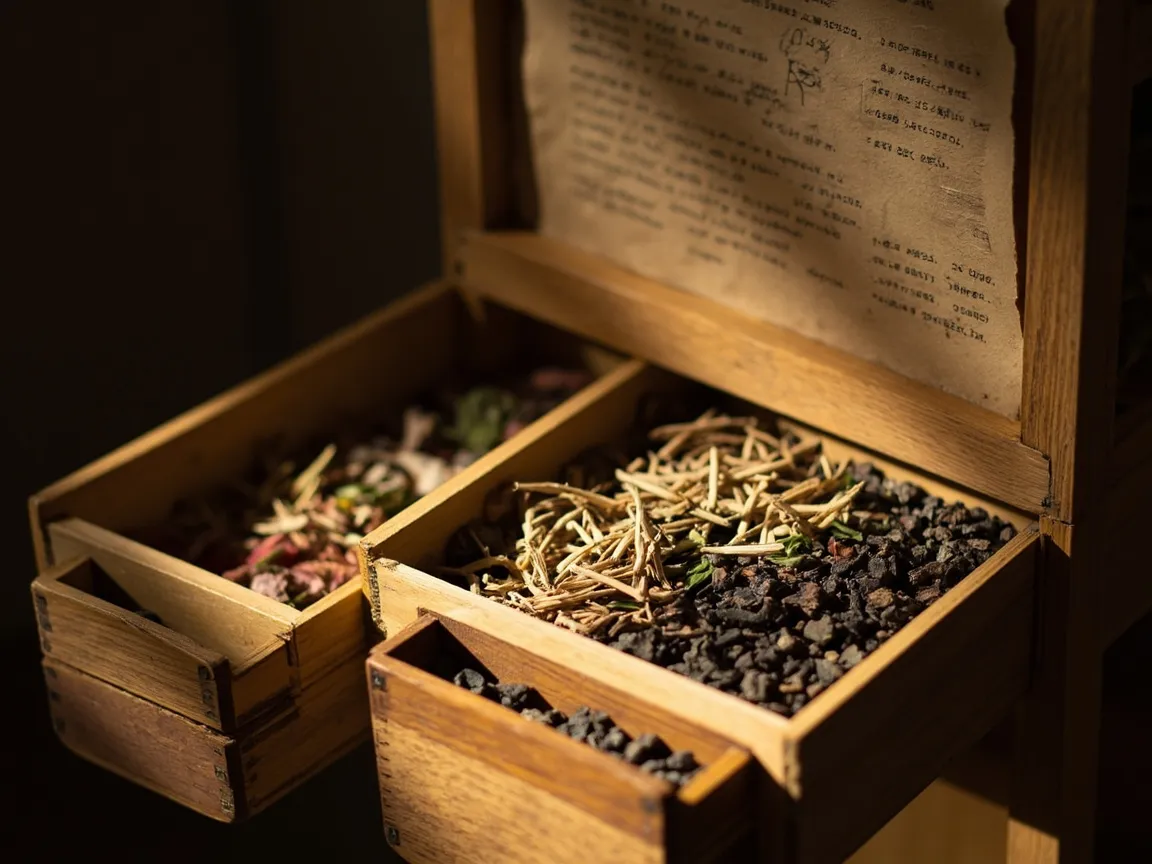
- Traditional Chinese Herbal Medicine Kit (50 herbs, labeled) — A starter set of common TCM herbs in labeled jars, useful for anyone wanting to begin cooking with the basic materia medica. Includes ginger, licorice root, goji berries, cinnamon bark, and chrysanthemum.
- Moxibustion Kit with Smokeless Sticks and Acupressure Chart — Moxibustion (the burning of dried mugwort near or on the skin) is one of the most distinctive TCM practices, and Li Shizhen cataloged mugwort (艾草, aicao) in considerable detail. A beginner kit lets you experience the practice safely.
- Chinese Acupressure Mat and Pillow Set — Acupressure is the practice of stimulating the same meridian points that acupuncture targets, but with pressure rather than needles. A spiked mat and pillow are a low-cost way to begin experimenting.
- The Web That Has No Weaver: Understanding Chinese Medicine (Ted Kaptchuk) — Still the best single English-language introduction to the theoretical framework of TCM. Kaptchuk is a Western-trained physician who spent years apprenticing with Chinese practitioners; the book is a model of clear, sympathetic explanation.
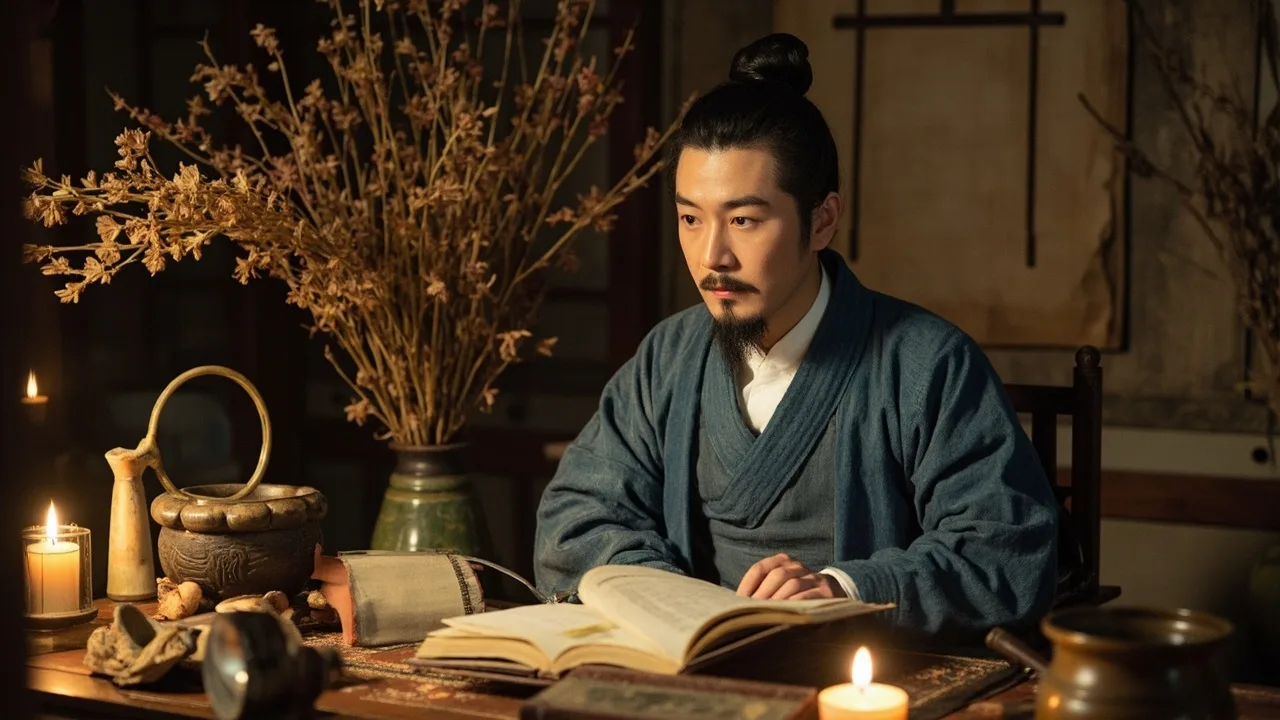
Li Shizhen would not have used any of these. He used a wooden desk, a brush, an inkstone, and an ironclad discipline to spend twenty-seven years observing the world with more care than almost any physician before him had done. He left us a book that is still worth reading. That is no small thing.