Longjing Tea (Dragon Well): The Legendary Green Tea of Hangzhou
There are few teas in the world that carry the weight of history quite like Longjing, commonly known as Dragon Well tea. Walk into any respectable tea shop in China and ask for Longjing, and you’ll see faces soften, shoulders relax, and a quiet reverence settle over the conversation. This isn’t just a tea — it’s a cultural artifact, a diplomatic gift, a morning ritual, and a testament to what happens when geography, climate, and centuries of craftsmanship align perfectly.
I first encountered Longjing properly during a visit to Hangzhou a few years back. Not in a tourist tea house with English menus and gift-wrapped boxes, but at a small family operation tucked behind a temple on the hillsides overlooking West Lake. The farmer — a weathered man in his sixties with soil-stained hands — brewed me a pot using nothing fancy: a glass vessel, water just off the boil, and leaves he’d processed that spring. The taste stopped me cold. There was something in that cup that no tea I’d had before had managed to capture: a mellow sweetness, like fresh toasted nuts, with this incredible lingering aftertaste that stayed with me for twenty minutes. I understood then why emperors fought over this tea, why poets wrote about it, and why people spend more on a single ounce of top-grade Longjing than they would on a week’s worth of groceries.
The Legend Behind the Name
The story of Longjing begins, as many Chinese origin stories do, in the realm of myth and memory. The name translates to “Dragon Well,” and it comes not from any scaly creature but from a specific geographical feature: a well in the village of Longjing, situated in the hills just outside Hangzhou. Local legend holds that the well’s water was unusually clear and sweet, and that the local tea made from leaves grown in the surrounding misty hills was something special. Over time, the reputation of the village’s tea grew until “Longjing” became the definitive name for the style itself.
But there’s another layer to the name, one tied to Chinese imperial history. The Qing Dynasty emperor Qianlong — the same ruler who famously traveled the country and left his brushstrokes on everything from mountains to monuments — developed an personal obsession with Longjing. During his visits to Hangzhou, he reportedly sampled the tea and was so taken with it that he designated 18 specific tea bushes in the Hangzhou area as “Imperial Tea.” Those 18 bushes, located near the Huqing Yutang pavilion, became the most famous tea plants in Chinese history. They still exist today, and tea from those exact bushes fetches prices that would make your eyes water. During imperial times, the privilege of drinking from those 18 bushes was reserved exclusively for the emperor and his inner court — a single pot of tea from these bushes could cost more than a commoner’s entire yearly income.
The imperial endorsement elevated Longjing from a respected regional tea to a national treasure. By the time the 20th century rolled around, it had become the default answer when Chinese people thought of fine green tea — and remains so to this day. Foreign dignitaries visiting China in the mid-20th century were routinely served Longjing as a gesture of diplomatic respect, further cementing its reputation as China’s most internationally recognized tea.
From Leaf to Cup: The Hand-Shaped Flat Leaf
What makes Longjing visually and texturally distinctive is its unique flat, sword-shaped leaf. Unlike most green teas, which curl or roll into tight spirals, Longjing leaves lie flat against each other like scales or the blades of a fan. This shape is achieved entirely by hand, and it’s one of the most labor-intensive processes in all of tea production.
The harvest season for Longjing is brutally short — just a few weeks in early spring, typically around the Qingming festival in early April. During this window, tea farmers work from dawn to dusk, hand-picking only the tender young shoots: typically two leaves and a bud. Quality Longjing requires only these youngest, most delicate parts of the plant. Anything older, any stem or coarse leaf, is considered second-tier and processed separately at lower price points.
After picking, the leaves are spread out immediately on large bamboo trays to wither — losing moisture so the leaves become supple rather than brittle. This is followed by the critical step that defines Longjing’s character: pan-frying, known locally as “shaqing.” The leaves are cooked in large, flat iron woks heated to around 200°C (392°F). The handler moves the leaves continuously with bare hands, pressing them against the wok surface to shape them into their signature flat form while simultaneously stopping oxidation. This shaqing step is performed multiple times — typically three rounds — and requires extraordinary skill. Too much heat and the leaves burn, creating bitter, acrid notes. Too little and they oxidize, losing that fresh, clean green character that defines the tea. The best Longjing makers spend years learning to read the leaves by feel, adjusting temperature and pressure by instinct rather than measurement.
It’s worth pausing on how unusual this is. Most green teas are fixed through steaming (Japanese-style) or baking (some Chinese styles). The wok-frying method is particular to Longjing and gives the tea its distinctive toasted, slightly chestnutty aroma that you won’t find anywhere else. The technique requires not just skill but also physical endurance — standing over a hot wok for hours, continuously tossing and pressing leaves while managing heat. It’s no coincidence that the best Longjing makers tend to be older, experienced hands whose bodies have adapted to the demanding routine over decades.
Understanding the Longjing Grades
Not all Longjing is created equal, and the grading system exists for good reason. The market ranges from everyday drinking Longjing to single-origin, hand-picked imperial grades that represent the absolute pinnacle of what this tea can be.
Xihu Longjing (West Lake Longjing) refers specifically to tea grown in the West Lake area of Hangzhou — roughly 168 square kilometers of tea country that has historically been considered the spiritual home of the style. Within this zone are five famous villages: Longjing, Meijiawu, Wengjia, Shangyang, and Hupao. Each produces Longjing with subtly distinct characteristics based on microclimate and soil composition. Teas from Meijiawu, for example, tend to be slightly more aromatic with a cleaner finish; Longjing village teas are often cited as the most balanced and complex. Wengjia is known for producing teas with a more pronounced chestnut note, while Hupao teas often show a sweeter, more floral character.
Beyond geography, the harvest timing defines quality. Spring harvest (especially pre-Qingming) commands the highest prices because the leaves are at their most tender and nutrient-dense after winter dormancy. The flavor at this stage is remarkably sweet and delicate — almost ethereal in its lightness. Summer and autumn harvests are still drinkable Longjing but lack that ethereal spring quality, often showing more astringency and a less refined character.
Grade designations you’ll commonly encounter:
- Mingqian (Before Clear and Bright): The absolute first harvest, picked before the Qingming festival. Extremely rare, extraordinarily expensive, and spectacularly delicate. A single kilogram of true Mingqian Longjing can cost thousands of dollars.
- Yuqian (Around Clear and Bright): Picked in the weeks immediately surrounding Qingming. Still premium but more accessible than Mingqian. Excellent quality for those willing to spend a bit more for spring-harvest character.
- Yuehua (After the Flowers Bloom): Late spring harvest, still good quality but with more body and less of that fragile early-spring sweetness. Better suited to everyday drinking than special occasions.
The leaf grades — super grade, premium grade, first grade — refer to the proportion of bud-only versus two-leaf shoots, and how uniform the leaf size is. Super grade Longjing is almost entirely bud and first leaf, all processed to identical flatness. Lower grades include more mature leaves, stems, and broken pieces, which brew up darker and more bitter.
The Art of Brewing Longjing
One of the wonderful things about Longjing is that it doesn’t demand ceremony to shine. You can brew it in a simple tall glass, which is arguably the most authentic way, or you can treat it with the full Gongfu treatment if you prefer. Both work; both are correct. The method you choose depends on your mood and the time you have available.
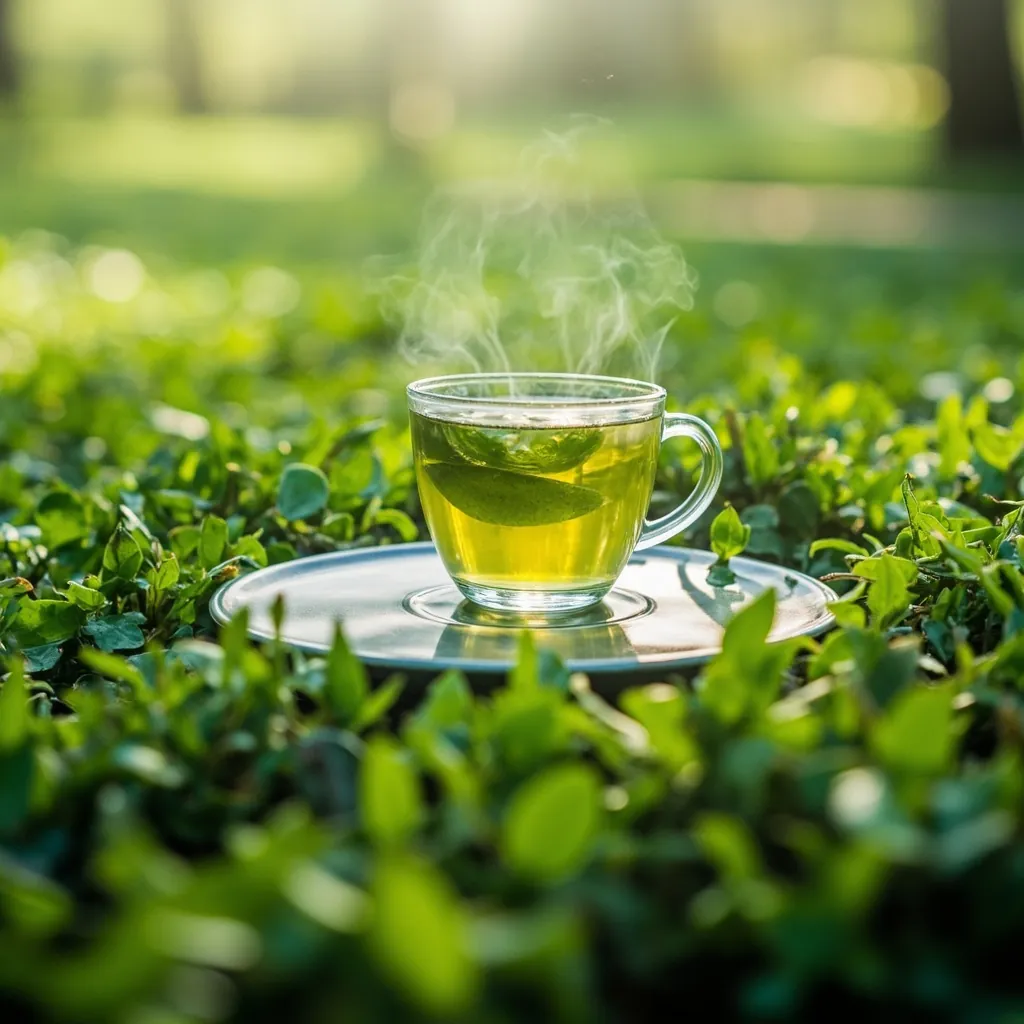
For the glass method, which I personally find most meditative, use about 3-4 grams of tea per 150ml of water. The traditional approach is to add the dry leaves first, then pour just enough room-temperature or lukewarm water to cover the leaves. Watch them slowly unfurl and begin to sink — this is a contemplative moment, watching the compressed leaves come back to life. Only then do you add the hot water — ideally filtered, with a temperature between 75-80°C (165-175°F). Lower than you might expect for a green tea, and that’s intentional. Too-hot water bruises the delicate leaves and brings out bitterness rather than sweetness. This restraint in water temperature is one of the secrets to Longjing’s best expression.
The first infusion will be pale gold, almost chartreuse, with a light body and floral aroma. Drink it slowly. The second infusion, made with the same leaf and fresh hot water, is typically where Longjing shows its depth — more body, more of that toasted chestnut character, a pleasant warmth that settles in your chest. You can get three to four good infusions from quality Longjing, each one subtly different from the last. The final infusions often reveal a honeyed sweetness that wasn’t apparent in earlier rounds.
If you prefer the Gaiwan or small teapot approach (Gongfu style), use more leaf — around 5-7 grams — and multiple short infusions of 15-30 seconds each. This concentrates the flavors and lets you experience how the tea evolves cup after cup. The Gongfu method reveals Longjing’s complexity more quickly but requires more tea and attention per session.
One thing I always tell people new to Longjing: don’t be surprised if your first cup seems almost too subtle. This is not a tea that assaults your senses. It’s a slow, quiet tea that rewards patience and attention. Give it time, give it attention, and it will open up in ways that bolder teas simply cannot. If you’re used to strong black tea or even robust oolongs, Longjing’s delicacy can initially seem disappointing. Persist. The rewards are real.
Longjing in Chinese Culture and Daily Life
Longjing has a place in Chinese life that extends far beyond the teacup. It is the tea served at state functions, the gift exchanged between business partners, the first offering to a guest in a Hangzhou home. During the Qingming harvest season, entire sections of Hangzhou’s hillsides are covered with bamboo mats where leaves are spread to wither — a seasonal transformation that draws visitors who come specifically to witness the harvest and taste the freshest possible Longjing. The sight of those green leaves carpeting the hillsides, fragrant with the scent of early spring, is one of those images that stays with you.
Beyond its cultural cachet, Longjing plays a surprisingly prominent role in Chinese cuisine. Longjing虾仁 (Longjing shrimp) is a famous Hangzhou dish where fresh river shrimp are quickly wok-fried with Longjing tea leaves, infusing the dish with a subtle tea aroma that no other ingredient can replicate. The combination is elegant in its simplicity — the sweetness of the shrimp, the toasted aroma of the tea, a few stems of chives, perhaps a touch of Shaoxing wine. It tastes like spring on the shores of West Lake. There’s also Longjing chicken, Longjing stewed pork, and various other regional preparations that use the tea as both flavoring and aromatic element.
For the tea enthusiast, collecting Longjing is its own rabbit hole. Spring harvest seasons become pilgrimage opportunities, with tea lovers traveling to Hangzhou to buy directly from farmers they know. Some of the older trees in the surrounding hills are reportedly several hundred years old, and their leaves produce a tea that experienced palates insist is categorically different from cultivated bushes. Whether that’s objectively true or a function of the romance of age is a debate worth having over many cups. The price differential is certainly real — ancient tree Longjing commands serious premiums — and the flavor differences, while sometimes subtle, are real enough that most serious drinkers can detect them with practice.