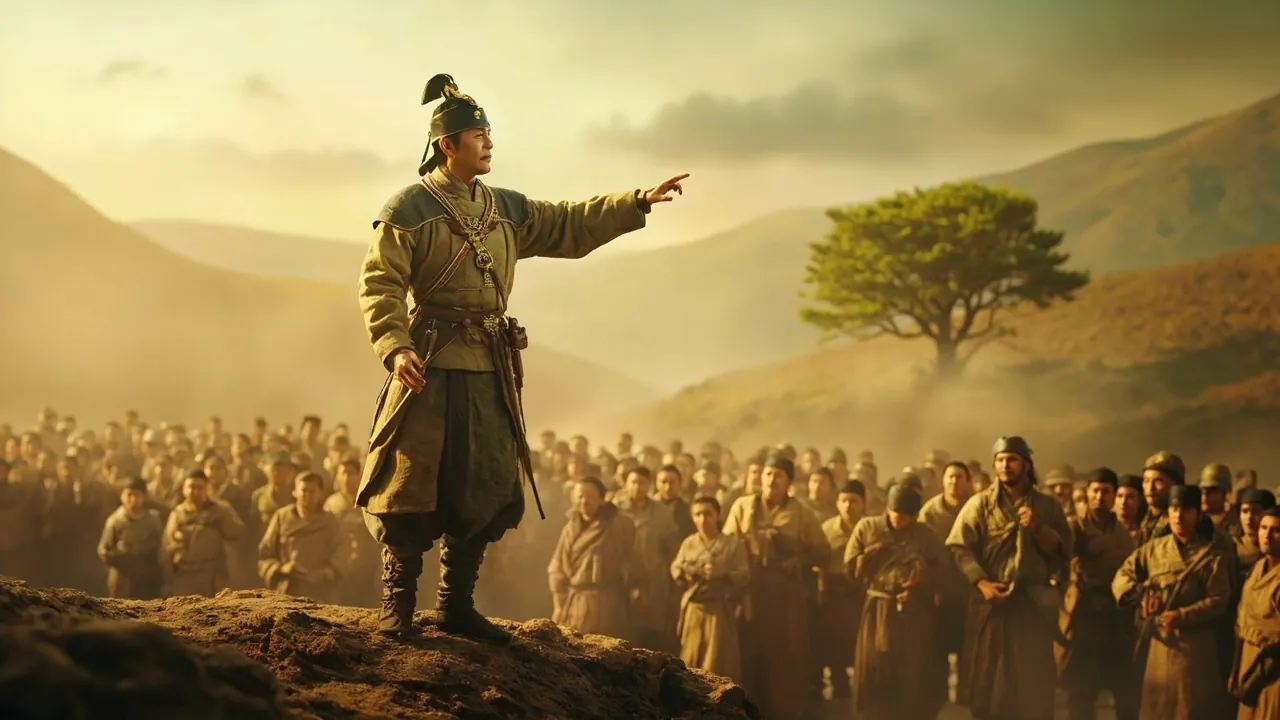
There’s a kind of confidence that comes from being good at something for a long time — the kind that makes you stop learning, stop listening, and start assuming that your way is always the right way. It happens in classrooms, in offices, in armies, and in empires. And when it happens, it creates blind spots that sharper minds can exploit. In the Three Kingdoms period of China, around the year 210 CE, a young general named Lu Meng was about to teach everyone around him — including his own king — a lesson about the danger of dismissing people who are still growing.
The idiom that came from this story is 刮目相看 — guā mù xiāng kàn — which literally means “scrape your eyes and look anew.” In everyday Chinese it means to reassess someone you thought you already understood, to look at them with fresh eyes because they have changed in ways you didn’t expect. The image is visceral: scraping away the film that has built up over your vision so you can see clearly again. It implies that your previous assessment was clouded, that something has changed in the person you’re looking at that deserves a second look.
The story begins with Lu Meng’s reputation. He was a brave soldier and a loyal officer in the kingdom of Wu, serving under the warlord Sun Quan — one of the three great rulers who would eventually divide China. But Lu Meng was not what you would call a scholar. He had joined the military young, probably as a teenager, and had risen through the ranks through raw bravery and loyalty rather than through any study of military theory or classical texts. He could fight. He could lead a charge. But books? Strategy? The kind of intellectual preparation that produced legendary strategists like Zhuge Liang of Shu? That was not Lu Meng’s world.
The Conversation That Changed Everything
Sun Quan, like all effective leaders, had a habit of trying to improve the people around him. He believed deeply in the power of study and self-cultivation, and he kept urging his officers to read more, to think more, to prepare themselves for larger responsibilities. One day, he turned to Lu Meng and suggested that he start reading military classics — texts like Sun Tzu’s Art of War and the strategies of earlier Chinese military thinkers. Lu Meng’s response was famously blunt: he was a soldier, not a scholar. He had never needed books to fight, and he didn’t see why he should start now.
Sun Quan didn’t push. But he did say something that Lu Meng apparently took to heart, even if it took a while to sink in. He said, and this is a rough paraphrase from historical records: “You say you don’t need to read. But think about what happened to the kingdom of Chu. It had the bravest soldiers in China, but because its leaders neglected learning, it fell to Qin. And the Qin dynasty, for all its strength, collapsed because its rulers were arrogant and unwilling to change. You are capable of more than you think. The question is whether you will push yourself to reach that potential.”
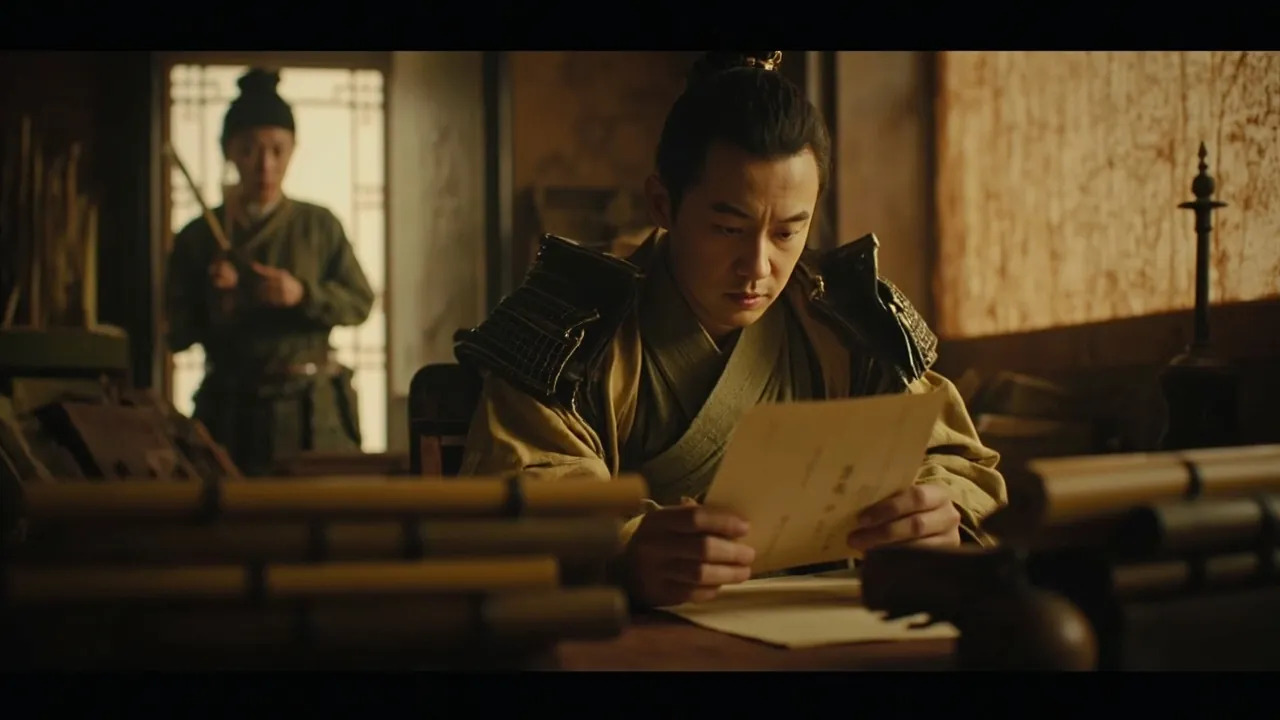
Lu Meng reportedly took this to heart. The transformation didn’t happen overnight — but over the following months and years, he began to read. He started with basic texts and worked his way up to more complex military strategy. He studied maps, analyzed past campaigns, thought deeply about the principles behind successful warfare. And somewhere along the way, the rough soldier who had dismissed books began to develop into something genuinely new: a tactical thinker.
The Test: Facing the strategist Everyone Feared
The opportunity to show this transformation came during a campaign against the kingdom of Shu. Zhuge Liang — the legendary “Crouching Dragon” and perhaps the most celebrated military mind of the entire Three Kingdoms era — was serving as Shu’s chief strategist under Liu Bei. Zhou Yu, the great general of Wu, had died by this point, and leadership of Wu’s military had passed to others. When conflict erupted between Wu and Shu, Lu Meng was given a command position.
The other Wu generals were nervous. Zhuge Liang’s reputation was enormous. He had never lost a campaign. He had outmaneuvered Zhou Yu at Red Cliffs, out-thought every opponent who faced him, and was generally considered almost superhuman in his strategic acuity. Wu’s generals expected the worst.
Lu Meng studied the situation and came up with a plan. It was, by all accounts, a genuinely clever approach — one that exploited weaknesses in Shu’s position that other generals had missed. He presented it to Sun Quan, who was astonished. This was not the Lu Meng who had once dismissed books with a wave of his hand. This was someone who had clearly internalized military principles and could apply them creatively to real situations. Sun Quan approved the plan, and Lu Meng led the Wu forces to victory.
The Idiom Is Born:刮目相看
When the campaign was over and Lu Meng had proven himself against an opponent everyone else had feared, Sun Quan reportedly looked at his general and said something to the effect of: “刮目相看.” Look at this man with scraped-clean eyes. You would not recognize him from the person he used to be. His military skill has reached a level that deserves new respect.
The phrase caught on as a way to describe exactly this kind of transformation — the person you dismissed as incapable or unremarkable, who then shows you something completely different. It’s used today in Chinese in exactly the way it was used then: as a reminder that people can change, grow, and surprise you if you give them the space and encouragement to do so.
What Made Sun Quan Different as a Leader
It’s worth pausing on Sun Quan’s role in this story, because the idiom isn’t just about Lu Meng’s transformation — it’s also about the kind of leadership that made that transformation possible. Sun Quan was unusual among the Three Kingdoms rulers in that he genuinely believed in developing people. He wasn’t just using his officers as tools; he was trying to make them better. His famous encouragement to Lu Meng wasn’t about getting immediate results from a reading assignment. It was about planting a seed and trusting that it would grow.
This approach showed up in other aspects of Sun Quan’s leadership. He was known for being approachable, for listening to advice even from junior officers, for creating an environment where people felt empowered to speak up and suggest ideas. The kingdom of Wu never had the largest army or the most famous strategists, but it consistently punched above its weight because Sun Quan built a culture of growth and learning.
Lu Meng’s story is also a reminder that self-improvement is a process, not an event. He didn’t become a strategic genius overnight. The historical record suggests that his transformation took years — a gradual accumulation of reading, practice, and reflection. The victory against Shu’s forces wasn’t the result of one good idea. It was the result of a sustained commitment to learning that eventually paid off in a big way.
The Modern Meaning: Don’t Write Anyone Off
Today, 刮目相看 shows up in Chinese conversations about all kinds of transformations. A former classmate who seemed average in school but became a successful entrepreneur? 刮目相看. A colleague who seemed unpromising but then delivered an unexpectedly brilliant presentation? 刮目相看. The idiom captures something universal about human potential — the fact that we are all works in progress, and that the person standing in front of you today may be barely recognizable a few years from now if they decide to commit to growth.
In business contexts, it’s often used as a way to acknowledge a competitor’s unexpected success, or to praise someone who has clearly leveled up their skills. In personal contexts, it might be said about a family member who overcame a difficult period and emerged stronger. The common thread is always the same: this person surprised you, and the surprise was a good one.
There’s also a subtler message embedded in the idiom: the importance of keeping your own vision clear. The phrase literally means scraping your eyes — removing the film that has built up over your assumptions. In that sense, 刮目相看 is as much about the observer as the observed. It asks us to stay humble, to remember that our current understanding of any person is always incomplete, and that the next chapter of someone’s story might make the previous ones look like a rough draft.
If this story of transformation interests you, you might also enjoy our article on the Three Kingdoms period and the story of Zhuge Liang’s early years and rise to power.