Ode to the River Goddess: The Eternal Beauty of Luo Shen
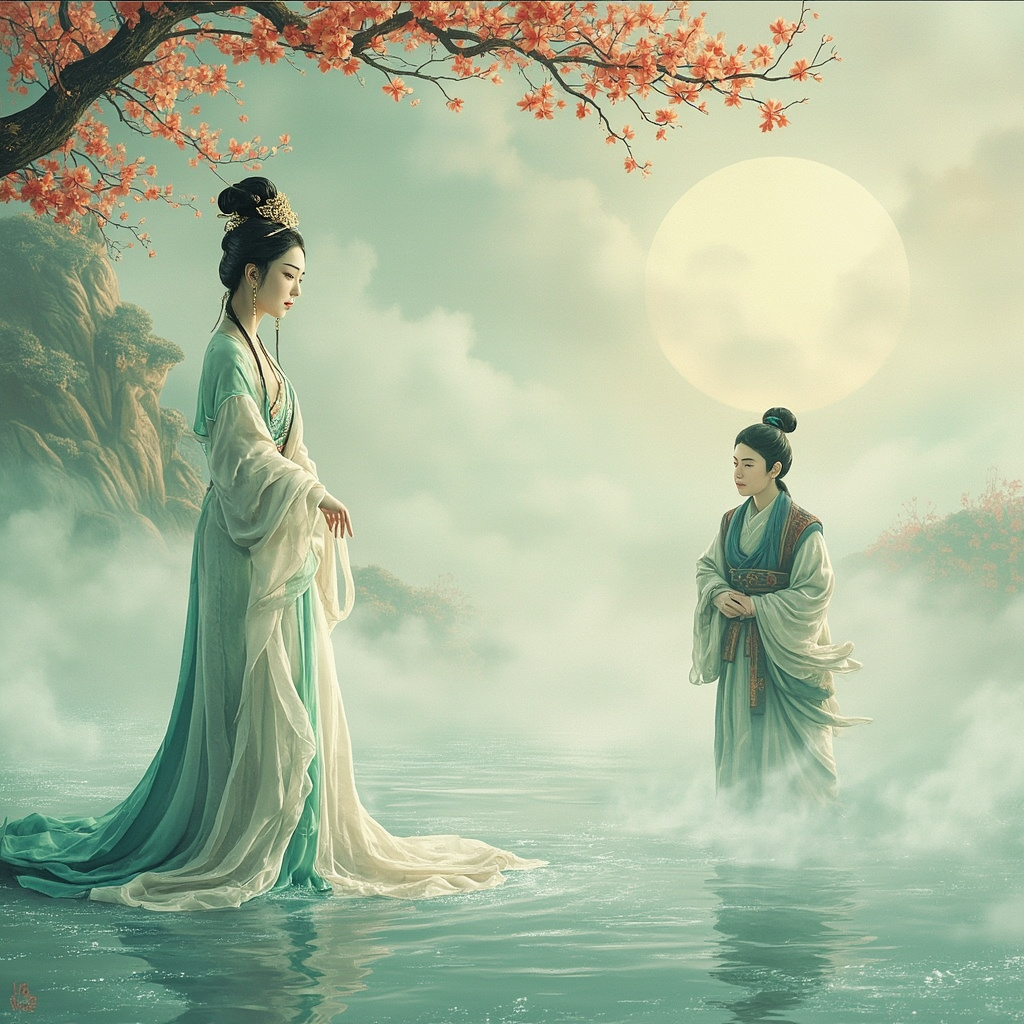
There are love stories throughout human literature that capture the heart’s longing for something beautiful but unreachable, the bittersweet knowledge that some experiences exist beyond our grasp. In the Western tradition, we might think of the myth of Orpheus and Eurydice, or the troubadour tradition of courtly love where the beloved is always distant, always beyond reach. In Chinese literature, one of the most haunting expressions of this theme is a poem called “Ode to the River Goddess,” written nearly two thousand years ago by a poet named Cao Zhi. The goddess at the center of this poem—Luo Shen, the spirit of the Luo River—has become one of the most enduring figures in Chinese cultural imagination, a symbol of transcendent beauty, melancholy longing, and the pain of separation.
The poem is not just a story about a beautiful supernatural being. It is a profound meditation on the nature of beauty itself, on the relationship between the seen and the unseen, between human desire and divine perfection. To understand why “Ode to the River Goddess” has remained beloved for nearly two millennia, we need to understand both the legend of Luo Shen and the particular circumstances that led Cao Zhi to create this masterpiece.