Mencius Mother Moving Thrice: How One Mother’s Sacrifice Shaped China’s Greatest Philosopher
Every great person has a origin story, and for Mencius—one of the most important philosophers in Chinese history—the story begins not with the man himself but with his mother and her extraordinary determination to give her son the best possible chance in life.
I’ve been reading about Mencius lately, and I keep coming back to this story of his mother’s three moves. It’s one of those tales that somehow manages to be both heartwarming and deeply practical, a reminder that the small decisions we make about where we live and what environments we expose ourselves and our children to can shape the course of entire lives.
Mencius himself would become known as the “Second Sage” of Confucianism, second only to Confucius himself in importance. His philosophical writings on human nature, virtue, and government would influence Chinese thought for more than two thousand years. But none of that would have been possible without the sacrifices and wisdom of his mother, Meng.
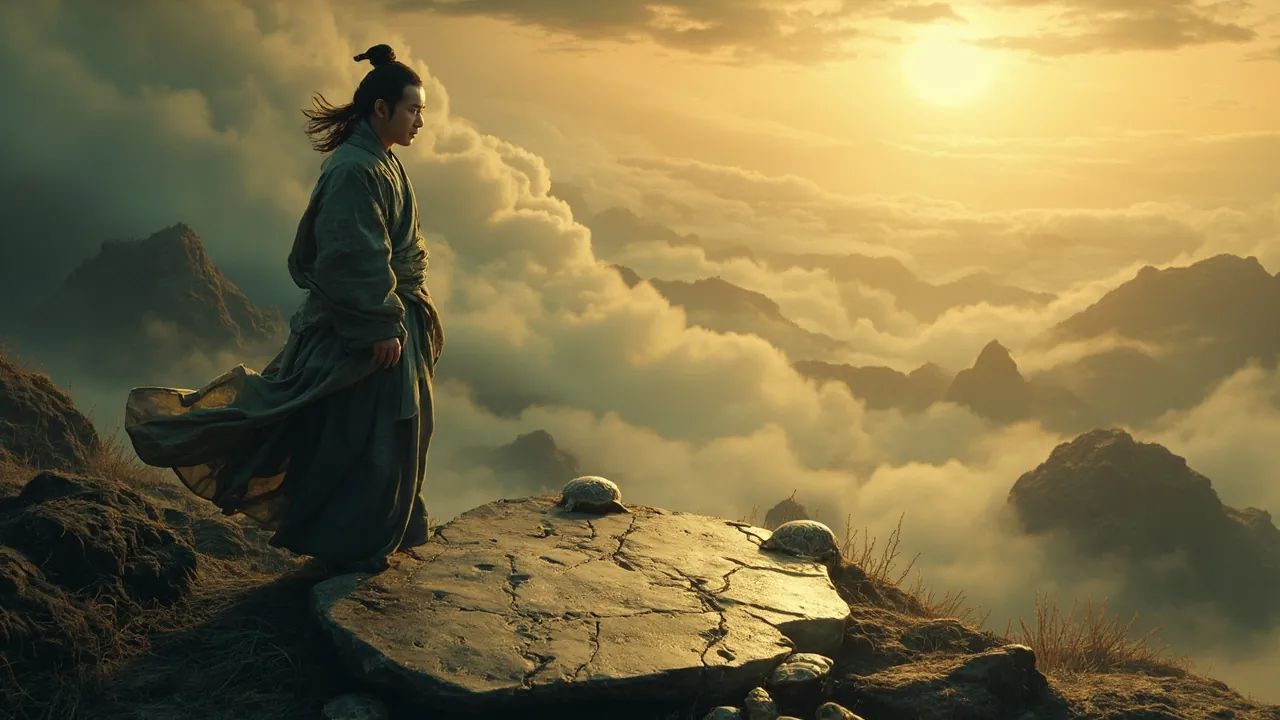
The First Move: Escaping the Graveyard
The story begins in the Zou (邹) state of ancient China, where a young boy named Mengzi—later known as Mencius—was growing up. His father had died when the boy was very young, leaving his mother to raise him alone. In ancient China, this was an enormous challenge. A widow with a young child had limited options and faced considerable hardship.
The first place they lived was near a cemetery. This wasn’t unusual for the time; many poor families couldn’t afford to live anywhere better, and cemeteries often had open spaces that could be used for various purposes. Young Mengzi, like any child, learned by imitating the people around him. He would play games with other children in the cemetery, and he began to pick up behaviors and language that reflected his surroundings—things like mimicking funeral rites and engaging in the kind of dramatic play that children around cemeteries often developed.
Mengzi’s mother watched this with growing concern. She recognized that her son was absorbing the culture of his environment, and she didn’t like what she saw. Children growing up around funerals and graves would naturally develop certain patterns of thought and behavior—morbid interests, perhaps, or a casual attitude toward death and ritual. This wasn’t the environment she wanted for her son’s character development.
So she made a difficult decision: they would move. This meant leaving whatever community they had established, whatever support systems were in place, and starting over somewhere new. For a widow with limited resources, this was no small sacrifice. But Mengzi’s mother understood that the environment shapes the person, and she was willing to do what was necessary to give her son a better foundation for life.
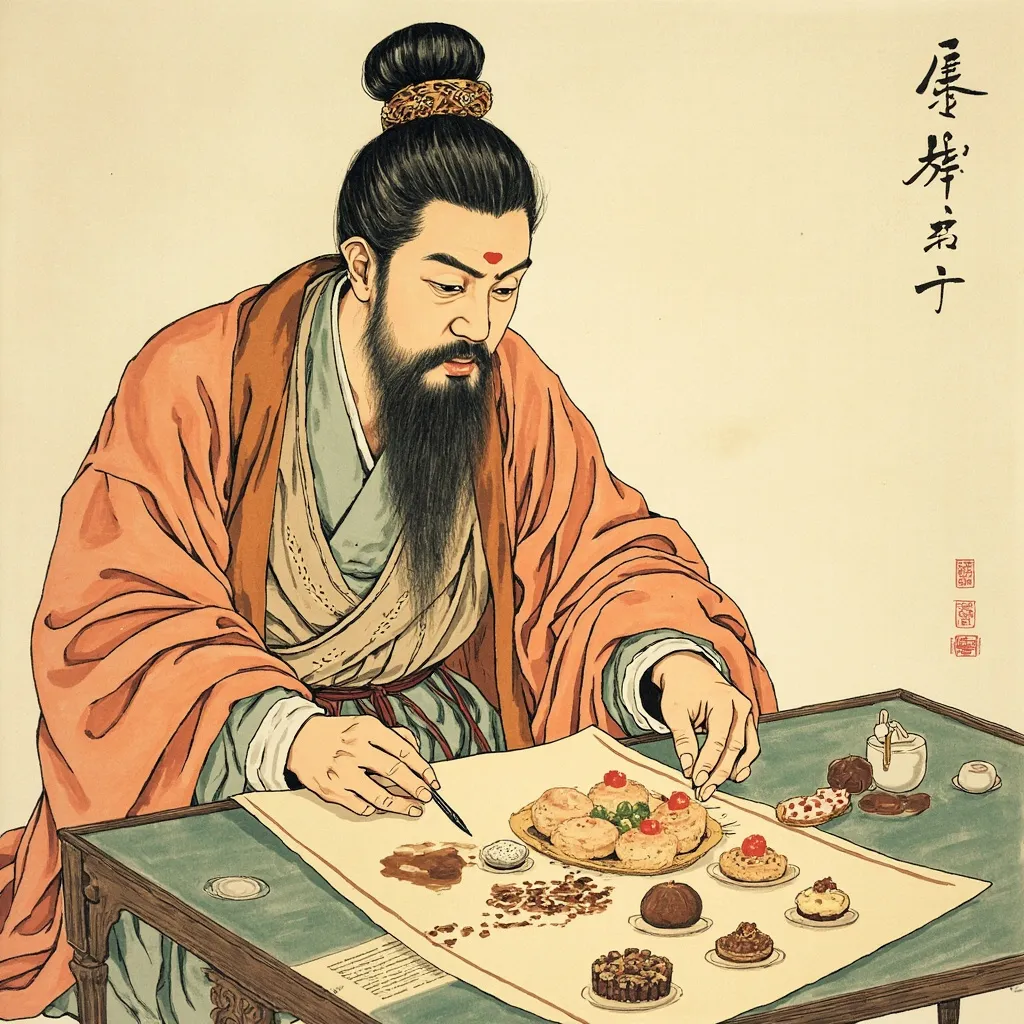
The Second Move: The Market and Its Merchants
The second location they found was near a market—a bustling commercial district where merchants and craftspeople conducted their business. This was a significant improvement over the cemetery in terms of the energy and activity of the neighborhood. Markets are full of life, commerce, and the kind of social interaction that can broaden a child’s horizons.
However, as Mengzi’s mother observed her son, she noticed a new set of behaviors emerging. The market environment taught its own lessons, and not all of them were what she wanted for her child. Young Mengzi began mimicking the calls and behaviors of merchants, playing games about buying and selling, and developing what we might call a commercial mindset—focused on profit, negotiation, and the transactional aspects of human interaction.
There’s nothing inherently wrong with these values, of course—markets are essential to society, and commerce has its own virtues. But Mengzi’s mother had larger ambitions for her son. She wanted him to develop intellectual and moral depth, not just commercial savvy. She wanted him to be someone who would contribute to society in ways that transcended mere profit-seeking.
Once again, she decided they needed to move. The family would have to pack up their few belongings and start over, this time in search of an environment that would foster the kind of character development she envisioned. This second move demonstrates something important about Mengzi’s mother: she wasn’t just looking for any improvement, she was looking for the right environment for her specific child. Different environments suit different purposes, and she understood that what was needed now was something different from both the cemetery and the market.
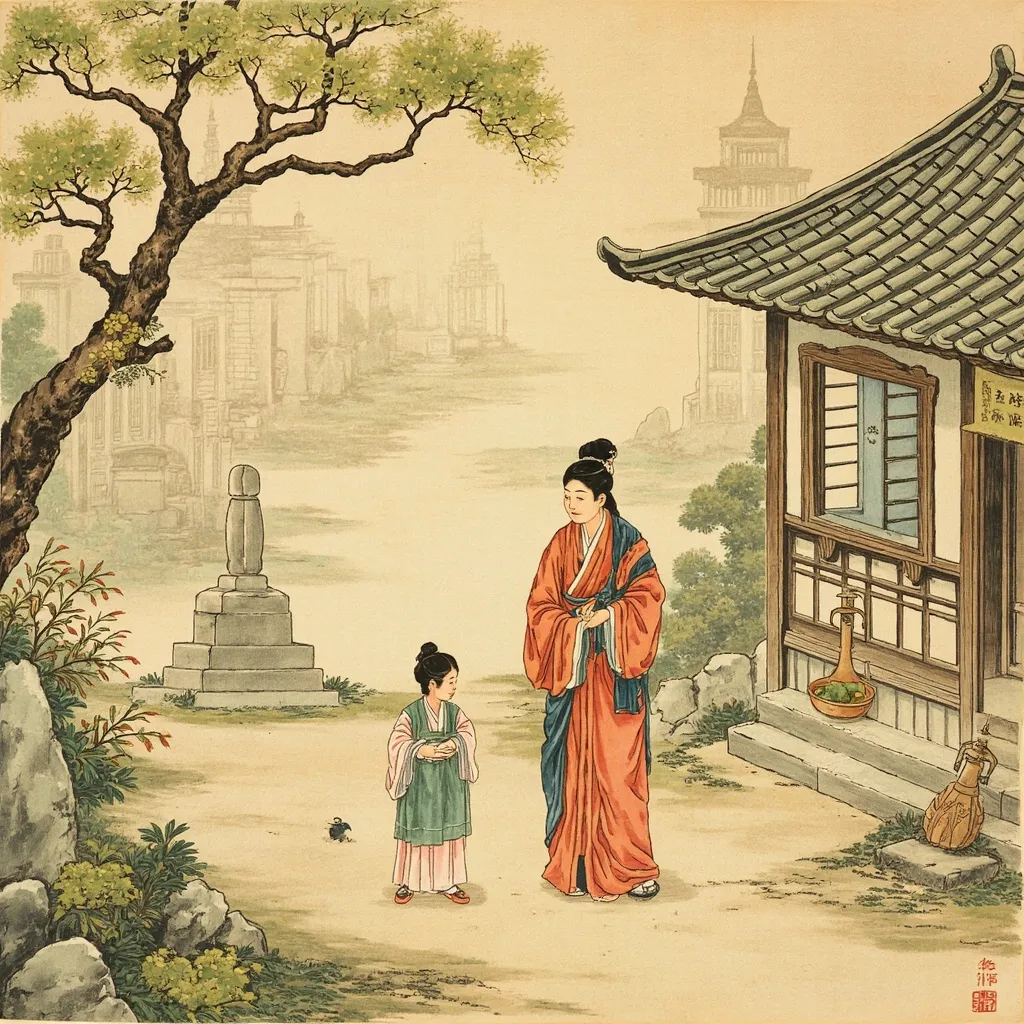
The Third Move: The Academy District
The third and final location they found was near a school—or more precisely, near an academic community where scholars and students gathered to study and discuss ideas. In ancient China, this would have been a neighborhood of considerable intellectual activity. People spending their days engaged in study, debate, and the cultivation of virtue. The air itself probably felt different there.
This time, the results were exactly what Mengzi’s mother had been hoping for. Young Mengzi began to absorb the culture of learning and moral development that surrounded him. He played games that involved scholarly discussion and ritual observance. He imitated the respectful behavior and intellectual curiosity that characterized the academic community. Most importantly, he began to develop the foundation of character and intellect that would eventually make him one of the greatest philosophers in Chinese history.
The story doesn’t end with the move, of course. Mengzi went on to become the student of a Confucian scholar and eventually developed his own philosophical system that would expand and enrich Confucian thought. He traveled from court to court, teaching and debating, developing the ideas about human nature being fundamentally good and the importance of cultivating virtue through education and self-reflection that would make him immortal in the history of philosophy.
But none of this would have been possible without the环境的塑造—the shaping power of environment—that his mother had recognized and acted upon. She understood that her son was a product of his surroundings, and she was determined to give him surroundings that would bring out his best qualities.
The Deeper Philosophy: Why Environment Matters So Much
Let’s step back from the specific details of the story and think about what it reveals about human development. The principle at work here is one that has been confirmed by modern psychology and educational research: environment profoundly shapes behavior, character, and capability.
We know from studies of brain development that early experiences literally shape the physical structure of the brain. Neural connections that are used frequently become stronger, while those that aren’t used fade away. This means that the environments children grow up in don’t just influence their temporary behavior—they actually alter the fundamental architecture of their minds.
This is what Mengzi’s mother intuitively understood. She knew that her son was absorbing lessons from everything around him, whether she liked those lessons or not. The cemetery taught its lessons about death and ritual. The market taught its lessons about commerce and transaction. The academic community taught its lessons about learning, virtue, and intellectual growth. Each environment was a teacher, and each was shaping her son in different ways.
For modern parents, this insight remains deeply relevant. We often think about education as something that happens in schools, but the truth is that children are constantly being educated by their environments—by the people they interact with, the media they consume, the neighborhoods they live in, and the cultural norms that surround them. Being intentional about environment is one of the most powerful tools parents have for shaping their children’s futures.
Lessons for Modern Education
There’s a reason this story has remained popular in Chinese culture for over two thousand years. It contains wisdom that transcends its original context and remains applicable to contemporary challenges in education and child development.
First, the story reminds us that education is not just about formal schooling. While schools matter enormously, children are learning all the time from their total environment. The message we send through our communities, our media, our social interactions—all of these teach lessons that may be more powerful than anything that happens in a classroom.
Second, the story suggests that different environments serve different purposes. The cemetery wasn’t a bad environment for all purposes—it’s just that Mengzi’s mother wanted something different for her son. We don’t always need to find the “best” environment; we need to find the right environment for our specific goals and values.
Third, the story illustrates the importance of being willing to make sacrifices for education. Mengzi’s mother gave up stability, community, and resources to move her family multiple times. She understood that some investments are worth making even when they’re costly, and that the long-term benefits of proper development far outweigh short-term inconveniences.
For parents today, this might mean making difficult decisions about where to live, what schools to choose, what activities to prioritize, and what social circles to engage with. These aren’t easy choices, and there’s no single right answer for everyone. But the principle of being intentional about environment—of recognizing that where you live and who you surround yourself with matters enormously—is as true today as it was in Mencius’s time.
The Symbolism of the Three Moves
In Chinese culture, the number three often carries symbolic significance, representing completion or the multiple aspects of a journey. Mencius’s mother’s three moves are sometimes interpreted as representing three stages of education or three types of environment that shape human character.
The first environment—the cemetery—represents exposure to death, ritual, and perhaps a certain solemnity that can either be constructive or destructive depending on how it’s channeled. The second environment—the market—represents engagement with the material world, commerce, and practical affairs. The third environment—the academy—represents the life of the mind, moral development, and the pursuit of wisdom.
The progression from cemetery to market to academy can also be seen as a metaphor for the development of civilization itself, or for the development of an individual from childhood through adolescence to adulthood. We all start in certain environments and move through others as our needs and aspirations evolve.
What’s particularly striking about this interpretation is that it suggests there was nothing wrong with the first two environments in absolute terms. Markets are essential to civilization, and a proper understanding of death and ritual is part of a complete education. The problem was that these environments alone weren’t sufficient for the kind of development that Mengzi’s mother wanted for her son. She wasn’t saying that commercial or funeral cultures were bad; she was saying that they weren’t right for her specific child’s needs at that specific time.
Mencius’s Philosophy: The Fruit of Good Upbringing
It’s worth understanding a bit about what Mencius actually taught, because his philosophy can be seen as an extension of the environmental awareness that shaped his childhood. Mencius believed that human nature was fundamentally good—that all people had the capacity for virtue and that this capacity could be developed through proper education and cultivation.
This optimistic view of human nature stands in contrast to some other philosophical traditions that viewed humans as fundamentally selfish or needing external control. For Mencius, the key to moral development was creating the right conditions—environmental and otherwise—for the natural goodness of human nature to flourish. This is essentially what his mother had done for him physically; Mencius would spend his life articulating a philosophy that described how this same principle could be applied more broadly to individuals and societies.
One of Mencius’s most famous analogies was about the cultivation of beans or other crops. He argued that just as plants grow when properly tended and wither when neglected, so too do human virtues develop or fail to develop based on their environment and cultivation. This agricultural metaphor clearly reflects his own experience: he had been planted in good soil (the academic community) and had flourished as a result.
Modern Interpretations and Applications
Contemporary educators and psychologists have found much to appreciate in the Mencius mother story. While we might phrase the insights in different language, the core wisdom remains relevant.
Consider the modern debate about neighborhood effects in education. Research has consistently shown that where children grow up has enormous impacts on their educational outcomes, employment prospects, and life trajectories. This isn’t just about school quality—it’s about the total environment, including peer effects, community norms, exposure to violence or stability, access to cultural institutions, and countless other factors. Mengzi’s mother understood this intuitively, and modern research has confirmed her insight.
Or consider the importance of early childhood environments on brain development. We now know that the first few years of life are critical periods when the brain is particularly receptive to environmental input. The neural connections that form during these periods shape cognitive capacities for life. This is why early intervention programs, quality childcare, and supportive home environments are so important—and why deprivation during these periods can have lasting negative consequences.
The story also speaks to the importance of being observant and responsive to how your child is developing. Mengzi’s mother wasn’t just randomly moving them from place to place; she was carefully watching how her son was changing in each environment and making decisions based on what she observed. Modern parenting benefits from the same approach: watching your child, noticing what’s working and what isn’t, and being willing to make changes when the current environment isn’t serving their needs.
The Lasting Legacy of One Mother’s Wisdom
Mengzi’s mother doesn’t have a famous name in the way her son does, but her impact on Chinese civilization may be greater than she ever imagined. Without her wisdom and sacrifice, there would have been no Mencius as we know him—no philosophical writings that shaped centuries of Chinese thought, no “Second Sage” to carry forward the Confucian tradition, no influence on the development of East Asian civilization more broadly.
This is a powerful reminder that we don’t always know the ultimate impact of our actions. Mengzi’s mother was simply trying to give her son the best possible upbringing; she had no way of knowing that he would become one of the most important philosophers in Chinese history. The changes she made were local and immediate—moving to a new neighborhood, finding a better environment for her child—yet they contributed to outcomes that echoed through millennia.
For parents today, this perspective can be both humbling and motivating. We make daily decisions about our children’s environments without knowing how those decisions will ultimately shape their futures. We can’t predict which exposure will spark a lifelong passion or which environment will bring out our child’s best qualities. All we can do is be as thoughtful and intentional as possible, paying attention to what we observe, and making changes when the current situation isn’t working.
Conclusion: The Environment Is the Message
As I think about the story of Mencius’s mother, I’m reminded of Marshall McLuhan’s famous phrase “the medium is the message.” In the context of this story, we might say “the environment is the message”—meaning that the contexts in which we place ourselves and our children communicate lessons that may be more powerful than any explicit instruction.
The cemetery communicated one set of lessons. The market communicated another. The academy communicated yet another. Each was a kind of teacher, and each shaped the student in ways that explicit teaching could never match.
For us, the environments we choose—whether for ourselves or for our children—are similarly teaching lessons all the time. The question is whether we’re being intentional about what those lessons are. Mencius’s mother was intentional in a way that stands as an example for all time. She saw what was being taught, evaluated whether those lessons aligned with her hopes for her son, and acted decisively when they didn’t.
In a world where so much is outside our control, this is something we can do. We can pay attention to our environments. We can notice what’s being absorbed and what effects it’s having. And we can have the courage to make changes when the environment isn’t serving its purpose.
The story of Mengzi’s mother moving three times is ultimately a story about hope—about the belief that the future can be different from the present, and that our actions can help make that difference happen. It’s a belief that has driven human progress for millennia, and it remains as true and relevant today as it was in ancient China.