Mogao Caves: The Thousand-Year Library Carved into a Cliff at Dunhuang
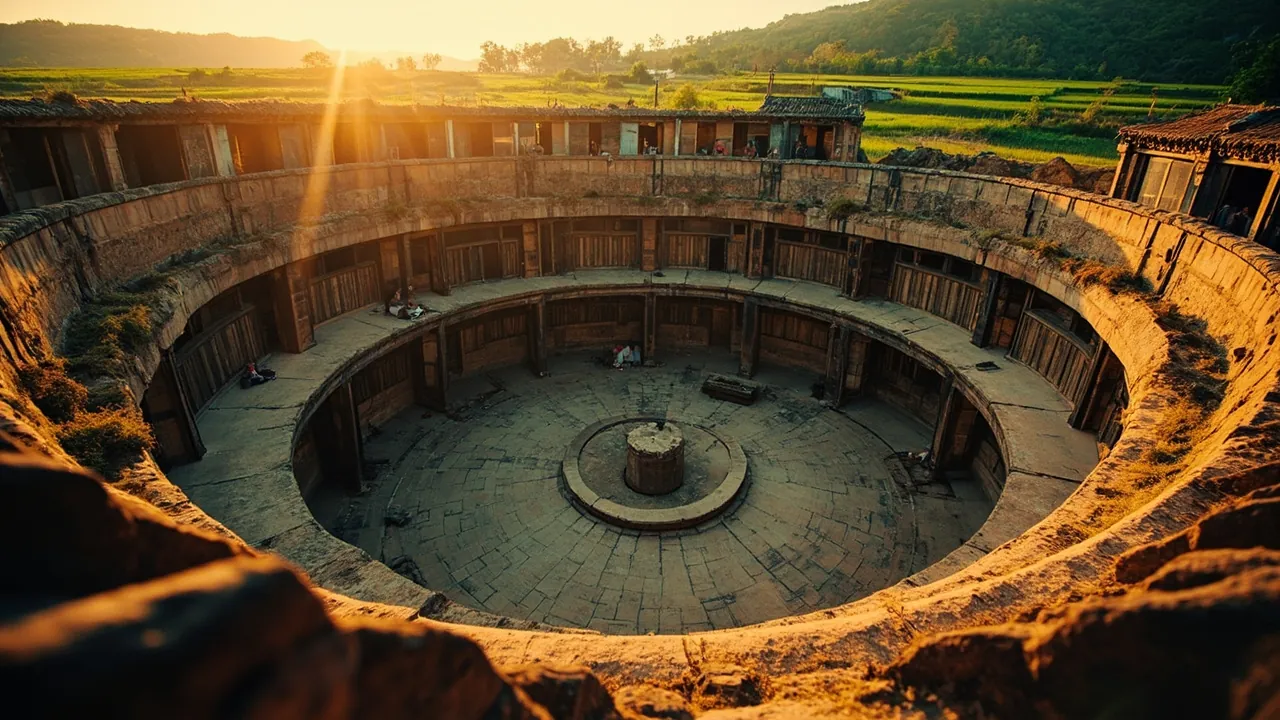
There’s a particular kind of silence at Mogao, in the western Chinese desert near the small town of Dunhuang. The cliffs along the Daquan River are not towering — they’re perhaps 80 feet of pale, layered sandstone, gently weathered — but they’ve been pockmarked with hundreds of small wooden doors at human height, and behind those doors are caves that hold what is almost certainly the densest collection of medieval Buddhist art on earth. You can stand on a wooden balcony in front of Cave 96 with the wind blowing sand across your face and feel, suddenly, what a thousand years looks like.
The Mogao Caves are sometimes called the “Thousand Buddha Grottoes” or, more directly, the “Thousand-Year Library.” The numbers vary depending on who you ask, but the working figure is around 735 caves, most of them Buddhist shrines carved out of the cliff between roughly 366 CE and the early 14th century. Inside them are tens of thousands of painted murals and roughly 2,400 surviving painted clay sculptures, some of them considerably larger than a tall man and small enough to fit in a cabinet. The walls and ceilings tell the entire story of how Buddhism entered China: its path in from Central Asia, its decoration, its stories, its controversies, its eventual transformation in Chinese hands.
The site is on UNESCO’s World Heritage list. The Chinese government treats it as a national cultural treasure. If you visit, you’ll be one of fewer than a million people annually who make the trip out into the Gansu desert to see it — not a large number for a site of this scale, partly because Dunhuang is far from any major Chinese city and partly because the site is intentionally kept uncrowded.
Where the Site Sits and Why It Mattered
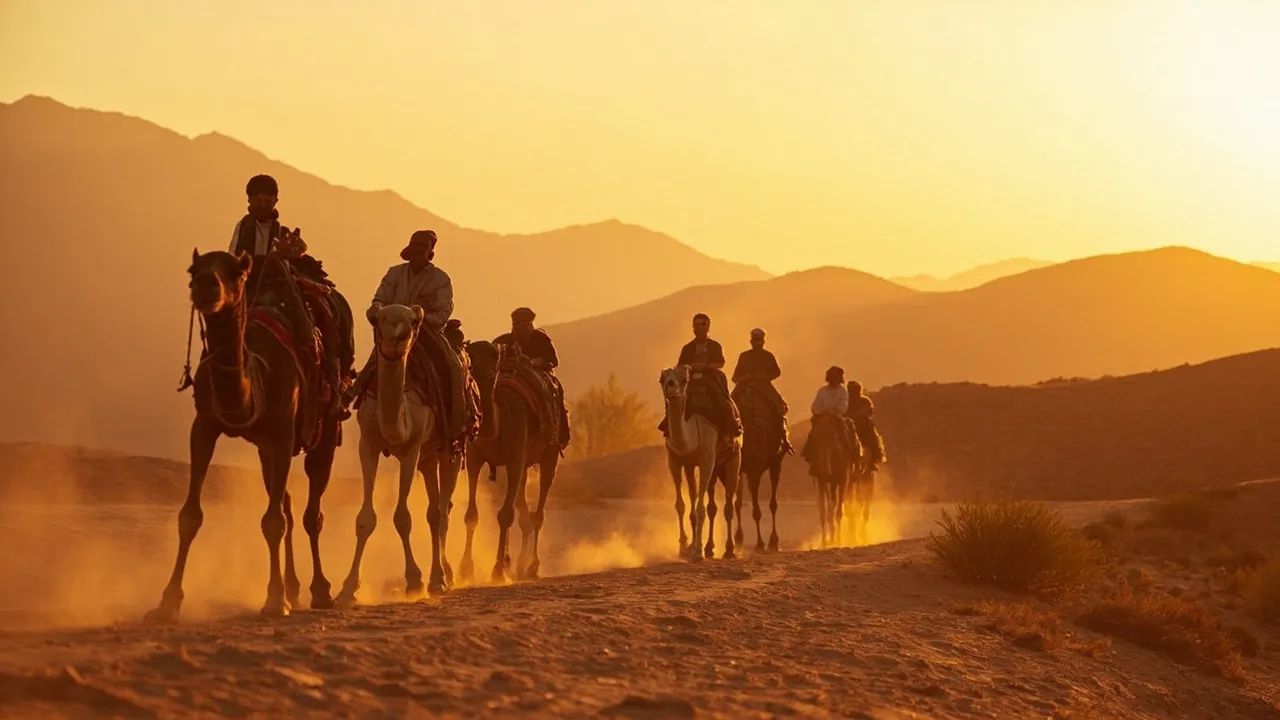
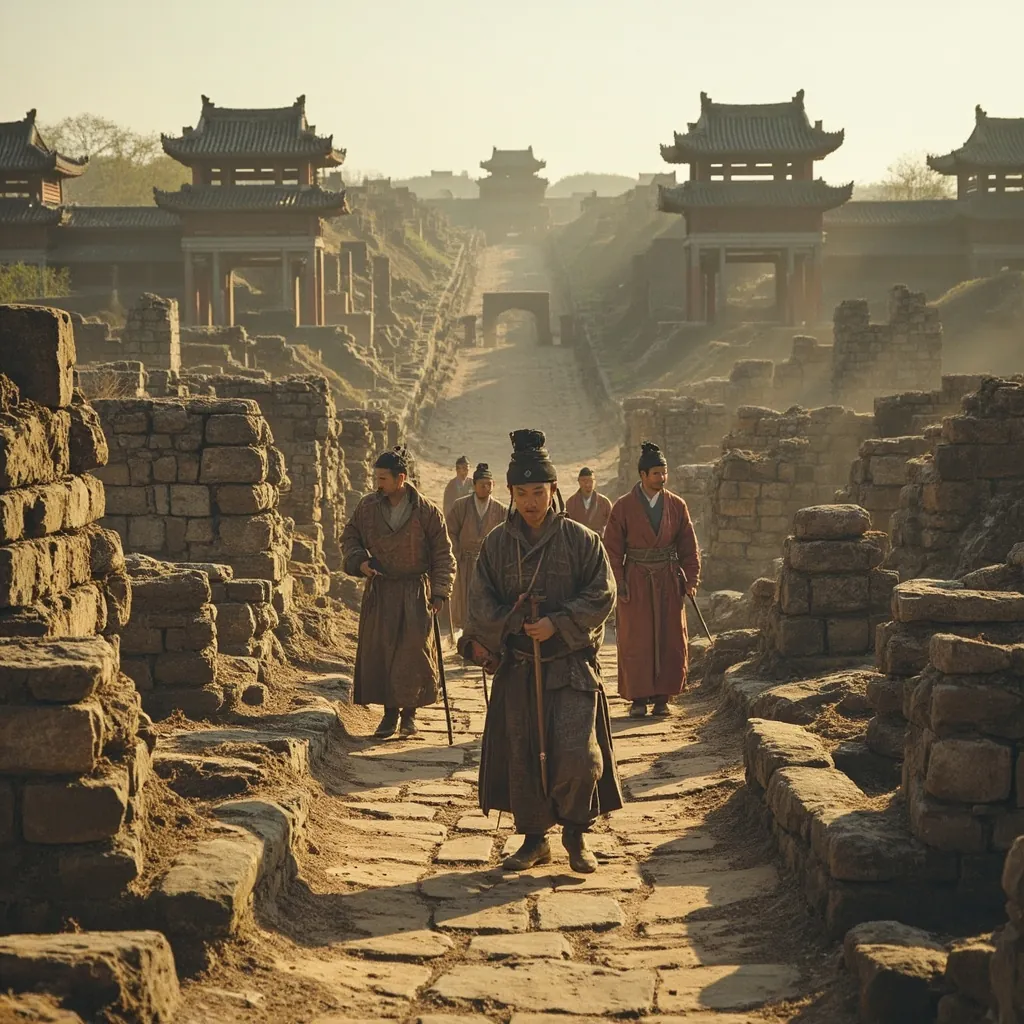
To understand why Mogao exists at all, you need to imagine the Silk Road before there were highways. Dunhuang is on the western edge of what’s now Gansu Province, at the dry mouth of what was once a working oasis at the edge of the Taklamakan Desert. Two thousand years ago, travelers going from China proper toward Central Asia, India, or Persia had to cross enormous stretches of desert, and they did so by hugging a long chain of oases from Dunhuang westward to Kashgar and beyond. Dunhuang was the last oasis on the Chinese side of the journey and the first on the way back. Everyone crossing the desert stopped there.
Politically, the area cycled through empires: Han Chinese, Xiongnu, Tibetans, Uighurs, Tanguts, Mongols, and more. Religiously, it was unusually tolerant at the right time in history. Buddhism came up from China, possibly passing through Dunhuang around the late 200s CE and the early 300s. By the time the first cave was carved, in 366 CE, the religion was already a working force in the area, attracting pilgrims who funded shrines.
The site’s thousand-year run came from this combination of religious patronage and geographic accident. Trade prospered, pilgrims traveled, donors funded caves, monks staffed them, and the maintenance passed between Tibetan, Uighur, and eventually Mongol administrators. Over the centuries, the cliff face grew into a kind of focus-grouped encyclopedia of how Buddhism was understood at every historical moment. Some caves are simple cells with a small image of the Buddha and a single donor inscription. Others are enormous vaulted halls with painted ceilings and dozens of narrative scenes.
The First Cave, and How the Project Grew
According to the oldest surviving Chinese records of the site, two monks in 366 CE came across a Buddhist meditation site at this cliff and decided to carve the first proper sanctuary into it. (The legend says a monk saw a vision of golden light, but the historical record is blessedly less poetic.) It wasn’t a grand proclamation. It was a small cave, with a single carved Buddha and a couple of painted donors.
What followed was, in retrospect, unusual. Over the next four centuries or so, every major donor class — nobility, monks, merchants, military governors, ordinary families with modest savings — funded their own caves. The result is less a single imperial project than a thousand overlapping visions, each driven by a particular decade’s theology, taste, and aspirations. That’s why looking at Mogao is so rewarding for art historians, and so humbling for theologians: there are no two caves with the same program. Different donors, different sects, different painters, different centuries.
By the Northern Wei dynasty (386-535) the cliff already hosted a working cave complex with painted images and small sculptures. The Northern Wei images are austere, with thin bodies, lighter colors, and a strong Central Asian influence — long-nosed Buddhas, certain iconographic details that look Persian or Sogdian.
By the Tang dynasty (618-907) the project had become enormous. Tang-era caves are the most artistically famous: large central Buddhas, broad and corpulent, with confident painted figures, expressive scene composition, and dense narrative panels telling stories of the Buddha’s life and parables. This is also when the patron pool shifted. The Tang had a richer class structure and a more mobile population, and more individual families could afford to fund their own private devotional caves, which often have names and inscriptions identifying the donors. Some of these inscriptions are heart-grabbing: a small family cave, the inscription “Funded by local monk Huijian in memory of his parents, for the repose of their souls,” and the painted walls showing what looks like a slightly secular market scene.
After the Tang, the project slowed but didn’t stop. Song dynasty (960-1279) and Yuan dynasty (1271-1368) caves are less numerous but remain vivid, often showing a stronger Chinese-painter style rather than the Indian-influenced Tang style. By the late Yuan, the desert caravans slowed under the breakup of trade routes, and the final major patron wave ended around the 13th century. The caves were sealed, many of them, and used mainly as quiet meditation sites by monks passing through.
For several hundred years, the caves sat largely silent in the desert, known only to local shepherds and a few wandering monks. Then came the Library Cave.
The Library Cave: When a Wall Opened Onto the Ancient World
In 1900, a Daoist monk named Wang Yuanlu was clearing sand from a corridor in Cave 16 when he pried open what he assumed was another empty section of cliff. Behind the partition was a small chamber stacked to the ceiling with bundles of paper scrolls.
The Library Cave (Cave 17) was sealed on June 25, 1006 CE — we know the exact date because one of the first documents in the sealed stack is a votive offering list from a Buddhist ceremony that day. It was a deliberate act: late-Tang or early-Song monks, facing chaos and invasion in the area, gathered their sacred and secular texts and shut them away for safekeeping. They didn’t come back. We don’t know why — the historical record is sparse on those years — but somehow the cache sat hidden for nearly 900 years until Wang Yuanlu cracked it open.
The contents of the Library Cave were staggering. There are roughly 50,000-plus manuscripts and printed documents, in multiple languages and on multiple materials: Chinese, Tibetan, Uighur, Khotanese, Sogdian, Sanskrit, and more. The materials range from Buddhist sutras on paper and silk to Confucian and Daoist classics to liturgy, hymns, manuals, pharmacy texts, monastic records, local histories, school primers, calendars, and even secular documents such as tax records and receipts.
Some of the documents predate 1006 CE by many centuries. Among the most famous are a printed version of the Diamond Sutra dated 868 CE — one of the oldest surviving dated printed books in the world, predating Gutenberg by roughly 600 years. Other manuscripts include a small “calendar” decree from the Song court, illustrated scroll paintings, school exercise sheets from the Tang period showing how children learned to write, and a striking set of diagrams of the human body used in breathing and meditation exercises.
Wang Yuanlu eventually realized what he had, and he tried to gain imperial support to protect the cave and its contents. He had some success but also attracted the attention of foreign explorers, and the Library Cave became one of the most consequential acts of looting and dispersal in the modern history of art.
The Dispersal: Stein, Pelliot, and Their Western Successors
In the first decade of the 20th century, three Western expeditions almost wholly emptied the Library Cave, taking most of the major documents away to foreign libraries.
Aurel Stein (Hungarian-British), working for the British Museum and the Government of India, visited Dunhuang in 1907 and 1914. A scholar of Central Asia and a polymath, he had a remarkable ability to befriend local figures and acquire large collections. He traded modest sums and gifts with Wang Yuanlu for thousands of manuscripts and painted objects, which Stein then shipped back to London’s British Library and the National Museum in New Delhi. The collection is now one of the principal treasure of the British Library’s Stein manuscripts.
Paul Pelliot (French), a young sinologist and intrepid traveler, arrived in 1908, two years after Stein, and spent only three weeks at the cave but emerged with a much larger haul — he was a more focused negotiator and he understood the documents’ scholarly value better than Stein initially did. Pelliot’s finds, which number in the thousands of manuscripts and paintings, are now at the Bibliothèque nationale de France in Paris, with companion collections at the Musée Guimet.
Sergei Oldenburg (Russian), of the Russian Academy of Sciences, visited in 1914-15 and took a smaller but significant group of items now held in the Institute of Oriental Manuscripts in St. Petersburg.
Some of the most important paintings from the Library Cave wound up at the British Museum and the Victoria and Albert Museum in London, with others now scattered across Berlin, Stockholm, New York, and beyond. The Chinese government has repeatedly asked for the materials to be returned and has generally been refused, although the British and French institutions have made digital facsimiles widely available.
The dispersal of the Library Cave is one of the defining events of modern Chinese cultural history. It has been criticized as cultural theft, but the modern Chinese preservation stance accepts that the foreign institutions preserved them well and that scholarship in China and abroad has used them in roughly equal share. There’s also the quiet acknowledgment that the White Russian, British, and French expeditions were of their era: Western museums did what they did to Silk Road archaeology, and the Library Cave is one of the most extensively studied collections ever to leave Asia.
What remains in Dunhuang is the Library Cave itself (still there, now empty), and a small collection of manuscripts that were either overlooked or removed too late to be sold. The Dunhuang Academy has worked to make these and the cave art digitally accessible. Today the Digital Dunhuang project offers an extraordinarily high-resolution online walkthrough of most caves.
The Art, and Why It Still Matters
It’s hard to describe what the cave murals actually look like, because the variation from cave to cave is so enormous. But a few themes recur.
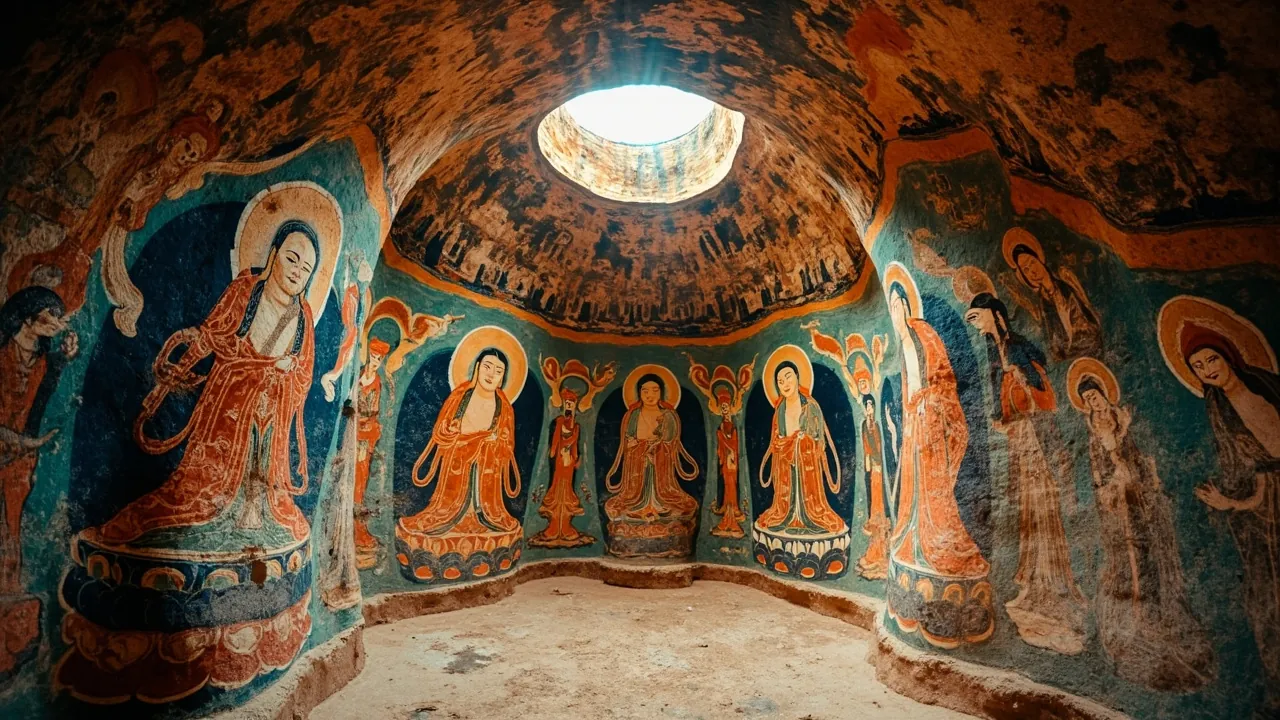
Main Buddha images are often the centerpiece of a cave. A typical setup has a single large seated or standing Buddha, sometimes thirty feet tall, in the middle of the back wall, with smaller attendants, bodhisattvas, and disciples arranged around. The technique is built-up clay layered over a wooden or woven armature, painted with mineral pigments (lapis lazuli blue, malachite green, cinnabar red) and gilded in real gold leaf.
Narrative panels go around the bottoms of walls and up the ceilings. They tell stories: the Buddha’s life, parables, scenes from Buddhist sutras, donor inscriptions with painted portraits of the patrons, depictions of Pure Land paradise, and sometimes startlingly practical images of daily life — markets, weddings, processions, even Chinese imperial court scenes.
Heavenly scenes and Buddhist cosmology fill the ceilings. A typical ceiling might have concentric circles filled with flowers, clouds, lotus motifs, and floating buddhas — sometimes a thousand small buddhas packed into a single cave. There are ceiling designs in Mogao that art historians believe were among the forerunners of the flower-and-bird painting that became a major Chinese tradition centuries later.
Khara-khoto scenes are a small but striking category: images of northern Tibetan-style horsemen, often appearing in later caves showing Mongol-period donors or guardians. These are quite different in style from the Chinese-Persian blend of earlier Tang art and they tell you a lot about how the frontier was changing.
Most preserved murals were repaired multiple times. A single cave can have layers: original Song-era plaster, with a Ming-era overpainting, with a modern conservation repaint. Modern restorers have used minute pigment and aging tests to separate out what is original and what is retouched. The amount of pure original surface that survives is shocking, especially in caves that have been sealed most of the time since they were made.
Seeing Mogao: The Visitors’ Reality
Visiting Mogao is not the same as visiting other Chinese heritage sites. The caves are deliberately tightly controlled. You can’t just walk up to a cliff face and pick a cave; the Dunhuang Academy operates timed tours with a strict cap of visitors per cave, and you must be accompanied by a guide. A standard visit includes roughly 8-10 main caves over two hours, with another 4-5 on a separate ticket if you want a deeper look.
The visit is also, frankly, a bit physically arduous. Dunhuang is hot, dry, and far from major airports; getting there usually means a connection through Lanzhou, Xi’an, or Urumqi, and then a four-hour drive or short flight to Dunhuang. Tours add another day for the Mogao site plus the optional Western Thousand Buddha Caves and the Yulin Caves in Guansu Province.
The reward is enormous. Walking up the wooden stairs at cave level, climbing a small ladder through a low door, and standing in a Tang-era space that’s been locked up for over a thousand years is a very specific kind of art-history experience. Small things matter: the way a particular bodhisattva’s eye curves, the way a donor’s inscription has been re-painted countless times, the way a corridor of narrative panels can be read as a comic strip of late Tang piety.
If you can pair a Mogao visit with a stop at the Dunhuang Museum (a small, accessible museum with some of the better pieces from the Library Cave still in China), you’ll get context for the caves that a single visit alone won’t supply. Photography inside the caves is forbidden — that’s fine; the caves are dusty, dark, and small, and the digital access is the better way to study the details. Outside, the wooden facade and the eastern cliff-face look all the more impressive when you’ve just been inside.
Why the Caves Still Matter
A reasonable question for an American reader is: why does this site, in this corner of a desert I will probably never reach, matter to me? The answer runs through three threads.
First, the sheer artistry. The Mogao murals and sculptures are not just staggering in scale, they’re a parallel tradition to medieval European cathedrals: the giants of religious art from a major civilization, made by working painters and sculptors who were largely anonymous. Both tell you what a culture most sincerely cared about.
Second, the inscription and writing. The Library Cave’s contents contain the earliest surviving printed book, the everyday paper trail of a Silk Road community, and a thousand traces of how Buddhism entered East Asia and was domesticated. Without Dunhuang, we’d know less about how Chinese culture absorbed South Asian religion and then transformed it.
Third, the preservation problem. Mogao is a fragile thing — the cliff face itself is being slowly buried by drifting sand, painted surfaces are being slowly damaged by humidity fluctuations, and the original pigments are too fragile for any but very limited contact. The Chinese government and the Getty Conservation Institute (a Los Angeles-based American organization) have been partnering on conservation work since the early 1990s, and the lessons from those projects are being applied at cave temples across Asia. The site’s survival is part of a contemporary shared enterprise of stewardship.
There’s something else worth saying: a place like Mogao makes a useful correction to a kind of casual assumption some American readers have about China being either a monolithic-or-modern thing. The Mogao Caves are deeply, complexly Chinese, but they’re also deeply Central Asian, Tibetan, and Indian. Silk Road Dunhuang was a cosmopolitan place where merchants from Persia, monks from India, and Chinese families funded the same temples, side by side. Visiting (or even reading about) Mogao reminds you that Chinese civilization has always been characterized by more varieties than its self-image admits. The caves are lovely; they’re also a reminder that “civilization” is bigger than any one place, and that we should never mistake the fixity of a modern country for the openness of its past.
Recommended Products
- dunhuang-art-book — A high-quality art book reproducing Mogao Cave murals and sculptures with curatorial essays on Tang, Song, and Yuan dynasties of Dunhuang.
- silk-road-history — A history of the Silk Road with extensive sections on Dunhuang as the desert gateway for cross-cultural trade and religion.
- buddhist-statue-replica — A small museum-quality replica of a Mogao Bodhisattva sculpture; a wearable-scale look at the artistic tradition without the trip.
- replica-mural-scroll — A printed scroll reproducing a Mogao cave mural (the popular “flying apsaras” image is widely available) for study or display.
- chinese-painting-supplies — A Chinese painting set with mineral pigments, brushes, and rice paper in the spirit of what the Mogao painters used.