The Monkey King: Sun Wukong – China’s Greatest Mythological Hero
Sun Wukong, the Monkey King, has entertained readers for over 500 years. From his rebellious stand against Heaven to his epic journey across ancient China, this trickster hero represents something many people understand—the desire to break free, find inner strength, and shape one’s own destiny.
Who Is the Monkey King?
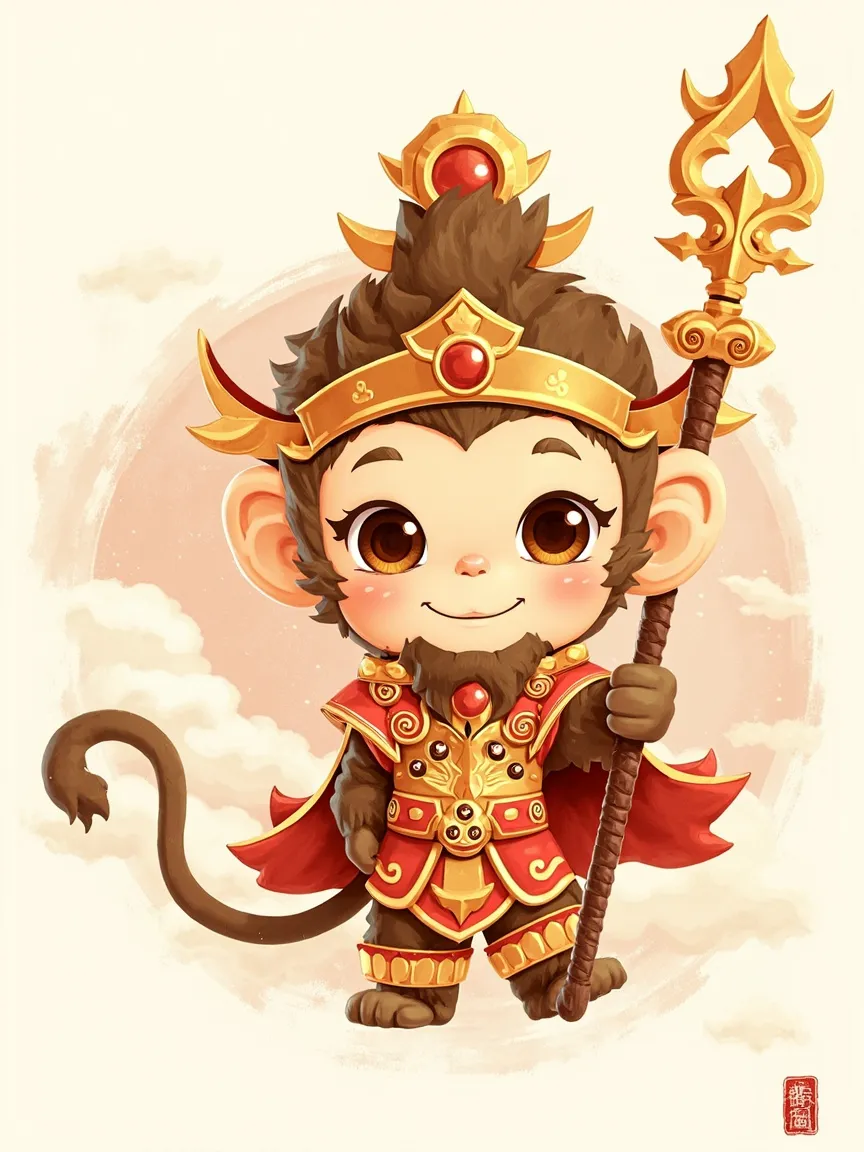
Picture this: a monkey with flaming eyes and a golden body, wearing a golden circlet on his head, holding a magical staff that can shrink or grow with a thought. He’s standing before the gates of Heaven itself, defiant and unafraid, ready to challenge the entire celestial bureaucracy. This is Sun Wukong, the Monkey King—the most beloved mythological hero in Chinese culture and one of the most recognizable characters in world literature.
If you’ve ever watched Dragon Ball, played a video game featuring a mischievous monkey hero, or caught one of the recent Monkey King films on Netflix, you’ve already met Sun Wukong in spirit. His influence stretches far beyond China, shaping anime, movies, and games across the globe. But what’s the real story behind this legendary figure?
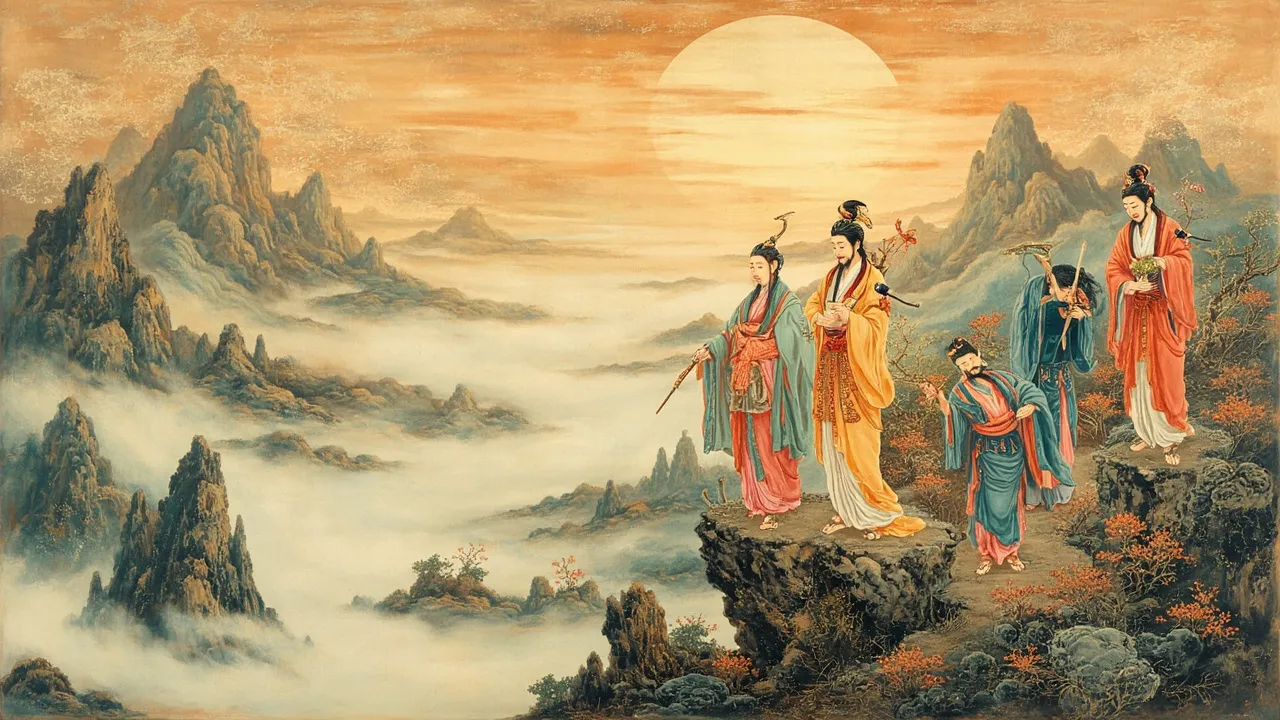
The Monkey King is the central character of Journey to the West (Xi You Ji), one of China’s Four Great Classical Novels, written by Wu Cheng’en in the 16th century. The story follows a Buddhist monk named Tripitaka and his four disciples—Sun Wukong the Monkey, Zhu Bajie the Pig, Sha Wujing the Sand Demon, and the white horse—on their pilgrimage to India to retrieve sacred Buddhist scriptures. It’s an adventure story, a comedy, a spiritual allegory, and an exploration of human nature—all rolled into one.
What makes the Monkey King memorable isn’t just his magical powers or his mischievous personality. It’s the deeper meaning behind his journey. Sun Wukong starts as a rebel, a trickster who refuses to accept any authority—divine or mortal. Through his adventures, he learns discipline, loyalty, and what enlightenment actually means. In this way, his story reflects something many people experience: we all start out wanting to break free, and along the way, we discover what it really means to grow up.
The Origins of Sun Wukong
Birth from a Stone
The story of Sun Wukong begins in extraordinary fashion. According to Chinese mythology, a stone egg sat for eons atop the Mountain of Flowers and Fruit. This wasn’t just any stone—it contained the essence of heaven and earth, absorbing spiritual energy from the sun, moon, and stars. One day, the stone cracked open, and from it emerged a stone monkey.
The Chinese concept of the Five Elements (wood, fire, earth, metal, water) plays a crucial role here. The stone monkey was born from earth, but his nature encompassed all five elements—he was a being of balance, born to defy the ordinary boundaries between mortal and immortal. This elemental connection explains many of his later abilities, including his resistance to fire and his mastery of transformation.
The stone monkey quickly proved he was no ordinary animal. He discovered a tribe of monkeys living near a waterfall and became their king after proving his courage by leaping through the rushing water to find their secret paradise: the Water Curtain Cave. The monkeys named him “Handsome Monkey King” (Mei Hou Wang), and for a time, he lived in blissful ignorance of the wider world.
But Sun Wukong was destined for something greater. When he realized that all creatures—even monkeys—must eventually die, he set out to seek immortality. This quest would take him across mountains and seas, eventually leading him to the greatest teachers in all of creation.
Training Under the Master
Sun Wukong’s journey to find a teacher led him to a remote island, where he stumbled upon the legendary Patriarch Subhodi (Putri Zhenren). Impressed by the monkey’s determination and innate intelligence, the Patriarch agreed to teach him—but only if Sun Wukong was willing to perform humble tasks and follow strict discipline.
For over twenty years, Sun Wukong served his master faithfully, doing chores and waiting patiently while other students learned the more glamorous arts. When the Patriarch finally offered to teach him, Sun Wukong proved to be an extraordinary student. He learned:
The 72 Transformations (Qi Shi Er Bian): The ability to change into 72 different forms, including animals, objects, and even humans. This power would become his most famous ability, allowing him to escape danger, trick enemies, and accomplish seemingly impossible tasks. Each transformation requires focus and intention—the Monkey King cannot simply change form at random; he must understand the essence of what he’s becoming. This mastery of transformation also connects to Taoist concepts of becoming one with nature, of flowing like water between different states of being.
Cloud Somersault (Jin Dou Yun): A magical cloud that carries him 108,000 li (about 54,000 miles) in a single somersault—effectively granting him instant transportation across any distance. The cloud itself, known as “Cloud of the Great Peng” (Da Peng Yun), is no ordinary cloud. It’s said to be spawned from the primordial energies of creation, and only those with sufficient spiritual power can mount it. In the story, Sun Wukong often rides this cloud to scout ahead of his companions or to escape from overwhelmingly powerful enemies.
Body Invulnerability: Techniques to make his body resistant to harm, including resistance to swords, fire, and even some magical attacks. This training came from years of meditation and physical discipline under his master, and represents the Taoist pursuit of physical perfection alongside spiritual enlightenment. However, this invulnerability is not absolute—certain magical weapons and divine powers can still harm him, which creates dramatic tension throughout the story.
The name “Sun Wukong” itself means “Awakened to Emptiness”—a deeply spiritual name that reflects his eventual path toward enlightenment. The name was given to him by his master, suggesting that even in these early chapters, the monkey was destined for something beyond mere mischief.
However, Sun Wukong’s rebellious nature soon got him into trouble. When the Patriarch predicted that his student would cause chaos in Heaven, Sun Wukong was expelled from the island before completing his training. This was the beginning of his legendary rebellion against the celestial order.
The Journey to the West
The Pilgrimage Begins
The full story of Journey to the West begins when the Buddha and the bodhisattva Guanyin seek faithful believers to retrieve sacred Buddhist scriptures from India. They choose Tripitaka (Tang Sanzang), a gentle Buddhist monk from China, as their pilgrim. However, the journey is too dangerous for one man alone.
Guanyin assembles a team of divine protectors, each of whom has been exiled to Earth as punishment for various transgressions:
- Sun Wukong (the Monkey King), who was sealed under a mountain for 500 years after wreaking havoc in Heaven
- Zhu Bajie (Pigsy), a former heavenly general exiled for his贪婪 (greed) and lecherous nature
- Sha Wujing (Sandy), another heavenly exile for his crimes
- White Dragon Horse, the third son of the Dragon King of the Western Sea, who was sentenced to serve as Tripitaka’s mount
Together, this unlikely band of heroes must travel 108,000 li to the Western Paradise (India) and back, facing 81 trials (or 72, depending on the count) along the way. Demons, magical creatures, human villains, and the trials of nature itself stand between them and their goal.
The dynamic between the four disciples forms the heart of the story. Tripitaka is pure of heart but physically helpless; Sun Wukong is powerful but hot-headed; Pigsy is lazy and greedy but ultimately loyal; Sandy is quiet and dependable. Their conflicts and reconciliations create both humor and pathos, making Journey to the West as emotionally engaging as it is adventure-packed.
The Great Monkey’s Powers
If Tripitaka is the soul of the pilgrimage, Sun Wukong is its engine. His extraordinary abilities make him the group’s indispensable protector, even as his fiery temper and pride often create new problems.
The Ruyi Jingu Bang (如意金箍棒), often translated as the “Golden Staff with Willow” or “Compliant Golden Hoop Staff,” is one of the most powerful magical artifacts in Chinese mythology. Its origins are deeply rooted in the cosmic structure of the universe, making it far more than a simple weapon.
Originally, the staff served as the “Ocean Tally” (Hai Ting), a ceremonial instrument used by the Dragon King of the Eastern Sea to measure the depth of the ocean. It could be adjusted to any length or thickness, making it perfect for exploring the ocean’s depths. When Sun Wukong visited the Dragon Palace seeking a weapon, the Dragon King offered him various weapons—giant swords, golden halberds, massive axes—but none suited the Monkey King’s immense strength and fighting style. The weapons either broke under his grip or were too cumbersome to wield effectively.
Finally, the Dragon King’s daughter suggested offering the unassuming iron pillar from the ocean floor. At first, Sun Wukong was disappointed by its plain appearance—it looked like nothing more than an ordinary piece of metal. But when he learned it could change its size and weight at will, his eyes lit up. He made it shrink to the size of a needle and tucked it behind his ear—a place it would remain until needed.
In its smallest form, the Ruyi Jingu Bang can fit behind the Monkey King’s ear; in its largest form, it can reach from the bottom of the ocean to the heavens, its tip piercing the clouds. When enlarged, it weighs an incredible 13,500 jin (about 13,500 pounds or 6,125 kilograms), yet Sun Wukong wields it as easily as a baton. The staff can also multiply into thousands of identical copies, allowing the Monkey King to overwhelm his enemies with a forest of golden weapons—a technique he uses in many battles throughout the journey.
The staff’s name carries deep symbolic meaning. “Ruyi” means “as you wish” or “compliant,” referring to its ability to change size and form at the wielder’s will. The “Jingu Bang” connects it to the golden hoop—a circle without end, representing the cyclical nature of time and the eternal struggle between order and chaos.
72 Transformations
Beyond his weapon, Sun Wukong’s mastery of the 72 Transformations makes him nearly unstoppable. He can transform into:
- Animals (birds, fish, insects, tigers, dragons)
- Objects (trees, mountains, coins, weapons)
- Humans (warriors, old women, children, even deities)
- Even concepts (wind, fire, sounds)
This power serves him in countless ways: spying on enemies, escaping from traps, gaining access to forbidden places, and fighting battles with unconventional tactics. The key limitation is that he cannot transform his tail—which becomes a telltale weakness exploited by his enemies.
Cloud Somersault
The Cloud Somersault (Jin Dou Yun) allows Sun Wukong to travel instantaneously across any distance. A single somersault can carry him 108,000 li—more than four times the Earth’s circumference. This ability makes him the perfect scout and messenger, able to gather information or deliver warnings across vast distances in moments.
Immortality and Resistance
Through his training and later adventures, Sun Wukong gained various forms of immortality or near-invulnerability:
- He ate the peaches of immortality at the Heavenly Peach Banquet
- He drank the elixir of immortality prepared by the Royal Alchemist
- His body was forged through magical training to resist many forms of harm
While not absolutely immortal (the Buddhist scriptures he helps retrieve are partly meant to save Tripitaka from his inevitable death), Sun Wukong is extraordinarily difficult to kill—a fact that drives much of the humor and drama in the story, as demons constantly try to capture and eat the monk in hopes of gaining immortality themselves.
Symbolism and Meaning
The Hero as Rebel
At its core, the story of Sun Wukong is a profound allegory about rebellion and enlightenment—a theme that resonates across cultures and generations. The Monkey King begins as the ultimate rebel—a creature who refuses to accept any authority over him. He demands immortality, challenges the celestial court, and declares himself equal to the gods. His rebellion against Heaven is one of the most famous sequences in all of Chinese literature, depicted in countless paintings, operas, and films.
The story of Sun Wukong’s rebellion is a tale of cosmic proportions. When the Jade Emperor—the supreme deity of the Taoist heavens—offers Sun Wukong a minor position in the celestial bureaucracy, the Monkey King is insulted. He sees through the political game: the heavens are trying to contain him, to tame his wild spirit with the promise of comfort and status. Instead of accepting, Sun Wukong returns to his mountain kingdom and declares himself “Great Sage, Equal to Heaven” (Qi Tian Da Sheng)—a title that challenges the very hierarchy of the cosmos.
This challenge to divine authority sends shockwaves through the heavenly court. The Jade Emperor dispatches armies of celestial warriors to capture the rebel monkey, but Sun Wukong defeats them all. He battles the Four Heavenly Kings, the Twenty-Eight Constellations, the Generals of the Divine Wind and Fire, and ultimately faces the Buddha himself. The rebellion reaches its zenith when Sun Wukong crowns himself equal to Heaven—a declaration of defiance that shakes the foundations of the universe.
This hubris—excessive pride—is what leads to his eventual defeat and punishment. The Buddha makes a wager with Sun Wukong: if the monkey can leap out of the Buddha’s palm, the heavens will belong to him. Confident in his cloud somersault, Sun Wukong travels far beyond what seems possible, marking the Five Pillars of the East as proof of his journey. But he has only jumped out of the Buddha’s hand—he has never truly escaped the bounds of existence. The Buddha presses down, and the Monkey King is trapped under a mountain for 500 years.
This imprisonment represents a kind of spiritual death—the necessary consequence of unchecked ego and defiance. It mirrors the Buddhist concept of enlightenment itself: the wild, restless mind must be contained before it can find peace. The mountain is not just punishment; it’s a crucible, a place where Sun Wukong’s fiery spirit can cool into wisdom.
Only when Guanyin, the Goddess of Compassion, releases him to serve as protector on the Buddhist pilgrimage does he begin his true transformation. Through the journey, Sun Wukong gradually learns that true strength isn’t about defying authority or demanding recognition. It’s about discipline, compassion, and using one’s abilities to serve others.
His character arc mirrors the Buddhist concept of enlightenment: the wild, selfish mind must be tamed before it can achieve wisdom. This is the core teaching of Journey to the West—that enlightenment cannot be seized through rebellion alone, but must be earned through service, suffering, and ultimately, selflessness.
This journey from rebel to sage is what makes the Monkey King such a powerful symbol. We all, at some point, feel the urge to rebel against the rules and limits others impose on us. Sun Wukong shows us that breaking free is only the first step—the real challenge is learning what to do with that freedom.
The Monkey in Chinese Culture
Beyond Journey to the West, the monkey holds a special place in Chinese cultural tradition. The monkey is the ninth animal in the Chinese zodiac, and those born in the Year of the Monkey are believed to inherit many of the animal’s qualities: intelligence, curiosity, playfulness, and sometimes a mischievous streak that borders on the cunning.
In Chinese folklore, monkeys are often portrayed as intelligent creatures with supernatural powers. Stories of monkeys attaining immortality or learning magic are common throughout Chinese literature. The famous TCM physician Sun Simiao was said to have learned his skills from a monkey, and various martial arts traditions incorporate monkey-like movements inspired by the animal’s agility and alertness.
The Monkey King himself has become a figure of worship in some regions. Temples dedicated to Sun Wukong can be found throughout China, particularly in the southern provinces and among overseas Chinese communities in Southeast Asia. Devotees pray to him for protection, good fortune, and especially for help in overcoming obstacles—whether physical, legal, or spiritual. His role as a protector against evil spirits and malicious beings makes him especially popular during festivals and important life events.
During Lunar New Year celebrations, monkey-themed decorations bring joy and good luck. The monkey represents the yang energy—active and bright—of the new year, promising vitality and success in the year ahead. Children especially love monkey characters in New Year performances, as the animal’s playful nature embodies the festive spirit.
In traditional Chinese art, monkeys often appear in paintings of nature, particularly those depicting mountains and waterfalls. They represent the wild, untamed aspect of the natural world—free from the constraints of human civilization. This artistic tradition connects to Taoist philosophy, which values spontaneity and living in harmony with nature. Sun Wukong, in many ways, embodies this Taoist ideal: a being who lives according to his own nature, unashamed of his desires and instincts.
The Monkey King Goes Global
Adaptations in Film and Anime
Perhaps no character shows the global reach of Chinese mythology better than the Monkey King. His story has been adapted into hundreds of films, TV shows, anime, manga, video games, and other media—making him a pop culture icon that transcends cultural and national boundaries.
Dragon Ball: The Ultimate Tribute
The most famous adaptation is undoubtedly Dragon Ball by Japanese manga artist Akira Toriyama. The series’ protagonist, Son Goku (whose name is a direct play on “Sun Wukong”), is heavily based on the Monkey King. The connections are not subtle—they’re deliberate and far-reaching. Like Sun Wukong, Goku:
- Has a magical staff (the Power Pole) that can change size
- Can fly on a cloud (his Flying Nimbus)
- Uses 72 (or more) transformations
- Has a tail and simian appearance
- Begins as a mischievous troublemaker who later becomes a hero
- Goes on a journey to collect sacred items (the Dragon Balls instead of Buddhist scriptures)
The Dragon Ball franchise has become a global phenomenon, generating billions of dollars in revenue and introducing millions worldwide to the Monkey King’s archetype. Many fans who grew up watching Goku never realized they were watching a Chinese legend adapted for Japanese audiences. This cultural transmission shows how appealing Sun Wukong’s character is across different cultures.
Hollywood Discovers the Monkey King
In recent years, Hollywood has also embraced the Monkey King. The 2023 Netflix film The Monkey King brought a contemporary, family-friendly interpretation to international audiences. While the film took significant creative liberties with the original story, it succeeded in introducing the character to viewers who might never have encountered Journey to the West. The film’s visual effects brought the magical battles to life in ways that previous adaptations could not, showcasing the cosmic scale of Sun Wukong’s powers.
Other notable films include Stephen Chow’s Journey to the West: Conquering the Demons (2013), which reimagined the story with a darkly comedic and action-packed approach. Stephen Chow, known for his martial arts comedy Shaolin Soccer and Kung Fu Hustle, brought his signature blend of humor and spectacle to the Monkey King legend. The film was a massive success in China and gained a devoted international following through streaming platforms.
Chinese productions have also taken the lead in bringing the Monkey King to modern audiences. The Legend of the Monkey King television series, various animated films, and even video games have explored different aspects of the story. The 2019 animated film Monkey King: Hero Is Back received critical acclaim for its beautiful animation and faithful (yet updated) retelling of key moments from the journey.
Video Games and Interactive Media
The Monkey King has also found a natural home in video games. Titles like Enslaved: Odyssey to the West (2010) drew direct inspiration from the story, placing a Monkey-like protagonist alongside a female companion on a perilous journey. Mobile games featuring the Monkey King are popular throughout Asia, and the character appears in numerous fighting games, role-playing games, and strategy games.
These adaptations share a common thread: they recognize the universal appeal of Sun Wukong’s character. Whether in anime, film, games, or other media, the Monkey King’s core traits—his rebellious spirit, his incredible powers, his journey from chaos to wisdom—remain remarkably consistent even as the details change to suit different audiences and media.
Why the Monkey King Still Resonates
What keeps audiences interested in the Monkey King five centuries after Wu Cheng’en first wrote his story? Several factors explain his lasting appeal:
1. Relatability
Everyone knows what it feels like to be told “no” by authority, to want to break free from constraints, to chafe under rules we didn’t choose. Sun Wukong gives us a hero who actually does break free—even if he eventually learns to channel that rebellious energy constructively. His initial defiance of Heaven speaks to something primal in the human experience: the desire to be free, to be recognized as equal, to refuse to accept limitations imposed by others.
2. Adventure and Humor
Journey to the West is genuinely funny. The dynamic between the four disciples creates comedy gold: Pigsy’s constant hunger and flirtation, Sandy’s quiet dependability, Tripitaka’s frequent distress at his disciples’ behavior, and Sun Wukong’s mischief all combine to create a story that’s as entertaining as it is meaningful. The Monkey King’s pranks and trickery provide constant entertainment, and the story never takes itself too seriously, even as it explores profound themes.
3. Visual Spectacle
The magical battles, the transformations, the fantastical creatures—Journey to the West offers endless visual imagination. Every adaptation finds new ways to bring these magical elements to life, from the elaborate costumes of traditional Chinese opera to the stunning CGI of modern films. The staff that grows to the heavens, the cloud that circles the globe in a single somersault, the 72 transformations—these images inspire in ways that few other mythological stories can match.
4. Depth Beneath Surface
For those who look deeper, the story offers layers of meaning. Journey to the West can be read on multiple levels: as a simple adventure story, as a religious allegory about Buddhist enlightenment, as a political commentary on Ming Dynasty China, or as a psychological study of the human mind. The monkey’s rebellion against Heaven can be seen as a metaphor for the individual against society, the self against the ego, or the creative spirit against rigid convention.
5. The Hero’s Journey
At its heart, Sun Wukong’s story follows the classic hero’s journey template that resonates across all human cultures. He starts as an unlikely hero (a monkey!), receives supernatural help (his training under the Patriarch), faces trials (the 81 challenges on the pilgrimage), and transforms into a wiser, more complete being. This structure—found in myths from around the world, from Odysseus to Harry Potter—makes the story immediately accessible to audiences regardless of their cultural background.
6. The Power of Trickster Figures
The trickster is one of the oldest and most universal archetypes in human storytelling. From Coyote in Native American mythology to Anansi in African tales, from Loki in Norse legend to the Coyote in Mexican folklore, tricksters appear in virtually every culture. These characters challenge the established order, expose hypocrisy, and remind us that rules are human constructions that can be questioned and sometimes broken. Sun Wukong is the ultimate trickster—a monkey whose mischief exposes the absurdity of celestial bureaucracy while ultimately affirming the value of compassion and wisdom.
7. A Mirror for Personal Growth
Perhaps most importantly, the Monkey King story offers a powerful narrative about personal growth. We all, at some point in our lives, feel like Sun Wukong—young, restless, convinced we know better than those in authority. The story acknowledges the value of this rebellious energy while also showing its limitations. True wisdom, the story suggests, comes not from defying all authority, but from learning when to fight and when to serve, when to speak and when to listen, when to act and when to wait.
This journey from rebel to sage is what makes Sun Wukong such an enduring figure. He represents the best of both worlds: the energy and creativity of youth, tempered by the wisdom and compassion of experience. He’s not a perfect hero—he’s proud, impatient, and sometimes cruel—but he’s our hero, and his imperfections make him relatable.
Conclusion: The Eternal Appeal of the Stone Monkey
From his dramatic birth from a magical stone to his legendary rebellion against Heaven, from his epic pilgrimage with the monk Tripitaka to his appearance in anime, video games, and blockbuster films—Sun Wukong, the Monkey King, has become one of mythology’s greatest heroes.
His story shows that true strength comes not from defying all authority, but from learning discipline, loyalty, and compassion. His powers—the magical Ruyi Jingu Bang, the 72 Transformations, the Cloud Somersault—spark the imagination and push the boundaries of what’s possible.
The Monkey King endures because he speaks to something fundamental in the human experience. We all, at some point, feel the weight of rules we didn’t choose, the frustration of being told we can’t, the burning desire to prove ourselves. Sun Wukong shows us that breaking free is possible—but the real challenge is what comes after. True freedom isn’t about doing whatever we want; it’s about choosing to use our abilities in service of something greater than ourselves.
As you explore more about Chinese mythology, remember that the Monkey King offers a gateway to a rich tradition of storytelling. Whether you first encountered him in Dragon Ball, in a Netflix film, or through the original 16th-century novel, his story invites you to discover more about the culture that created him.
The pilgrimage continues. The scriptures still await. And the Monkey King still rides his cloud, waiting for new audiences to discover his story.
📚 Recommended Reading & Products
Disclosure: This article contains affiliate links. We earn a commission on qualifying purchases.