There’s a kind of confidence that walks the razor’s edge between genius and hubris. Too little of it, and you never achieve anything worth remembering. Too much of it, and you might just get yourself executed. Han Xin walked that edge his entire life, and nowhere did he teeter more spectacularly than in a single conversation with Emperor Liu Bang that gave birth to one of the most honest — and most startling — idioms in Chinese history.
多多益善 (duō duō yì shàn). More is better. The more, the better. It’s a phrase that sounds almost childish in its simplicity, the kind of thing a greedy merchant might say about gold or a hungry child might say about sweets. But the story behind it is anything but simple. It’s a story about genius, jealousy, betrayal, and one of the most remarkable military minds in Chinese history being asked to justify exactly how extraordinary he truly was.
The General Nobody Wanted
Before Han Xin became one of the greatest generals in Chinese history, he was a nobody. Not quite nobody — he had a name, a family that claimed descent from the old Qi royal line, and a childhood spent studying the art of war from books written centuries before his time. But in every way that mattered to the social order of his day, he was invisible. He was born in the kingdom of Qi sometime in the third century BCE, during the chaotic final years of the Qin Dynasty’s collapse. His family had lost its wealth and status, and young Han Xin grew up poor — so poor that he spent much of his early adulthood as a common foot soldier, the lowest rung of the military ladder.
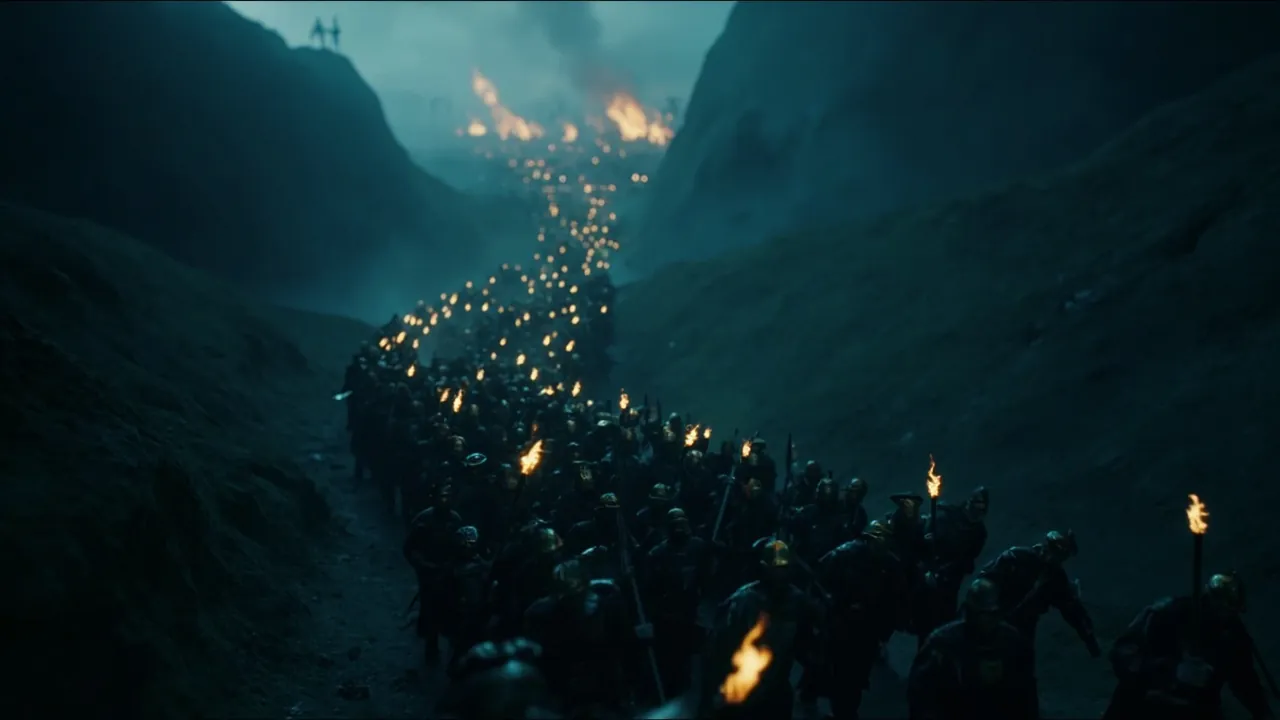
The humiliation of his situation followed him everywhere. He served under Xiang Yu, the legendary “Hero of Chu” whose raw martial prowess made him the most feared warlord of his generation. Han Xin was a nobody among thousands in Xiang Yu’s vast army, a man whose ideas about strategy and tactics went completely unheard. He offered suggestions; they were ignored. He submitted plans; they were dismissed. The great Xiang Yu, for all his courage and physical power, had no interest in the kind of careful, systematic thinking that Han Xin had spent years developing. For Han Xin, serving under Xiang Yu was like being a master chef forced to work in a kitchen where nobody wanted to taste your food.
He made the most dramatic career change in Chinese history: he defected to Liu Bang’s camp.
If anything, his situation got worse before it got better. Liu Bang’s forces were rough around the edges — a collection of peasants, ex-criminals, and minor officials who somehow kept stumbling into situations where they either won or escaped by the skin of their teeth. Han Xin arrived with recommendations from some minor officials who had recognized his abilities, but when he sat down with Liu Bang for their first meeting, the conversation went nowhere. Liu Bang, practical to the bone and suspicious of anyone who talked about warfare in sophisticated terms, wasn’t impressed. Han Xin was given a minor administrative post and promptly forgot about.
He might have faded into complete obscurity if not for a chance encounter with Liu Bang’s most trusted advisor, Xiao He. Xiao He found Han Xin one day, literally crawling out of a gutter where he’d been nearly beaten to death after being caught in the middle of some dispute. There was nothing dignified about the scene — Han Xin was muddy, bleeding, and demoralized. But Xiao He saw something in the man’s eyes that stopped him cold. He struck up a conversation, and what he heard convinced him that he’d stumbled onto something extraordinary. Xiao He immediately went to Liu Bang and delivered what must have sounded like the most outrageous recruitment pitch in Chinese history.
“Excellency,” he said, “you’ve been searching for a general who can match Xiang Yu on the battlefield. I’ve found him. He’s nobody special to look at, he’s currently bleeding from about six different places, and he’s been washing dishes for a living. But I assure you, this man is the greatest military strategist alive.”
The Test That Changed History
Liu Bang was skeptical — to put it mildly. He’d been through enough false promises to know that unusual claims usually meant unusual disappointment. But Xiao He was one of his oldest and most trusted friends, and he pushed hard enough that Liu Bang eventually agreed to give Han Xin an audience. The emperor wasn’t planning to make any decisions based on this meeting. He was doing it as a favor to Xiao He, to get the weird obsession over this gutter-emerged nobody out of his hair.
What happened in that room changed the trajectory of the war.
Han Xin didn’t come in and kowtow. He didn’t grovel or make excuses or try to manage the emperor’s expectations downward. He laid out a comprehensive analysis of the current political and military situation — Xiang Yu’s strengths and weaknesses, the geography of the conflict, the psychology of the various warlords, the economic factors that would determine which side could sustain a long war. His presentation was methodical, precise, and utterly unlike anything Liu Bang had encountered in his rough-and-tumble military career. Every point he made was backed by historical precedent and logical inference. By the time he finished, Liu Bang wasn’t just listening — he was leaning forward, asking follow-up questions, testing Han Xin’s reasoning against scenarios he knew to be true.
Liu Bang was impressed. More importantly, he was convinced. He promoted Han Xin on the spot and began consulting him on military matters that would decide the fate of the empire.
But here’s the thing about Han Xin: being given responsibility wasn’t enough for him. He didn’t want to merely execute someone else’s strategy. He wanted to fight, to prove on the field of battle what he could already demonstrate in a conference room. And what he wanted most of all was to be given an army of his own — not a small detachment, not a supporting force, but a genuine independent command. The kind of authority that would let him prove what he could really do.
The Emperor’s Uncomfortable Question
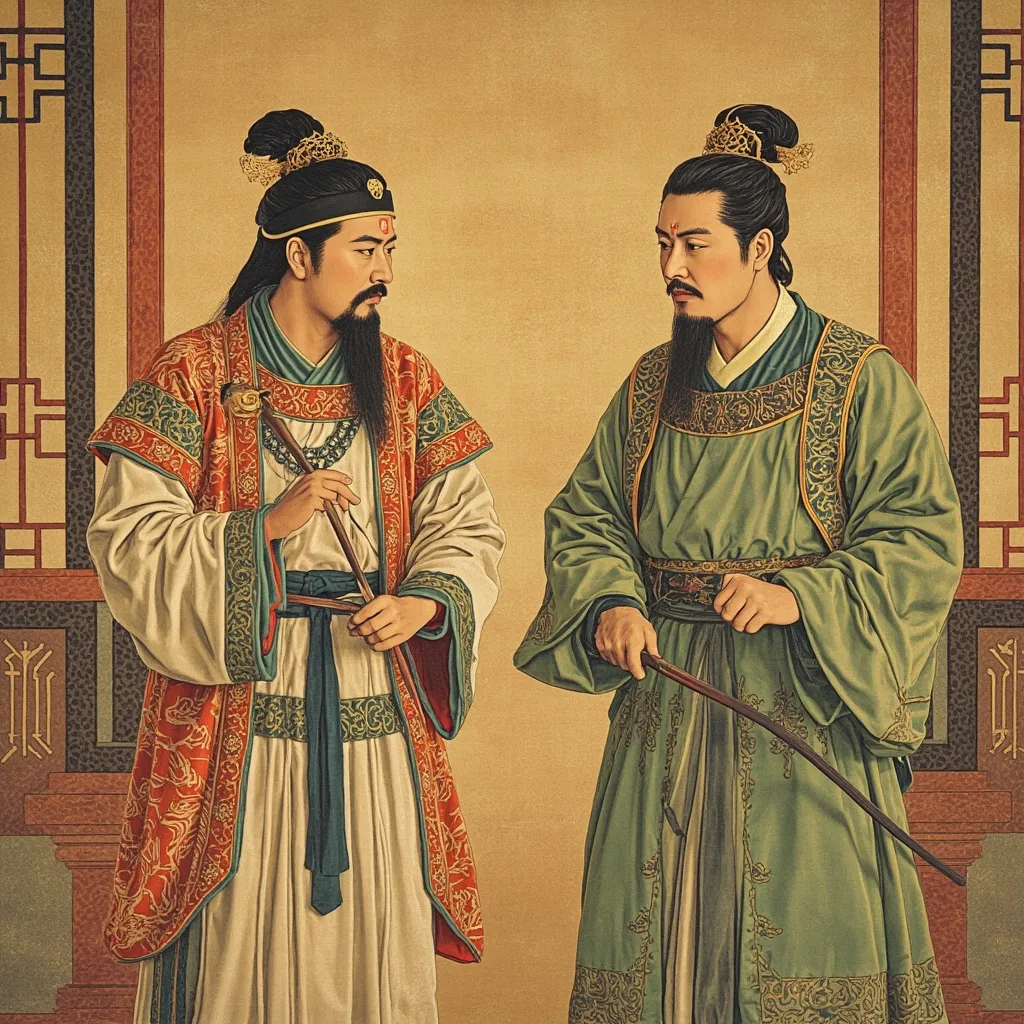
It was during one of their strategy sessions that Liu Bang decided to test exactly how much confidence Han Xin’s abilities had bred into him. The conversation drifted, as many do between a ruler and a general, toward the question of scale. Liu Bang was curious, perhaps a little wary: exactly how many troops did Han Xin believe he could effectively command?
This was a question that most generals would have answered carefully. Claim too few, and you sound inadequate for the role you’ve been given. Claim too many, and you raise uncomfortable questions about your loyalty and your intentions. Armies in ancient China were political instruments as much as military ones — a general who claimed he could command unlimited troops was making a statement that went far beyond logistics.
Han Xin didn’t answer carefully. He answered honestly, which in this case meant spectacularly.
“The more, Your Majesty,” he said, “the better.”
Not ten thousand. Not fifty thousand. Not any specific number at all. Just: more. More troops, more resources, more responsibility. There was no ceiling in Han Xin’s mind, no upper limit to the scale at which his tactical genius could operate. He wasn’t being naive or boastful — he was stating what he genuinely believed to be true about his own capabilities. Give him a hundred thousand soldiers and he would find a way to win with them. Give him five hundred thousand and he would find a way to win with them too. The only thing holding him back would be the number of soldiers provided, not his own capacity to lead them.
Liu Bang laughed. The conversation had taken a turn that he hadn’t expected. Han Xin’s answer was either brilliantly confident or dangerously deluded, and the emperor couldn’t quite decide which. But he was intrigued enough that the conversation continued, eventually winding around to matters of comparison — who, among the famous generals of the age, could match Han Xin’s abilities? Who could不服 (fú fú, equal him)?
It was then that Han Xin made what might have been the most politically foolish statement of his career. When asked directly whether he himself could be matched by any of the great warriors of the age, he answered with complete candor: no. Not by Fan Li (范蠡), the legendary minister of Yue who had engineered one of history’s most dramatic reversals of fortune. Not by Bai Qi (白起), the terrifying “God of War” of Qin who had annihilated enemy armies on a scale that defied comprehension. Han Xin placed himself not merely among these giants but above them, at least in the specific domain of military command.
The Price of Honesty
The idiom 多多益善 emerges directly from this exchange, and its meaning has shifted over the centuries. Today it most commonly means “the more, the better” in a fairly innocent sense — the more effort you put in, the better the results; the more practice you get, the more skilled you become. It speaks to abundance and generosity, to the value of having plenty rather than too little.
But the original context of the phrase carries a sharper edge, one that Han Xin himself would have understood better than anyone. In the mouth of a general speaking to an emperor, “more is better” was not merely a statement about logistics. It was a declaration of capacity, a claim that one’s abilities scaled without limit. And in the paranoid political environment of the early Han Dynasty, such a claim was as dangerous as it was impressive.
Liu Bang was not a man who easily forgot uncomfortable truths. He valued Han Xin’s abilities enormously — he used him to devastating effect against Xiang Yu at the Battle of Gaixia, where Han Xin executed a masterpiece of tactical maneuvering that destroyed the Chu forces and effectively ended the civil war. But he never quite forgot that conversation, that moment when his general had cheerfully admitted that there was no upper limit to his own ambition for command. An emperor always has to worry about a general who thinks he can command unlimited power.
Han Xin was eventually stripped of his titles and executed, done in by the jealousies of empress Lü Zhi and the political machinations that were the inevitable byproduct of the early Han court’s struggle to consolidate power. His end was tragic and unnecessary, the fate of a man whose military genius was never quite matched by political survival skills.
What 多多益善 Teaches Us About Ambition and Self-Knowledge
The phrase has survived for over two thousand years, and it survives because it contains a truth that people in every era have recognized. More is better — in the right context. More effort, more preparation, more resources dedicated to a worthy goal: these things do make outcomes better, and anyone who has achieved something genuinely difficult knows this to be true. You cannot phone in excellence. You cannot half-prepare and expect to fully succeed. Han Xin understood this instinctively, and that understanding was precisely what made him the kind of general who could look an emperor in the eye and say, without apparent irony, that there was no ceiling on his capabilities.
The idiom also carries a warning, one that Han Xin’s own fate illustrates perfectly. The philosophy of “more is better” works beautifully in the domain of skill and preparation. It works rather less well in the domain of power and influence, where more often invites resistance, resentment, and ultimately retaliation. Knowing the difference between “I should prepare more” and “I should demand more authority” is one of the distinctions that separates sustainable success from spectacular collapse.
Han Xin’s genius was real. His confidence was earned. But the combination proved impossible for the political environment of his time to absorb. He was too much, too fast, too undeniably excellent — and the system eventually pushed back.
Use 多多益善 when you want to talk about the value of thorough preparation, comprehensive effort, and the genuine benefits of scale in fields where scale genuinely matters. But remember the general who coined it, and remember that some kinds of “more” come with costs that even the greatest minds don’t always anticipate.