A Mountain That Earned Its Reputation
When the Chinese say “you can’t admire Mount Huangshan without having seen its beauty, and once you’ve seen it, you won’t need to look at any other mountains” — they are not exaggerating. Huangshan, which literally means “Yellow Mountain,” is so dramatically beautiful, so wrapped in cloud and mist and impossible rock formations, that it has inspired Chinese painters, poets, and monks for over a thousand years.
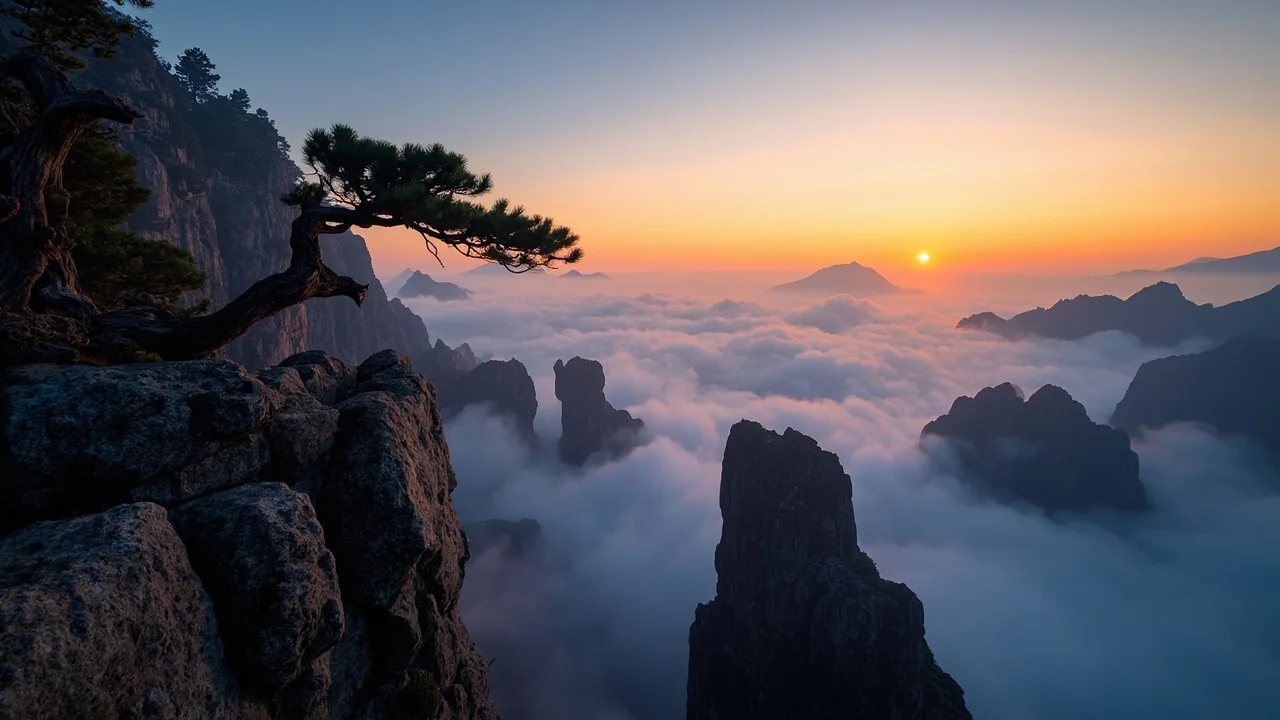
It is also one of the few places in China where Americans — who grew up with the Rockies and the Appalachians — genuinely stand in front of a landscape and feel like they’ve landed on another planet. The rock spires shoot straight up from the valley floor, wrapped in centuries-old pine trees that twist into shapes that look hand-sculpted. Morning fog rolls through the peaks like breath. Then the sun breaks through and everything turns gold.
This is why Huangshan gets three million visitors a year. This is why the Chinese government classifies it as one of the country’s most sacred scenic spots. And this is why you need to plan carefully, because half the visitors leave disappointed because they picked the wrong trail, the wrong season, or the wrong weather.
Here’s the key fact most travel guides don’t tell you clearly: weather is everything at Huangshan. A mountain that looks mediocre in flat gray light is transcendent in morning fog and sunrise gold. Many visitors who complain about “just seeing clouds” went during the wrong season or didn’t wake up early enough. The visitors who call it the most beautiful place in China almost universally went in autumn or spring with good weather, and almost universally woke up before 5 AM to catch the sunrise from one of the key peaks. You cannot phone this in and have it work.
For American visitors, there’s a useful frame of reference: Huangshan is to China what Yosemite is to America — the iconic landscape, the one that defined how a whole culture thinks about mountains. Chinese landscape painting as an art form was essentially invented in response to Huangshan. When you see the mountain in person, you’re seeing the image that live in the Chinese cultural imagination for a thousand years.
The Geology Behind the Beauty
Mount Huangshan is a cluster of peaks in Anhui Province, about five hours by train from Shanghai. Geologically, the mountains are made of granite that formed around 130 million years ago, during the same era dinosaurs were dying out. Over millennia, rain and frost cracked and shaped the granite into the vertical pillars, arches, and bridges visitors see today.
The granite is what allows the pines to grow where they do — wedged into cracks in the rock face with virtually no soil, hanging in mid-air over drops of hundreds of meters. Some of the gnarled pines on the most famous peaks are estimated to be over 500 years old. They look like the kind of tree you’d find in a Studio Ghibli film.
The combination of granite geology, extreme vertical relief, and Huangshan’s position where warm, moist air from the south collides with cold northern winds creates one of China’s most persistent cloud-cover zones. Huangshan is cloud-covered about 200 days a year. For photographers, this is a feature, not a bug.
The 24-Hour Drama of Weather at Huangshan: The mountain has its own weather microclimate. A typical day might start in fog at 4 AM for sunrise, clear to blue sky by 9 AM, build afternoon thunderclouds by 2 PM, clear again at sunset, then fill back in with fog by 9 PM. The locals say you can experience “four seasons in one day” at the summit. This unpredictability is what makes the photography so rewarding — and so frustrating if you’re on a tight schedule. The photographers who get the iconic shots come prepared to wait multiple days.
The Four Wonders Chinese Visitors Come to See
Chinese visitors speak of Huangshan in terms of four signature attractions. Understanding these helps you plan your time.
The Strange Pines (Qi Song) — the “oddly shaped pines” are Huangshan’s most photographed subject. These pines grow out of almost bare rock, their trunks bent and twisted by centuries of wind and gravity into shapes that seem to defy horticulture. The most famous is the Welcoming Guest Pine — a 400-year-old specimen that arches out over a cliff edge like a reaching hand. It has appeared in countless Chinese paintings and is so iconic that it has its own merchandise section in the gift shops. But the Welcoming Guest Pine, for all its fame, is actually not the most beautiful pine on the mountain — it’s simply the most accessible. For the most dramatically positioned pines, hike to 始信峰 (Shixin Peak) in the eastern sector, where the pines are older and the drops more vertigo-inducing.
The Sea of Clouds (Yun Hai) — when moist air gets trapped below the summit level, the valleys disappear and the peaks become islands in a white ocean. Standing on a cliff edge watching cloud banks roll through the mountain notches below you is one of those travel moments that doesn’t translate into words. The best viewing points are 光明顶 (Bright Summit) and 狮子林 (Lion Grove Peak). Early morning, before 6 AM, offers the clearest views and the smallest crowds. The key tip: check the weather forecast before choosing your sunrise spot. If there’s rain forecast for your morning, the cloud sea will be deeper and more dramatic — fog and cloud in rain conditions can create a completely different kind of beauty, moody and almost supernatural.
The Sunrises (Ri Chu) — few experiences in China rival watching the sun rise over Huangshan’s cloud sea. The sky shifts from black to navy to pink to gold, and the cloud ocean below turns into molten copper. The most popular sunrise spot is 丹霞峰 (Danxia Peak), though 光明顶 (Bright Summit) is more accessible for visitors staying at the mountaintop hotels. Arrive at Danxia Peak at least 45 minutes before sunrise — on clear nights the crowd can be 200+ people, and you’ll want a front-row spot. Bring a small flashlight; the trail is in total darkness until about 5:30 AM. Pro tip: the sunrise at 石猴观海 (Stone Monkey Watching the Sea) — a rock formation that looks like a monkey gazing at the cloud sea — is less crowded and arguably more dramatic.
The Hot Springs (Wen Quan) — after two days of hiking up and down 60,000 granite steps, your legs will want to fall off. The hot springs at the base of the mountain have been popular since the Tang Dynasty — the earliest written reference to their healing properties dates to the year 743 CE, during the reign of Emperor Xuanzong. The water is geothermally heated underground and contains minerals that Chinese medicine claims are good for joint pain and skin conditions. The 飘雪温泉 section has outdoor pools set among bamboo — go in the evening when the temperature difference between the hot water and cool mountain air creates a misty atmosphere. Pro tip: bring a bathing suit from home or buy one at the base before entering — the on-site shops charge inflated tourist prices. The hot springs are open year-round and are particularly worth it in winter when watching steam rise from the pools while snow falls on the surrounding peaks creates a scene that looks staged.
For serious hikers, the four peaks circuit is the ultimate test — a full day hike connecting all four of Huangshan’s main peaks (光明顶, 始信峰, 狮子林, and 丹霞峰) for a total of about 15 kilometers with significant elevation changes. Most visitors take a cable car between some sections; doing the full circuit on foot is considered a badge of honor among Chinese hikers, who call it the 四大门 (Four Great Gates). Start at 6 AM from Beihai Hotel, follow the western route down to Xihai, then climb back up to Shixin Peak, cross to Bright Summit, and finish at Lion Grove Peak in time for sunset. The trail is well-marked but steep — allow 8–9 hours total.
Practical Guide — Seasons, Hiking, and Costs
When to Go: Spring (March to May) brings green mountains and moderate weather, but also the wettest season — bring rain gear. Avoid Tomb-Sweeping Week (early April) when domestic tourists flood the mountain. Summer (June to August) offers the most consistent weather, though thunderstorms appear most afternoons. Autumn (September to November) is peak photography season with stable weather and fall foliage — book mountaintop hotels months in advance. Winter (December to February) is beautiful but dangerous; some trails close due to ice. Winter also brings the most dramatic cloud formations — ice-covered pines and frozen fog create a surreal landscape that serious photographers prize above all other seasons.
The Hiking Reality: Huangshan is steep. The vertical gain from base to summit is roughly 1,800 meters — comparable to hiking from a valley floor to a high Colorado peak in a single push. The stairs were cut into the rock over centuries and vary wildly in height and condition. A typical itinerary: cable car up on Day 1, hike to the summit area, explore the western area including the Grand Canyon-like Xihai Gorge, watch sunset from Danxia Peak, stay at a mountaintop hotel. Day 2: wake before dawn for sunrise, hike the eastern peaks including Bright Summit and the Welcoming Guest Pine, cable car down by early afternoon. The mountaintop hotels — 白云宾馆 (Baiyun Hotel) and 北海宾馆 (Beihai Hotel) — are expensive by Chinese standards, rustic by American ones, and absolutely essential. Book at least six months ahead for Chinese public holidays. If you can’t get a mountaintop hotel, stay at the base and do a sunrise hike — but be prepared for a 3 AM start and potential closures if trails ice over.
What to Bring: This is not a hike where you can improvise. The temperature at the summit can be 15°C cooler than the base, and weather changes in minutes. Essentials: layers (quick-dry shirts, a fleece, a waterproof shell), hiking shoes with good ankle support, a headlamp for pre-dawn hikes, sunscreen, and more water than you think you need. The mountain is not ADA accessible — if you have mobility limitations, the cable cars can get you to most major viewpoints, but some trails require steps.
How to Get There and What It Costs: Huangshan is accessible by high-speed train from Shanghai (about 5 hours, $40–60), Hangzhou (about 3 hours), and Beijing (about 6 hours). Huangshan Tunxi International Airport has direct flights from Beijing, Shanghai, Guangzhou, and several other cities, about 45 minutes from the scenic area. A park pass (approximately $45–60 depending on season) plus a cable car ticket ($40–50 each way) is required. Total cost of a two-day visit is roughly $150–200 per person — not including flights or the mountaintop hotel.
Where to Stay: For mountaintop hotels, book Beihai Hotel ($150–250/night) on the northern peak for easiest access to sunrise spots, or Baiyun Hotel ($180–300/night) on the southern peak near Bright Summit for hikers targeting the western circuit. Both are rustic by American standards — thin walls, shared bathrooms in some room categories, heating that struggles in January — but the location is everything. For base-area stays, the Huangshan International Hotel ($80–120/night) offers reliable Western-style comfort with airport shuttle service. During peak autumn season (October–November), mountaintop hotels sell out 3–6 months in advance; book immediately if your trip coincides with Chinese National Day Week (October 1–7).
The Bottom Line
Mount Huangshan is not just a scenic destination — it is a spiritual landscape that shaped the Chinese imagination. The area is full of Taoist temples and meditation caves where Chinese monks sought enlightenment for over a thousand years, and a UNESCO inscription in 1990 recognized it not just as a natural wonder but as a cultural landscape.
When American painters went west in the 19th century and found Yosemite and the Sierra Nevada, they came back transformed. When Chinese painters came back from Huangshan, they painted what they saw for generations — and those paintings became the visual vocabulary of Chinese landscape art. The twisted pines, the vertical peaks, the sea of clouds: Huangshan is the reference point for how the Chinese see mountains.
For American visitors, this cultural context deepens the experience significantly. You are not just looking at a pretty mountain — you are looking at the mountain that gave the Chinese a visual language for the sublime. When you see a Chinese restaurant with a scroll painting of a misty peak, there’s a good chance the painter was thinking of Huangshan.
It is also not easy to get to, not cheap to visit, and not gentle on your knees. You will wake up at 4 AM to fight crowds for a sunrise spot. You will climb thousands of uneven stairs. Your legs will ache for days afterward.
But standing on a granite peak watching clouds roll through the valley below, with 400-year-old pines bent into impossible shapes by the wind — you will understand immediately why the Chinese have been climbing this mountain for twelve centuries. Some places earn their reputation. Huangshan has earned every single poem written about it.
Why This Matters for Western Travelers: There is a direct parallel between Huangshan’s role in Chinese culture and Yosemite’s role in American culture that is worth exploring. When Ansel Adams photographed the Sierra Nevada in the 1920s and 1940s, he wasn’t just taking landscape photos — he was codifying a visual language for American wilderness. When the Song Dynasty painter Xia Gui painted the misty peaks of Huangshan in the 13th century, he was doing exactly the same thing for Chinese landscape art. Both mountains became the defining image of their respective cultures’ relationship with nature.
For American visitors who have been to Yosemite, this connection is immediately tangible. The granite cliffs of Huangshan serve the same cultural function as El Capitan — they represent the sublime in landscape, the sense of nature being so vast and powerful that human scale becomes irrelevant. The difference is that the Chinese version comes with twelve centuries of painting, poetry, and philosophy layered on top of it. When you look at a 400-year-old pine growing out of a crack in a granite cliff at Huangshan, you’re seeing the same image that a Song Dynasty painter sketched from this same spot. The continuity is staggering. You’re standing inside the most influential landscape in Asian art history, and you didn’t have to fly to a museum to do it.
Photography tip for American visitors: If you’re a photographer, consider that Huangshan is one of the most-photographed locations in Asia — which means the “iconic shot” is already everywhere. The photographers who come away with the best work are the ones who go off the beaten path: shooting in bad weather when others stay inside, exploring the less-visited western peaks, or focusing on details (the texture of pine bark, water droplets on granite, the pattern of cloud against rock face) rather than the grand overview. The famous shots are famous for a reason — but you’ve already seen them. Make your own.