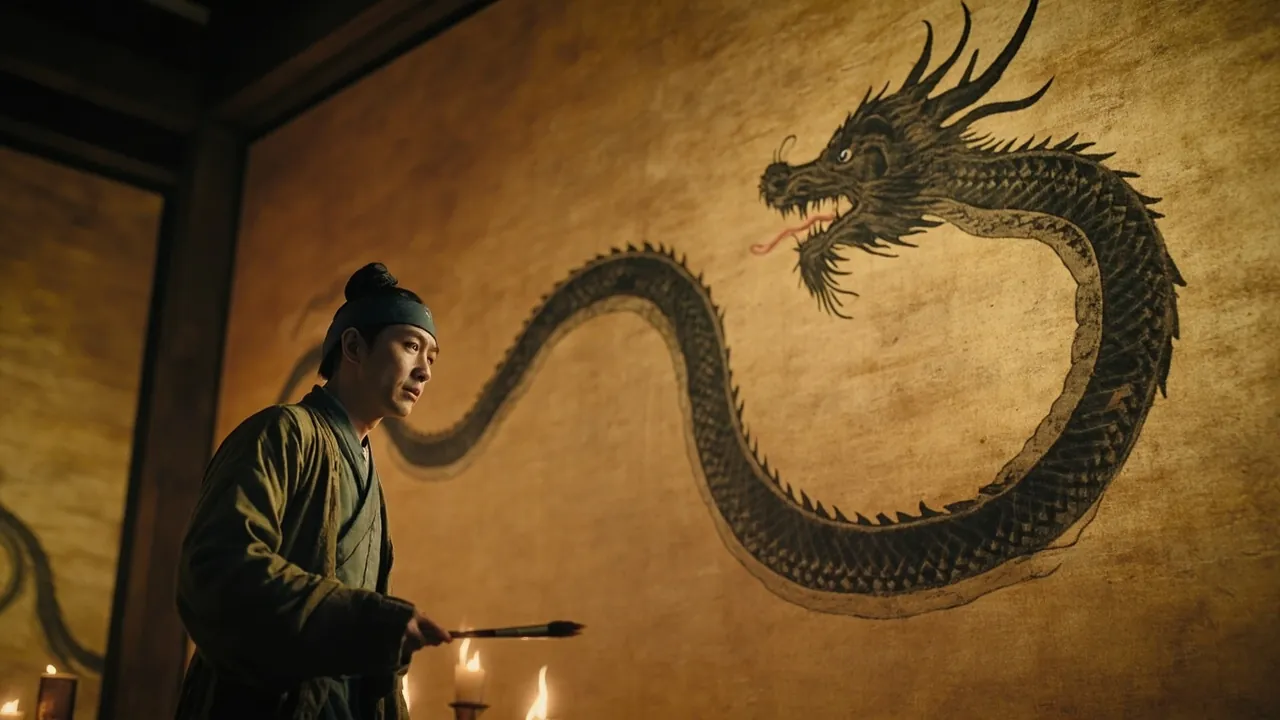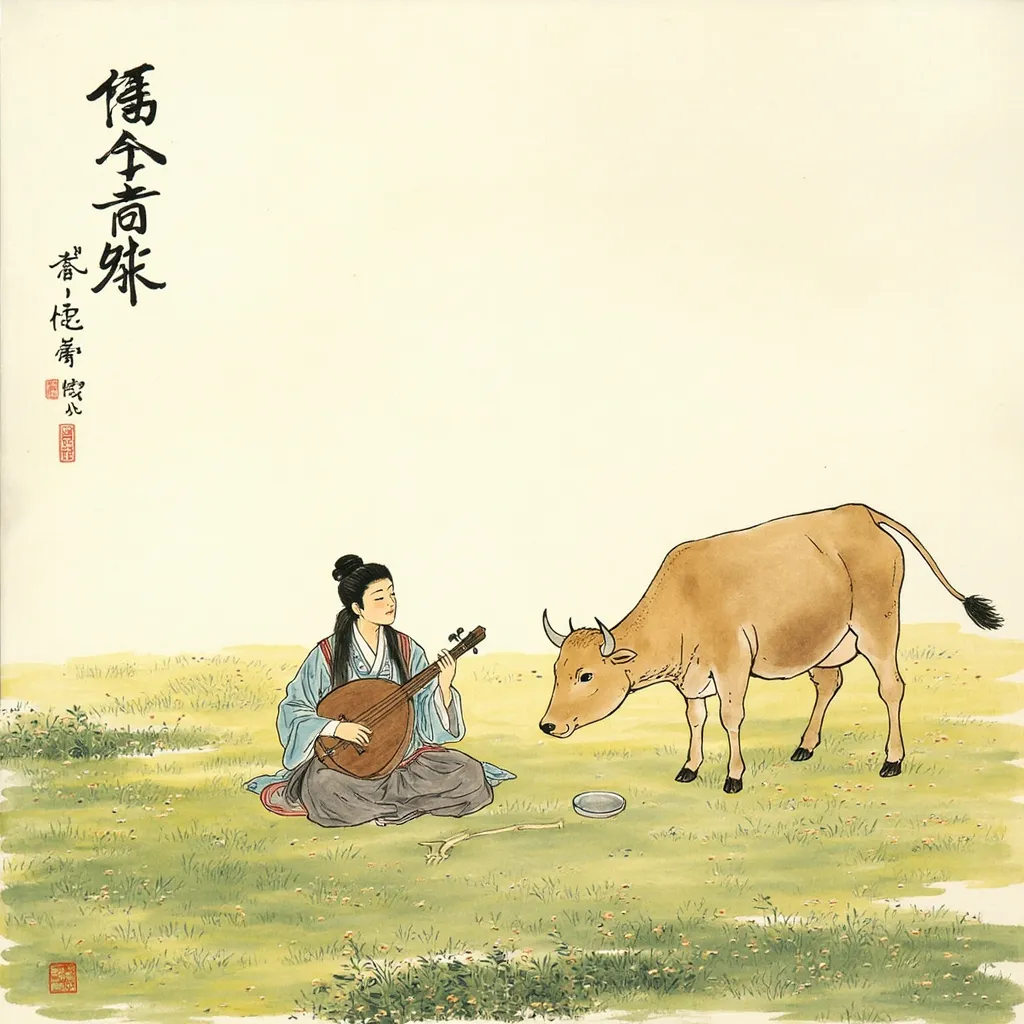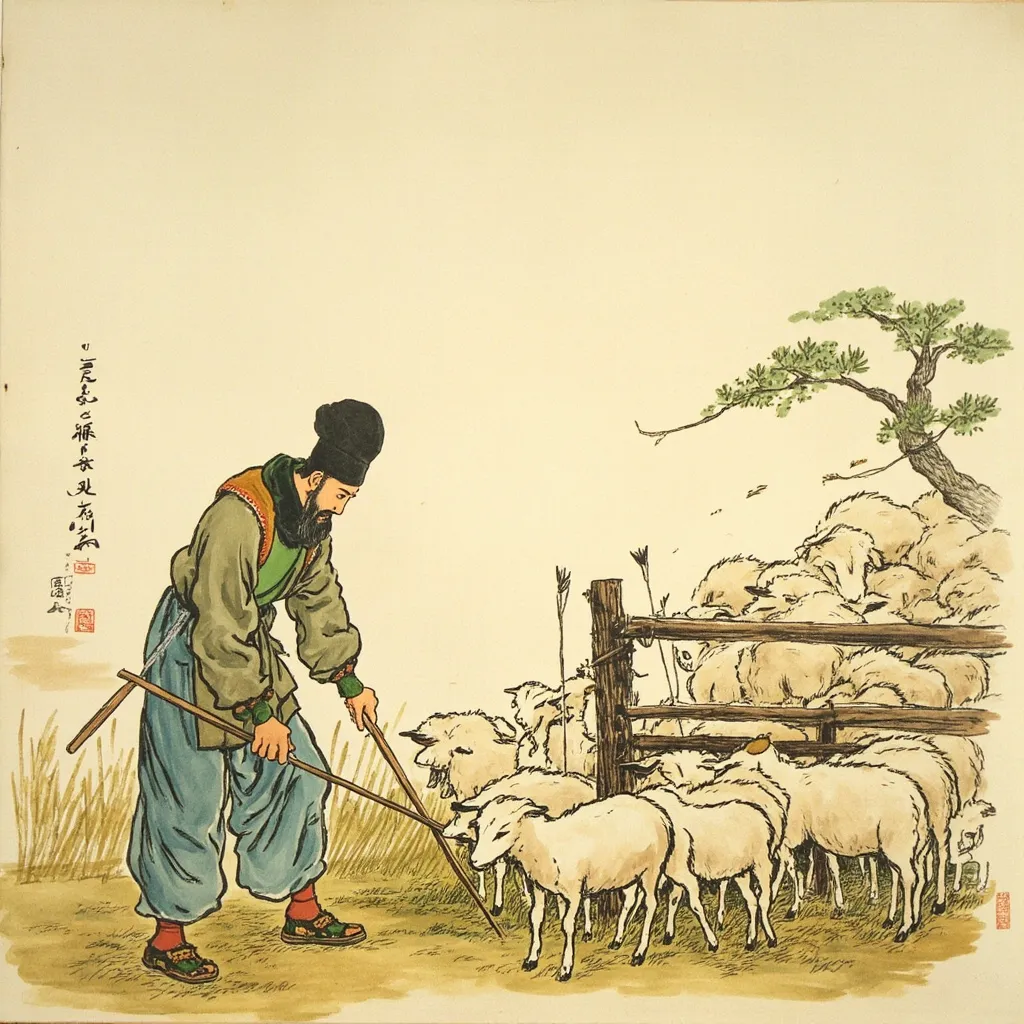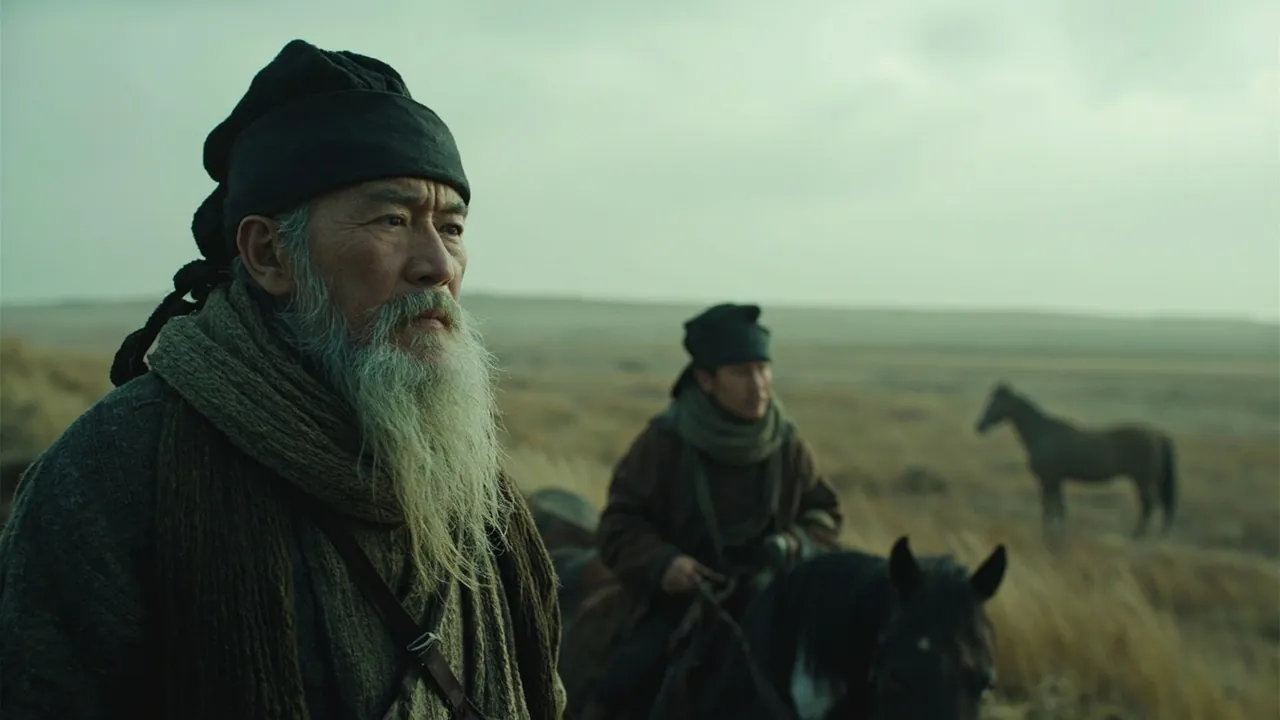
Nobody saw it coming. The horse simply bolted into the night, vanishing into the vast northern frontier that bordered their village. The neighbors gathered to offer condolences. “What terrible luck,” they said. But the old man at the center of the story just shrugged and replied, “Who knows what fortune this brings?”
The Parable of the Borderland Old Man
The idiom “the old man who lost his horse” (塞翁失马, sài wēng shī mǎ) comes from Huainanzi, a classical Chinese philosophical text compiled in the 2nd century B.C. during the Han Dynasty. But the wisdom it contains is far older — rooted in the same Taoist philosophy that gave us concepts like yin and yang, the interplay of opposites, and the understanding that nothing in life stays the same.
The story takes place in a small village near the northern frontier of ancient China, where the Great Wall marked the border between the civilized world and the nomadic territories beyond. Life there was hard. Raiders could strike without warning. The winters were brutal. And yet the people who lived in these borderlands developed a toughness and a philosophical outlook that visitors from the more comfortable central provinces found baffling.
At the center of our story is an old man — known simply as “the borderland old man” or sai weng — who lived with his only son. They weren’t wealthy, but they weren’t poor either. They had a horse, which in those days was one of the most valuable assets a family could own. A horse meant mobility, status, and in border country, survival.
One day, the horse ran away. It simply vanished — slipped its tether in the night and disappeared into the vast grasslands beyond the Wall. The neighbors heard about it and came to offer their sympathy. “What bad luck,” they said, shaking their heads. “A horse is such a valuable animal. Your family will suffer for this.”
The old man responded with a simple shrug. “Who knows what fortune this brings?” he said.
The neighbors thought he was in shock, or perhaps just too old to understand his misfortune. They shook their heads and left, feeling sorry for the old man and his son.
A month later, something remarkable happened. The horse returned — but it wasn’t alone. It had found its way to a wild herd of horses on the frontier and had led a band of them back to the old man’s corral. Not one horse, but five. The old man’s single horse had multiplied into a small herd.
The neighbors came running. “What incredible luck!” they exclaimed. “Five horses! You went from one to five! This is wonderful fortune!”
The old man again shrugged. “Who knows what misfortune this brings?” he said.
Sure enough, a week later, the old man’s son was riding one of the new horses when he was thrown and broke his leg. The neighbors gathered again. “What terrible luck,” they said. “Your son can’t work the fields now. How will you manage?”
The old man, again, seemed unconcerned. “Who knows what fortune this brings?” he said.
A year later, the northern nomadic tribes launched a major raid on the border settlements. Every able-bodied young man in the region was conscripted into the militia to defend the villages. The old man’s son, with his broken leg, couldn’t ride, couldn’t fight, and was left behind. The raiders came, took what they wanted, and killed many of the young men they captured.
But the old man and his son survived. Because of a broken leg. Because of a horse that had run away and returned with four friends.
The neighbors finally understood. They stopped trying to label the old man’s circumstances as good or bad, lucky or unlucky. They saw what he had seen all along: that fortune and misfortune flow into each other, that the worst events sometimes lead to the best outcomes, and that no single moment can be judged in isolation.
This is the origin of 塞翁失马: “the old man at the frontier lost his horse.” The idiom is used to express the idea that good and bad fortune are interrelated, that things can change in ways we don’t expect, and that we should neither celebrate too enthusiastically nor despair too completely, because the wheel is always turning.
The Deeper Philosophy: Yin and Yang, Fortune and Misfortune
At the heart of this idiom is a fundamentally Taoist insight: that opposites are interdependent, not opposed. Light doesn’t just exist separate from darkness — it creates darkness. Up doesn’t exist without down. Life doesn’t exist without death. And in the same way, good fortune doesn’t exist separate from bad fortune — they create each other.
This is the principle embodied in the yin-yang symbol — the circle divided by a curving line between two teardrop shapes, one light and one dark, each containing a small dot of the other. The symbol represents the Taoist understanding that all apparent opposites are actually complementary, each containing the seed of the other.
The old man at the frontier wasn’t being philosophical in a vague, wishy-washy way. He was articulating a precise understanding of how the world works: that when something seems purely good, something bad is already developing within it, and when something seems purely bad, something good is already on its way.
Consider a practical example. You get a promotion at work — excellent news, clearly good fortune. But the promotion means more responsibility, more stress, more hours away from your family. It also makes you a target for coworkers who resent your success. The promotion creates new problems.
Or consider a more personal one. You get dumped by a romantic partner — clearly bad fortune. But that breakup opens you up to meeting someone who is actually right for you, someone you never would have encountered if you’d stayed in the previous relationship. The misfortune creates the opportunity.
This doesn’t mean every bad thing leads to something good, or that we should become fatalists who never try to improve our circumstances. The idiom isn’t saying “everything happens for a reason” in the way that phrase is often used to dismiss genuine suffering. It’s saying something more subtle: that our categories of “good” and “bad” are provisional, temporary, and often wrong. The old man didn’t cause his horse to run away. He didn’t engineer the chain of events that followed. He simply refused to be caught off guard by the reversals that are built into the fabric of life itself.
Why We Can’t See What’s Coming
One of the most powerful aspects of the old man’s philosophy is his refusal to assume he knows how events will unfold. We, on the other hand, are constantly making these judgments — and constantly being proven wrong.
Think about how often you’ve been absolutely certain that something was terrible, only to discover later that it was the best thing that ever happened to you? Or how often you’ve been convinced that something wonderful was unfolding, only to find yourself mired in new problems six months later?
The human mind is wired to interpret events through the lens of immediate impact. When something bad happens, it feels catastrophic. When something good happens, it feels like the beginning of a permanent elevated state. But life doesn’t work that way. Life is a series of ups and downs, and the up isn’t the destination any more than the down is the end of the story.
The old man’s neighbors made the classic mistake: they judged each moment as if it were the whole story. The horse ran away — terrible! The horse returned with five others — wonderful! The son broke his leg — terrible! The son avoided conscription and death — wonderful!
Each judgment was premature. Each moment contained within it the seeds of its opposite. And only by waiting — by refusing to make final judgments about any single event — could you see the full picture.
This is, admittedly, a difficult philosophy to live by. When something painful happens, we want relief. We want someone to tell us it will be okay, or that it’s all part of some grand plan. The old man’s philosophy doesn’t quite offer that comfort — it doesn’t promise that things will turn out well. It just promises that things will change, and that the change might be in a direction we don’t expect.
But there’s a strange peace in that. If fortune can become misfortune, then misfortune can also become fortune. If the worst day of your life might contain within it the seed of your best day, then no moment is final. Nothing is irretrievably lost. And no victory is as secure as it seems.
Modern Applications: When Your Plans Fall Apart
The idiom 塞翁失马 finds its most practical application in moments when our carefully laid plans collapse. Job losses, relationship endings, unexpected illnesses, economic downturns — these are the “horse running away” moments that feel catastrophic in the moment.
And yet, history is full of stories of people whose lives transformed after exactly these kinds of disruptions. The person who lost their job and finally started the business they always dreamed of. The couple who divorced and each found more compatible partners. The city that was devastated by a flood and rebuilt itself stronger and more resilient than before.
These aren’t just anecdotes — they’re examples of the old man’s wisdom playing out in real life. They show that disruption, while painful, can be generative. That the loss of something familiar creates space for something new. That the worst news might genuinely be good news, if we’re willing to wait and see.
The practical lesson isn’t to become passive and stop trying. It’s to maintain a kind of psychological flexibility — to hold our plans loosely, to accept that disruption is inevitable, and to look for the opportunities that disruption creates rather than dwelling exclusively on what we’ve lost.
This requires what psychologists sometimes call “cognitive reappraisal” — the ability to reframe a situation in ways that reduce its emotional intensity and open up new possibilities. The old man didn’t pretend his horse hadn’t run away. He didn’t deny the loss. But he also didn’t let that loss define the entire future. He simply said, in effect, “Let’s see what happens next.”
The Limits of This Wisdom
It’s worth being clear about what 塞翁失马 does and doesn’t say. The idiom doesn’t promise that everything will work out for the best. It doesn’t say that there are hidden benefits behind every tragedy. It doesn’t require us to be grateful for suffering or to pretend that losses don’t hurt.
A child who dies of illness, a person who survives a devastating accident, a family displaced by war — these are not “good fortune in disguise.” The old man’s wisdom, while profound, has limits. Some misfortunes are simply misfortunes. Some losses cannot be recovered or reframed.
What the idiom does say is that our categories of “good” and “bad” are provisional and often wrong. It says that life is full of reversals, and that the reversal is built into the nature of things. It says that we should be humble about our ability to predict the future, and that we should hold our circumstances loosely rather than desperately clinging to whatever state we’re in.
The old man at the frontier wasn’t a saint or a philosopher making grand pronouncements. He was a practical man who had lived long enough to see the pattern — the endless cycle of loss and gain, pain and recovery, decline and renewal. His wisdom wasn’t mystical. It was empirical. He had seen too much to believe that any single moment could be trusted as the final truth.
Conclusion
The story of the old man at the frontier is one of the most beloved in Chinese culture precisely because it captures something true about the human experience — something that transcends any single era or culture. We all know what it’s like to have our certainties shattered, to watch our best-laid plans collapse, to feel that the universe has betrayed us. And we all know, if we’re honest, that the opposite can happen just as easily: that what seemed like a disaster turns into an unexpected gift.
塞翁失马 invites us to live with less certainty and more openness. To hold our joys and our sorrows with equal hands, knowing that both are temporary. To resist the urge to declare victory or defeat in any single moment, because the story isn’t over and the wheel keeps turning.
The next time something seems like terrible news, you might try the old man’s response. Don’t celebrate. Don’t despair. Just say, “Who knows what fortune this brings?” And then wait — with curiosity rather than fear — to see what happens next.
📚 Recommended Reading & Products
Disclosure: This article contains affiliate links. We earn a commission on qualifying purchases.