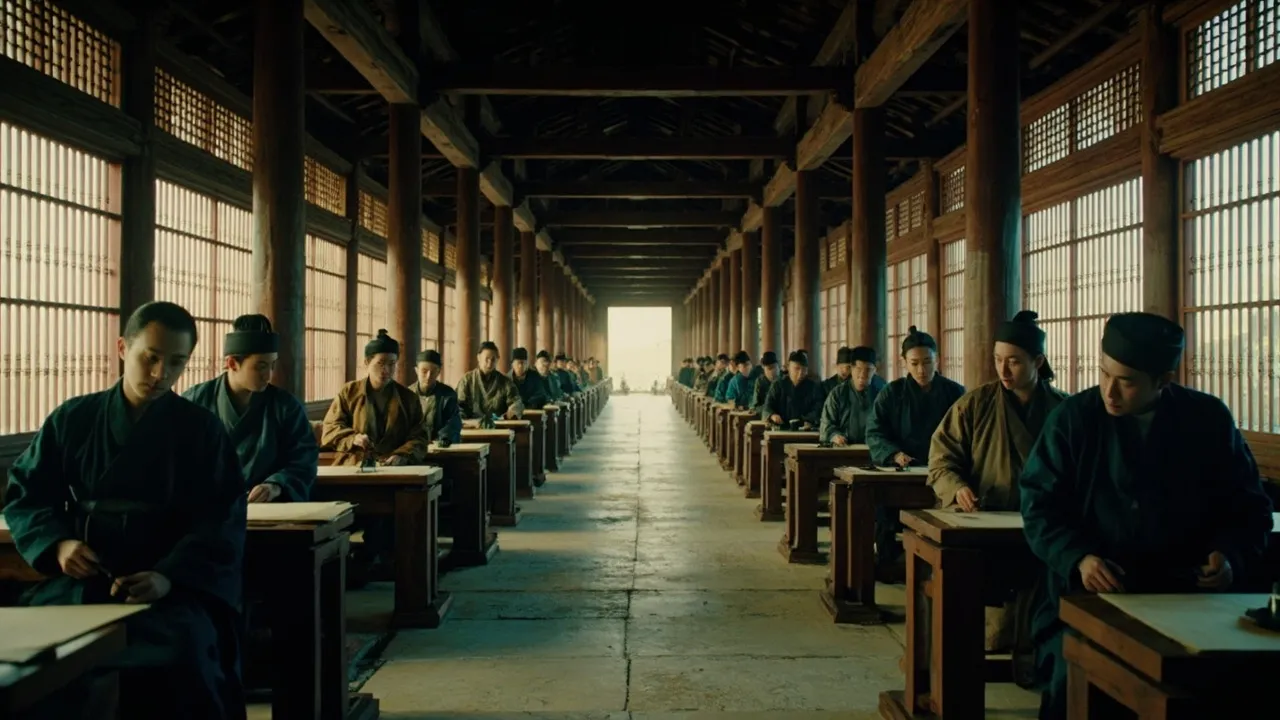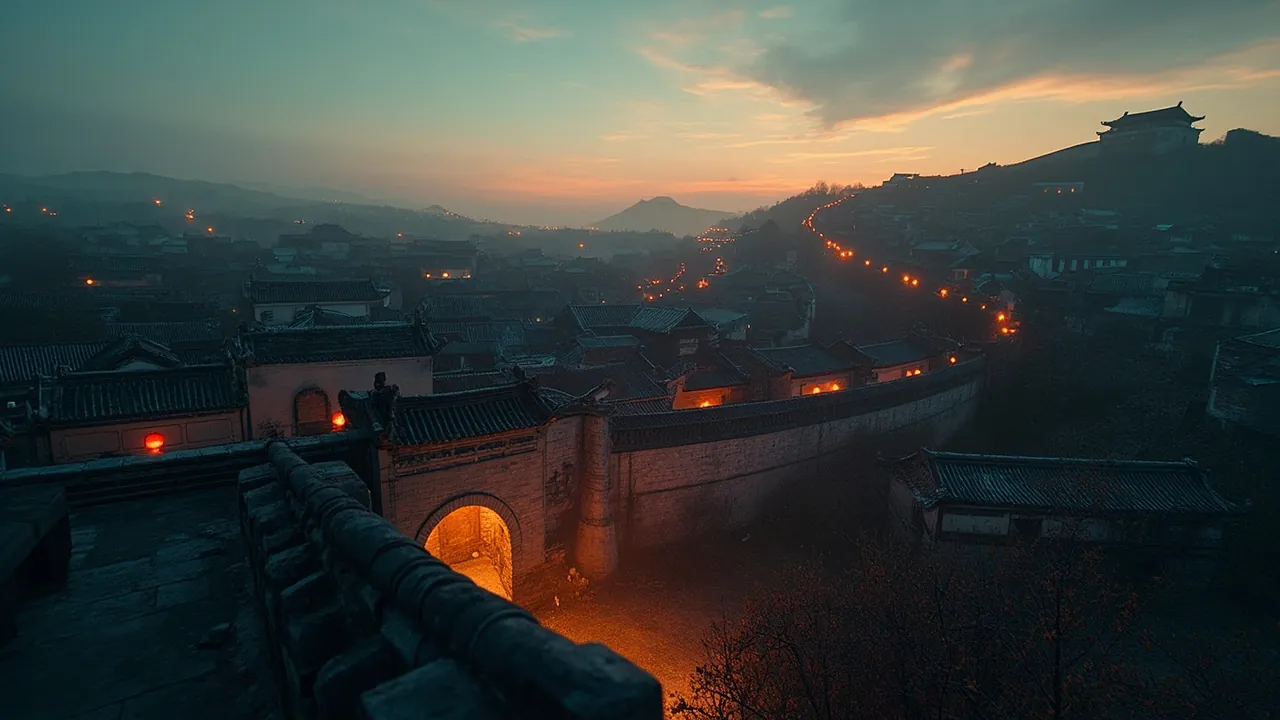
If you have ever wondered what a Chinese city looked like in the year 1700, walk into Pingyao. Not a reconstruction. Not a theme park. Not an open-air museum with souvenir stands masking the original fabric. The walls are the walls. The street grid is the street grid. The granite slabs worn down by two centuries of mule-cart traffic are still the walking surface. The rooflines are the rooflines. Pingyao (平遥) in central Shanxi province is the best-preserved ancient walled city in all of China, and one of the best-preserved in the world.
What makes Pingyao more than a beautifully maintained relic, though, is the financial history that made it worth preserving. For about a century, between the 1820s and the early 1900s, this modest county seat was the de facto capital of Chinese private banking. The merchants headquartered here — collectively known as the Jin shang (晋商), or Shanxi merchants — built the world’s first widespread system of bills of exchange, pioneered the practice of branch banking, and ran a national clearinghouse that could move money from Beijing to Guangzhou in under a week. They did all of this without telegraph, without railroads, and without a central bank. Their flagship institution, the Rishengchang Draft Bank (日昇昌票号), is still standing on Pingyao’s main street, preserved almost exactly as it was in 1823.
Most Americans who know anything about banking history know about Medici Florence, the Rothschilds, or the early Federal Reserve. Almost none of them know about Pingyao. That’s a gap worth closing.
The Walled City: How Pingyao Survived
To understand why Pingyao looks the way it does, you have to start with the walls. They were first raised, according to local tradition, in the reign of King Xuan of the Western Zhou dynasty — about 827 BCE, more than 2,800 years ago. The current walls, the ones you can actually walk on, are Ming-era. They were rebuilt in 1370, after the Ming founder Zhu Yuanzhang consolidated power over Shanxi, and they were substantially reinforced in the 1430s and again in the 1540s.
The wall is a proper medieval fortification: about 12 meters high, 5 meters thick at the base tapering to about 3 meters at the top, total length roughly 6 kilometers around the city perimeter. Six main gate towers pierce the wall — one on each face of the roughly square layout, plus an additional pair. Seventy-two watchtowers project outward at regular intervals, with crenellations designed to allow defenders to fire along the wall face in either direction. Inside the wall is the original county grid: roughly four main streets in a cruciform pattern, dozens of smaller lanes, and the usual mix of temples, government buildings, courtyard mansions, and small workshops that you would expect in a working Chinese county seat.
What saved Pingyao from the modernization that flattened most other Chinese old cities is partly accident, partly economics. After the fall of the Qing dynasty in 1912, the new Republic of China prioritized modernizing cities, building new urban cores elsewhere, and largely abandoning the old county seats. Pingyao, no longer the financial hub it had been for a century, lost its economic reason to be rebuilt. The Puxian Railway, built in 1934, deliberately bypassed the city to the west, which insulated Pingyao from the industrial pollution and demolition that consumed most of the other old Chinese city centers over the twentieth century.
So Pingyao sat. Untouched. Unrenovated. Mostly unphotographed until well into the twentieth century. When Chinese preservation authorities began their first comprehensive surveys of historic county seats in the 1980s, Pingyao turned out to be unusually intact — over 3,800 traditional courtyard houses (siheyuan) still standing inside the walls, hundreds of shops with their original Ming and Qing wooden facades, the wall itself walkable end to end. UNESCO inscribed Pingyao on the World Heritage List in 1997, citing it as “an outstanding example of a Han Chinese city of the Ming and Qing dynasties.”
The Shanxi Merchants, and Why They Mattered
The story of Pingyao as a financial capital really begins with the Shanxi merchant guilds — the Jin shang — over the previous three centuries. Shanxi’s pre-eminence in long-distance trade started in the Ming period (roughly 1368-1644), when Shanxi merchants began moving grain, salt, and textiles along the northern frontier trade routes. They became famous for thrift, for keeping their books meticulously, for forming clan-based partnerships that survived over generations, and for being willing to travel to places nobody else would — Inner Mongolia, Xinjiang, Russia, the steppe markets of Central Asia.
By the early Qing (1644-1911), the Shanxi merchant houses had accumulated serious capital. The biggest firms, like the Qiao family compound (a separate UNESCO site, about 50 kilometers from Pingyao) or the various Taiyuan firms, operated across a dozen provinces. They were not banks yet. They were trading houses, moving goods across vast distances and settling accounts with each other in cash.
The problem was the cash. Silver ingots were heavy. Copper coins were even heavier by value. A shipment of tea from Fujian to Beijing might involve moving actual physical silver across a thousand miles of bad road. Loss to banditry, theft, and tolls was routine. Settlement between two firms that had traded across provinces could take months, and required armed escorts.
The Shanxi merchants developed a workaround. By the late 1700s, several of the larger Pingyao firms were routinely issuing private bills of exchange — essentially IOUs payable on demand at a designated branch office. If you sold tea in Fuzhou to a Pingyao merchant, instead of paying you in silver, the merchant could give you a bill drawn on his Pingyao office. You could either wait months for the silver to come via the merchant’s own couriers, or you could cash the bill locally at a money shop, or you could use the bill itself to buy goods. By the 1810s, the bills had become a de facto currency across northern China.
It was into this environment that the Rishengchang Draft Bank was founded, in 1823, in a small two-story building on Pingyao’s West Street. Its founding partners were silk and dye merchants who had been using private exchange bills among themselves for years. They decided to formalize the practice, transforming their informal exchange system into a dedicated financial institution.
Rishengchang: China’s First Draft Bank
Rishengchang’s innovation was simple in concept and revolutionary in execution. It would accept deposits from clients, issue bank drafts redeemable at any of its branch offices, and clear those drafts against a central ledger. It was, in modern banking terms, a hybrid of a deposit bank, a remittance house, and an early clearinghouse — a structure that did not really have a Western equivalent until the late nineteenth century, when joint-stock banks began doing something similar in London and New York.
The bank’s physical premises were modest. The original Rishengchang building is a narrow two-story brick structure on West Street, with a small courtyard behind it, an upstairs office, a vault hidden in the back wall, and a counter facing the street. From this small Pingyao storefront, by the 1880s, Rishengchang operated more than 30 branch offices in cities as far apart as Beijing, Shanghai, Hankou, Guangzhou, Xian, and even Osaka and Seoul. Its peak annual draft volume — the total value of bills cleared through the system — reportedly exceeded 40 million taels of silver per year, an enormous sum for the period.
The actual mechanics of moving money across the Pingyao network were astonishing for their time. A merchant in Guangzhou who needed to pay a supplier in Beijing would walk into the Guangzhou branch of Rishengchang, hand over 10,000 taels of silver, and receive a bank draft — a piece of printed paper with intricate anti-counterfeiting marks — payable at the Beijing branch. The merchant could either physically carry the draft to Beijing himself, or send it via courier. The Beijing branch, on receipt of the draft, would compare its serial number against a master register updated weekly from Pingyao, confirm its authenticity, and pay out the 10,000 taels. The whole trip, from Guangzhou to Beijing, took about five to seven days — about a tenth of the time it would take to physically move the silver, with a fraction of the risk of robbery.
Rishengchang also pioneered what we would now call a kind of early merchant credit card. The bank kept detailed credit profiles of major merchants across China, accepted deposits from them, and issued drafts against those deposits. Major salt merchants, grain dealers, and even some government offices routinely used Rishengchang drafts for transactions. The bank’s directors sat on local committees that arbitrated commercial disputes. The Pingyao headquarters effectively functioned as the central bank of northern China for several decades, before any government-run equivalent existed.
How It Compares to Western Banking
It is tempting to overclaim Pingyao’s place in financial history, and important not to. The Medici Bank of fifteenth-century Florence had a similar branch structure and clearing system, half a century earlier. London private banks and Amsterdam exchange banks had draft systems in the 1600s. The Rothschild network of the 1830s and 1840s was arguably more sophisticated than the Pingyao system.
What is genuinely distinctive about the Pingyao banks is three things. First, they ran at unprecedented scale within China, covering essentially the whole territory of the Qing empire. Second, they did so without significant government involvement, using private capital and clan-based governance structures. Third, they did so in a country with no industrial base, no telegraph, and no standardized national currency — limitations that should have made a national banking network impossible.
The Shanxi banks collapsed in the early twentieth century, for reasons both internal and external. Internal: the merchant families had become conservative, the younger generation preferred government office to the hardships of caravan travel, and the family-based governance structures were aging out. External: the Qing dynasty collapsed in 1912, removing the political environment that had sheltered the banks; the subsequent warlord era made remittance routes dangerous; the Republican government began issuing its own national currency, gradually displacing the tael; and the new joint-stock Chinese banks, modeled on Western examples, took over much of the modern banking business. Rishengchang itself failed in 1914, after 91 years of operation.
Why Pingyao Endures
If you visit Pingyao today, you can see almost everything I just described in physical form. The Rishengchang headquarters is preserved as a small museum on West Street, with the original counter, the upstairs offices, the vault, and an excellent display of antique bank drafts — actual pieces of printed paper, with elaborate anti-forgery patterns, that merchants used to move silver across eighteenth- and nineteenth-century China. The courtyard behind it has a reconstruction of the courier service: imagine a 19-year-old from a Pingyao merchant family, riding a horse at night along a bandit-infested road to deliver a single Rishengchang draft from Shanxi to Hubei.
You can also climb the city wall. The entire 6-kilometer circuit is walkable, and the view from the top — over the grey tiled roofs of the courtyard houses below, the temple eaves, the occasional tree — is one of the best preserved urban panoramas anywhere in East Asia. The main streets inside the wall still operate as a commercial district, but the goods for sale are mostly the same goods Pingyao merchants sold in the 1800s: vinegar (Shanxi is famous for it), aged vinegar bottles, traditional leather goods, indigo-dyed cloth, lacquerware, and a small but high-quality selection of antique coins and old bank notes from the Rishengchang era.
The town also retains its Ming- and Qing-era sense of scale. There is no high-rise visible from anywhere inside the walls. The rooflines are unbroken. The main street is wide enough for foot traffic only, with the occasional electric scooter. The pace is, by Chinese standards, unusually slow. It feels less like a museum and more like a working county town that has simply been paused in time — which, in a sense, is exactly what it is.
For Americans, the most interesting comparison might be to imagine an American small town where you could walk into a building that, in 1823, had moved more money across the continental United States than the entire federal banking system. There isn’t one. The American banking system of the 1820s was a mess of state-chartered banks, each issuing its own currency, with no real way to move money across state lines. The First Bank of the United States had already been dissolved in 1811. The Second Bank wouldn’t be chartered until 1816, and would be killed by Andrew Jackson in 1836. For about fifty years, between roughly 1820 and 1870, the Pingyao merchants were running a more sophisticated, more reliable interregional banking system than anything then existing in the United States.
Recommended Products for Pingyao Cultural Exploration
1. Qing Dynasty Copper Coin Replica Set (Collector’s Coins) A small set of replica copper cash coins from the Qing dynasty (1644-1911), the same era when Rishengchang operated. The square-holed round coins are heavy, distinctive, and historically accurate enough to use as a visual reference when reading about Pingyao’s financial history. Good for a desk, bookshelf, or classroom. Available from Asian numismatic suppliers and museum gift shops. Look for coins stamped with reign marks from the Daoguang or Xianfeng periods to match the Rishengchang peak era.
2. “The History of Banking in China” (Scholarly Reference) An English-language history covering Chinese banking from the Shanxi merchant guilds through the rise of modern joint-stock banks in the late Qing and Republican eras. Useful for readers who want to understand Rishengchang in its longer historical context — including how the Shanxi banks related to the Canton and Shanghai treaty-port financial systems, and how modern Chinese banking evolved after the 1912 revolution. Look for university-press editions for accurate scholarship.
3. “Ming Dynasty: The Open-Era Empire” (Illustrated History Book) A richly illustrated general history of the Ming dynasty, including the period when Pingyao’s current walls were rebuilt (1370 and after). Useful for visualizing what daily life looked like inside a walled Chinese county seat during the late imperial era. Includes sections on the grain tribute system, the salt monopoly, and the merchant networks that gave rise to Pingyao’s commercial prominence.
4. “Chinese Architecture: A Visual Arts History” (Architecture Survey) A photographic and analytical survey of Chinese architecture from the Tang through the Qing dynasties, including the courtyard-house (siheyuan) style that dominates Pingyao’s preserved cityscape. Particularly useful for visualizing the difference between Pingyao’s residential architecture and the temple architecture of the same period. Includes comparative material from other Chinese walled cities.
5. Chinese Gongfu Tea Set with Clay Teapot (Tea Ware) A modest gongfu tea set including a small Yixing-style clay teapot, two to four porcelain cups, and a bamboo tea tray. Useful as a meditative complement to reading about Pingyao: the Shanxi merchants were also enthusiastic tea drinkers, and trade in Fujian and Anhui teas was one of the businesses that built up the merchant fortunes whose capital later became Rishengchang’s banking reserves. Drink a cup while reading about a system that moved silver across a continent in a week.