The Pixiu: China’s Mythical Wealth Guardian
A Complete Guide to the Pixiu for Americans
Imagine you could own a creature so powerful that it would guard your wealth for eternity — eating gold and silver from the world, but never letting any of it leave. That is the pixiu (pronounced “pee-shew”), one of the most popular and widely used mythological creatures in modern China.
Walk into any jewelry store in Beijing, Shanghai, or San Francisco’s Chinatown, and you will find them: small jade or brass pixiu pendants, priced at hundreds of dollars, sold to businesspeople, new homeowners, and anyone who wants a little extra luck in their finances. The pixiu is not just a museum piece — it is a living tradition, worn on bodies and displayed in businesses across the Chinese-speaking world.
But the pixiu’s story is far older and far stranger than a jewelry store. It begins with a dragon.
The Origin Story: A Dragon’s Right-Hand Creature
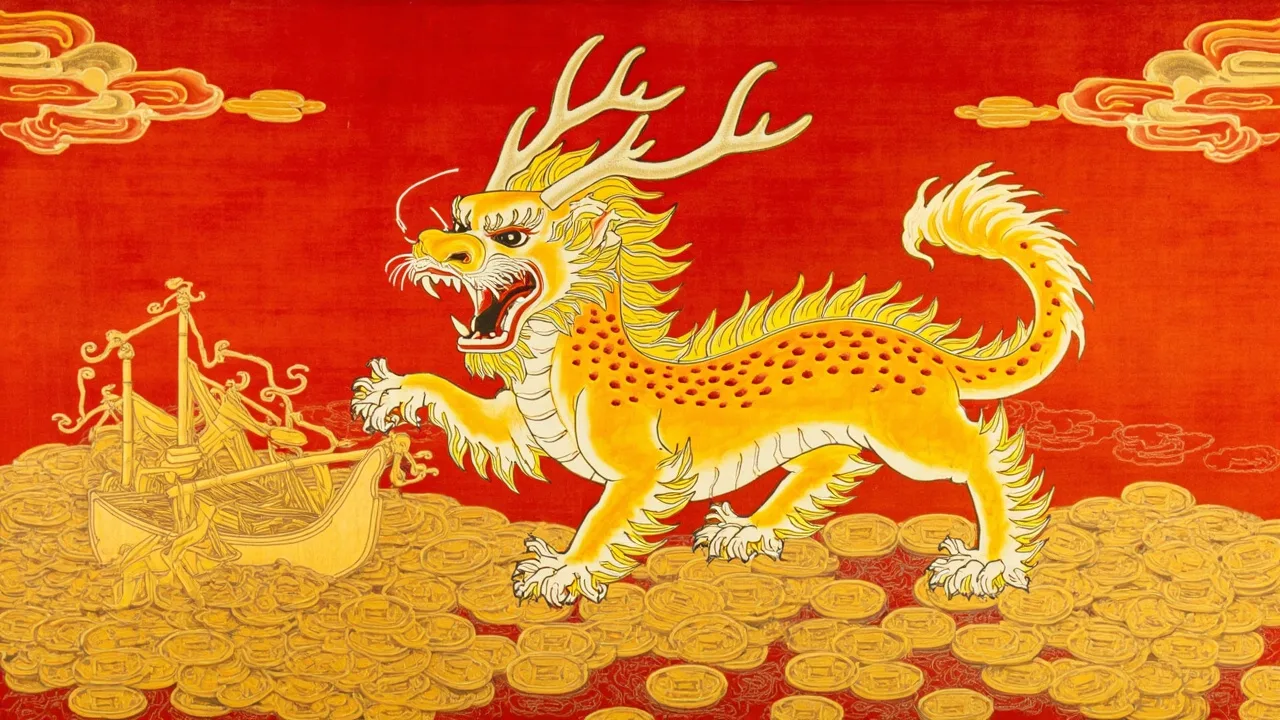
According to Chinese mythology, the pixiu was one of the nine sons of the Dragon King (Ao Jun), the divine ruler of the oceans. The Dragon King had nine sons, each with a different appearance and personality — much like the European legend of the dragon’s nine sons, though the Chinese versions are stranger and more varied. The pixiu was the eighth son, and unlike its fearsome father, the pixiu had an unusual appetite: it loved eating gold, silver, and precious jewels.
Its power was immense. The pixiu could gather wealth from anywhere in the world — from mountain mines, riverbeds, foreign treasuries, anywhere gold or silver existed — and bring it all back to its owner. But here was the catch that makes the pixiu unique among Chinese mythological creatures: the pixiu had no anus. What went into the pixiu never came out.
This sounds like an absurd biological detail, but in Chinese mythology it carries serious spiritual weight. The pixiu is a creature of “in” but not “out” — it attracts wealth but never lets it escape. This is why pixiu pendants are always worn with the head pointing upward (toward the sky, toward opportunities) and never pointing down (which would mean wealth flowing away).
The mythology holds that when the pixiu was first created, it was a somewhat greedy and undisciplined creature. It ate not only gold and silver but also the offerings that common people left for the gods. The Jade Emperor (the supreme Taoist deity) was furious. As punishment, he sealed the pixiu’s排泄 aperture — its exit — so that what it consumed could never be returned. From that moment, the pixiu became the perfect wealth guardian: it ate gold and silver with the same appetite, but now it kept everything it ate.
There is a darker version of the story in which the pixiu was originally a celestial general who offended the Jade Emperor so grievously that he was transformed into the creature and his排泄 powers were sealed as punishment. Either way, the pixiu is both powerful and cursed — a creature of immense use to humans but eternally unable to relieve itself.
Yes, this is as strange as it sounds. And yes, it is taken completely seriously in Chinese business culture.
Tian禄 and the Pixiu: A Military Legend
There is another origin story for the pixiu that appears in some Taoist texts. In this version, the pixiu was a supernatural general named Tian禄 (Tianlu), who served under the supreme Taoist immortal Zhong Kui (not to be confused with the Halloween-style demon slayer of the same name in some Western texts). Tian禄’s duty was to patrol the four directions of the world and ensure that financial energy — what Taoists called “cai qi” or wealth breath — flowed properly through the world.
In this version, the pixiu has four legs (in some depictions), wings (for speed in patrolling), and a fierce but loyal disposition. It does not eat gold — it protects the flow of wealth in the world by standing guard at important intersections and doorways. This is the version most commonly referenced in Feng Shui contexts, where the pixiu is placed at the entrance of homes and businesses to guard the “wealth gate.”
Both origin stories coexist in Chinese popular belief, which is characteristic of how Chinese mythology works: multiple versions, all true simultaneously, all useful.
Pixiu in Feng Shui: Where to Put Your Wealth Guardian
Feng Shui is the ancient Chinese art of arranging living and working spaces to optimize the flow of energy (qi). Like the pixiu itself, Feng Shui has a dual identity: it is taken seriously by millions of practitioners worldwide, and it is dismissed by skeptics as superstition. But the cultural logic behind it is coherent: spaces have energies, and arranging them properly affects how energy flows.
The pixiu is one of the most popular Feng Shui cures for financial luck. Here is how it is used:
Placement: The pixiu should always be placed facing inward — toward the interior of the home or business — not toward the door. This is because the pixiu gathers wealth from the outside world and brings it inside. If it faces the door, it is gathering wealth and then immediately depositing it back outside.
Number: Traditionally, a pair of pixiu is more powerful than one. A pair represents the two dragon sons working in harmony. They are often placed on either side of a wealth symbol (like a bowl of coins or a jade disc) in the wealth corner of a home or office.
Direction: In classical Feng Shui, the pixiu should be placed in the northeast corner of a room (the “wealth corner”) or in the owner’s personal wealth direction based on their Bazi (Four Pillars) birth chart.
Position relative to water: Pixiu should never be placed near water features (fountains, fish tanks, aquariums). Water represents流动性 (flowing/liquid energy) and the pixiu needs solid ground to anchor wealth. Placing them near water can paradoxically make wealth flow away faster.
Pixiu and the Chinese Military
Here is a piece of modern history that few Americans know: the pixiu played a small but real role in a major Chinese military operation.
During the Second Sino-Japanese War (1937–1945), the Nationalist government of Chiang Kai-shek was struggling to finance its resistance against Japan. Chiang’s wife, Soong Mei-ling (Song Mei-ling), was a Christian who had studied in America and was known for her elegance and political sophistication. She famously wore a pixiu pendant given to her by her husband, believing it would protect the financial luck of the Nationalist government.
Whether the pendant actually worked is, of course, unknowable. But the anecdote illustrates how deeply the pixiu is embedded in Chinese political and military culture — even modernizing elites who had studied abroad continued to believe in traditional protective symbols.
More recently, there are persistent rumors in Chinese military circles that certain high-ranking officers keep pixiu figurines on their desks in the Ministry of Defense building in Beijing. Whether or not these rumors are true, they reveal how the pixiu occupies a unique space in Chinese culture — both modern and ancient, both superstitious and practical.
The Pixiu and the Qilin: Guardians of Different Energies
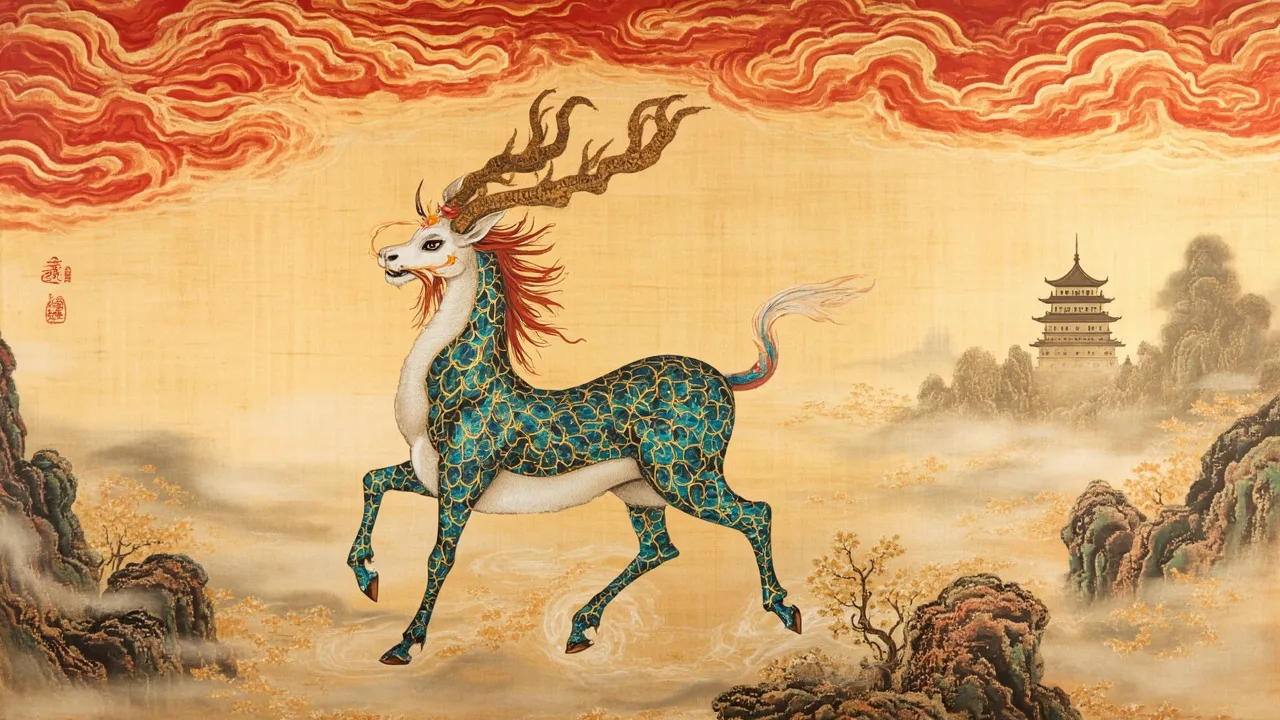
It is easy to confuse the pixiu with the qilin (covered in the previous article), since both are mythical creatures associated with wealth and protection. But they are quite different.
The qilin is a gentle, saintly creature associated with virtue, harmony, and the Mandate of Heaven. It brings no specific material wealth — it brings the broader blessing of a well-governed, harmonious life. A ruler who saw a qilin was judged to be governing well by cosmic standards.
The pixiu is a fierce, dragon-like creature associated specifically with financial wealth. It does not judge rulers. It gathers gold. The pixiu is to the qilin what a Wall Street banker is to a philosopher-king: both deal in important things, but they deal in very different currencies.
In Feng Shui, this difference is reflected in how the two creatures are used. The qilin is placed to bring general harmony and protect against negative energy — it is the family guardian. The pixiu is placed specifically to attract wealth and lock it in place — it is the business guardian.
The Pixiu and Modern Consumer Culture
The pixiu’s transition from mythology to consumer product is one of the most remarkable examples of cultural continuity in the modern world. In the 1990s, as China’s economy boomed and a new middle class emerged, the pixiu became one of the country’s most popular luxury good accessories.
Celebrities were photographed wearing pixiu pendants. Business magazines wrote articles about the “pixiu economy” — a term referring to the enormous market for jade, gold, and precious-metal pixiu ornaments. Jewelry stores in Hong Kong and Shanghai created entire pixiu collections, ranging from affordable brass versions to extraordinary pieces featuring pixiu carved from Hetian jade (the most prized jade in China, worth more per gram than gold).
The pixiu even made it into the digital economy. In 2014, the Chinese mobile game “Fantasy Westward Journey” introduced a pixiu as a mount/companion creature, and it became one of the game’s most popular items. Players spent real money to acquire digital pixiu for their digital characters — a mythological creature born from a dragon king’s son, now monetized in a free-to-play mobile game.
How to Wear a Pixiu: A Practical Guide
If you decide to wear a pixiu pendant — and there is no reason not to, aside from skepticism about Feng Shui — here are the rules that Chinese tradition dictates:
Head up or head down: The pixiu’s head should always point upward, toward the sky. This symbolizes ascending to the heavens for wealth. Never wear the pendant upside down.
Left or right: There is debate about this, but the most common advice is that men should wear the pixiu on the left and women on the right. Some say the reverse. The key principle is consistency — pick a side and stick with it.
Remove when bathing: The pixiu should be removed when bathing, swimming, or doing anything that might soil it. It is a gatherer of pure wealth energy and should not be exposed to dirty water.
Do not let others touch your pixiu: This is critical. The pixiu bonds to its owner. If someone else touches it, the pixiu may transfer its loyalty. This is the mythological equivalent of not sharing your credit card.
Feed it: In some Feng Shui traditions, the pixiu should be “fed” weekly with three gold coins or a small piece of gold jewelry, placed on a plate near the pixiu overnight, then removed. This keeps the pixiu’s appetite strong.