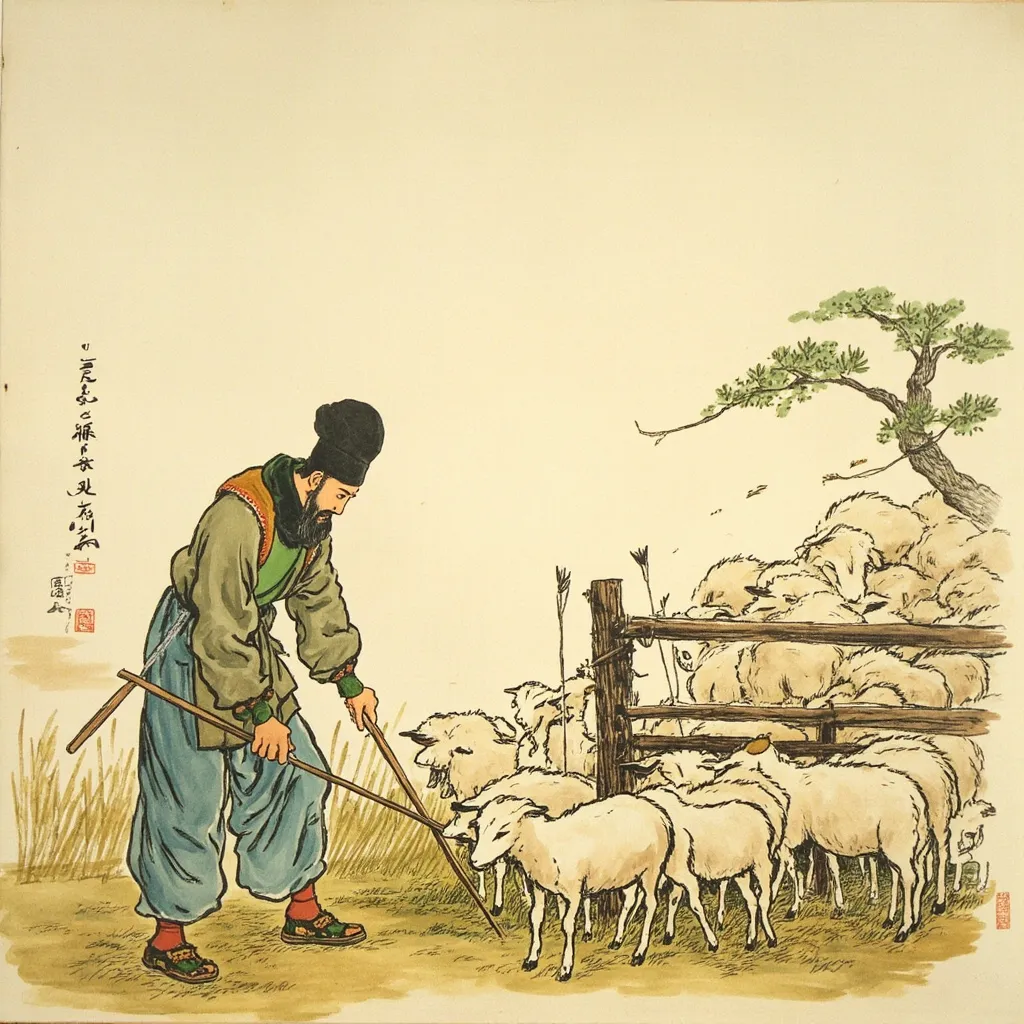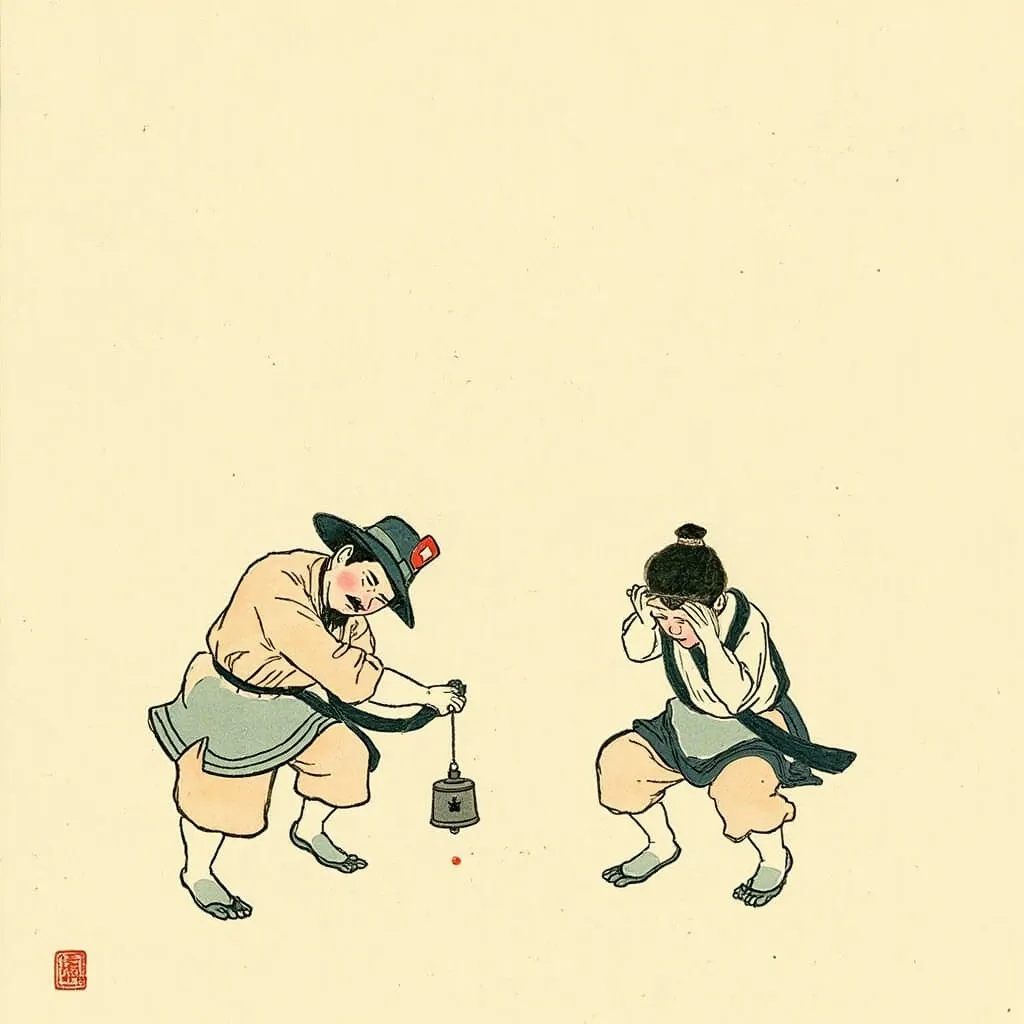
Imagine spending hours crafting the most beautiful, heartfelt message — only to have your audience stare at you with blank confusion. This is the situation an ancient Chinese musician found himself in, and it’s exactly why this timeless idiom still matters today.
The Story Behind the Idiom
The idiom “playing music for an ox” (对牛弹琴, duì niú tán qín) comes from a classic Chinese text called Liezi (列子), a philosophical work compiled during the Warring States period (475–221 B.C.). The story is deceptively simple, but it carries a punch that still lands nearly 2,500 years later.
The protagonist was a man named Gong Mingyi (公明仪), renowned across the land as one of the finest musicians of his day. He played the guqin — an elegant seven-stringed zither that was considered one of the most sophisticated instruments in ancient China. People traveled from distant villages just to hear him perform. His music could make grown men weep, stir the hearts of warriors, and bring a sense of peace to any room.
One spring afternoon, Gong Mingyi went for a walk in the countryside. He came upon a large, sturdy ox standing in a field, grazing contentedly. The ox was healthy and well-fed, its sides rising and falling in a slow, peaceful rhythm. The scene was picturesque — green grass, blue sky, a gentle breeze rustling through the trees.
Gong Mingyi looked at the ox and felt a sudden urge to share his art with this noble creature. After all, wasn’t the ox deserving of beauty too? He sat down on a nearby stone, positioned his guqin carefully, and began to play one of his finest compositions — a piece so moving that it was said to make the clouds pause in the sky and the rivers slow their flow.
The music filled the field. Birds stopped singing to listen. The wind seemed to carry the melody farther than it had ever traveled.
The ox, however, continued grazing. It flicked its tail at a fly. It swished its ears. It showed absolutely no reaction whatsoever to the most exquisite music ever played in that field.
Gong Mingyi tried another piece — something more gentle, more pastoral, designed to evoke the feeling of meadows and sunshine. The ox still didn’t budge. It lifted its head briefly, as if sensing something different in the air, then returned to its meal with the same placid indifference.
After a while, Gong Mingyi realized the problem wasn’t his music. The music was as brilliant as ever. The problem was that he was playing it for an ox.
In frustration — or perhaps in a moment of sudden clarity — he tried one more thing. He began to play a melody that imitated the sound of a calf calling for its mother. A short, plaintive “moo” repeated in musical patterns. And the ox? It immediately raised its head, perked up its ears, and walked toward the music, looking genuinely interested for the first time.
The ox didn’t care about sophisticated guqin compositions. It cared about things it could understand — the sound of another calf, the call of its own kind.
This is the origin of 对牛弹琴: playing beautiful music for an ox. The idiom describes the act of trying to communicate something profound to someone who simply cannot appreciate it — not because the message is wrong, but because the audience is wrong.
What This Idiom Really Means
At its core, 对牛弹琴 is about the mismatch between sender and receiver in any act of communication. It’s a reminder that good communication isn’t just about having something valuable to say — it’s about saying it to the right person, in the right way, at the right time.
The literal meaning is obvious: you can’t expect an ox to appreciate guqin music. But the deeper meaning cuts to something universal. How many times have you poured your heart into an explanation, a proposal, a piece of advice, or an expression of love — only to have it completely missed, ignored, or misinterpreted?
It happens to everyone. A manager gives a brilliant strategic presentation to a team that just wanted clearer instructions on their daily tasks. A parent explains their feelings to a teenager who isn’t developmentally ready to process that level of emotional complexity. A scientist writes a dense, technical paper trying to communicate climate risks to the general public. In each case, the message may be excellent — but it’s being delivered to the wrong audience, in the wrong language.
The idiom doesn’t criticize the quality of the message. It doesn’t say the music was bad. It simply points out a fundamental truth: communication requires compatibility between the speaker and the listener. You can have the most beautiful ideas in the world, but if you’re speaking to people who can’t receive them, your efforts will always fall flat.
This is why the idiom has been used for centuries in China as a gentle (sometimes pointed) reminder about knowing your audience. It’s quoted in political speeches, business meetings, educational discussions, and relationship advice. It’s one of those proverbs that seems simple on the surface but reveals new layers of meaning the more you think about it.
The Modern Workplace Application
Few places illustrate the “playing music for an ox” problem more clearly than the modern workplace. Every day, brilliant strategies fail not because they were bad ideas, but because they were presented to the wrong people, in the wrong format, at the wrong time.
Consider the manager who walks into a meeting full of frontline employees and delivers a sweeping vision statement about “disrupting the industry through synergistic cross-functional leverage.” The employees nod politely. They write nothing down. And within five minutes of leaving the room, they’ve forgotten everything they heard — not because they’re unintelligent, but because the message was calibrated for a completely different audience.
Or the consultant who produces a 200-page report dense with data analysis and strategic frameworks, only to find that the client — a small business owner — just wanted three clear action items they could implement next week. The report was impressive. It was thorough. It was probably correct. But it was guqin music played for an ox.
What these situations share is a failure of audience calibration — the speaker’s inability or unwillingness to adjust their message to match the knowledge, context, and needs of their listeners. The most common culprit? Speakers who are so in love with their own message that they forget to ask whether anyone else can receive it.
The idiom teaches us that true communication wisdom isn’t about speaking beautifully — it’s about speaking appropriately. It means meeting people where they are. It means asking questions before launching into presentations. It means being humble enough to recognize that your brilliant ideas only have value if they can actually land with the people you’re trying to reach.
In practical terms, this might mean replacing industry jargon with plain language when speaking to non-specialists. It might mean leading with “what’s in it for you” instead of diving into features and specifications. It might mean saving the detailed data analysis for the people who actually want to dig into it, while giving everyone else a clear, high-level summary they can act on.
The best communicators — the ones who actually move people and get things done — have learned to put their pride aside and adapt. They’ve learned that sometimes you need to play the calf’s call instead of the guqin. And that doesn’t make the guqin any less beautiful. It just makes you a better musician.
What This Says About Relationships
The idiom applies just as powerfully to personal relationships as it does to the workplace. How many arguments, misunderstandings, and silent resentments have their roots in the same fundamental problem — two people trying to communicate across a gulf of completely different emotional languages?
Think about the partner who expresses love through acts of service — cooking meals, fixing things around the house, running errands — but whose spouse primarily experiences love through words of affirmation and physical touch. The first partner works tirelessly, pouring genuine love into every task. But the second partner feels unloved, unheard, unseen. Both people are trying. Both people are failing. The message is genuine on both sides. But the frequencies don’t match.
Or consider the parent who grew up in a culture that expressed care through direct criticism and correction — “I’m hard on you because I want you to succeed” — trying to communicate with a child who interprets that same tone as rejection or contempt. The parent’s intent and the child’s interpretation are so misaligned that no amount of genuine love can bridge the gap through that communication style alone.
This is 对牛弹琴 in its most human form. Not a failure of love, but a failure of translation. Two people who care about each other deeply, speaking past each other because they haven’t learned to speak each other’s language.
The solution isn’t to stop expressing love — it’s to learn the other person’s language. It means being curious about how the other person actually experiences care, not just how you intend to show it. It means being willing to adjust your methods when your current approach isn’t landing. It means accepting that your way of seeing the world isn’t the only way, and that other people have equally valid — if different — ways of receiving and interpreting messages.
The Other Side of the Coin
Here’s something worth considering: the idiom can also be turned around. Sometimes the person playing the music isn’t the one at fault — it’s the ox who needs to grow.
If you find yourself consistently unable to understand someone’s message, it might be worth asking whether the problem is really with their communication style, or whether there’s something in your own frame of reference that needs to expand. Great learners, curious minds, and emotionally mature people don’t just wait for the world to speak their language — they work to understand languages they haven’t yet learned.
In that sense, the idiom serves as a two-way mirror. For speakers: adapt your message to your audience. For listeners: stretch yourself to understand perspectives and communication styles that aren’t native to you. Both directions lead to better communication. Both are signs of wisdom.
There’s also a cautionary note here about snobbery. Just because someone doesn’t appreciate your sophisticated guqin music doesn’t mean they’re stupid. The ox isn’t stupid — it’s just an ox. It has different concerns, different interests, and a completely different framework for experiencing the world. Understanding that difference isn’t a judgment on either party. It’s simply the first step toward effective communication.
Conclusion
The story of Gong Mingyi playing guqin for an ox is one of those ancient parables that seems almost too simple to contain much wisdom — and then you realize you’re still thinking about it hours later. Because the core insight is as true today as it was in the Warring States period: the most beautiful message in the world will fail if it reaches the wrong audience.
This doesn’t mean you should dumb down your ideas, abandon your standards, or only speak to people who already agree with you. It means you should be thoughtful about who you’re speaking to, how you’re speaking to them, and whether your message is calibrated to actually land. It means understanding that communication is a two-way street, and that the responsibility for making a connection doesn’t rest solely on the speaker’s shoulders — though the speaker does hold a significant share of it.
Next time you find yourself frustrated that nobody seems to “get” what you’re trying to say, pause and ask yourself a simple question: am I playing guqin music right now? If you are, maybe it’s time to try the calf’s call. Your message is still beautiful. It just needs to find its way to someone who can hear it.
📚 Recommended Reading & Products
Disclosure: This article contains affiliate links. We earn a commission on qualifying purchases.