The Qin Dynasty: How One Man’s Vision Created China’s First Empire
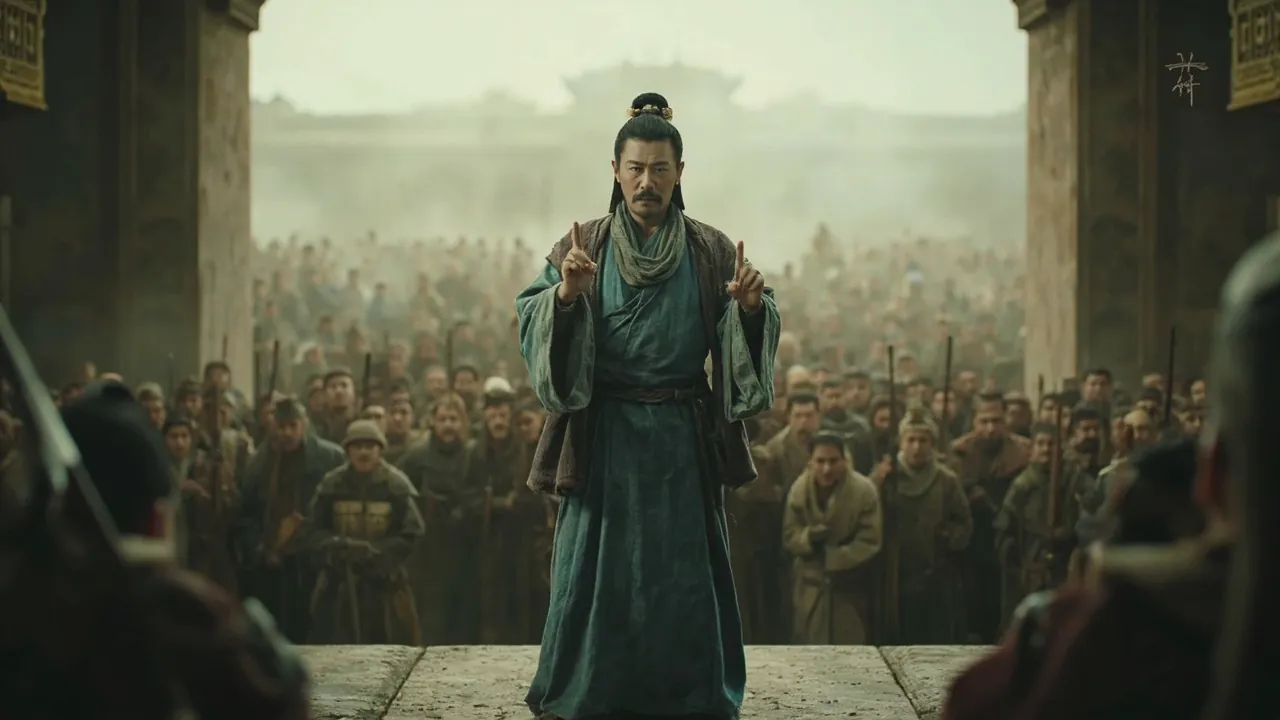
In 221 BC, a ruthlessly ambitious king from the western state of Qin did something that no one in Chinese history had ever accomplished—he unified seven warring kingdoms into a single empire. The man who achieved this was Ying Zheng, a ruler who would later call himself Qin Shi Huang, meaning “First Sovereign Emperor.” His vision transformed a fractured collection of states into the first unified Chinese empire, a political entity that would shape the destiny of a civilization for over two thousand years.
The Qin Dynasty lasted only fifteen years, from 221 to 207 BC. That’s barely a blink of an eye in historical terms. Yet in that short time, Qin Shi Huang and his government accomplished feats that still amaze us today. They built the first version of the Great Wall, created the world-famous Terracotta Army, standardized weights and measures across an entire nation, and established administrative systems that later dynasties would build upon. The Qin Dynasty was like a thunderclap—brief, loud, and impossible to ignore.
If you’ve ever looked at a map of China and wondered how such a vast and diverse country came to be unified, the story of the Qin Dynasty is where that story begins. It’s a tale of ambition, ruthless efficiency, groundbreaking achievements, and ultimately, tragic collapse. Let’s dive into the world of ancient China and discover how one man’s dream of empire changed the course of human history.
The Rise of Qin Shi Huang
The story of the Qin Dynasty begins not with Qin Shi Huang, but with his ancestors. The state of Qin was located in what is now the western region of Shaanxi province, a mountainous area surrounded by natural barriers that provided some protection from neighboring states. For centuries, Qin had been considered a backward border state, looked down upon by the more sophisticated kingdoms in the east. The rulers of Qin were seen as rough, militaristic, and lacking the cultural refinement of their rivals.
Everything changed when King Ying Yi became ruler in 361 BC. He recognized that if Qin was to survive in the brutally competitive world of the Warring States period, the kingdom needed to modernize. He began by hiring reform-minded officials and implementing policies that would strengthen the state. But the most transformative leader was yet to come.
In 246 BC, a thirteen-year-old boy named Ying Zheng became King of Qin. He was the son of King Zichu, who had ruled for only three years before dying under suspicious circumstances. The new young king inherited a kingdom that was already changing rapidly, but he would take those changes to an entirely new level.
The early years of Ying Zheng’s reign were dominated by a powerful minister named Lü Buwei. Lü Buwei had been instrumental in placing Ying Zheng’s father on the throne, and he continued to wield enormous influence as the young king grew up. Lü Buwei was a pragmatic thinker who believed in the philosophy of Legalism—more on that later—and he used his position to push through reforms that strengthened Qin’s military and administrative capabilities.
But as Ying Zheng matured, he began to assert his own authority. The young king was ambitious, intelligent, and above all, determined to fulfill what he saw as his historical destiny: unifying all of China under Qin’s rule. Around the age of twenty-two, Ying Zheng took direct control of his government, dismissing Lü Buwei and his supporters. From that moment on, he would be the sole architect of Qin’s destiny.
What made Qin different from its rivals? Several factors came together. First, Qin’s geography, while somewhat isolated, gave it a defensible position that allowed the state to focus its energy outward rather than constantly defending against attacks. Second, Qin had access to the fertile Guanzhong plain, which provided agricultural wealth. Third, and most importantly, Qin developed a highly efficient administrative system based on meritocracy rather than noble birth. Officials were promoted based on their abilities and achievements, not their family connections. This created a government that could respond quickly to challenges and implement policies effectively.
Under Ying Zheng’s leadership, Qin began systematically conquering its neighbors. The process would take about nine years, but when it was finished, the map of China would be forever changed.
Unifying China
In 230 BC, Qin launched its first major offensive against one of the seven warring states: Han. This kingdom, located in what is now Henan province, was the smallest and weakest of the major states. Within two years, Han had fallen. The pattern would repeat with the other states, each falling to Qin’s superior military organization and tactics.
The Qin armies were famous for their discipline and efficiency. They used iron weapons that were superior to the bronze weapons still used by some rival states. They developed new military strategies, including the use of heavy cavalry and coordinated infantry formations. And they were relentlessly aggressive, pressing their attacks even when other kingdoms might have paused to consolidate their gains.
After Han came Wei in 225 BC, then Zhao in 222 BC, Yan in 222 BC, and finally Qi in 221 BC. Each conquest followed a similar pattern: Qin would first weaken its opponent through diplomatic pressure and economic warfare, then deliver a crushing military blow. The northern state of Chu, which had the largest territory, took longer to conquer, but it too fell to Qin’s relentless advance.
When Qi, the last independent kingdom, surrendered in 221 BC, Ying Zheng accomplished what no Chinese ruler had ever done—he unified all of the warring states into a single empire. The young king, now just thirty-eight years old, had achieved his life’s goal. But he wasn’t content to simply call himself king of a unified territory. That title was far too ordinary for someone who had accomplished something so unprecedented.
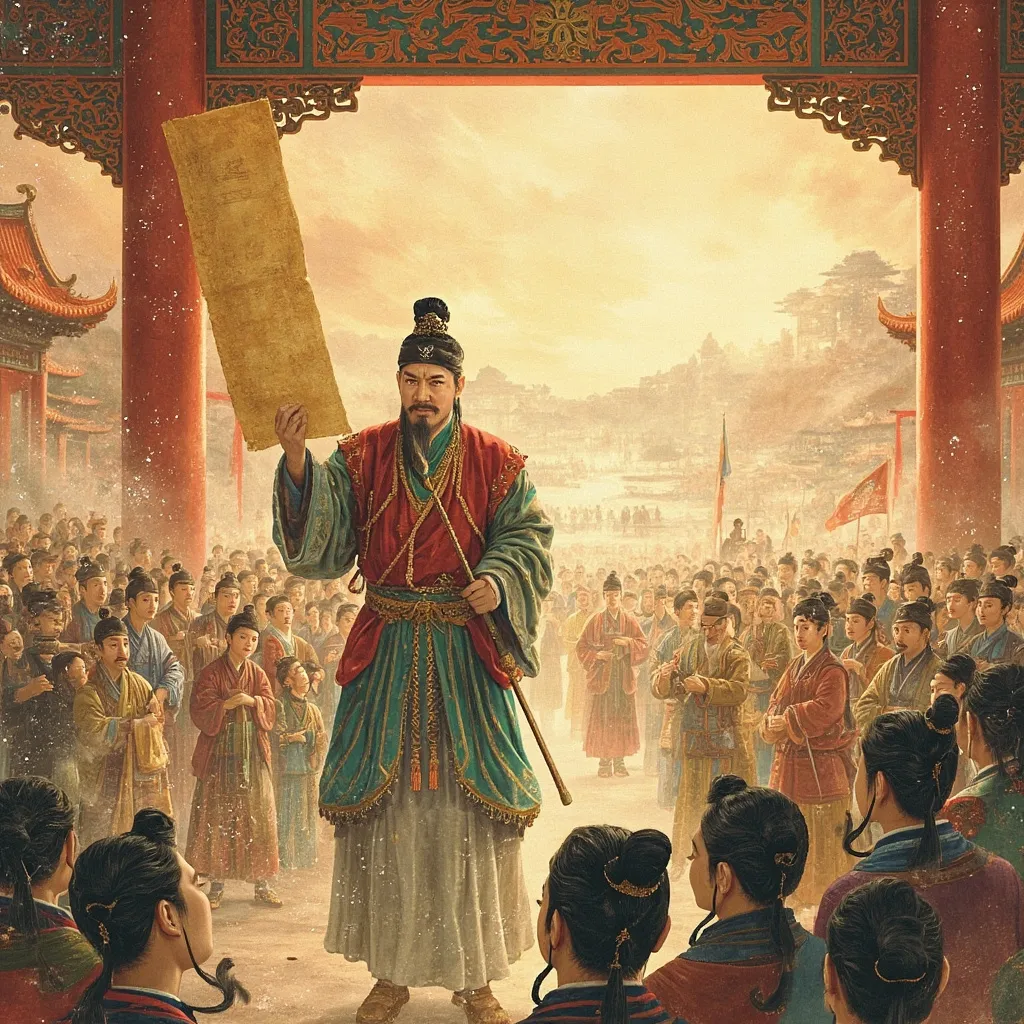
Instead, Ying Zheng created a new title that would resonate through Chinese history for over two thousand years. He called himself Qin Shi Huang, which translates roughly to “First Sovereign Emperor.” He combined the characters for “Qin” (his state) with “shi” (meaning “first” or “beginning”) and “huang” (the ancient term for a supreme ruler). The title explicitly claimed that he was the first of a new line of emperors who would rule all of China. Future rulers would call themselves “Huangdi,” and the term would become synonymous with supreme authority in Chinese political culture.
Qin Shi Huang now ruled an empire that stretched from the mountains of modern-day Sichuan in the southwest to the coastal plains of Shandong in the east. It was vast, diverse, and incredibly difficult to govern. But the First Emperor was determined to create a truly unified nation, not just a collection of conquered territories. The reforms he implemented would transform China in ways that are still visible today.
The Terracotta Army
One of the most remarkable achievements associated with the Qin Dynasty is the Terracotta Army, a collection of life-sized clay soldiers that were buried with Qin Shi Huang to protect him in the afterlife.discovered entirely by accident in 1974, this archaeological wonder has become one of the most famous historical sites in the world.
The story of the Terracotta Army begins with Qin Shi Huang’s obsession with immortality. Like many古代中国统治者, the First Emperor was fascinated by the idea of achieving immortality and living forever. He was reportedly terrified of death and spent enormous resources searching for elixirs of life. He also believed that he would need an army in the afterlife, just as he had needed one in life.
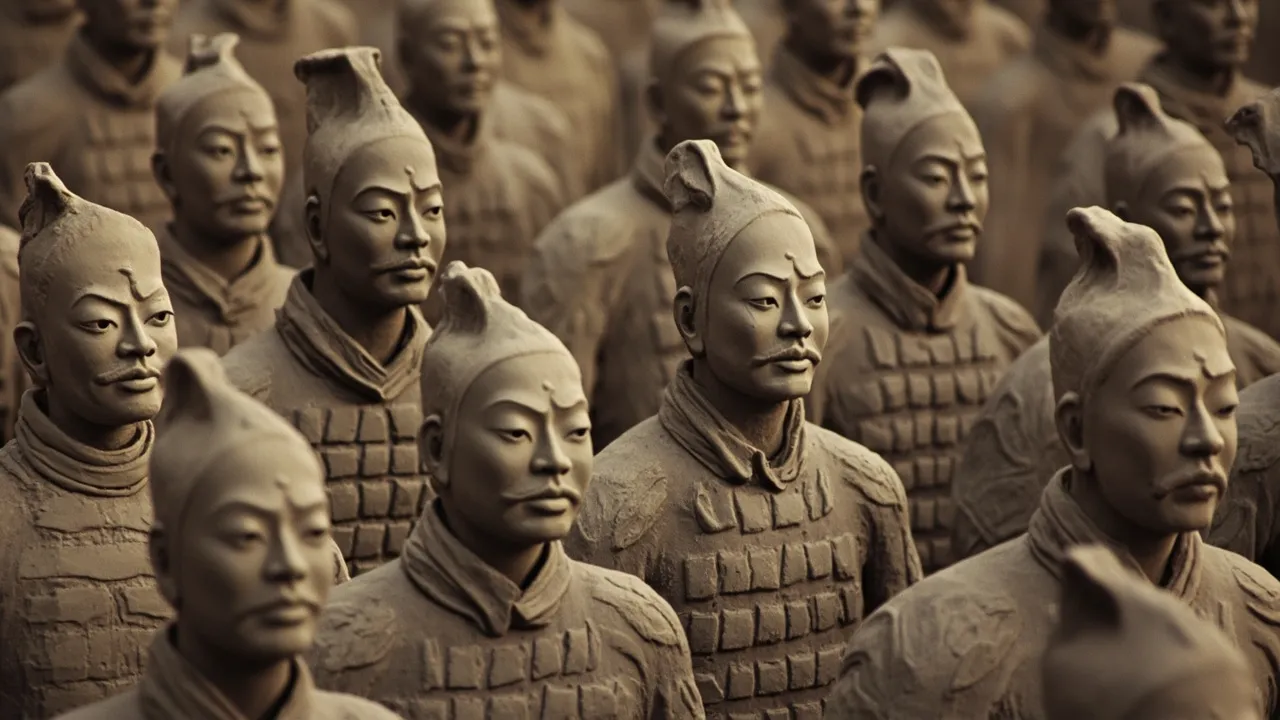
So he ordered the creation of an army unlike anything the world had ever seen. More than 8,000 life-sized terracotta soldiers, horses, and chariots were crafted by skilled artisans and buried in elaborate underground pits near his tomb. Each figure was individually sculpted, with unique facial features, hairstyles, and expressions. The level of detail is extraordinary—every soldier has different facial features, and the hairstyles and uniforms reflect actual Qin military practices.
The army is arranged in battle formation, with infantry soldiers, cavalrymen, archers, and charioteers all represented. The figures are positioned as if they were about to go into battle, with generals standing in command positions behind the front lines. It’s believed that the army was meant to protect Qin Shi Huang in his journey through the afterlife and to help him maintain his power even in death.
The discovery in 1974 was entirely accidental. A group of farmers digging a well near the city of Xi’an struck hard earth instead of finding water. They had no idea that beneath their feet lay one of the greatest archaeological discoveries of the twentieth century. When archaeologists began excavating the site, they found thousands of terracotta figures broken into pieces. The restoration work has taken decades and is still ongoing.
What’s particularly remarkable is the scale of the project. Modern archaeologists estimate that creating an army of this size would have required the labor of hundreds of thousands of workers over decades. The project would have been enormously expensive and would have pulled resources away from other state projects. Yet Qin Shi Huang ordered it anyway, convinced that his afterlife was just as important as his reign in the living world.
The Terracotta Army is now a UNESCO World Heritage Site and one of China’s most popular tourist attractions. Visitors to the site can see the excavated pits and the partially restored figures. It’s a powerful reminder of the ambition and resources of the First Emperor—and of the human cost of his grand projects.
Building the Great Wall
Perhaps no other structure in China is more iconic than the Great Wall. While most of the wall that visitors see today was built during the Ming Dynasty (1368-1644), the origins of this massive defensive project date back to the Qin Dynasty and the era of Qin Shi Huang.
After unifying China, Qin Shi Huang faced a serious threat from the north: the nomadic Xiongnu tribes, skilled horsemen who raided Chinese settlements and threatened the empire’s borderlands. These weren’t enemies that could be conquered through traditional warfare—they were mobile warriors who could strike quickly and vanish into the steppes. To protect against these raids, Qin Shi Huang ordered the construction of a massive defensive barrier.
The First Emperor tasked General Meng Tian with building the wall. Meng Tian was one of Qin’s most capable military commanders, and he threw himself into the project with characteristic efficiency. He was given command of an army of 300,000 soldiers and forced laborers, and he began connecting and extending existing defensive walls that various states had built along their northern borders.
The wall wasn’t built all at once or in a single continuous line. Instead, it was a series of fortifications, natural barriers, and constructed walls that together created a defensible boundary. Workers used local materials—earth, stone, sand, and whatever else was available—to create walls that could slow down enemy cavalry and provide early warning of attacks.
The human cost of this construction was staggering. Historical records suggest that hundreds of thousands of workers died during the wall’s construction. Many were soldiers and prisoners of war, but others were peasants conscripted for forced labor. The conditions were brutal, and the death toll was enormous. The wall became known as the “longest cemetery in the world” because of the countless workers who died and were reportedly buried within the structure itself.
For Qin Shi Huang, the wall was essential to protecting his empire. But it was also a symbol of his power and a physical manifestation of his determination to defend China against all threats. The wall declared to the nomadic peoples of the north that China was now unified and would not be an easy target.
While the Qin-era wall was eventually neglected and fell into disrepair, the concept of the Great Wall remained important to Chinese rulers for millennia. Later dynasties would invest in maintaining and extending the wall, and it remains today as one of the most impressive engineering achievements in human history.
Standardizing Everything
Qin Shi Huang’s most lasting contribution was transforming China into a unified nation in ways that still matter today. When he conquered the seven kingdoms in 221 BC, each had developed its own traditions, writing systems, currencies, and measurement standards. A merchant traveling from one state to another might discover that his currency was worthless, that his scales meant something different, or that he couldn’t even read the local laws.
So Qin Shi Huang mandated sweeping reforms. First, he standardized the Chinese writing system. Before this, each state used different characters—the same word might look completely different depending on where you were. Qin Shi Huang ordered a uniform script that let officials communicate anywhere in the empire. This script became the ancestor of Chinese characters still used today.
He also standardized weights and measures. A foot in one region now measured the same as a foot anywhere else. This made trade simpler and tax collection far easier.
Next came currency. The old kingdoms minted their own coins with different designs and values. Qin mandated a single coinage that worked everywhere, binding the empire’s economy together.
Cart axles might seem like a small detail, but it mattered enormously. Before, carts built in one region often couldn’t travel on roads in another because the wheel ruts didn’t match. Mandating uniform axle widths opened the door to a national road system.
Finally, Qin imposed a uniform legal code across the empire. Rather than letting each region keep its own laws, everyone—from the highest noble to the poorest farmer—faced the same rules and punishments.
These reforms were revolutionary. They turned China from a patchwork of semi-independent regions into a functioning unified nation, setting the template that every subsequent Chinese dynasty would follow.
The Legalist Philosophy
To understand how Qin Shi Huang pulled off such dramatic transformations, you need to understand the philosophy that drove his rule: Legalism.
During the Warring States period, Chinese thinkers developed various schools of philosophy to address the political and social challenges of their time. Confucianism emphasized moral virtue and proper relationships. Daoism taught harmony with nature and simplicity. But Legalism offered something different—a ruthlessly efficient approach to governance.
The Legalists believed human beings were naturally selfish and prone to wrongdoing. Relying on moral virtue to govern was naive, they argued. What a well-run state needed was clear laws, strict enforcement, and harsh punishments. Do what the law requires, and you will be rewarded. Break the law, and you will be punished—swiftly and mercilessly.
Han Fei was the most influential Legalist thinker, and his writings profoundly shaped Qin Shi Huang. Han Fei argued that a ruler needed two things: “fa” (law or standards) and “shu” (technique). The ruler establishes clear laws, then uses various methods to ensure his officials carry them out faithfully. The ruler himself stays above the fray, using his ministers as tools and never letting any single individual become too powerful.
Qin Shi Huang embraced Legalist principles completely. He implemented laws that were strict, clear, and applied equally to everyone—from the highest noble to the lowest peasant. Punishments were severe, often involving corporal punishment or death. The infamous “burning of the books” episode—where he ordered the destruction of historical records and philosophical texts he considered subversive—came from Legalist fears about the dangers of independent thinking.
The Legalist system was incredibly effective at mobilizing resources and enforcing the ruler’s will. It let Qin raise large armies, construct massive public works, and implement sweeping reforms in a relatively short time. In many ways, it was the secret behind Qin’s success in unifying China.
But Legalism had a dark side. The system relied on fear and punishment rather than consent or loyalty. It treated ordinary people as instruments of state policy, to be used and discarded as needed. And it provided no mechanism for popular discontent to be expressed peacefully. When things went well, the system achieved remarkable results. When they went wrong, there was no safety valve to release the pressure.
The harshness of Legalist rule would ultimately contribute to the Qin Dynasty’s collapse. But for a brief moment in history, it provided the ideological foundation for one of the most dramatic transformations any society has ever experienced.
The Fall of the Qin
In 210 BC, Qin Shi Huang died during a tour of eastern China. He was fifty years old, and despite his obsession with immortality, he’d failed to find the elixir of life. His death would trigger a chain of events that destroyed everything he’d built.
The First Emperor had two serious problems with succession. First, he had many children but never clearly designated an heir. Second, his eldest son, Fusu, was considered too soft and moderate—a Confucian-style thinker who might undo all of Qin’s Legalist reforms. So when Qin Shi Huang died, the empire was thrown into uncertainty.
The man who controlled the succession was a court official named Zhao Gao. Zhao Gao was a eunuch who’d served the First Emperor for years and had enormous influence over the dying emperor. After Qin Shi Huang’s death, Zhao Gao conspired with the Second Emperor (the First Emperor’s youngest son, Ying Huhai) to falsify imperial edicts. They claimed the First Emperor had ordered Fusu to commit suicide, which he did. Then they placed the Second Emperor on the throne.
The Second Emperor was even more tyrannical than his father. Under his rule, the empire’s already heavy taxation and conscription increased dramatically. Large-scale construction projects continued unabated. The legal system became even harsher and more arbitrary. The population, already strained by decades of wars and public works, was pushed to the breaking point.
In 209 BC, just a year after Qin Shi Huang’s death, a major rebellion erupted. A peasant named Chen Sheng had been conscripted to serve in the army but arrived late to his post due to heavy rain. He decided he’d rather die in rebellion than face the expected punishment. He raised the standard of revolt, and thousands of peasants joined him. The rebellion spread quickly across the empire.
What followed was a chaotic period of civil war. Various rebel leaders raised armies against the Qin government, and the empire’s centralized system couldn’t cope with so many simultaneous threats. The Qin armies, once the most powerful in China, found themselves fighting on too many fronts. Local officials—many appointed by the central government but with little loyalty to it—began defecting to rebel causes.
In 207 BC, the Qin Dynasty finally collapsed when the last Qin emperor surrendered to a rebel army. The empire Qin Shi Huang had built with such effort and ambition lasted only fifteen years. It was one of the shortest-lived major dynasties in Chinese history.
Here’s the remarkable thing: the fall of the Qin Dynasty didn’t undo its accomplishments. The unified empire Qin Shi Huang created remained the basic political unit of Chinese civilization for the next two thousand years. Even though the Qin Dynasty ended, the idea of a unified China persisted. The Han Dynasty, which followed the Qin, would adopt and adapt many Qin institutions, preserving the basic framework the First Emperor had created.
Legacy
The Qin Dynasty was short-lived—just fifteen years—but its legacy is enormous. In that brief time, Qin Shi Huang and his government established patterns that would shape Chinese civilization for millennia.
Most obviously, the Qin Dynasty established the precedent of a unified Chinese empire. After the Qin fell, China experienced another period of civil war (the Chu-Han Contention), but when a new dynasty emerged—the Han—it inherited the basic territorial framework the Qin had created. The concept of a unified China, ruled by a single emperor and administered through a centralized bureaucracy, became the standard model for Chinese political organization. Every major dynasty that followed, from the Han to the Ming, would base its government on the Qin model.
The standardization reforms also endured. The uniform writing system Qin Shi Huang mandated became the foundation for Chinese literacy and culture. Despite differences in pronunciation and local dialects, educated Chinese people across the empire could communicate through writing. This cultural unity helped forge a shared Chinese identity that transcended regional differences. The standard weights and measures, the unified currency, the common legal code—all these innovations were refined and improved over the centuries, but the basic principle of standardization remained central to Chinese governance.
The Great Wall, though it fell into disrepair after the Qin, became a recurring project for Chinese rulers. Later dynasties invested enormous resources in maintaining and extending the wall, recognizing its strategic importance. Today, the Great Wall is the most recognizable symbol of China in the world.
And then there’s the Terracotta Army, which has become a window into the ancient world for millions of visitors. The site near Xi’an attracts millions of tourists each year, and the ongoing excavation and restoration work continues to reveal new details about Qin culture and technology.
But perhaps the most profound legacy of the Qin Dynasty is more subtle. The Qin demonstrated that China could be unified—that the various states and regions of the Chinese heartland could be brought together under a single government. This was an achievement of enormous significance, and it transformed the political landscape of East Asia. Even when the Qin Dynasty itself collapsed, the idea of a unified Chinese empire persisted. It became the default assumption of Chinese political culture, the goal that every new dynasty aspired to achieve.
Qin Shi Huang died in 210 BC, but his shadow has loomed over Chinese history ever since. He was a brutal tyrant whose rule caused immense suffering. He burned books, buried scholars alive, and worked countless laborers to death on massive construction projects. In terms of human lives, his reign was a catastrophe.
And yet, he also created something new—a unified Chinese empire that would endure for over two thousand years. He standardized the writing system that still carries Chinese culture across space and time. He built roads and canals that connected the empire. He created administrative institutions that future dynasties would build upon.
Love him or hate him—and Chinese history has done both—you cannot ignore him. Qin Shi Huang was the First Emperor, and everything that followed in Chinese history happened in the context of the empire he created. The Qin Dynasty was brief, but its impact was eternal.
If you ever visit Xi’an and stand before the Terracotta Army, watching those thousands of silent figures staring out at you across more than two millennia, you’ll understand something about the Qin Dynasty’s enduring power. It’s not just an archaeological site—it’s a monument to one man’s impossible ambition, and to the civilization that grew from his vision.
📚 Recommended Reading & Products
Disclosure: This article contains affiliate links.