The Qing Dynasty: China’s Last Imperial Dynasty
When you think about Chinese emperors, the Qing Dynasty probably springs to mind—that final chapter of imperial China before the modern republic emerged. The Qing was the last of China’s great dynasties, ruling from 1644 all the way until 1912. That’s nearly 270 years of history, spanning from the height of imperial power to dramatic encounters with Western powers that would reshape East Asia forever.
What makes the Qing particularly fascinating is that it was founded not by ethnic Han Chinese, but by the Manchus—a people from northeastern China who created one of the most sophisticated multi-ethnic empires in world history. Understanding the Qing helps us grasp how modern China came to be, and why certain cultural and political traditions run so deep.
The Rise of the Manchus
The Qing story begins in the early 17th century, when a tribal confederation called the Jurchens dominated the northeastern frontier of the Ming Dynasty. In 1635, their leader Hong Taiji renamed his people “Manchu” and two years later declared himself emperor, establishing the Later Jin Dynasty. This eventually became the Qing (which literally means “pure” or “clear”).
The Manchus didn’t take Beijing by surprise—they’d been gradually expanding their power for decades, building alliances with Mongol and Tibetan leaders and recruiting Han Chinese officials who saw advantages in working with the new regime. When the Ming Dynasty finally collapsed in 1644 amid peasant rebellions, the Manchus seized their moment. The Ming general Wu Sangui, defending the Great Wall against rebel forces, made the crucial decision to invite Manchu troops into Beijing to restore order. That invitation turned into an occupation, and the Qing never left.
The new rulers faced a serious challenge: they were a relatively small ethnic group governing a massive population of Han Chinese. Their solution was brilliant and ruthless. They enforced the “Queue Order” in 1645, requiring all men to adopt the Manchu hairstyle—shaving the forehead and growing a long braid called a queue—as a visible sign of loyalty. Resistance to this was fierce, and it took decades before the queue became universally accepted. This policy wasn’t just about hair—it was about reminding everyone who was in charge.
The Golden Age: Kangxi, Yongzheng, and Qianlong
If there’s a single reason the Qing Dynasty deserves your attention, it’s the incredible run of emperors who made it one of the most prosperous periods in Chinese history. The Qing produced some of the most capable rulers the world has ever seen, and their reigns shaped Chinese culture in ways we still see today.
Kangxi Emperor (r. 1661-1722) was the longest-reigning emperor in Chinese history—61 years on the throne. Born just eight years after the Qing took Beijing, he inherited a kingdom that still faced resistance from Ming loyalists and local warlords. By the time he died at age 68, he had consolidated Manchu control, expanded China’s borders to their greatest historical extent, and created an era of remarkable cultural and intellectual achievement.
Kangxi was a genuine polymath. He learned mathematics, astronomy, and Western sciences from Jesuit missionaries who had arrived at his court. He personally oversaw the compilation of the Kangxi Dictionary, the most comprehensive Chinese character dictionary ever created, which remains a scholarly resource today. He also instituted policies that allowed China’s population to explode—from roughly 150 million at his accession to over 400 million by the end of the Qing—through reforms that gave peasants more security in farming their land.
His grandson Qianlong Emperor (r. 1735-1796) took these achievements even further. Qianlong was obsessed with conquest and culture in equal measure. Under his rule, China reached its territorial peak, absorbing Xinjiang, Tibet, Mongolia, and parts of Central Asia into the empire. He was also an avid patron of the arts, commissioning massive literary projects like the Complete Library of the Four Treasuries—a massive encyclopedic collection that attempted to preserve all of Chinese literature.
But here’s where the Qing story gets complicated. Qianlong’s reign also marked the beginning of the end. He surrounded himself with corrupt officials, and his later years saw the empire’s finances begin to strain under the weight of endless military campaigns and imperial extravagance. The famous poet Cao Xueqin wrote “Dream of the Red Chamber” during this period—a novel that’s still considered one of the greatest works of Chinese literature—and its story of a noble family’s decline feels almost like an omen for what was coming.
Culture and Society Under the Qing
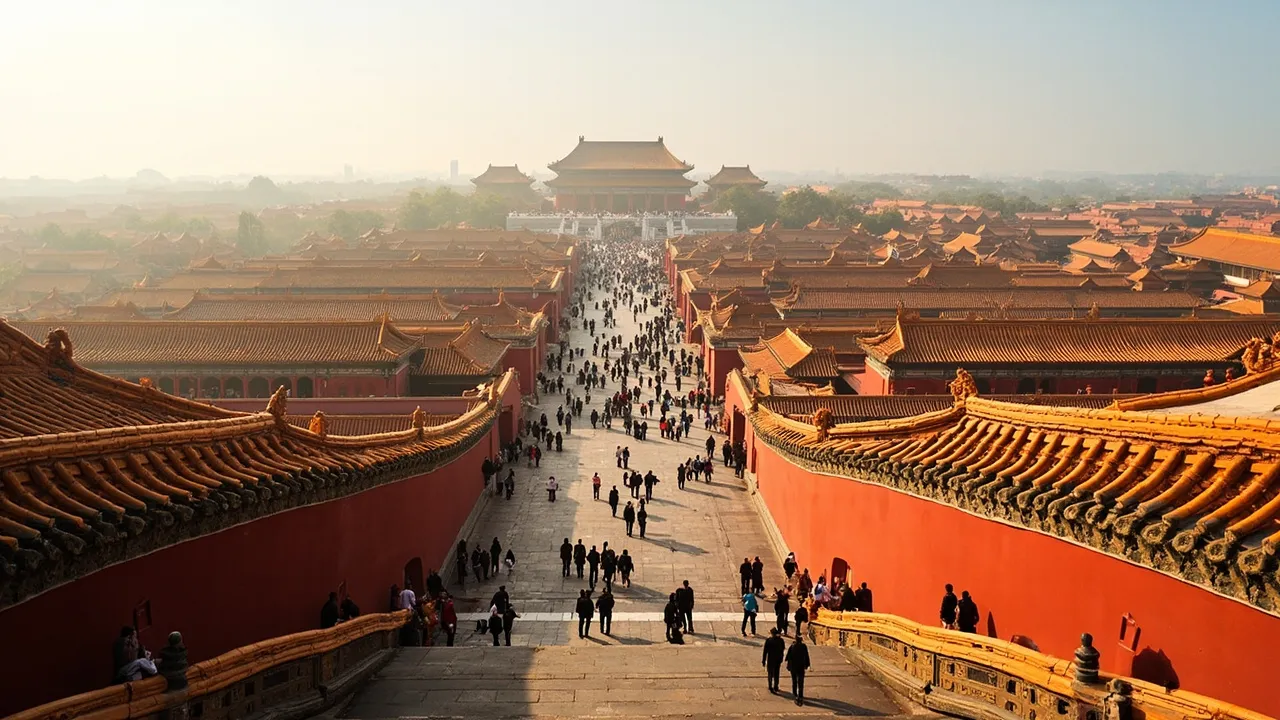
The Qing Dynasty left an enormous cultural legacy that still shapes Chinese identity today. This was the era when many quintessentially “Chinese” traditions took their final form, from Beijing opera to the distinctive architecture of the Forbidden City that you can still visit in modern Beijing.
The Manchus brought their own cultural traditions to the Chinese heartland, and over time, Han and Manchu cultures blended in fascinating ways. The “Hanfu” traditional clothing we think of today actually has Qing-era modifications—the Manchu riding jacket influences are woven into what became standard Chinese dress. The elaborate Qing-era wedding ceremonies, with their red decorations, dragon-and-phoenix motifs, and tea ceremonies, established traditions that Chinese families still follow today.
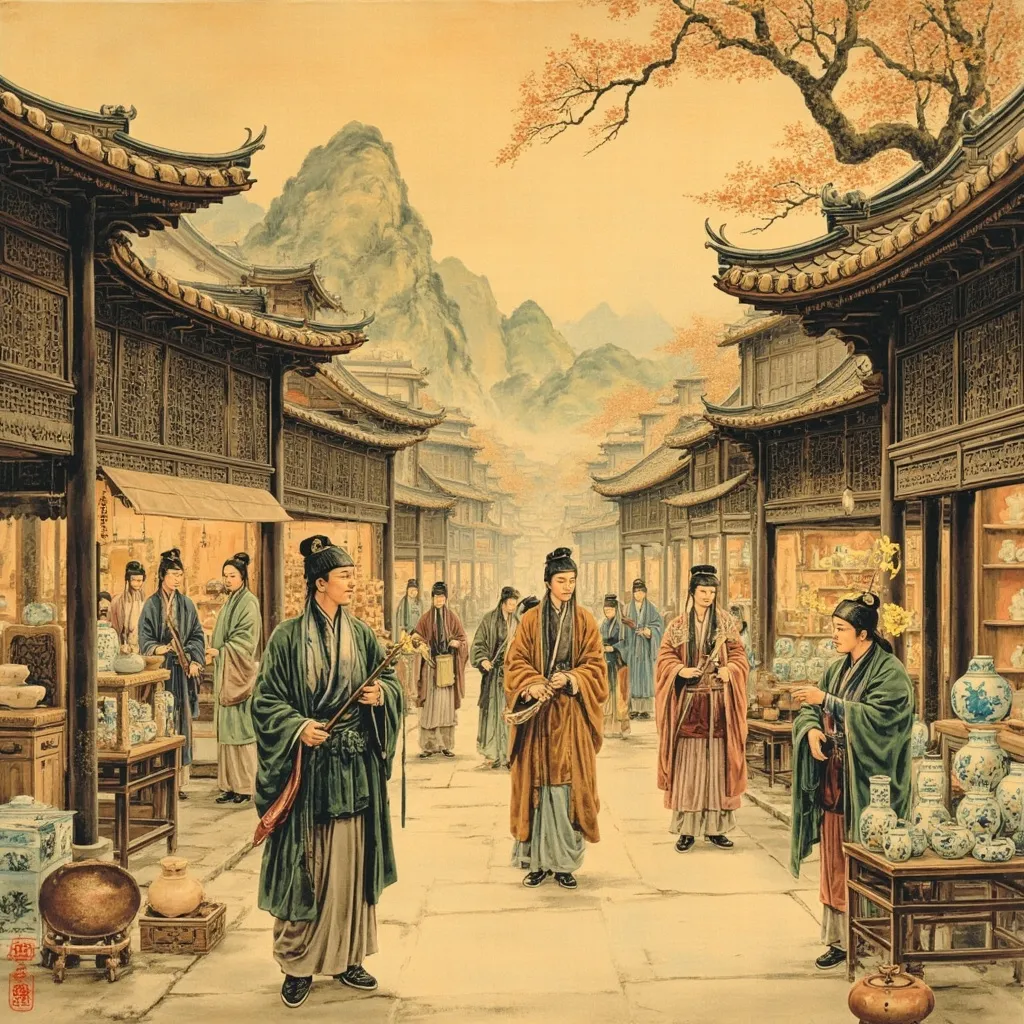
The Qing also oversaw a golden age for the arts. Jingdezhen, the porcelain capital, reached new heights of technical achievement, producing the delicate enameled wares that European collectors obsessive today. The period saw the development of the “Four Great Classical Novels” of Chinese literature—though they were written earlier, they reached their canonical forms during Qing printing. And the literati painting tradition continued, even as it increasingly incorporated Western perspective techniques brought by Jesuit artists at court.
Perhaps most significantly, the Qing period saw the codification of many popular religious and philosophical practices that spread Chinese culture beyond the empire’s borders. The practices of ancestor veneration, Feng Shui, and Traditional Chinese Medicine all reached their standardized forms during this period.
The Decline and the Opium Wars
Every great empire eventually stumbles, and the Qing’s fall was as dramatic as any in history. The 19th century brought a perfect storm of troubles: internal rebellions, governmental corruption, population pressures, and—most explosively—contact with Western powers who had developed a taste for Chinese tea but wanted to sell something in return.
The British had found a solution: opium. By the 1830s, British traders had flooded China with opium grown in India, creating millions of addicts and draining silver from the Chinese economy. When the Qing government tried to stop the trade—most dramatically when Commissioner Lin Zexu confiscated and destroyed 1.2 million箱 of British opium in 1839—Britain responded with force.
The First Opium War (1839-1842) was a revelation—and not in China’s favor. British warships, powered by steam and armed with superior artillery, made short work of Chinese defenses. The Treaty of Nanjing that ended the war forced China to open five ports to foreign trade, cede Hong Kong to Britain, and pay enormous indemnities. This was just the first of what Western powers would call the “unequal treaties”—agreements that systematically stripped China of sovereignty.
The Second Opium War (1856-1860) brought even more humiliation. The Summer Palace outside Beijing—originally built by the Qianlong Emperor as a retirement retreat—was destroyed by Anglo-French forces in 1860. The Xiangshan, as the Chinese called it, was rebuilt by the 1880s, only to be destroyed again in 1900 during the Boxer Rebellion. Today’s ruins stand as a monument to this era of foreign humiliation.
Yet even in decline, the Qing produced remarkable figures. Empress Dowager Cixi, who effectively ruled China from 1861 to 1908, was a shrewd operator who tried to modernize China’s military and educational systems while maintaining traditional authority. By the time of her death, however, the dynasty was circling the drain. The Boxer Rebellion of 1900, which tried to expel foreigners and was crushed by an international military force, marked the final loss of legitimacy.
Legacy of the Qing Dynasty
The Qing Dynasty officially ended in 1912, when the last emperor Puyi abdicated and the Republic of China was proclaimed. But the Qing’s legacy lives on in countless ways.
The borders of modern China were largely drawn during the Qing era—the empire’s control of Tibet, Xinjiang, Mongolia, and Taiwan established territorial claims that succeeding Chinese governments have maintained. The Forbidden City became the Palace Museum, one of the world’s great repositories of Chinese art. The Qing legal code influenced early Republican law. Even the Chinese Communist Party, in its early years, governed parts of northern China using administrative systems inherited from the Qing.
The Last Emperor’s Story
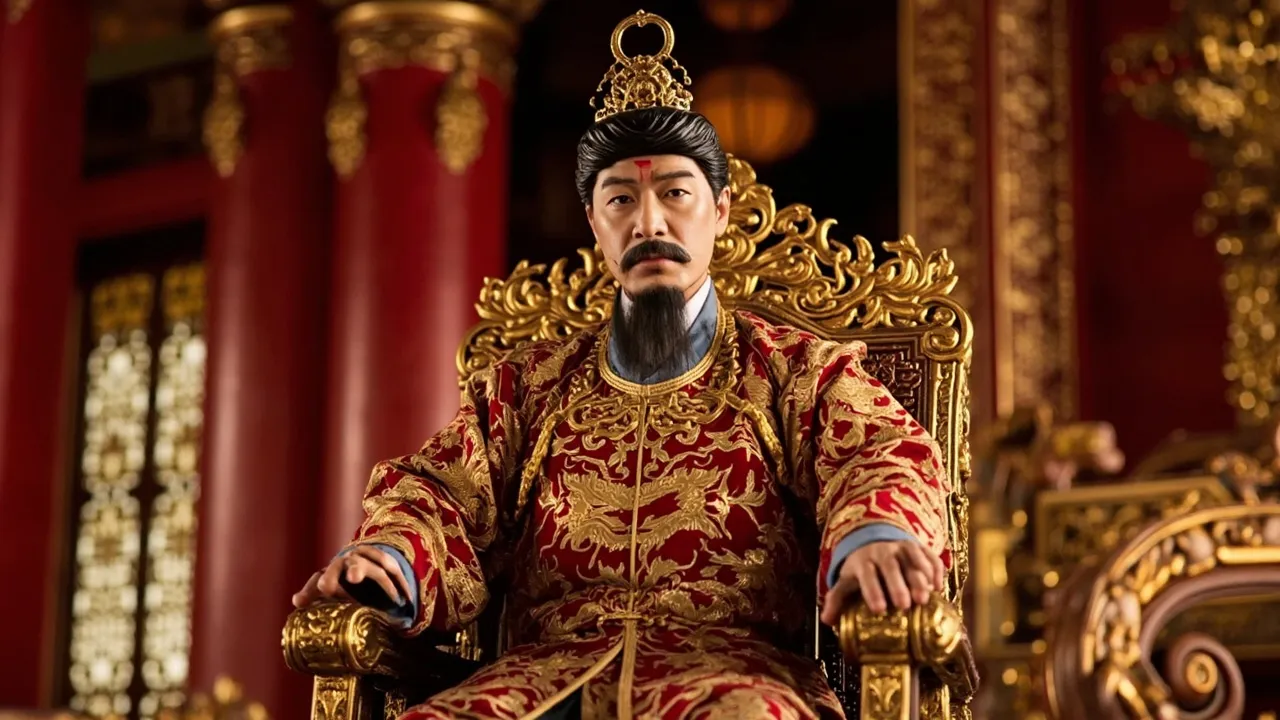
Perhaps no figure embodies the tragic arc of the Qing better than Puyi, the “Last Emperor.” Born in 1906, Puyi was just two years old when he was placed on the throne as the Xuantong Emperor. He ruled for only three years before the dynasty was formally abolished in 1912. Remarkably, he was allowed to continue living in the Forbidden City until 1924, effectively a prisoner in his own palace.
Puyi’s life took even more dramatic turns. He was installed as the puppet ruler of Manchukuo, the Japanese puppet state in Manchuria, during the 1930s and 1940s—essentially a prisoner of Japan’s imperial ambitions. After World War II, he was captured by Soviet forces and spent five years in the Soviet Union before being returned to China. He spent years in communist “re-education” camps, learning to be a ordinary citizen after a lifetime of imperial privilege.
The contrast between Puyi’s life and the lives of his illustrious ancestors—Kangxi, Yongzheng, Qianlong—makes for one of history’s most dramatic stories. His autobiography, “From Emperor to Citizen,” and the famous film “The Last Emperor” directed by Bernardo Bertolucci, brought his remarkable story to audiences worldwide. The ending of the film, where theelderly Puyi returns to the Forbidden City as a tourist and is asked for tickets by a small child, perfectly encapsulates the transience of human power.
The Qing and Modern Chinese Identity
For Americans curious about Chinese culture, the Qing offers a window into the final flowering of imperial China—a world of emperors and concubines, of bound feet and queue hairstyles, of porcelain and poetry—that forms the backdrop to everything that came after. When you visit a Chinese restaurant and see those red and gold decorations, or hear about feng shui practices, or read about the history of Hong Kong or Taiwan—you’re really learning about the long shadow of the Qing.
The dynasty’s story reminds us that civilizations rise and fall, that cultures blend and transform, and that every era leaves traces for those who come after. The Qing gave us a rich legacy of art, bureaucracy, and cultural practice—and also a cautionary tale about the dangers of isolation and the challenges of modernization. Both of those threads run through Chinese life today.
Understanding China Through the Qing
The Qing period also saw the first significant Chinese migration to the Americas. Chinese laborers, many from Guangdong Province, arrived in California during the Gold Rush of the 1840s and 1850s, building railroads and working in mines and agriculture. These early immigrants faced tremendous discrimination, including the Chinese Exclusion Act of 1882, which barred Chinese laborers from entering the United States for decades.
Yet these immigrants maintained their cultural traditions, including foods, festivals, and family practices that Chinese-Americans continue to observe today. The Spring Festival celebrations in American Chinatowns, the dim sum restaurants of San Francisco and New York, and the martial arts schools that dot cities across America—all carry forward traditions that took shape during the Qing Dynasty.
The Qing Dynasty also left its mark on the world through the goods that flowed from China to Europe and America. Chinese porcelain, silk, tea, and artwork became highly prized in Western markets, driving the trade imbalances that ultimately led to the Opium Wars. Understanding this history helps explain both China’s sense of its own historical importance and the complex relationship between China and the West that continues to evolve today.