If you have ever ordered a cup of coffee from a café that sources beans from Ethiopia or Guatemala, you are participating in a global trade network that has existed, in various forms, for over a thousand years. The supply chains that move physical goods across oceans connect distant civilizations, and while the technology has changed dramatically, the underlying logic of comparative advantage and mutual benefit has remained constant.
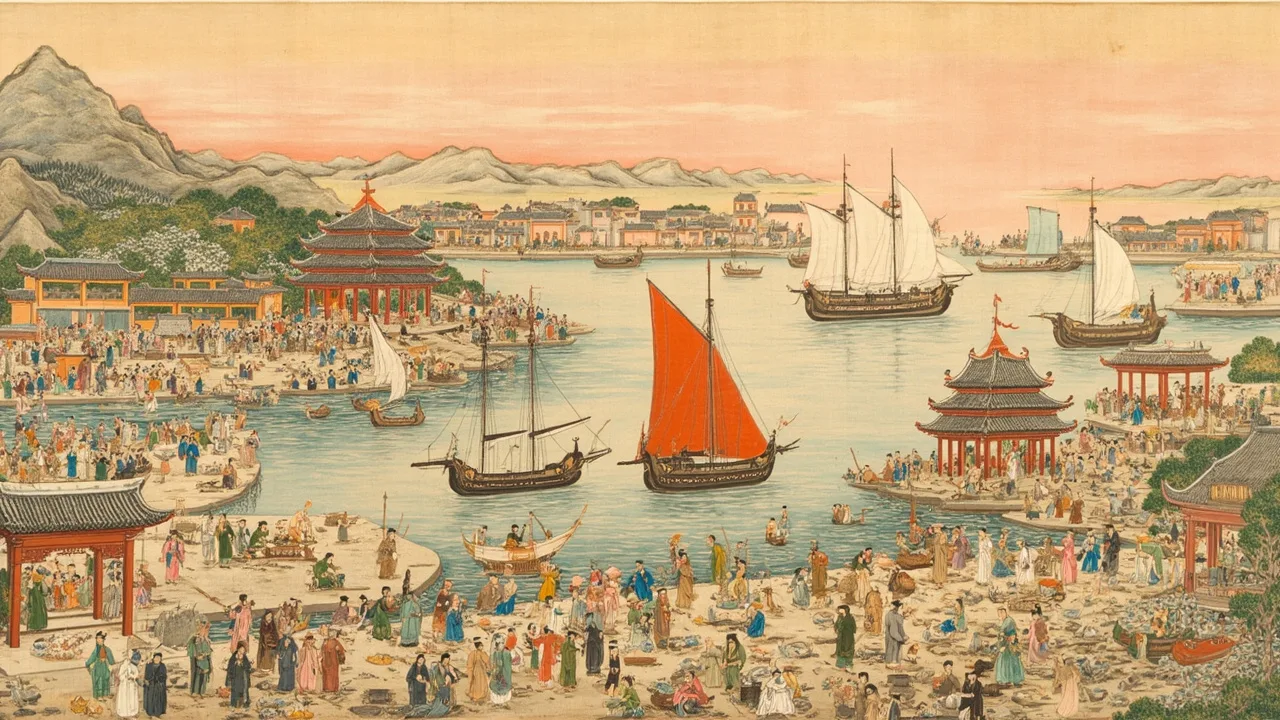
China’s Quanzhou Province offers a window into how these networks operated before steam power, before container ships, and before European maritime expansion reorganized global commerce. In the Song and Yuan Dynasties, from roughly 960 to 1368, Quanzhou was one of the busiest ports in the world. Ships loaded with porcelain, silk, tea, and other Chinese goods set sail for Southeast Asia, the Indian Ocean, the Persian Gulf, and the east coast of Africa. Foreign merchants from Arabia, Persia, India, and Southeast Asia arrived in turn, bringing spices, woods, textiles, and other goods that Chinese consumers wanted.
The port was so famous internationally that Arab geographers called it Zayton, a name that appears in Marco Polo’s travel accounts and in navigational charts used by Indian Ocean sailors. For a period of roughly 400 years, Quanzhou was China’s primary gateway to the maritime world.
Where Is Quanzhou and Why Did It Matter
Quanzhou is located in Fujian Province on China’s southeast coast, facing the Taiwan Strait. The province’s geography is characterized by mountains that come right down to the sea, which historically made overland travel difficult but created excellent conditions for maritime activity. Fujianese people became some of the most skilled sailors and fishermen in East Asia, and their seafaring tradition shaped Chinese maritime history in ways that are still evident today.
The port’s specific name was Citong, or Quit-tong in older transcriptions, and it sat at the mouth of the Ji River where it emptied into the Taiwan Strait. The harbor was naturally sheltered and deep enough to accommodate large ocean-going vessels. These physical advantages made it ideal for the kind of large-scale maritime commerce that developed during the Song Dynasty.
The Song Dynasty period, beginning in 960, saw a significant expansion of China’s maritime trade. The Song government actively encouraged foreign commerce because it generated tax revenue and provided goods that domestic production could not supply in sufficient quantities. Unlike some later Chinese dynasties that restricted foreign trade, the Song actively sought it out. This policy environment helped ports like Quanzhou flourish.
The government also invested in port infrastructure. Lighthouse towers were built along the coast to guide ships safely into harbor. Warehouses were constructed to store goods awaiting shipment. Official customs offices were established to regulate trade and collect tariffs. This created a professional trading environment that attracted merchants from across Asia.
The Global Trade Network
What made Quanzhou remarkable was not just its volume of trade but the breadth of its connections. Ships leaving Quanzhou for Southeast Asia in the 12th and 13th centuries could reach ports in present-day Vietnam, Thailand, Malaysia, Indonesia, and the Philippines. From these Southeast Asian entrepots, goods moved further west to India, Sri Lanka, the Persian Gulf, and the east coast of Africa.
The cargoes were diverse. Chinese exports included ceramics from the famous Jun and Ding ware traditions, silk textiles in a range of qualities, tea from Fujian’s own mountains, and paper currency that foreign merchants used as negotiable instruments. Imports included spices like pepper and cloves from Southeast Asia and India, aromatic woods from Africa, textiles from India, and various rare materials that Chinese elites prized for their exotic origins.
This trade operated on what economists call a “bullion” basis — Chinese goods were paid for in silver and gold, which moved eastward from Africa and the Indian Ocean region into Chinese hands. The accumulation of precious metals in China during the Song and Yuan periods was substantial, and historians have traced these flows through archaeological finds of Chinese coins and ceramics in locations across the Indian Ocean world.
The human dimension of this trade was equally significant. Arab and Persian merchants settled in Quanzhou in large numbers, establishing mosques, cemeteries, and commercial networks that remained active for generations. Their presence is documented in inscriptions, graves, and the accounts of Chinese officials who wrote about the foreign communities living in their midst. Some of these families had been in China for so long that they had lost their Arabic or Persian language and spoke only local Fujianese dialect.
Zayton in the Medieval World
European travelers of the 13th and 14th centuries wrote extensively about Zayton, and these accounts are one of the primary ways Westerners learned about Song and Yuan Dynasty China. Marco Polo visited the port around 1290 and described it as a major hub for pearl fishing and maritime commerce. His account, though disputed by some historians about its accuracy in other details, consistently portrays Quanzhou as a wealthy, cosmopolitan city with extensive foreign trade.
Other European accounts followed. Franciscan missionaries traveling through China in the 14th century mentioned Zayton in their letters. Arab navigational charts of the Indian Ocean included the port as a major destination. Indian Ocean sailors knew Quanzhou not as a remote Chinese city but as a familiar waypoint on a trade route they used regularly.
This international recognition is significant because it challenges the narrative that China was always isolated from the wider world. China under the Song and Yuan was deeply integrated into global commerce, and Quanzhou was one of the primary nodes of that integration. The “isolation” narrative tends to come from the Ming Dynasty period after 1368, when Chinese government policy shifted toward restriction and the famous voyages of Zheng He were eventually halted in favor of domestic consolidation.
Understanding Quanzhou’s history therefore provides an important counterpoint. Chinese civilization was not inherently isolationist. Chinese governments chose different trade policies at different times, and the period of greatest maritime openness coincided with remarkable cultural and economic achievement.
American Connections, What Remains to See, and How to Visit Today
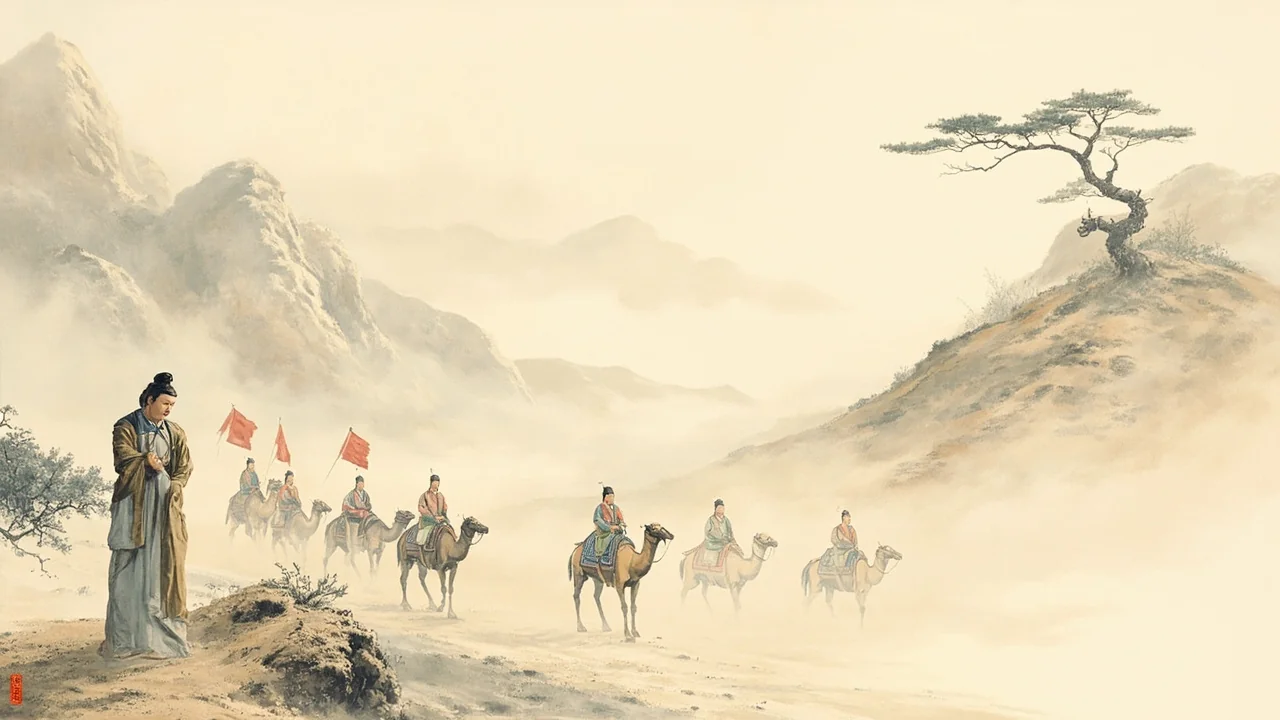
Americans who think about the Silk Road often picture camel caravans crossing Central Asian deserts, and that image is accurate for the overland routes that connected China to Persia and the Mediterranean world. But the Maritime Silk Road was equally important, and it operated on a larger scale than many people realize. The ocean routes moved more volume than the land routes, and they connected a wider geographic range of civilizations.
For Americans specifically, the historical connection between Quanzhou and global commerce has a contemporary echo. The United States is now the world’s largest importer and a major participant in global supply chains that stretch across every ocean. Understanding that these networks have ancient precedents helps contextualize modern trade relationships.
The port of Quanzhou also has something to say about economic development. The city became wealthy not through agricultural production but through its geographic advantages for commerce. This is a pattern that repeats throughout economic history — cities on natural harbors become wealthy through trade regardless of what their hinterlands produce. Singapore, Rotterdam, Hong Kong, and New York are all examples of this dynamic operating in the modern world. Quanzhou was the medieval version.
Fujian Province itself remains one of China’s most economically dynamic regions. The same geographic features that made it ideal for maritime trade in the Song Dynasty — mountain-ringed coast with deep-water harbors — make it well-suited for modern manufacturing and shipping. The city of Quanzhou’s GDP in 2023 was roughly equivalent to that of a mid-sized European country. The economic energy is new, but the location advantage is ancient.
Modern Quanzhou has worked to preserve and showcase its maritime heritage. The city was inscribed as a UNESCO World Heritage Site in 2021, recognition that its historical port areas, temples, and archaeological sites constitute irreplaceable evidence of the Maritime Silk Road’s existence and importance.
The Qingjing Mosque, built during the Song Dynasty for the Arab merchant community, still stands in central Quanzhou and is one of the oldest mosques in China. The Kaiyuan Temple, originally built in the Kaiyuan era of the Tang Dynasty and later rebuilt, contains architectural elements from multiple periods of construction. The tomb of the second chief of the Arab merchant community in Quanzhou, known as the “Puxian” tomb, is preserved outside the city and provides archaeological evidence of the foreign presence.
The waterfront area of Quanzhou, where the old Citong Port was located, has been partially excavated and is open to visitors. The excavations have revealed berths, warehouses, and other port infrastructure that give a concrete sense of how the ancient port operated. Artifacts recovered include Chinese ceramics bound for foreign markets, foreign coins, and items of daily use that belonged to the merchant communities.
For American travelers, Quanzhou offers something that more famous Chinese destinations cannot: the chance to walk through a genuinely ancient port city that is not yet overwhelmed by international tourism. The crowds are smaller, the commercialized historic sites are less developed, and the sense of connection to medieval global commerce is more immediate. You can stand at the old waterfront and feel the same wind that filled the sails of ships bound for Africa and Arabia.
The Decline and Legacy
Quanzhou’s prominence as a world port declined during the Ming Dynasty, for reasons that are still debated by historians. Some argue that the Ming government’s turn toward restriction made maritime commerce more difficult. Others point to the devastation of the Yuan Dynasty collapse, when the Mongol conquest of China disrupted commerce across the country. Still others argue that changing trade routes and the rise of alternative ports in Southeast Asia reduced Quanzhou’s relative importance.
Whatever the causes, by the 15th century the great age of Quanzhou as a global port had passed. The Ming government, after the Yongle Emperor’s famous voyages in the early 1400s, increasingly restricted private maritime commerce and eventually banned it entirely in the mid-15th century. Chinese merchants who wanted to trade overseas had to do so illegally, often through intermediaries in Southeast Asia.
This restriction created an opening that Portuguese, Spanish, Dutch, and English merchants were quick to fill. By the 16th century, European maritime powers had established themselves in Southeast Asian waters and were now controlling the flow of Asian goods to European markets. The age of Chinese maritime commercial leadership was over, replaced by the era of European colonial expansion that would define world trade for the next four centuries.
Quanzhou itself remained a regional port but never regained its global significance. The city that Arab merchants called the finest in the world became a provincial center, overshadowed by ports like Guangzhou and Shanghai that European powers developed under their influence.
The lesson for Americans from this history is not complicated. Global trade networks are powerful engines of prosperity, but they require supportive government policies and continued investment in infrastructure to maintain. When China opened its ports, cities like Quanzhou flourished and connected China to the wider world. When those ports closed, the prosperity faded and other cities rose to take their place. The same dynamic operates in the modern world, where trade policy choices made by governments have enormous consequences for the cities and regions that depend on international commerce.
Modern Quanzhou is a city of about 8 million people, making it smaller than China’s major coastal metropolises but larger than most American cities. It is accessible by high-speed rail from Fuzhou, Xiamen, and other regional centers, and it has an airport with domestic flights.
The best time to visit is in the spring or fall, when temperatures are moderate and the humidity is lower than in summer. The summer months bring typhoons that can disrupt transportation and make outdoor sightseeing uncomfortable. Winter is mild but can be rainy.
For travelers interested in Chinese maritime history, Quanzhou rewards a visit of at least two or three days. The UNESCO World Heritage sites alone — the port area, the temples, the mosques, the historical city center — can fill that time easily. Beyond the major attractions, the city’s street food scene offers Fujianese specialties like oyster omelets, sesame rice balls, and various noodle dishes that reflect the cosmopolitan heritage of a port city.
The one-hour drive from Quanzhou to the famous pottery town of Dehua is also worthwhile. Dehua porcelain was one of the major export goods from this region during the Song and Yuan periods, and the town still produces white porcelain using traditional techniques. Visitors can watch artisans at work and purchase contemporary pieces that are inspired by historical designs.
Understanding Quanzhou’s role in the Maritime Silk Road adds depth to any understanding of Chinese history. It reveals China as a trading civilization with deep connections to the wider world, not an isolated empire that European explorers “discovered” in the early modern period. That more accurate understanding is valuable precisely because it corrects a distortion that has shaped Western perceptions of China for too long.
[AFFILIATE: “The Ming Sea and the Maritime World” - Scholarly work on China’s maritime trade during the Ming Dynasty period]
[AFFILIATE: Fujian Province Travel Guide - Detailed practical guide covering Quanzhou, Xiamen, and the UNESCO heritage sites of the region]
[AFFILIATE: Chinese Ceramic Export Ware Guidebook - Identifies Song and Yuan Dynasty ceramics found along the Maritime Silk Road routes]