In 632 BC, the young King Wen of the state of Jin faced an impossible decision. His army had encountered the forces of the powerful State of Chu at Chengpu — one of the most significant battles of the Spring and Autumn period. King Wen had approximately 700 chariots. The Chu king commanded over 1,000. In ancient warfare, where numerical superiority in chariots could decide the outcome of a battle, this was a significant disadvantage.
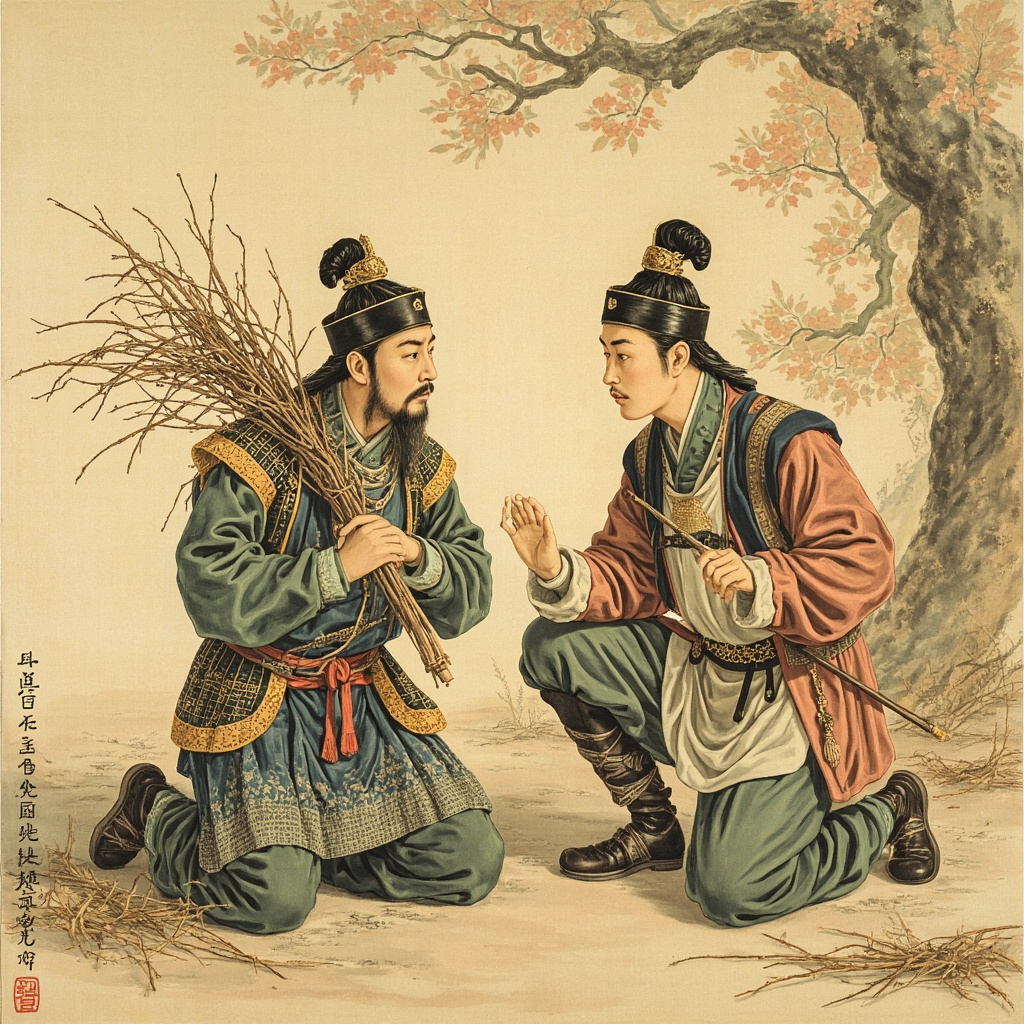
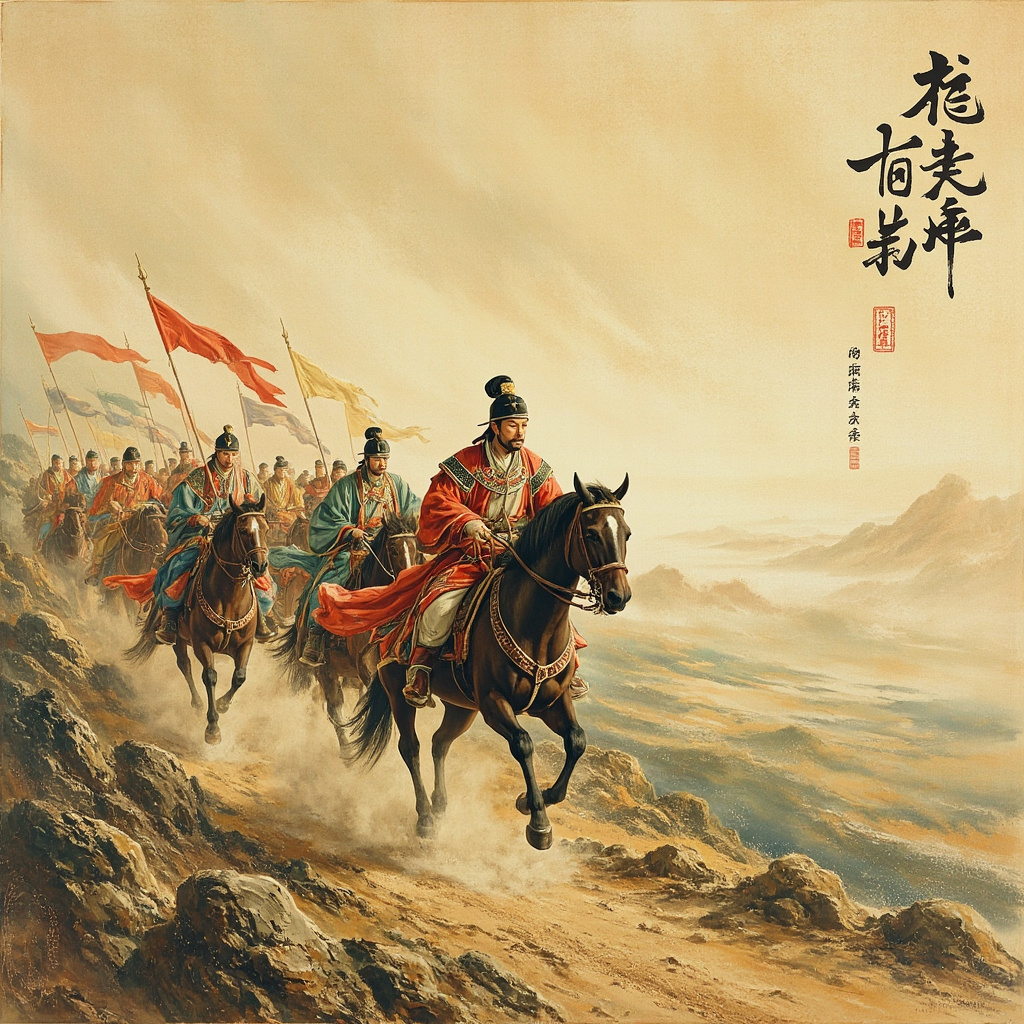
And yet King Wen did something that bewildered his own generals. Before the battle could even begin, he ordered his forces to retreat. Not a short retreat — not a tactical repositioning. He ordered a full withdrawal of ninety li, which in ancient Chinese measurements was exactly three “houses” — the distance that constituted a proper retreat under the code of noble warfare that governed relations between Chinese states.
His officers were furious. This was their enemy. They had the momentum. Retreat looked like cowardice. But King Wen simply smiled and told them to follow orders. The army withdrew. The Chu forces, confused by this unexpected retreat, followed at a distance but did not attack. And then, in the engagement that followed, King Wen’s forces turned and fought — and achieved a decisive victory that would reshape the balance of power in ancient China.
This is the story behind 退避三舍 — tuì bì sān shè — “retreating three houses.” The idiom describes a deliberate strategic retreat, specifically one undertaken to honor a prior commitment or to establish a position of moral high ground before a confrontation. In English, we might say someone “gave ground strategically” or “retreated to a strong position,” but tuì bì sān shè captures something more specific: the idea that giving way to an opponent can actually be a form of power play, not weakness.
The Background: A Debt of Honor
To understand why King Wen retreated, you need to know the story of his relationship with the King of Chu — a relationship that made this battle deeply personal.
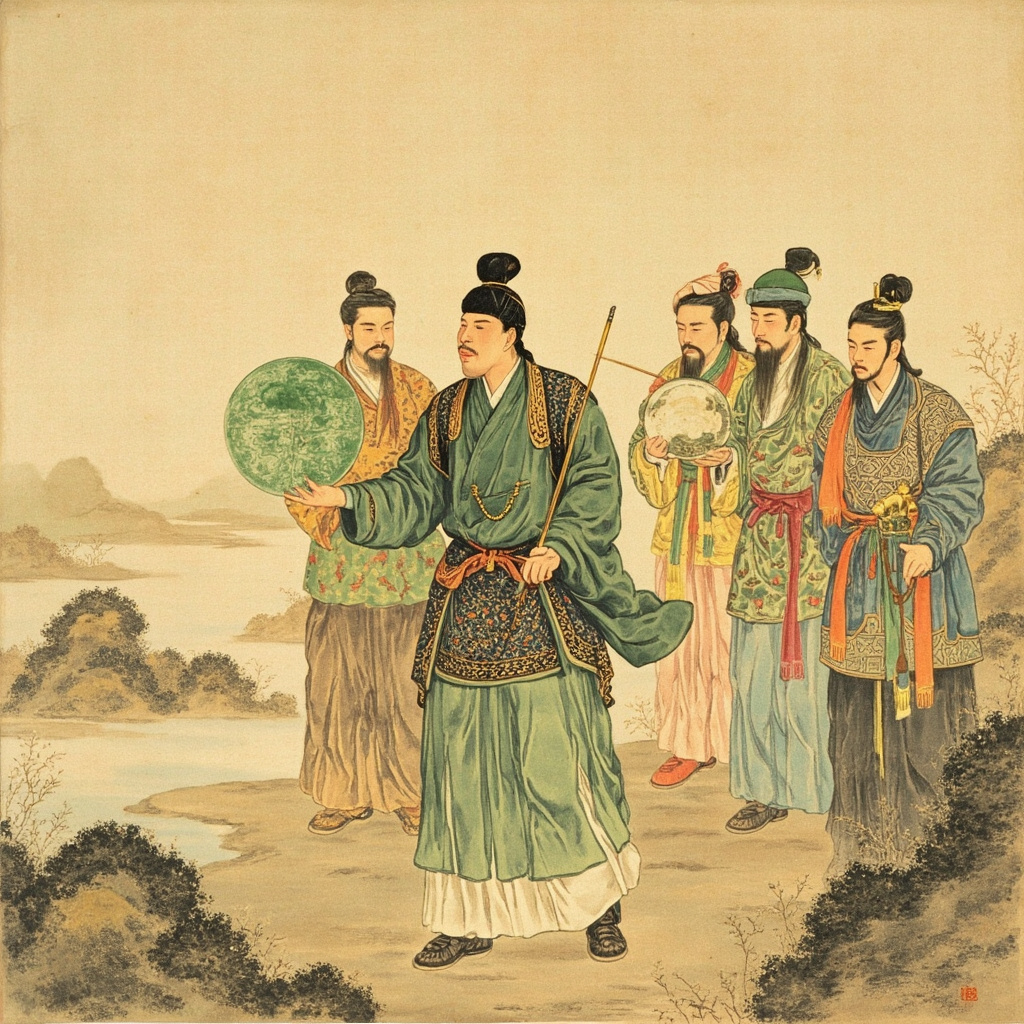
Years before the Battle of Chengpu, the young prince of Jin — before he was king — had been forced to flee his state during a period of internal turmoil. He had wandered from court to court, seeking refuge, and had eventually found hospitality with the King of Chu. The Chu king had taken him in, given him a position at his court, and treated him with the generous courtesy that characterized noble hospitality in ancient China.
During that time, the two men had developed something approaching friendship. The Chu king had been genuinely kind to his Jin guest, and the prince had been grateful. At one point, the Chu king had jokingly asked what gift the prince would give him if he ever returned to power in Jin. The prince, half-joking in return, had made a vow: if he ever became king and the two of them ever met on the battlefield, he would retreat three houses — ninety li — as a demonstration of respect and gratitude for the hospitality he had received.
The King of Chu had laughed it off. They were both nobles, both bound by codes of honor. It was the kind of promise friends make over wine that they never expect to actually have to keep.
Years passed. The prince became King Wen of Jin. The political situation in China shifted, alliances changed, and eventually the two former friends found themselves on opposite sides of a military conflict. The Chu king, leading his army north, encountered Jin forces at Chengpu.
And then King Wen, true to his old promise, ordered the retreat.
The Strategy Behind the Retreat
At first glance, King Wen’s decision seemed like a serious tactical error. His officers objected strenuously. But King Wen had calculated carefully, and his retreat was not the act of weakness it appeared to be.
First, it established his moral authority. By retreating ninety li to honor a promise made in his days as a refugee, King Wen demonstrated to every other state watching this conflict that he was a man of his word. The code of noble conduct that governed inter-state relations in ancient China required exactly this kind of fidelity to one’s commitments. By fulfilling his vow, King Wen positioned himself as the honorable party and Chu as the aggressor who had forgotten the old friendship.
Second, the retreat was strategically sound. The terrain at Chengpu favored the Jin forces — it was an area of forested hills that would limit the effectiveness of Chu’s numerical superiority in chariots. By drawing Chu further from their supply lines and into terrain that Jin knew well, King Wen turned a disadvantage into an advantage.
Third, and most brilliantly, King Wen had correctly calculated the psychological effect his retreat would have on the Chu forces. The Chu army had expected to fight. Instead, they received a retreat — an apparent victory without bloodshed. Some of the Chu commanders urged caution: surely Jin wouldn’t retreat without a reason. Perhaps there was a trap. The army slowed, became uncertain, lost the aggressive momentum that had carried it north.
The Battle of Chengpu
When the two armies finally engaged, King Wen’s strategic preparations paid off. The Chu forces, confused and uncertain, made a critical error: they divided their army, sending a portion to attack the state of Cao, an ally of Jin. This divided their forces at exactly the wrong moment.
King Wen saw his opportunity and seized it. He organized his forces into a precise formation and launched an attack that caught the Chu army off-balance. The battle that followed was decisive. The Chu forces, shaken by the unexpected Jin aggression after the retreat, were unable to regroup effectively. They suffered a major defeat that would define their military fortunes for generations.
When it was over, King Wen had achieved something remarkable: he had defeated a superior enemy force, honored a personal promise, and established Jin as the dominant power in northern China. The retreat that had looked like cowardice had been the foundation of victory.
What the Idiom Really Means
The phrase tuì bì sān shè is used in modern Chinese to describe any situation where someone retreats strategically — giving ground to an opponent not because they must but because doing so serves a larger purpose. It’s often applied to diplomatic negotiations, where one party might make concessions that appear to be weakness but actually position them for a stronger outcome later. It’s also used in business contexts, where a company might withdraw from a market or accept unfavorable terms in the short term to establish relationships or capabilities that will pay off later.
The deeper meaning of the idiom is about understanding that not all retreats are defeats, and not all confrontations need to be engaged immediately. Sometimes the smartest move is to step back — whether to honor a commitment, to let an opponent overextend, or to position yourself for a better engagement later. King Wen’s retreat was an act of power, not weakness: he chose to give ground on his own terms, which preserved his agency rather than surrendering it.
The Cultural Context: Honor and Strategy in Ancient China
What makes tuì bì sān shè particularly Chinese is the way it weaves together personal honor and strategic calculation. In Western military tradition, retreat is generally understood as a tactical decision — you withdraw because you must, because you’re outmatched, because fighting now would be foolish. The shame associated with retreat is recognized but understood as a separate issue from the tactical calculation.
In the Chinese tradition that produced this idiom, the two are intertwined. King Wen’s retreat was both honorable AND strategic — the honor of his commitment made the strategic move possible, and the strategic calculation gave the honorable act meaning beyond mere sentiment. You can’t fully separate the tactical from the moral in this idiom.
This reflects a broader Chinese insight about the relationship between personal integrity and strategic effectiveness. The ancient Chinese believed — and many modern Chinese still believe — that these two things are not separate spheres. Acting with integrity creates strategic advantages that purely tactical thinking cannot replicate. King Wen could retreat ninety li precisely BECAUSE he had built a reputation for honor that made his retreat credible as strategy rather than weakness.
Modern Applications: When to Retreat
Today, tuì bì sān shè is used in Chinese business and political discussions to advocate for exactly the kind of strategic give-and-take that King Wen demonstrated. It’s often invoked when someone is being too confrontational — suggesting that sometimes the smart move is to step back, make a concession, establish goodwill, and wait for a better moment.
In personal relationships, the idiom is sometimes used to describe situations where someone deliberately yields to another person’s position not because they’ve been defeated but because they recognize that preserving the relationship matters more than winning this particular argument. Choosing to “retreat three houses” in a personal conflict means accepting a short-term loss to maintain a longer-term connection.
There’s also a note of caution embedded in the idiom that modern users often invoke: the retreat must be purposeful. King Wen didn’t retreat out of weakness — he retreated as part of a plan. Mindless retreat is just defeat with extra steps. But a deliberate, strategic retreat that serves a larger purpose? That’s what the idiom celebrates.
The Lesson About Strategic Patience
The deepest teaching of tuì bì sān shè might be about the value of patience in conflict. Modern culture tends to celebrate direct confrontation — the decisive strike, the bold move, the immediate victory. King Wen’s story suggests a different model: sometimes the most powerful thing you can do is decline to engage on the terms your opponent is offering.
By retreating, King Wen forced Chu to follow him into terrain of his choosing, disrupted their momentum, established his moral authority, and ultimately achieved a victory that a direct confrontation at the original site might not have delivered. The retreat wasn’t a retreat at all — it was the opening move of a strategy that would take days to unfold.
This is why the idiom remains relevant: it reminds us that short-term optics often obscure long-term strategy. What looks like retreat might be preparation. What looks like concession might be positioning. The person who can see the larger picture will sometimes do things that look weak in the moment but prove decisive in the end.
King Wen retreated ninety li to keep a promise made years earlier. He won the battle and changed the course of Chinese history. Sometimes the wisest move is to step back — and the distance you retreat becomes the foundation of everything that follows.
Explore more Chinese historical idioms that reveal the ancient wisdom about strategy, honor, and the long game — lessons that remain as relevant today as they were twenty-five hundred years ago.