Shandong Cuisine: The Birthplace of Chinese Fine Dining
If you want to understand the roots of Chinese culinary tradition, you need to start with Shandong cuisine. Known as Lu cuisine (鲁菜) in Chinese, this ancient cooking tradition from China’s eastern coast is the oldest of the Four Great Chinese Cuisines, and it has shaped the way Chinese food is think about, cooked, and appreciated for over two thousand years. While Sichuan cuisine gets all the attention for its tongue-numbing spice and Cantonese cuisine wins fans with its dim sum, Shandong cuisine is the quiet elder statesman—the foundation upon which much of Chinese gastronomy was built.
Shandong Province juts out into the Yellow Sea, forming the Shandong Peninsula. This location gave ancient Shandong cooks access to abundant seafood, while the province’s interior plains provided wheat, millet, and fresh vegetables. The combination of mountain, sea, and fertile farmland created a diverse pantry that Shandong chefs learned to use with remarkable skill. But it wasn’t just ingredients that made Shandong cuisine special—it was the influence of Confucianism, which was born here in the 6th century BCE. The philosophy’s emphasis on balance, propriety, and respect for tradition found perfect expression in the kitchen, where cooks developed a cuisine that values precision, freshness, and elegant presentation above all else.
The Confucian Kitchen: Where Philosophy Meets the Stove
Confucius himself was famously particular about his food, and the cuisine of his homeland reflects his values. The Analects record that he “did not eat meat that was cut improperly, nor food that was not properly prepared.” This attention to detail became the foundation of Shandong cooking philosophy. Where regional cuisines elsewhere in China might prioritize aggressive flavors or complicated techniques, Shandong cuisine emphasizes purity, freshness, and the natural taste of ingredients.
The concept of “baowei” (包煨), or wrapping and braising, exemplifies this approach. Fine ingredients—fresh seafood, tender vegetables, premium meats—are wrapped in leaves or other protective layers and slow-cooked in seasoned broths. The wrapping steams the ingredients gently while the braising liquid infuses them with deep, complex flavors. The result is food that’s intensely flavorful yet somehow delicate, where you can taste the quality of the original ingredients beneath the layers of seasoning.
This cooking philosophy also emphasizes the “four tastes”: sweet, sour, salty, and bitter. A properly prepared Shandong dish should balance all four, creating a harmonious flavor profile that satisfies on multiple levels. This is quite different from Sichuan cuisine’s bold, one-note assaults on the palate, or the simple freshness that Cantonese cooking celebrates. Shandong cuisine asks you to slow down and appreciate the interplay of flavors—a truly Confucian approach to dining.
The Sea’s Bounty: Shandong’s Seafood Tradition
Given its peninsula location, it’s no surprise that seafood dominates Shandong cuisine. The province’s coastline stretches for over 3,000 kilometers, and its fishing industry has been supplying kitchens for millennia. But Shandong chefs don’t just throw fish on the grill—they’ve developed dozens of sophisticated techniques for preparing seafood that preserve its natural sweetness while adding depth and complexity.
“Braise” (烧, shao) is perhaps the most characteristic Shandong seafood technique. The method involves quickly searing ingredients in very hot oil to create a flavorful crust, then finishing them in a seasoned liquid. The high initial temperature causes the proteins on the surface to seal quickly, trapping moisture inside while developing rich, caramelized flavors. The subsequent braising in broth allows those surface flavors to penetrate deeper into the food, creating a dish that’s both juicy and intensely flavored.
One of the most famous Shandong seafood dishes is Braised Prawns (油焖大虾, you men da xia). Large prawns are quickly fried in oil until their shells turn bright red, then braised in a sauce made from scallions, ginger, sugar, and vinegar. The sweetness of the sugar balances the acidity of the vinegar, while the scallions and ginger add aromatic depth. The result is a dish where you eat the whole prawn—shell and all—savored for the way the sauce clings to every bite, infusing the tender meat with its complex flavors.
Another classic is Scallops with Scallion (葱烧海参, cong shao hai shen). Here, the star ingredient is the sea cucumber—a delicacy prized for its silky, gelatinous texture. The scallops are sliced and quickly cooked, then braised with massive amounts of scallions until soft and translucent. The dish gets its name from the generous use of scallions (葱, cong), which are cooked until they’re almost melted, their sharp raw flavor transforming into sweet, caramelized depth that pairs perfectly with the sea cucumber’s subtle richness.
The King of Sauces: Understanding Shandong’s Flavor Foundation
If there’s one ingredient that defines Shandong cuisine, it’s scallion. Called “cong” in Chinese, the scallion is treated with reverence in Lu cuisine kitchens. The key is to use massive quantities—entire bunches, really—and to cook them until they’re deeply caramelized, their sharp raw flavor mellowing into sweet, complex depth. This technique, called “cong shao” (葱烧), is the foundation of dozens of classic Shandong dishes.
The philosophy is beautifully simple: you don’t mask the flavor of good ingredients with sauce, you amplify it. A properly cooked Shandong dish lets you taste the underlying ingredients while the sauce adds layers of complexity. The scallions aren’t just seasoning—they’re a crucial component that transforms the entire dish. When you eat a truly excellent cong shao dish, the scallions should be almost the best part, their sweetness and depth the thing that makes you reach for another bite.
Beyond scallions, Shandong cuisine relies on a few key ingredients that you won’t find as prominently in other regional cuisines. Soy sauce provides body and umami depth. Rice wine adds warmth and complexity. Sugar provides subtle sweetness that balances acidity and salt. And a small amount of vinegar—whether black rice vinegar or clear rice vinegar—adds brightness and helps cut through rich, fatty dishes. The best Shandong cooks can balance these elements instinctively, creating sauces that seem simple on the surface but reveal endless complexity with each bite.
Classic Dishes That Define Lu Cuisine
No exploration of Shandong cuisine would be complete without sampling its greatest hits. These are the dishes that have been perfected over centuries and continue to define what Lu cuisine means today.
Dezhou Braised Chicken (德州扒鸡, de zhou pa ji) is perhaps Shandong’s most famous export. The chicken is slowly braised until the meat literally falls off the bone, while the skin becomes lacquered and deeply flavored from hours in the cooking liquid. The technique requires enormous patience—the chicken simmers for hours at very low heat, never boiling, which allows the collagen in the skin and connective tissues to dissolve into the sauce, creating a silky, unctuous texture. When done right, you can eat the entire chicken with your fingers, the meat so tender it needs no knife.
Sweet and Sour Carp (糖醋鲤鱼, tang cu li yu) is a showstopping dish that appears at banquets and celebrations throughout Shandong. A whole carp is deep-fried until the skin is incredibly crisp, then smothered in a glossy sweet-and-sour sauce made from sugar, vinegar, and ketchup. The contrast between the crunchy exterior and the tender, flaky fish within is sensational, while the sauce provides a perfect balance of sugar and acid. In Shandong, this dish is often prepared tableside in upscale restaurants, the sauce being poured over the fish with dramatic flourish.
Lion’s Head Meatballs (狮子头, shi zi tou) are massive, soft pork meatballs—usually the size of a tennis ball—that are braised until they’re impossibly tender. The name comes from their rough, lion’s-mane-like surface, created by the hand-shaping technique that gives them their distinctive texture. Made from a mixture of finely ground pork and coarse pork, bound with egg and cornstarch, these meatballs are surprisingly light despite their size. They’re typically braised in a savory broth with cabbage, and each one is enough to satisfy several people.
Nine-Segment Abalone (九转大肠, jiu zhuan da chang) is a dish for adventurous eaters—braised pork intestine prepared with extraordinary care. The intestine is cleaned thoroughly, then braised in multiple stages with different seasonings, creating layers of flavor that transform this humble ingredient into something remarkable. The “nine turns” in the name refer to the complex cooking process, which includes multiple additions of different sauces and seasonings. It’s a dish that demonstrates Shandong cuisine’s philosophy of making the most of every ingredient, transforming simple parts into culinary treasures.
Bringing Shandong Home: Tips for the American Kitchen
You don’t need to travel to Jinan or Qingdao to enjoy Shandong cuisine—you can bring it into your own kitchen with some key ingredients and techniques.
First, stock your pantry properly. You’ll need premium soy sauce (both light and dark), Shaoxing rice wine, granulated sugar, and Chinese black vinegar (or Chinkiang vinegar). A good wok with a flat bottom is essential, as is a heavy-bottomed braising pot for slow-cooked dishes. And don’t forget the scallions—buy them in bunches and keep them on hand at all times.
The technique that will serve you best is the Shandong approach to braising. Start with very hot oil, sear your protein to develop color and flavor, then add your liquid and let everything simmer gently for an extended period. The low-and-slow approach is key—it breaks down tough connective tissues in meat, transforms fish bones into edible softness, and allows flavors to meld in ways that quick cooking never achieves.
Don’t be afraid of using sugar. Shandong cuisine uses sugar not to make dishes sweet, but to add depth and help balance other flavors. A small amount of sugar in a savory sauce rounds out harsh edges and creates harmony. Start with less than you think you need—you can always add more.
The Shandong Banquet Tradition
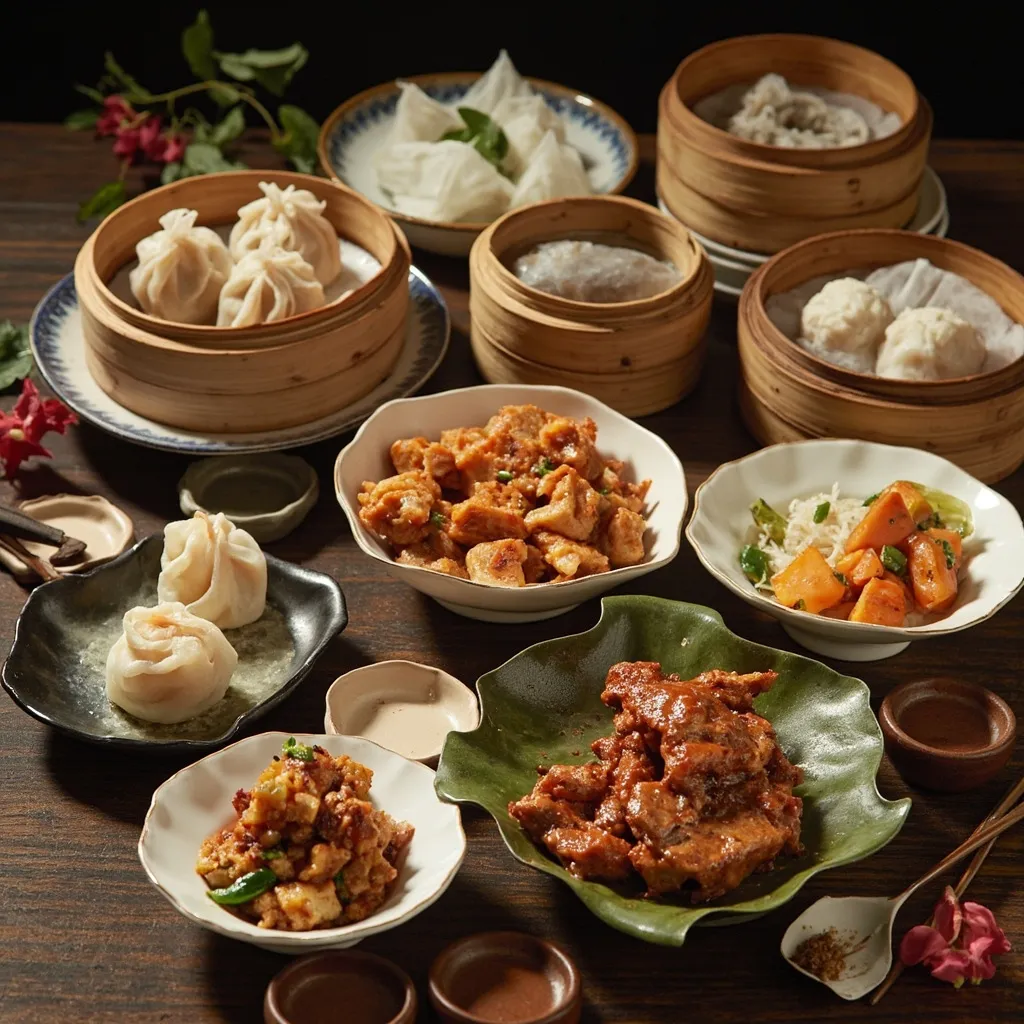
In Shandong, a formal dinner is an elaborate ritual that can last hours, with course after course of carefully balanced dishes. The meal typically begins with cold appetizers—small plates of preserved vegetables, sliced meat, and seafood—that stimulate the appetite without filling it. Then comes the main event: multiple courses of hot dishes, each one bringing a different combination of flavors, textures, and cooking techniques.
The sequence matters. Light dishes come before rich ones. Seafood comes before meat. And throughout the meal, the host repeatedly refills guests’ cups with rice wine, a sign of hospitality that must be reciprocated. This banquet tradition reflects Shandong’s Confucian heritage—food is not just nourishment but a form of social bonding, a way of honoring guests and celebrating relationships.
For Americans unused to multi-hour meals, this might seem excessive. But there’s something genuinely wonderful about the Shandong approach to dining—the way it turns eating into an extended act of connection and care. If you ever have the chance to attend a formal Shandong banquet, take it. You’ll come away with a deep appreciation for what this ancient cuisine is really about.
A Cuisine That Speaks to the Ages
Shandong cuisine might not have the immediate crowd-pleasing power of Sichuan’s spice or the snack-friendly appeal of Cantonese dim sum. But for anyone who wants to understand Chinese food at its most refined, its most thoughtful, its most deeply connected to the country’s philosophical heritage, Lu cuisine is essential. It asks more of the cook—a mastery of techniques, an understanding of flavor balance, a patience with slow cooking—but it rewards that investment with dishes of extraordinary depth and subtlety.
The next time you encounter a braised dish with complex, layered flavors, or a seafood preparation that lets the ingredient’s natural sweetness shine through, you’re experiencing the legacy of Shandong’s ancient kitchens. This is food that’s been refined for millennia, a continuous tradition that connects today’s diners to the banquets of imperial courts and the humble home kitchens of Confucius’s time. That’s something worth savoring—slowly, thoughtfully, the Shandong way.