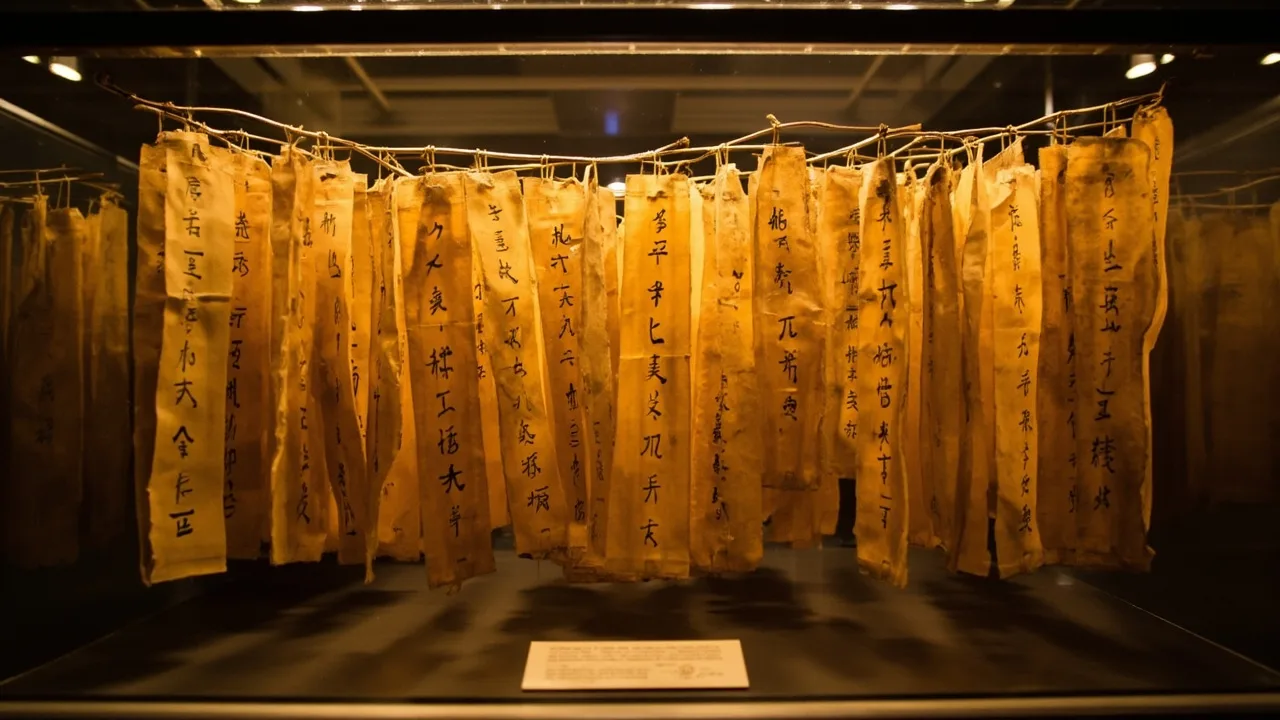
In the spring of 2008, something remarkable happened in the world of Chinese archaeology. A team of researchers at Tsinghua University in Beijing received a donation: 2,388 bamboo slips that had been salvaged from an illegal excavation, purchased on the antiquities black market, and eventually traced to a tomb in the province of Hunan. The slips turned out to be a previously unknown text—a lost chapter of the Shang Shu, China’s oldest government archive, missing for over 2,000 years.
The discovery electrified the scholarly world. The Shang Shu (尚书, “Documents of the Ancients”) is one of the oldest and most contested texts in Chinese civilization. Its 58 chapters, spanning from the legendary Yao and Shun through the Western Zhou to the Spring and Autumn period, are the closest thing China has to a founding documentary archive. But the text’s history is chaotic: it has been lost, reconstructed, corrupted, rediscovered, and reinterpreted so many times that the phrase “the Shang Shu problem” has become a byword in sinology for the difficulty of establishing reliable versions of ancient Chinese texts. The text was not simply written and preserved—it was repeatedly salvaged from catastrophe, rebuilt from memory, and contested by scholars who disagreed about which version was authentic. To read the Shang Shu is to read the history of Chinese textual preservation itself—the story of how a civilization tried to save its past, and how imperfectly it succeeded.
What Is the Shang Shu? The Archive That Became a Classic
The Shang Shu is, at its core, a collection of official documents—speeches, announcements, edicts, and historical accounts from the earliest periods of Chinese civilization. The word shang (尚) means “above” or “ancient,” and shu (书) means “documents” or “writings,” so the title is roughly “Ancient Documents from Above”—or, as it is usually translated, “Book of Documents.”
The text is divided into four major sections, corresponding to the four dynasties or periods it covers: the Canon (虞书), the Xia (夏书), the Shang (商书), and the Zhou (周书). The Canon sections, dealing with the legendary rulers Yao and Shun, are almost certainly mythological rather than historical in any modern sense. The Xia section, supposedly covering the first dynastic period, has no independent corroboration and is generally treated as legendary. The Shang and Zhou sections, however, contain material that is substantially older than the texts in which it has been transmitted—and some of it may go back to the periods it claims to describe. The Shang Shu was thus always a text that straddled the line between history and legend, fact and myth, archive and narrative.
The documents in the Shang Shu include royal speeches, ceremonial addresses, records of appointments and dismissals, and historical narratives. The most famous chapter is probably the “Tribute of Yu” (禹贡), a geographical catalog of the nine provinces of the early Chinese world and the products associated with each—a text that served as a foundation for Chinese geographical writing for over two thousand years. Another important chapter is the “Great Plan” (洪范), a cosmological and political treatise that describes the nine categories of state affairs and their proper ordering—text that influenced Chinese political thought profoundly.
The Kong Bojia Forgeries: How the Text Was Lost and Found in the 4th Century
The textual history of the Shang Shu is one of the most complicated in world literature. According to the traditional account, the text was first compiled by Confucius, who selected 100 documents from a larger body of material and organized them into the collection that became the Shang Shu. Confucius’s original version was then passed down through the Warring States period, preserved by scholars who memorized and copied it during a time when written texts were scarce.
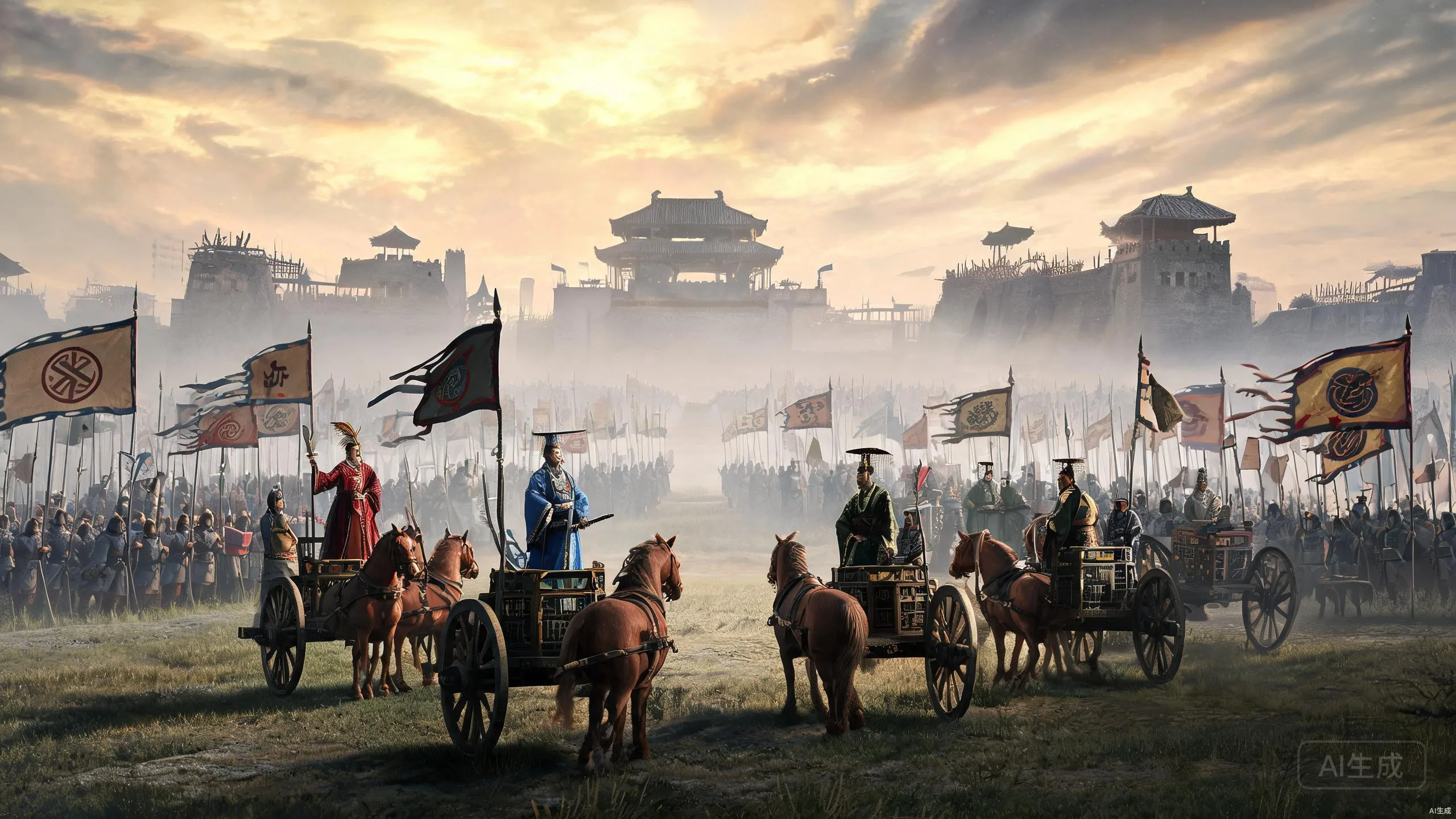
In the 3rd century BC, during the Qin dynasty, the Shang Shu suffered its first catastrophe. In 213 BC, the Qin Emperor Shi Huangdi ordered the burning of all books that were not medical, agricultural, or divination texts—a sweeping act of cultural destruction that the historian Sima Qian later described in horrified detail. The Shang Shu, as a classical text, was among those targeted. Scholars who possessed copies were executed or sent to hard labor. The text was not entirely destroyed—it was suppressed, not obliterated—but it went underground.
After the fall of the Qin, the Shang Shu resurfaced in two versions. The “Old Text” version (古文经, Guwen) was said to have been found hidden in the wall of Confucius’s old house in Qufu during renovations in the 2nd century BC. The “New Text” version (今文经, Jinwen) was a version reconstructed from memory by scholars who had memorized the text before the burning. Both versions claimed to be authentic, and for centuries Chinese scholars argued bitterly about which was the real Shang Shu.
Then, in the 4th century AD, a scholar named Kong Bojia (孔安国)—a descendant of Confucius, according to the family records—produced a commentary on the Shang Shu that included a long-lost section called the “22 Missing Documents.” His commentary became the standard version of the text for the next thousand years. The only problem: most modern scholars believe Kong Bojia was a forger, and the “missing documents” he produced were probably written by him or by someone in his circle.
The Qing Forgery Debate: When Scholarship Became Ideology
The question of the Shang Shu’s authenticity came to a head in the Qing dynasty (1644-1912), when the Kangxi Emperor himself became personally involved in the debate. On one side were scholars who followed the tradition and accepted the text as essentially authentic. On the other side were scholars of the “School of Evidence” (考据学, kaojuxue), who applied rigorous historical and linguistic analysis to the text and concluded that large portions were later fabrications.
The pivotal figure was Yan Kejun (阎若璩, 1636-1704), whose meticulous philological analysis demonstrated that the “Old Text” version of the Shang Shu contained anachronisms and inconsistencies that could only be explained by later composition. Yan Kejun’s work did not definitively prove that the entire Old Text version was forged, but it raised questions that have never been fully resolved.
The debate took an ideological turn in the early 20th century, when Chinese intellectuals searching for evidence of China’s “scientific” and rationalist traditions latched onto the Shang Shu as proof that ancient Chinese civilization had been more advanced than previously thought. In the context of China’s crisis and self-examination during the Republican period, the text’s authenticity became bound up with national identity questions that had nothing to do with textual scholarship.
In 2008, the Tsinghua University bamboo slip donation added a new dimension to the debate. Among the 2,388 slips was a text that corresponded to 20 of the 25 chapters of the Shang Shu that had been considered suspicious or forged. Carbon dating and ink analysis placed the slips in the period around 300 BC—before the Qin burning. If the Tsinghua slips are authentic, they suggest that at least some of the disputed chapters are genuinely ancient. The debate continues.
The Chapters That Matter: What the Shang Shu Actually Says
Whatever the questions about its textual history, the Shang Shu contains material of extraordinary historical and cultural importance. The text is not merely a historical archive—it is a political and philosophical document that shaped Chinese conceptions of governance, legitimacy, and the relationship between ruler and Heaven for over two millennia.
The chapter “The Great Plan” (洪范) describes a conversation between the legendary King Wu of Zhou and his minister Hong Fan, in which Hong Fan outlines the “nine categories” (九畴) of statecraft: the five elements, the five affairs, the five directions, the five measures, the five appointments, the three virtues, the geometric figures, the seasonal calendar, and the five fortune-bringing animals. This cosmological framework influenced Chinese political thought for centuries, and its influence can be seen in everything from imperial ritual to the practice of feng shui. The framework’s persistence is remarkable: a 3,000-year-old schema for organizing political knowledge continued to shape how Chinese rulers thought about governance long after the historical context that produced it had changed beyond recognition.
The chapter “The Tribute of Yu” (禹贡) is a geographic catalog of the early Chinese world, dividing it into nine provinces and listing the local products, geography, and tax rates of each. The text is a remarkable document of early Chinese geographic knowledge—imprecise by modern standards but ambitious in scope, attempting to describe the known world from the perspective of a bronze-age civilization. The nine-province framework became so deeply embedded in Chinese political geography that it continued to be referenced in official documents through the Qing dynasty.
The chapter “The Charge to Yue” (微子) is a personal and dramatic text: a record of the last days of the Shang dynasty, in which the prince of Shang debates with his counselors about whether to flee or submit as the Zhou forces close in. The text captures a moment of political collapse with unusual psychological depth—a prince facing the end of his world, calculating his options, hearing the arguments of those around him. It was clearly regarded as important by later generations, who preserved it and included it in the canon not for its historical detail but for its ethical weight.
The Shang Shu in the Five Classics: Why It Survived
The Shang Shu became one of the “Five Classics” (五经, Wujing)—the five texts that formed the core of the Confucian canon and the basis of the imperial examination system. Its inclusion in the Five Classics guaranteed its survival,抄 copied by generations of scholars who were required to master it for their exams. The exam system meant that millions of men memorized the text—creating a second line of defense against loss. If all written copies were destroyed, the text could theoretically be reconstructed from the memories of trained scholars.
This is precisely what happened with the Shang Shu during the Qin burning: scholars who had memorized the text reconstructed it from memory when the dynasty fell. The practice of committing classical texts to memory was a deliberate cultural strategy—texts were not merely written but embodied by scholars who carried them in their minds. The consequences of this system were mixed: on one hand, it preserved texts that would otherwise have been lost; on the other hand, it introduced errors as scholars reconstructed texts imperfectly.
The Shang Shu is a text that survived because China was willing to invest enormous resources in preserving its past. But preservation, in this case, was never perfect. The version that has come down to us is a layered document—genuine ancient material mixed with later reconstructions, fabrications, and well-intentioned but mistaken interpretations. Reading the Shang Shu requires reading it with one eye on its textual history, aware that the document in your hands is the product of thirty centuries of human effort, error, and dispute.