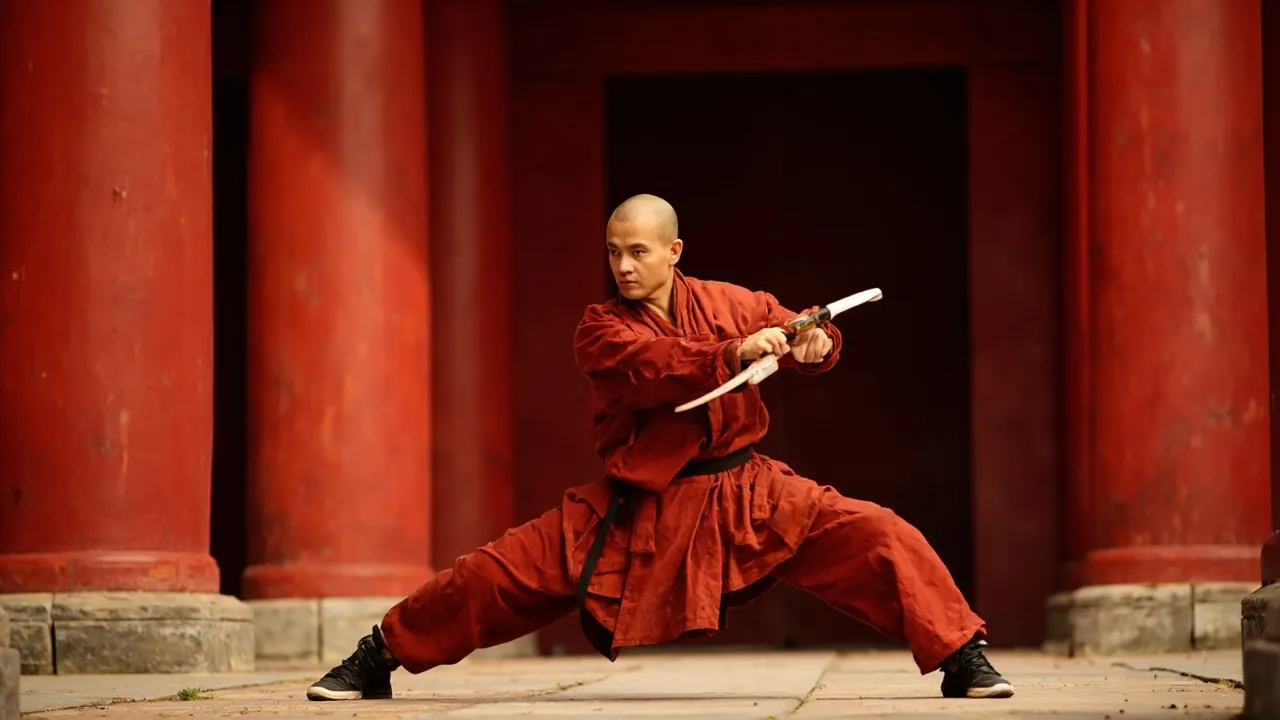
Shaolin Kung Fu: The Ancient Art of the Warrior Monks
Walk into any martial arts school in America and you’ll hear the name whispered with reverence. Shaolin Kung Fu. It’s the foundation upon which countless styles have been built, the art that turned peaceful monks into some of the most feared fighters in history. But what’s the real story behind this legendary martial tradition? Let’s dig into it.
The Legend Begins: Bodhidharma and the Birth of Shaolin
The story of Shaolin Kung Fu starts with a traveling monk who crossed an ocean to reach China around 527 AD. His name was Bodhidharma, and he was a Buddhist sage from India who had heard about the spiritual treasures to be found in the East. He is known as “Damochmo” in Chinese — the “Great Mo” who brought Chan (Zen) Buddhism to China.
According to legend, Bodhidharma arrived at the Shaolin Monastery on Mount Song in Henan Province after years of travel through Central Asia. The temple, founded in 495 AD during the Northern Wei Dynasty, was already a significant Buddhist center, but its monks were primarily scholars and contemplatives.
When Bodhidharma first presented himself at the temple gates, the monks initially rejected him. He was said to have sat in meditation outside the temple for nine years, waiting patiently until the monks finally recognized his spiritual authority. This legendary patience became a model for the Shaolin approach to training — persistent, dedicated work over many years.
The story goes that Bodhidharma found the monks weak and sleepy from long hours of meditation. They struggled to stay awake during their spiritual practices, and their bodies were frail from sitting in contemplation for years. Their meditation was excellent, but their physical condition was holding them back from deeper spiritual achievement.
Bodhidharma wasn’t impressed. He believed that a strong spirit needed a strong body, and he set out to change these sedentary monks into something more. He taught them a series of exercises that would later become the foundation of Shaolin Kung Fu — movements designed to strengthen the body, improve circulation, and prepare the mind for deep meditation. These became known as the “18 Lohan Hands” or “18 Luohan Shou.”
This fusion of physical training and spiritual practice became the heart of what we’d later call Chan Buddhism, known in Japanese as Zen. The monks weren’t just learning to fight; they were using combat training as a path to enlightenment. The body was seen as a vehicle for spiritual development, and a healthy body made meditation more effective.
The 72 Arts: A Complete Martial System
What makes Shaolin Kung Fu so remarkable is its sheer scope. Traditional teaching speaks of 72 “extraordinary skills” that Shaolin monks developed over centuries. These aren’t just kicks and punches — they encompass an incredible range of combat and physical disciplines.
The five animal styles mimic the movements of the dragon, tiger, leopard, snake, and crane. Each animal teaches different principles: the dragon represents spiritual power and floating movements; the tiger delivers devastating power and rootedness; the leopard provides speed and cat-like reflexes; the snake offers fluidity and precision strikes; and the crane emphasizes balance, lightness, and delicate strikes.
Beyond the animal forms, Shaolin training includes barehanded boxing (various fist and palm forms), various weapon arts (staff, sword, saber, spear, and many more), hard and soft techniques, standing meditation (zhan zhuang), and specialized training methods that build what practitioners call “iron shirt” conditioning — the ability to absorb impacts that would cripple an untrained person.
The “hard style” training (外家拳, Wai Jia Quan) emphasizes external power development — muscle strength, speed, and explosive strikes. Practitioners develop incredible physical conditioning through rigorous training. The “soft style” approach (內家拳, Nei Jia Quan) focuses more on internal energy cultivation, developing qi and the subtle power known as jin.
This diversity is what makes Shaolin such a complete martial system. Whether you want to learn to strike with lightning speed, grapple and wrestle, or master weapons from staff to sword, Shaolin has something to offer. A dedicated practitioner could spend a lifetime exploring all aspects without exhausting them.
Inside the Monastery: How Monks Train
Modern Shaolin monks wake before dawn, typically around 4 or 5 AM, and begin their day with meditation. But unlike the passive contemplation you might imagine, this meditation often includes dynamic movement — walking meditation, breathing exercises, and gentle movements that prepare the body for the rigorous training ahead.
After the morning meditation and simple breakfast, training begins in earnest. The morning session might focus on forms practice, with students performing the same sequence of movements hundreds of times until the techniques become automatic, etched into muscle memory. The afternoon session typically emphasizes conditioning, sparring, and weapon training.
The training itself is brutal by any standard. New students might spend hours in horse stance — a deep squatting position that builds leg strength and endurance. They might hold this stance for 30 minutes at a time, developing the structural strength that forms the foundation for all other techniques. The pain in the legs is intense but temporary; the strength gained lasts a lifetime.
They’ll perform hundreds of repetitions of basic movements until those techniques become automatic. A single punch might be practiced thousands of times. A simple kick might take months to master. There are no shortcuts in Shaolin — only consistent, dedicated effort over years and decades.
Forms practice is central to Shaolin training. Students learn choreographed sequences called “forms” or “katas” that contain the core techniques of the style. A beginner might start with a simple fist form like “Xiao Hong Quan” (Little Red Fist), but advanced practitioners work through elaborate routines that can take minutes to complete, every movement precise and intentional. The forms encode combat knowledge in sequences that can be practiced alone.
Sparring happens regularly, but it’s not the free-for-all you might expect. Controlled partner drills teach distance, timing, and the feel of connecting with an opponent. Students learn to read each other’s movements, develop timing, and practice techniques at various speeds. Full-contact fighting comes later, after students have built the foundation and control to fight safely without serious injury.
Conditioning follows a progression too. Students might start by striking padded surfaces, gradually moving to harder targets until they can strike wood, stone, and eventually strike or absorb blows from real weapons. This isn’t about being tough for its own sake — it’s about understanding the body’s limits and pushing past them mindfully, developing real skills for real combat.
The Spread of Shaolin: From China to the World
For centuries, Shaolin monks kept their art largely secret, sharing it only with worthy students who demonstrated both martial potential and spiritual dedication. The temple had its ups and downs — periods of imperial favor and patronage, times of suppression and decline. But the art survived and evolved.
The 20th century brought dramatic changes. The fall of the Qing Dynasty, the Republican era, the Japanese invasion, and finally the Communist revolution all profoundly affected the Shaolin Temple and its martial traditions. At various times, the temple was closed, its monks dispersed, and its traditions suppressed.
But Shaolin survived. In the 1980s, as China opened to the world, Shaolin monks began performing internationally, dazzling audiences with their athletic displays. The temple rebuilt its training programs, accepting both Chinese and foreign students who wanted to learn the ancient art.
Chinese cinema discovered Shaolin, and a string of popular movies brought the monks’ fighting prowess to audiences across Asia and eventually worldwide. Films like “The 36th Chamber of Shaolin” and “Shaolin Temple” starring Jet Li became international hits and created a global fascination with Shaolin martial arts.
Today, thousands of students from around the world make pilgrimages to train at the Shaolin Temple itself. The temple has rebuilt extensively, with new facilities for training and accommodations for international students. The current generation of Shaolin monks trains rigorously, preserving and extending the tradition.
In America, Shaolin Kung Fu schools have flourished. You can find authentic Shaolin instruction in most major cities, taught by masters who sometimes spent decades training at the source. The art has also influenced almost every other Chinese martial style — and many Japanese, Korean, and Western combat systems owe debts to Shaolin principles.
Why Train in Shaolin Kung Fu Today
So why should you consider Shaolin Kung Fu in 2026? The reasons go beyond learning to fight, though the fighting ability is certainly there.
The physical conditioning is unmatched. You’ll develop flexibility, strength, coordination, and cardiovascular endurance that few other training methods can match. The forms improve your balance, body awareness, and concentration. The conditioning work builds real functional strength.
The mental training matters just as much. Shaolin practice demands focus and discipline. You learn to control your body, your breath, and ultimately your mind. Many practitioners find that the meditation aspects reduce stress and improve mental clarity in ways that pure gym workouts never could. There’s something about the combination of physical and mental discipline that transforms practitioners.
The community matters too. Training in a Shaolin school means joining a tradition that stretches back over a millennium. You’re connected to something larger than yourself, part of a lineage of practitioners who have walked this path before you. This sense of connection to history and tradition gives the training a depth that purely modern fitness activities lack.
Whether your goal is self-defense, fitness, spiritual development, or simply the joy of mastering a challenging physical art, Shaolin Kung Fu offers a path worth exploring. The journey is long, but the rewards are proportionate to the effort invested. Many practitioners find that their training transforms not just their bodies but their entire outlook on life.
For those considering beginning their Shaolin journey, the first step is simply finding a qualified school. Look for instructors with demonstrated lineage and experience. The internet makes research easier, but nothing replaces visiting a school, watching a class, and talking to students about their experiences. Most good schools offer introductory sessions or trial periods.
The equipment requirements for starting are minimal — loose-fitting clothing is often sufficient for the first several months. As you progress, you may want to invest in a training uniform, basic equipment like focus mitts or a wooden dummy, and eventually your own weapon for practice. But these purchases come later; the only thing you need to begin is commitment.