The Silk Road: China’s Ancient Connection to the World
Imagine a merchant loading precious bundles onto a camel’s back somewhere in the Gobi Desert around 100 BC. The merchant has spent months traveling from Chang’an (modern Xi’an), carrying silk, spices, and ceramics westward. He has no idea that the routes he travels will reshape world history, connecting civilizations that had never spoken to each other before.
This was the Silk Road—not a single road but a vast network of trade routes stretching over 4,000 miles from China to the Mediterranean. For more than 1,500 years, these ancient paths carried far more than merchandise. They moved ideas, religions, technologies, and cultures between East and West in one of history’s greatest exchanges.
Think about what that actually meant in practice. A Roman senator in the first century AD might wear a silk robe purchased with denarii that had traveled through a hundred hands to reach a Chinese merchant in Chang’an. That same merchant might use those coins to buy Indian pepper, which had been transported across the ocean from Kerala. A Persian glassblower in an oasis town might fashion a vase that would eventually hold Chinese jade oil. And somewhere along the way, a Buddhist monk from India would explain his philosophy to curious Chinese merchants, planting seeds that would grow into one of China’s most influential religions.
This wasn’t just commerce. It was the birth of globalization.
What Was the Silk Road?
The term “Silk Road” is actually a modern invention. German geographer Ferdinand von Richthofen coined it in 1877, drawing on the German word Seidenstraße. He was mapping Central Asian trade routes and needed a catchy name for the network he was studying. The name stuck, though it oversimplifies what was really happening.
The routes themselves date back to the Han Dynasty, around the 2nd century BC. Before that, there were smaller networks of trade—Indians trading with Persians, nomads moving goods between steppe and sown fields. But the Han Dynasty transformed everything.
Chinese Emperor Wu sent a diplomat named Zhang Qian westward to form alliances against the Xiongnu, a nomadic confederation threatening China’s northern borders. Zhang Qian’s missions were diplomatic, not commercial. He was supposed to find allies, not open markets. But his journeys opened the door to trade in ways no one expected.
When Zhang Qian returned to China after years in Central Asia, he brought back information about powerful kingdoms in the West—Bactria, Parthia, the Roman Empire—kingdoms that were wealthy and hungry for Chinese goods. Merchants heard these reports and started packing their caravans.
The timing was crucial. China had silk—lots of it. The Chinese had mastered sericulture (silk production) for centuries, keeping the process secret from the outside world. Silk was not just a fabric; it was a symbol of status, a diplomatic gift, and eventually, a trade good that could fetch astronomical prices.
Roman elites went crazy for Chinese silk. At its peak, silk was worth its weight in gold in Rome. The Senate actually tried to ban it in 14 AD because so much Roman gold was flowing eastward to pay for it. Emperor Tiberius decreed that men couldn’t wear silk, but the law was impossible to enforce. The demand was simply too strong.
But the Silk Road carried much more than silk. Here’s a partial list of what moved along these routes: Indian cotton, Central Asian horses (crucial for Chinese cavalry), Persian glassware, Roman gold and silver, African ivory, Tibetan salt, Korean ceramics, Southeast Asian spices, Central Asian furs, Chinese porcelain, and countless other goods. The network connected dozens of civilizations: Chinese, Indian, Persian, Greek, Roman, Arab, Kushan, Sogdian, and many others.
Some historians estimate that at peak periods, tens of thousands of camels and thousands of merchants were moving across these routes annually. The scale of operation was remarkable for pre-industrial times.
The Routes and Geography
The Silk Road wasn’t one path but several, always changing based on politics, weather, and warfare. Think of it less as a highway and more like a river system, with main channels and countless tributaries. Some routes were used for centuries, then abandoned when empires fell or deserts shifted. New routes opened as political situations changed.
Getting the geography right matters, because the terrain itself was one of the biggest challenges traders faced.
The Northern Route
The most famous route ran north of the Taklamakan Desert, through the Gansu Corridor. Travelers would start in Chang’an, pass through the Hexi Corridor—a narrow valley between the Tibetan plateau and Mongolian desert—and reach the oasis cities of Turpan and Kashgar in modern Xinjiang.
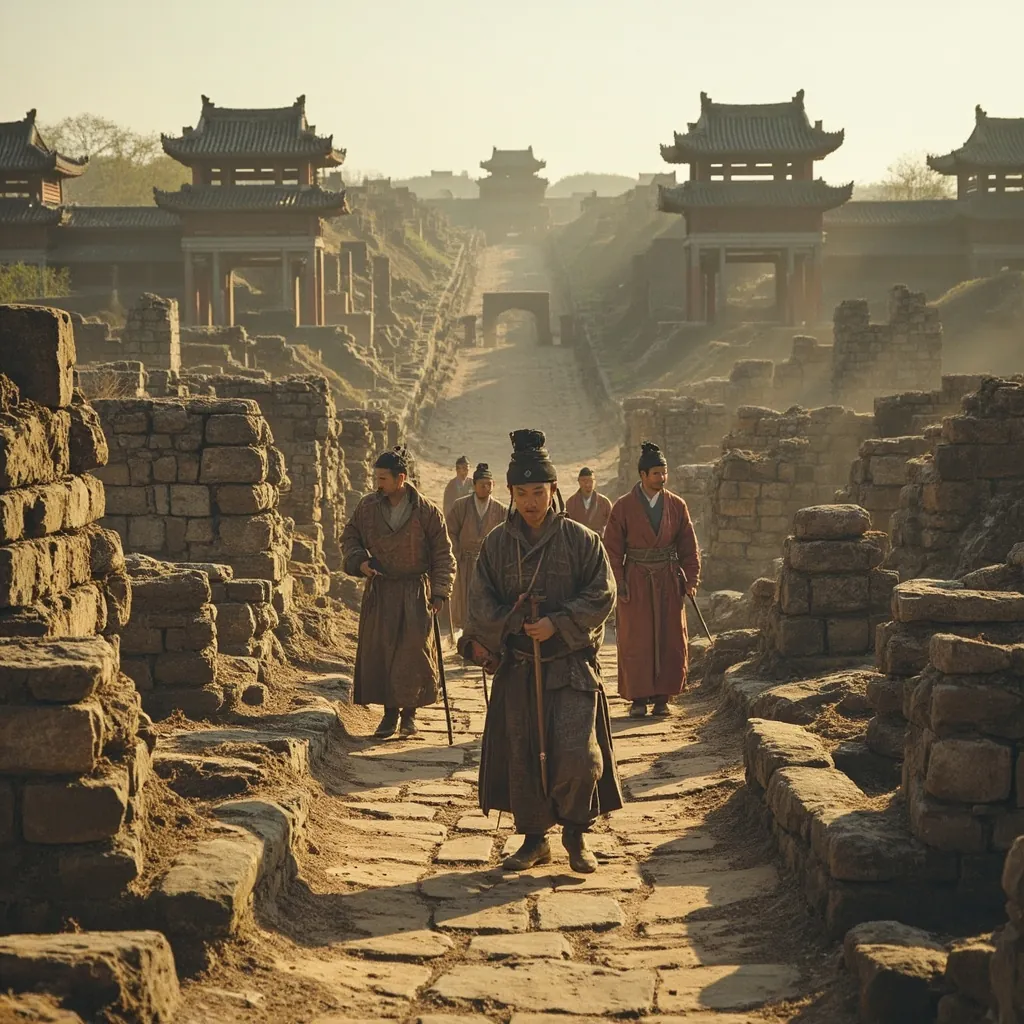
The Hexi Corridor was a strategic bottleneck. For centuries, Chinese dynasties fought to control this narrow strip of land, building walls and garrisoning soldiers to protect the trade routes. The corridor was fertile enough to support armies and travelers, but the deserts on either side were merciless.
From the oasis cities, the route split. One branch went north through the Tianshan Mountains toward Samarkand and Bukhara in present-day Uzbekistan. The Tianshan (literally “Heavenly Mountains”) rise to over 24,000 feet, with passes that remain snow-covered even in summer. Crossing them meant dealing with altitude sickness, freezing temperatures, and landslides.
Another branch headed south, crossing the Pamir Mountains—an epic journey through some of the most treacherous terrain on Earth. The Pamirs are sometimes called the “Roof of the World,” with average elevation above 13,000 feet. Travelers had to cross glaciers, navigate narrow cliff paths, and hope they didn’t get caught in the brutal winter storms that could bury a caravan overnight.
The Southern Route
A southern route ran below the Taklamakan Desert, passing through Khotan (modern Hotan) and finally connecting with the northern branch in the Fergana Valley. This route was slightly easier on travelers—more water sources, more oasis towns—but still demanded incredible endurance.
The Taklamakan itself was the great killer. The name reportedly means “you go in but you don’t come out” in local languages. Crossing the desert meant traveling at night to avoid the scorching heat, carrying all your water, and hoping the sandstorms didn’t disorient you. Archaeologists have found human remains and abandoned goods scattered across the desert, reminders of those who didn’t make it.
The Maritime Routes
By the Tang Dynasty (618-907 AD), sea routes became increasingly important. Chinese merchants shipped goods south through the South China Sea, reaching India, Southeast Asia, and eventually the Arabian Peninsula. These maritime paths connected to the overland routes at various points, creating a truly global trade network.
The maritime routes developed for several reasons. Overland travel was dangerous and expensive. Sea transport could move larger quantities of goods more cheaply. And as Chinese naval technology improved, the possibilities expanded.
Maritime trade centered on the ports of Guangzhou (Canton), Quanzhou, and later, during the Ming Dynasty, Fuzhou. These cities became enormously wealthy, filled with foreign merchants from Arabia, Persia, India, and Southeast Asia. Guangzhou in the 9th century reportedly had over 100,000 foreign residents—remarkable for any city in that era.
The Desert Journey
The geography shaped everything about the Silk Road experience. Crossing the Taklamakan meant certain death for those who ran out of water. The high mountain passes of the Pamirs could trap travelers in snow for months. Deserts offered no food or water, while mountain routes provided fresh water but exposed travelers to bandits and extreme cold.
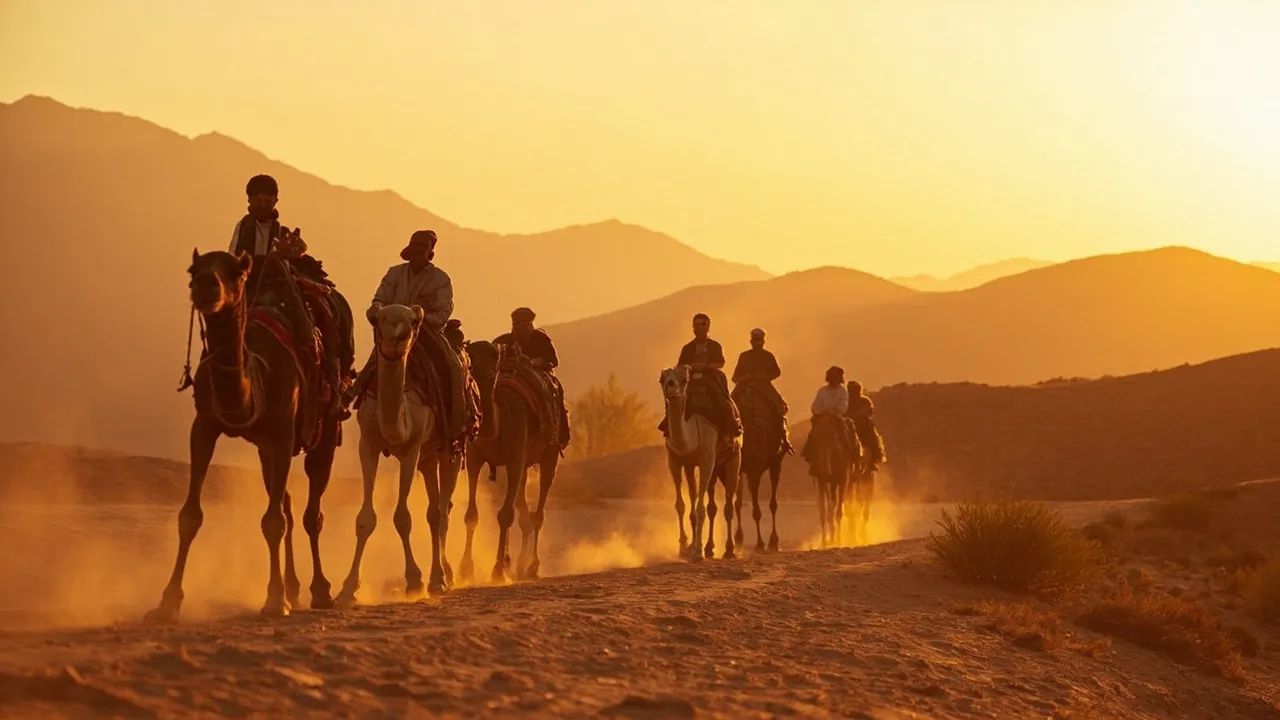
Travelers formed large caravans for protection—sometimes hundreds of camels and their handlers traveling together. These caravans would hire guards, often former soldiers or local guides who knew the terrain. The journey from Chang’an to Constantinople could take two to three years, with merchants spending months in various cities, waiting for favorable conditions to continue.
Camel trains were the backbone of overland trade. Bactrian camels (the two-humped variety) could carry 400 pounds each and go without water for days—an essential trait for desert travel. A typical caravan might have anywhere from a dozen to a thousand camels, with handlers every few animals to keep them moving and watch for problems.
The dangers were real and constant. Sandstorms could bury caravans. Flash floods could sweep through dry riverbeds. Bandits—sometimes desert nomads, sometimes organized criminal groups—raided trade routes looking for valuable cargo. Political instability could close routes entirely, sometimes for decades.
Trade and Cultural Exchange
Here’s where the Silk Road gets really interesting. Yes, merchants moved goods. But along with those goods came ideas that changed the world. This exchange was perhaps the Silk Road’s most enduring legacy—more lasting than any individual cargo of silk or spices.
Religion Travels West
Buddhism spread from India to China via the Silk Road. Indian monks traveled eastward, bringing scriptures and teaching. Chinese pilgrims like Xuanzang made the dangerous journey to India to collect Buddhist texts. Xuanzang’s journey, immortalized in the classic Chinese novel Journey to the West, took 17 years and covered over 10,000 miles.
By the time of the Tang Dynasty, Buddhism had become one of China’s major religions, reshaping Chinese art, philosophy, and daily life. Buddhist caves at Longmen and Dunhuang, filled with stunning sculptures and paintings, remain as testaments to this cultural transfer. The Buddhist impact on Chinese culture was profound—it influenced everything from architecture to literature to the very concepts people used to understand the universe.
Christianity also traveled these routes. Nestorian Christian missionaries from Persia reached China by the 7th century. The famous Xi’an Stele, erected in 781 AD, commemorates the spread of Nestorian Christianity in China—a testament to how far ideas could travel. The stele, discovered in 1625, describes the arrival of a Nestorian missionary named Alopen and his teachings. Interestingly, the stele was erected during the Tang Dynasty, when religious tolerance was at its peak.
Islam moved eastward from the Arabian Peninsula, reaching China by the 8th century. Muslim merchants settled in Chinese coastal cities, creating communities that exist to this day. The Muslim population in China today exceeds 25 million, descended in part from those early traders who came ashore in Guangzhou, Quanzhou, and other ports.
Zoroastrianism, one of the world’s oldest monotheistic religions, also traveled the Silk Road. Persian Zoroastrians settled in Chinese cities, bringing their fire temples and complex cosmology. While Zoroastrianism eventually died out in China, its influence on Chinese religious thought is still being studied.
Technology Moves Both Directions
The Silk Road was a two-way street for innovation. Here’s a quick tour of technologies that moved east to west and west to east:
Westward:
- Paper-making: Chinese paper-making technology traveled westward, eventually reaching the Islamic world and then Europe, revolutionizing how information was recorded and shared. The battle of Talas in 751 AD, where Chinese papermakers were captured by Arab forces, is often cited as the moment paper reached the Islamic world.
- Gunpowder: Another Chinese invention, gunpowder moved westward through the Mongols, eventually changing warfare in Europe. The Mongols, who controlled much of the Silk Road in the 13th century, were enthusiastic adopters of Chinese military technology.
- The compass: Originally a Chinese invention for divination, the compass guided sailors across the Indian Ocean and eventually the Atlantic.
- Silk production: For centuries, the Chinese kept silk production secret. Eventually, the technique spread to Korea, Japan, and then the Byzantine Empire—likely through captured weavers.
Eastward:
- Glass-making: Roman and Persian glassware was highly prized in China. Chinese potters eventually learned to make glass, developing their own unique styles.
- Musical instruments: Instruments like the pipa (a pear-shaped lute) came from Central Asia and became central to Chinese music.
- Astronomical knowledge: From the Islamic world, astronomers brought new instruments and calculation methods that helped Chinese calendar-makers.
- Medical knowledge: Indian medical texts influenced Chinese physicians, introducing new diagnostic techniques and herbal remedies.
The Money Question
Trade required money, and the Silk Road drove innovation in banking and currency. Chinese coins circulated in Central Asia. Silver from the Roman Empire flowed eastward. By the Tang Dynasty, Chinese merchants were using credit notes—a very early form of paper money. The financial systems that developed along these routes would eventually influence modern banking.
The Sogdian merchants, originally from Central Asia, were particularly important in developing early banking systems. They created bills of exchange that allowed merchants to deposit money in one city and withdraw it in another—remarkably similar to modern banking. This system allowed traders to avoid carrying massive amounts of gold and silver across dangerous terrain.
The Silk Road also introduced new forms of money. When Mongol rule united much of Eurasia in the 13th and 14th centuries, paper money became widespread across the Silk Road world. Kublai Khan’s paper currency was accepted from China to Persia—a remarkable experiment in monetary integration.
Key Cities Along the Way
The Silk Road wasn’t just about the journey—it was about the cities where travelers rested, traded, and exchanged ideas and culture. These urban centers were cosmopolitan places where a dozen languages might be heard in a single marketplace. They were the nodes where goods changed hands, where merchants recovered from grueling desert crossings, and where cultures collided and merged in fascinating ways.
Chang’an (Xi’an)
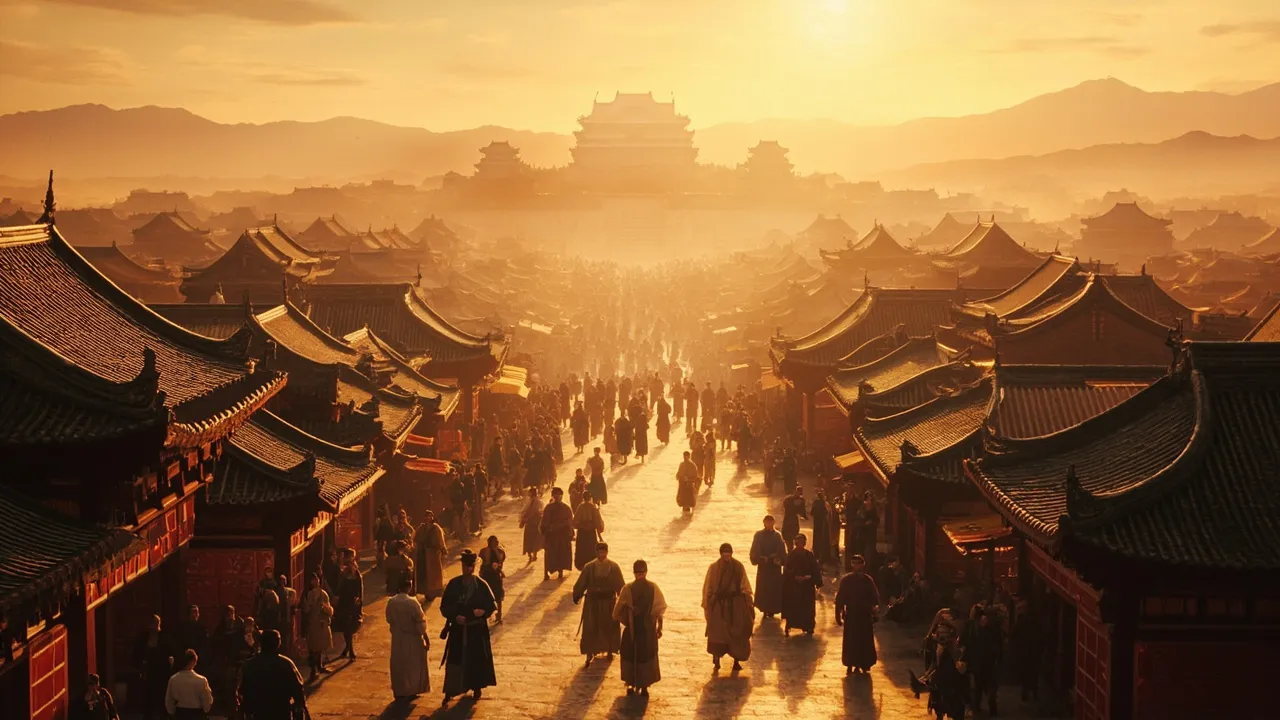
The eastern terminus of the Silk Road was Chang’an, one of the world’s largest cities in its time. During the Tang Dynasty, Chang’an had over a million inhabitants—a metropolis by any standard of the medieval period. The city was remarkably diverse. You could find Persian restaurants serving lamb and rice, Buddhist temples with towering statues, Christian churches celebrating masses in Aramaic, and Zoroastrian fire temples where priests tended eternal flames.
The city’s Western Market was famous for its international atmosphere. Traders from Rome, Persia, India, Korea, Japan, and dozens of other lands gathered there. The noise was incredible—merchants hawking their wares in a dozen languages, camel drivers shouting, money changers calling out exchange rates. It would have smelled of spices, incense, and the distinctive scent of camel.
The city had dedicated neighborhoods for foreign merchants. The Persian quarter, the Korean quarter, the Arab quarter—each had its own temples, restaurants, and community spaces. Some foreigners stayed for months; some stayed for years; some never left, settling down and intermarrying with local families.
Today’s Xi’an still bears traces of this glorious past. The ancient city walls, rebuilt in the 14th century, still enclose a large part of the old city. The Muslim Quarter, where descendants of Silk Road traders still live, is famous for its street food—lamb skewers, roujiamo (Chinese “hamburgers”), and hand-pulled noodles.
Samarkand
In modern Uzbekistan, Samarkand was the great midpoint of the Silk Road. Located at the intersection of several routes, it became impossibly wealthy from trade. The city’s famous Registan square—where three massive madrasahs (Islamic schools) face each other—was built with profits from Silk Road commerce. The tiled mosaics and towering minarets date mostly from the 15th century, but they stand on foundations laid by centuries of trade.
The name Samarkand itself evokes magic and mystery. Alexander the Great conquered it in 329 BC, reportedly exclaiming that everything he’d heard about the city was true. Geng Khan swept through it in the 13th century, destroying much of what Alexander had built. But the city always rebuilt, always thrived, always remained central to the trade routes crossing Central Asia.
Samarkand’s position also made it a center of learning. Scholars from across the Islamic world gathered there, preserving and expanding knowledge in medicine, astronomy, mathematics, and literature. The great astronomer Ulugh Beg, who built an observatory in Samarkand in the 15th century, created star catalogs more accurate than anything in Europe at the time.
Kashgar
The gateway to China, Kashgar sat where the northern and southern Silk Road routes converged. Every traveler passing between China and Central Asia went through this oasis city. The famous Sunday market there still operates today, a living reminder of ancient trade traditions. The marketplace, officially called the Id Kah Mosque square, fills with thousands of traders every Sunday, selling everything from sheep to smartphones.
The journey to Kashgar was the last leg before entering China proper. Merchants would rest here, repair their caravans, stock up on supplies, and wait for favorable weather to cross the mountains or deserts ahead. The city was polyglot—Turki, Chinese, Persian, and Arabic were all commonly spoken.
Dunhuang
At the edge of the Taklamakan Desert, Dunhuang was a vital oasis where the northern and southern routes almost met. The city grew rich from charging tolls on goods passing through. But Dunhuang is perhaps most famous today for the Mogao Caves, a complex of nearly 500 caves carved into the cliffs surrounding the city.
These caves, filled with Buddhist art spanning a thousand years, are one of China’s greatest cultural treasures. The paintings and sculptures represent a remarkable fusion of Indian, Central Asian, and Chinese artistic styles—a physical manifestation of the cultural exchange that defined the Silk Road. Cave 17, discovered in 1900, contained thousands of manuscripts in dozens of languages, including Tibetan, Sanskrit, Sogdian, and Old Turkic.
Constantinople (Istanbul)
At the western end of the Silk Road, Constantinople controlled the gateway between Asia and Europe. This city—later renamed Istanbul—was where Asian goods entered the European market. Byzantine wealth built the great Hagia Sophia church, funded in part by taxes on Silk Road trade. The church’s massive dome, completed in 537 AD, was an engineering marvel that inspired architects for a thousand years.
The city’s strategic position made it fabulously wealthy. Goods arriving from the east passed through customs (and paid duties) before continuing westward. Byzantine emperors built palaces, sponsored arts, and waged wars—funded largely by this trade. When the Ottoman Turks conquered Constantinople in 1453, they inherited not just a city but an economic engine built on centuries of Silk Road commerce.
Today’s Istanbul is one of the world’s great cities, straddling two continents. The Grand Bazaar, with its thousands of shops, is a descendant of the Silk Road markets. The spice bazaar nearby still sells saffron, cumin, and other goods that would have been familiar to medieval merchants.
The Silk Road Today
The original Silk Road fell into decline after the 15th century. Several factors killed the overland routes. First, sea routes proved safer and more efficient—Portuguese and later Dutch and English ships could move more goods more cheaply than camel caravans. Second, the rise of the Ottoman Empire disrupted overland trade; the Ottomans controlled key choke points and charged high tolls. Third, the plague pandemics of the 14th century had devastated many Silk Road cities and disrupted trade patterns. Fourth, the rise of maritime powers meant that the economic center of gravity shifted to the sea.
Eventually, the Silk Road faded into history—or so it seemed.
In 2013, Chinese President Xi Jinping announced the Belt and Road Initiative (BRI), a massive modern infrastructure project designed to recreate the spirit of the ancient Silk Road. As of 2026, over 140 countries have signed onto BRI projects, involving trillions of dollars in investment in ports, railways, highways, and power plants.
The Belt (the land-based “Silk Road Economic Belt”) focuses on connecting China to Central Asia, Europe, and the Middle East through railways, highways, and energy pipelines. The Road (the “21st Century Maritime Silk Road”) aims to connect China to Southeast Asia, Africa, and Europe through port construction and maritime cooperation.
The scale of the BRI is almost incomprehensible. China has built or is building railways in Kenya, Ethiopia, and Serbia. Ports in Pakistan, Sri Lanka, and Greece have been expanded with Chinese investment. Fiber optic cables now connect Asia and Europe through Central Asian routes. The China-Pakistan Economic Corridor alone has seen over $60 billion in Chinese investment, building highways, ports, and power plants.
Critics worry about debt traps—countries becoming so indebted to China that they lose economic sovereignty. Sri Lanka’s Hambantota Port, taken over by China after the country couldn’t repay its loans, is often cited as an example. Others worry about environmental impacts, worker safety issues, and the lack of transparency in BRI contracts.
Supporters point to new roads, ports, and economic opportunities in developing nations. They argue that the infrastructure being built will benefit local economies for decades. They note that Western countries had decades to build these connections and didn’t; China’s projects fill a real need.
Either way, the Belt and Road Initiative shows how deeply the idea of connecting East and West resonates—even in the 21st century. The desire to move goods and ideas across vast distances hasn’t diminished; if anything, it’s intensified.
For travelers today, the Silk Road remains a powerful destination. The cities of Xi’an, Dunhuang, Turpan, Kashgar, Samarkand, and Istanbul all preserve remarkable monuments from their Silk Road days. Camel rides in the Gobi Desert, visits to ancient Buddhist caves, bargaining in traditional bazaars—these experiences let modern travelers walk in the footsteps of ancient merchants.
In Xi’an, the ancient capital, you can see the starting point of the Silk Road at the Shaanxi History Museum, which houses the world’s largest collection of artifacts from the Tang Dynasty. In Dunhuang, the Mogao Caves remain a pilgrimage site for art lovers and history enthusiasts. In Kashgar, the Sunday market still operates as it has for centuries. In Samarkand, the Registan still gleams with blue tiles.
Travel agencies now offer “Silk Road tours” that take you through multiple countries, retracing the ancient routes. These tours aren’t easy—crossing the Pamir Mountains still requires endurance—but they’re easier than they would have been a century ago.
Archaeologists continue to make discoveries along the route. In 2024, researchers found a Tang Dynasty merchant’s ledger in a remote cave, providing unprecedented details about 8th-century trade prices. The ledger listed silk, spices, and precious metals, with prices in both Chinese coins and Sogdian silver weights. New technologies like satellite imaging are helping scholars map forgotten routes across Central Asia, discovering trade paths that had been lost for centuries.
Meanwhile, historians are using old documents—the Dunhuang manuscripts, Persian chronicles, Chinese dynastic histories—to reconstruct the economics of the ancient Silk Road with increasing precision. What emerges is a picture of a genuinely global economy, centuries before the term “globalization” was invented.
Conclusion
The Silk Road was never really about silk. It was about connection—human beings reaching across vast distances to trade, learn, and understand each other. The merchants who walked these routes faced death daily, from bandits, deserts, and mountain passes. Yet they kept traveling, driven by profit no doubt, but also by something more fundamental: curiosity about what lay beyond the horizon.
That same drive shapes our world today. The Belt and Road Initiative, container ships crossing the Pacific, fiber optic cables threading across ocean floors—all are modern versions of that ancient impulse to connect.
Next time you buy something made on the other side of the world, remember the merchants of Chang’an and Samarkand. They started something that never really stopped.
This article is part of our series exploring ancient trade routes and their lasting impact on world cultures.