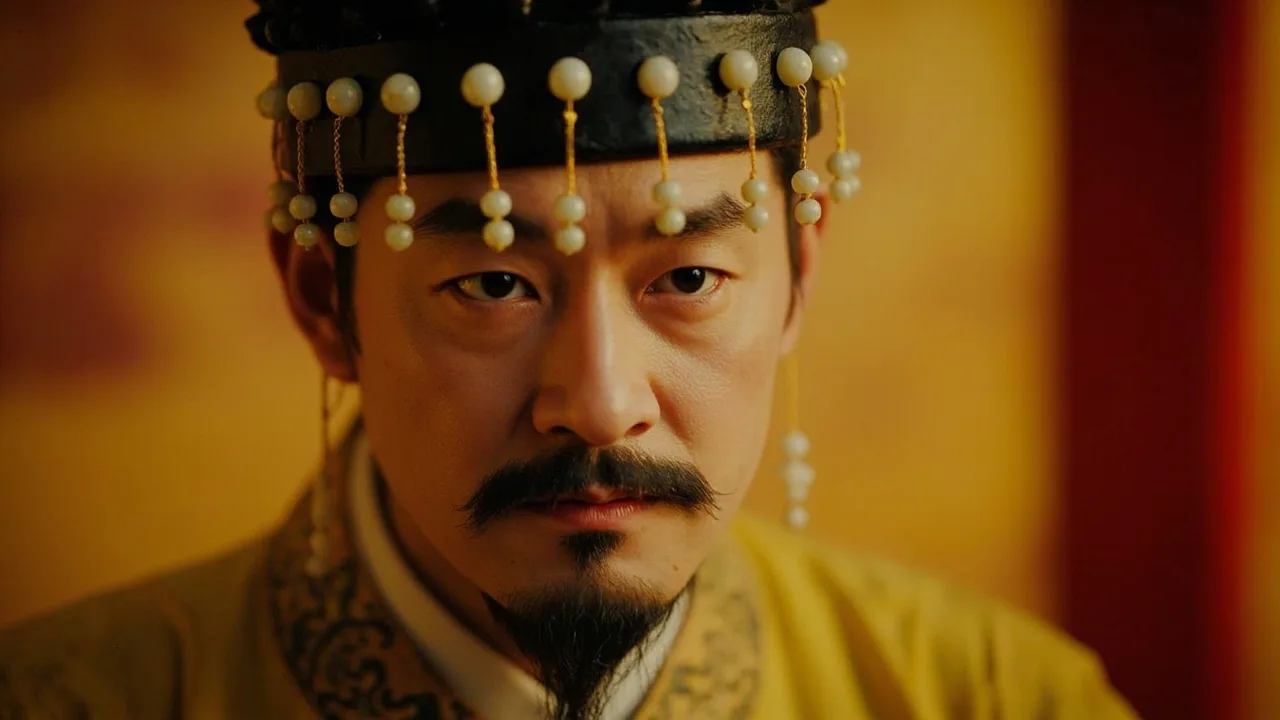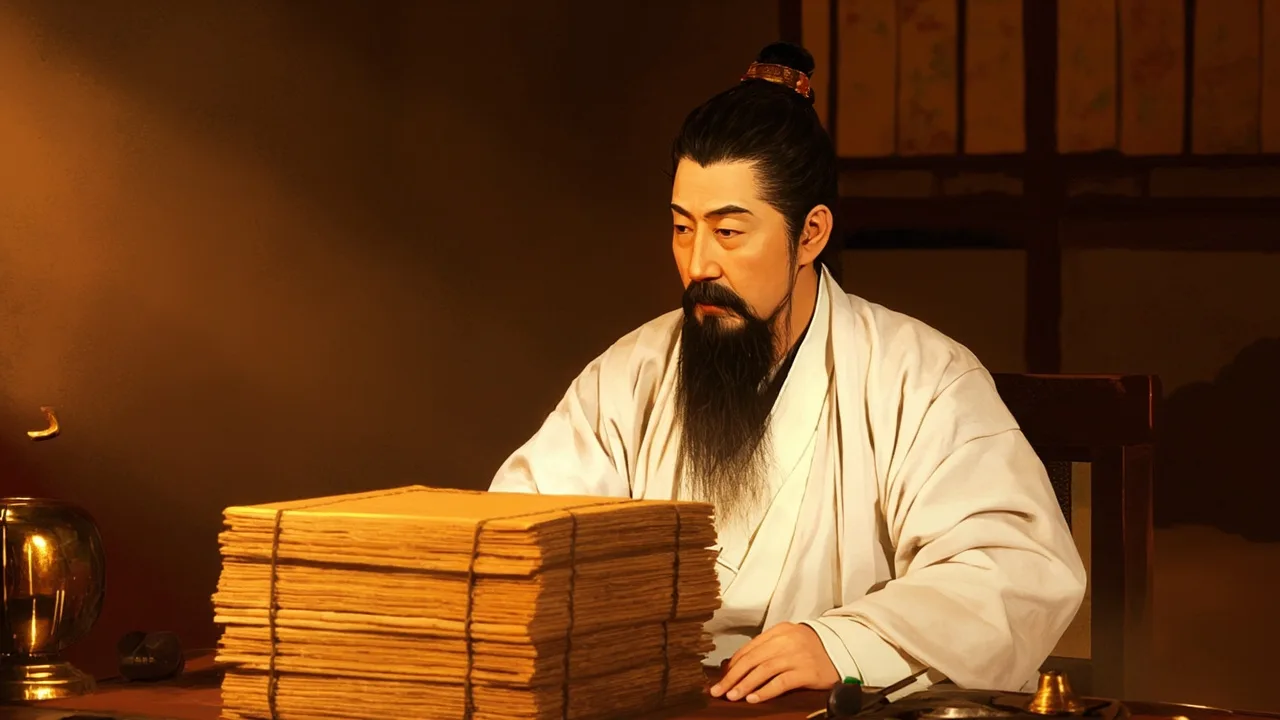
There’s a story every Chinese history student hears, and it never quite loses its sting. A court official in the early Han Dynasty is offered a choice: die with honor, or live with shame. He picks shame. He picks shame so he can finish a book. That official is Sima Qian, and the book is the Shiji — the Records of the Grand Historian — a 130-chapter chronicle that covers roughly 2,000 years of Chinese history and is still in print 2,100 years later.
You don’t have to be a Sinologist to feel the weight of that. Sima Qian isn’t just a historian. He’s the guy who, more or less single-handed, decided what Chinese history writing should look like. Before him, history was a scattered mess of court annals, genealogies, and prophetic texts. After him, it had a shape — biographical, comparative, narratively alive — and that shape stuck. The Shiji is the reason every dynastic history written afterward followed a recognizable template. When you read about the Tang Dynasty in the Old Book of Tang or the Song Dynasty in the History of Song, you’re reading grandchildren of Sima Qian’s invention.
So who was he? How did he end up with his hand on the entire Chinese past? And what does it tell us that he paid for the privilege with his own body?
The Boy Who Grew Up in the Archives
Sima Qian was born around 145 BCE in Xiayang, near modern Hancheng in Shaanxi province. His father, Sima Tan, held the hereditary title of Grand Historian (taishi gong) under Emperor Wu of Han — a position that sounds grand but was, in practice, a mid-tier court job combining astronomical duties, calendrical calculation, ritual protocol, and the maintenance of royal archives. Not exactly glamorous. But it had one enormous perk: access.
A young Sima Qian traveled with his father to court, learned to read classical texts at age ten, and by twenty was deep in the imperial library. He did what any ambitious historian would do today — he read everything. The Spring and Autumn Annals, the Book of Songs, the Book of Documents, the Analects. The Zuo Commentary. The Strategies of the Warring States. He went to the countryside to interview old men who’d seen events firsthand. He walked the supposed sites of legendary battles. He traced the routes of ancient embassies. By the time he was thirty-five and his father died in 110 BCE, leaving him the position, Sima Qian had spent fifteen years gathering material.
This wasn’t casual curiosity. Han Dynasty Confucian scholarship was just becoming the official ideology of the state, and there was a real question about how the past should be used. Should it be a lesson? A warning? A mirror? Sima Qian’s answer, eventually, was all three — and that’s one of the reasons his book still reads so well.
If you want to get a sense of how Han scholars worked, look at the kind of [product_affiliate: traditional Chinese calligraphy brush set with bamboo scrolls] that would have been standard in his study. The tools mattered: bamboo slips were still in use for important documents, though paper was beginning to arrive via the western regions. A working historian of Sima Qian’s rank would have needed brushes, ink stones, water droppers, and a steady supply of bamboo or silk. (For a deeper dive into this material culture, the [product_affiliate: Cambridge History of Ancient China with Shiji excerpts] is a gold-standard reference that gives you the actual source material in translation.)
The Li Ling Affair and the Price of Truth
Here’s where the famous story kicks in. In 99 BCE, the Han general Li Ling — grandson of the great Li Guang — led a column of about 5,000 Han soldiers deep into Xiongnu territory in modern Mongolia. He fought well, but was surrounded, outnumbered, and eventually captured alive. The news reached the capital at a politically inconvenient moment: Li Ling had been patronized by Emperor Wu’s brother, and the emperor was already unhappy with the brother. So when Li Ling’s defeat was confirmed, the court smelled a chance to destroy the faction.
Sima Qian made the mistake of saying something fair.
He defended Li Ling at court. He pointed out that Li Ling had fought valiantly with insufficient troops against overwhelming odds. He praised his conduct. He suggested that previous commanders who had done worse — including the emperor’s own brother-in-law — had been treated with more grace. This was, by all accounts, a measured, even cautious speech.
Emperor Wu took it as an insult. The emperor ruled that Sima Qian had been trying to tarnish recent military glory and show himself a sharper judge of men than the throne. The punishment: death.
In the Han legal code, death could be commuted to two alternatives — branding on the face, or castration. Sima Qian had no money for the fine attached to branding. Castration it was.
He writes, in a famous letter to his friend Ren An, that he considered suicide. He thought about it constantly. But then he gave the reasons — and these reasons, more than the act itself, are why he matters. He wrote the Shiji — and the historical material he’d gathered over fifteen years — was not yet complete. He had committed his father to finishing the project. To die would be to “break that promise,” to let the work be wasted. He also had a deeper, more Confucian reason: even an act of shame could be redeemed if it preserved something larger than the self.
So he lived. He lost his position at court, served in a degraded role, and finished the Shiji — likely between 94 and 91 BCE, shortly before his death. We don’t know exactly when he died. The empire moved on. The book stayed.
For readers who want to engage with the source material directly, Burton Watson’s [product_affiliate: Burton Watson translation of Shiji Records of the Grand Historian] remains the most accessible English version, and a good [product_affiliate: Great Books of the Chinese Classics anthology including Shiji] brings together many of the texts Sima Qian drew on, including the Spring and Autumn Annals and the Book of Documents — the most direct way to see what he was working with and what he made of it.
The Shape of the Shiji
The book itself is a structural innovation. Sima Qian didn’t just write a chronicle — he invented a form. The Shiji is divided into five major sections:
- Basic Annals (Benji) — chronological accounts of emperors and rulers, 12 chapters.
- Chronological Tables (Biao) — 10 chapters of timeline charts, almost an index.
- Treatises (Shu) — 8 chapters on ritual, music, calendars, economy, sacrifice, and other institutional topics.
- Hereditary Houses (Shijia) — 30 chapters on the great families and tributary states of the pre-imperial period.
- Ranked Biographies (Liezhuan) — 70 chapters of biographical essays on individuals from emperors’ advisors to assassins, merchants, and wandering philosophers.
This last section is where the genius shows. By treating a philosophical school founder like Confucius in the same form as an assassin like Jing Ke or a concubine like Consort Li, Sima Qian implied something quietly radical: history is the story of people, not the story of thrones. The form persisted. The Hanshu, the Shiji’s successor covering the Western Han, kept the layout. So did every subsequent dynastic history down through the Qing. When you’re reading the History of the Ming and find a long essay on a single recalcitrant official or a single Buddhist monk, you’re inside a form Sima Qian invented.
The content was just as ambitious. The Shiji reaches back to the legendary Yellow Emperor and ends roughly in the early Western Han — about 2,000 years of history compressed into 130 chapters. It draws on documents, oral testimony, inscriptions, and Sima Qian’s own travels. It’s not always accurate by modern standards — he quotes prophecies and portents with a straight face that makes a twenty-first-century reader squirm — but the critical apparatus is robust. Where he couldn’t verify, he often said so. Where sources conflicted, he laid out the conflict and let the reader decide. That’s still a useful habit.
His prose is, by all surviving accounts, a pleasure to read in the original. The famous passage on Jing Ke’s assassination attempt on the King of Qin — the slow build through the maps, the sudden leap, the broken dagger, the pursuit around the pillar — has been imitated for two millennia.
What Sima Qian Did to Chinese Memory
It’s tempting to treat Sima Qian as a neutral recorder. He wasn’t. He was a writer with a thesis. The thesis, roughly stated, was that moral quality and political success are not the same thing — that a ruler can be impressive and still be a tyrant, that a private person can fail utterly and still be noble. He had heroes and villains, and his structure kept showing his hand. Emperor Wu of Han — the same emperor who destroyed Sima Qian’s life — gets one of the longest and most critical Basic Annals in the Shiji. The unflattering portrait is in there, full of the emperor’s arrogance, his reversals of policy, his persecution of his own family.
Reading the Shiji is therefore reading an argument, not a transcript. Sima Qian is constantly judging, constantly comparing, constantly looking for the irony in a career. When he describes Liu Bang — the founder of the Han Dynasty, who came from a peasant family and became emperor — he points out, gently but firmly, that Liu Bang was a petty official who let his people starve while he built a palace. When he describes Xiang Yu, the brilliant and doomed warlord, he treats him as a tragic hero, comparing his defeat to a tiger who has lost his mountain.
That last comparison — the “tiger fallen from the mountain” passage — has been quoted for two thousand years. The [product_affiliate: collected works of Sima Qian in English translation with commentary] includes extensive notes on his rhetorical methods, which any reader interested in how narrative shapes memory will find illuminating.
A note on legacy: the Shiji became the model, but it also became a political problem. Later dynasties sometimes found the Shiji too critical of Han Dynasty emperors and commissioned alternative histories, or banned the book from official reading lists. None of that stuck. The Shiji’s influence on Chinese historical writing is so foundational that breaking with it would have meant breaking with how history was understood at all. By the Tang Dynasty, Sima Qian was treated as a demigod of letters. By the Song Dynasty, the Shiji was being printed. By the Qing Dynasty, every serious scholar owned a copy. Today, the Shiji is on UNESCO’s Memory of the World register.
The Man Behind the Book
It’s easy to read the Shiji as a cold monument. Don’t. The book is hot with Sima Qian’s anger, grief, and stubborn faith in the worth of finishing what you start. He never pretended he was a great man. He writes about himself in the Shiji once, briefly, in the postface — and what he says is essentially that he was a mid-ranking official with bad luck who did his job and got punished for it. He ends the Shiji with an apology to posterity for his imperfections.
That modesty is part of why he has lasted. Other historians of comparable skill existed in early imperial China — Ban Gu wrote the Hanshu with similar ambition and arguably tighter structure — but Ban Gu served the state and shaped his work to flatter it. Sima Qian wrote at a price. He knew what it cost. The book knows it too.
When you pick up the Shiji, whether in Burton Watson’s translation or one of the newer editions, you’re reading the work of a man who chose to keep living in disgrace so that you could read about the lives of people he never met, who lived two thousand years before he was born. That’s not a small thing. That might be one of the most extraordinary acts of professional commitment in any literature.