Every era has its invisible people — men and women whose abilities far exceed what their circumstances would suggest, whose minds operate at a level that the world around them cannot recognize or reward. In most cases, this obscurity is permanent. The brilliant strategist dies unknown in a village somewhere. The artist who could have reshaped a medium spends their life painting signs for merchants. The future corporate genius grows old running a failing shop, never encountering the conditions that would have let their real talents flourish. History is full of people who were never found, who lived and died without anyone understanding what they had in them.
But sometimes — rarely — the invisible person is found. And when that happens, the results can reshape the world.
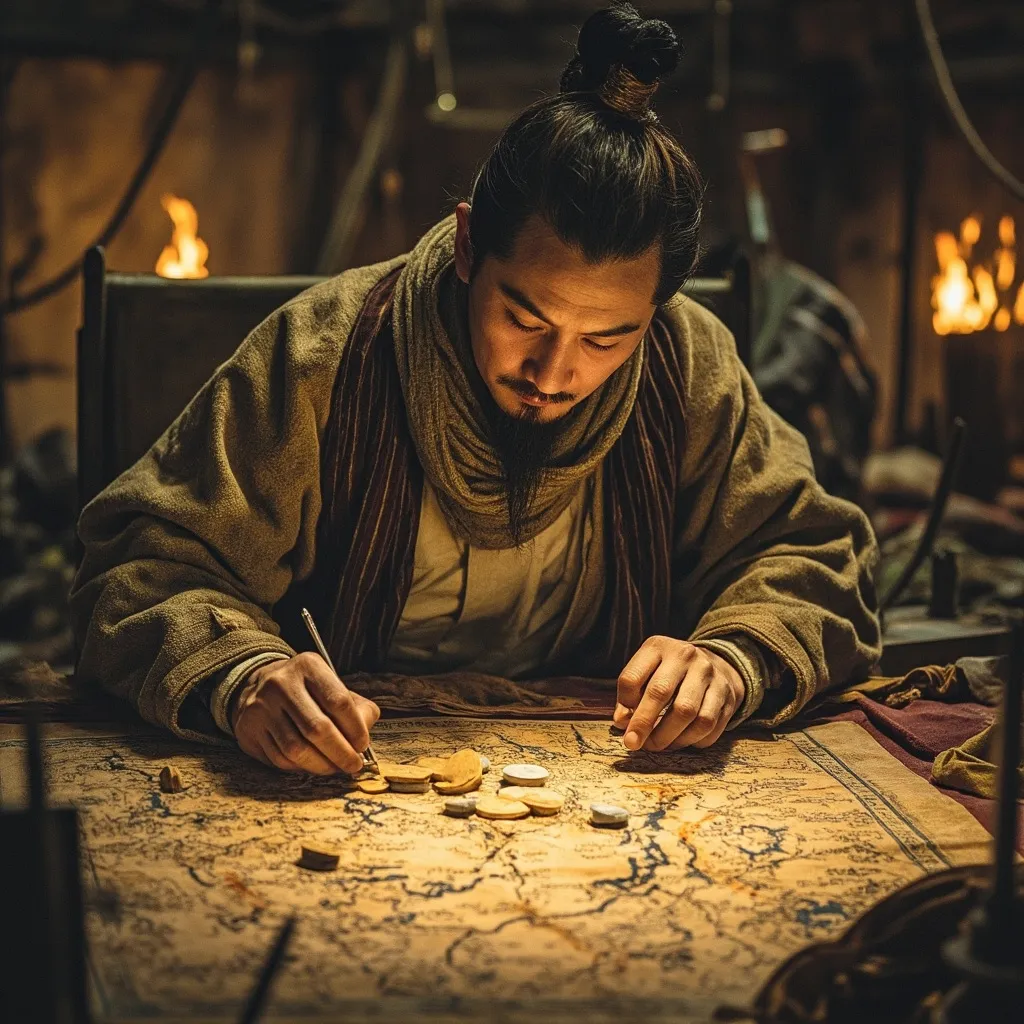
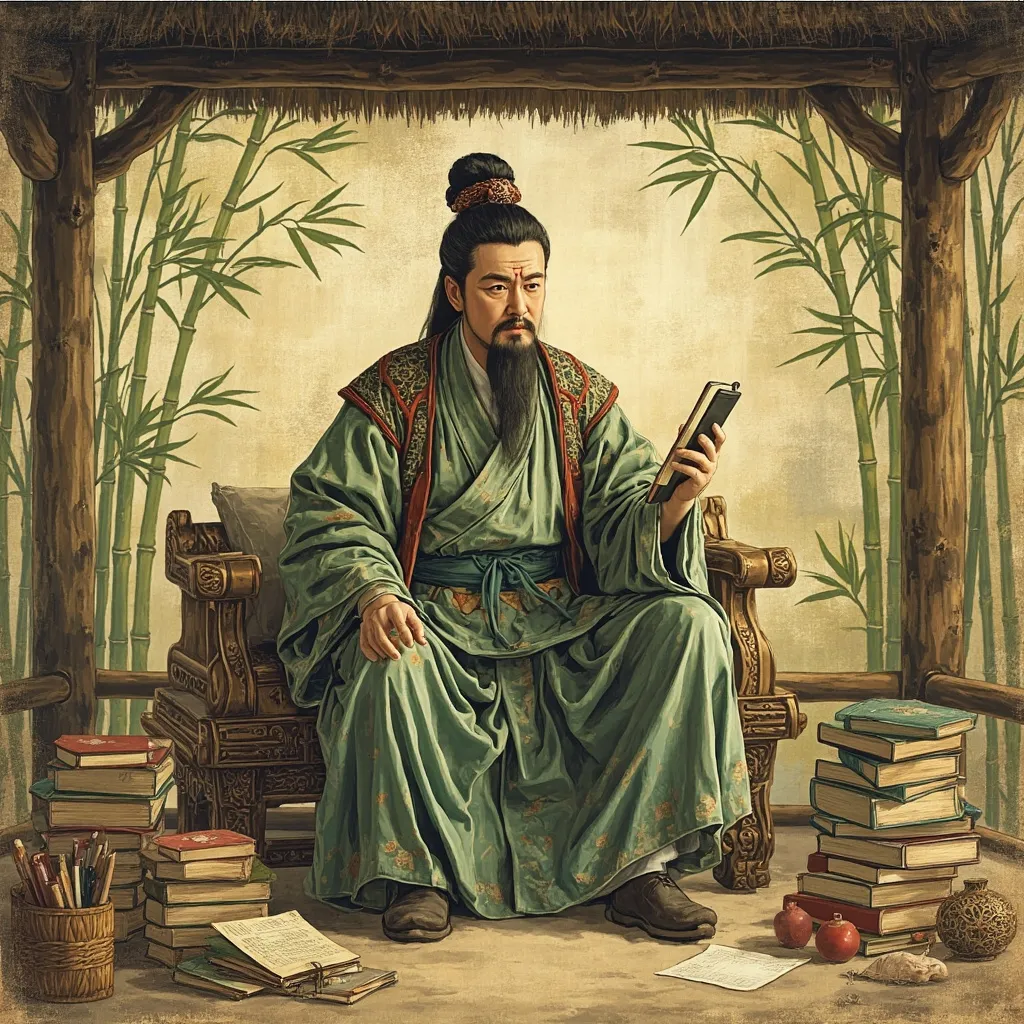
Zhuge Liang was invisible for most of his early life. He lived in a small thatched hut in the countryside of present-day Hubei Province, growing vegetables, reading voraciously, and thinking about the kind of grand strategic questions that most people never contemplate in a lifetime. He had no official position, no military command, no political influence. By every conventional measure, he was nobody — a young man of uncertain prospects in an era that offered precious few opportunities to men who wouldn’t play by the established rules. His days were spent in study and contemplation; his nights were spent in the kind of deep thinking that most people find uncomfortable because it reveals how little they actually understand about the world.
Yet somehow, word of his abilities had begun to spread. Not widely — he wasn’t famous in any conventional sense. But among a small circle of scholars, officials, and military men who had learned to recognize genuine brilliance when they encountered it, Zhuge Liang’s name carried a weight that his humble circumstances couldn’t explain. They called him by two different names, each one a poetic description of what they saw in him, and those names would eventually become so famous that they outlived the era that produced them.
卧龙 (wò lóng). The Sleeping Dragon.
凤雏 (fèng chú). The Phoenix Chick.
The Man in the Hut
To understand why those names made sense, you have to understand what Zhuge Liang actually was — not the semi-legendary figure of later folklore, but the young man who lived in relative obscurity before Liu Bei’s famous visit.
Zhuge Liang was born in 181 CE in Yangdu County, Langye Commandery — modern-day Yinan County in Shandong Province. His family belonged to the scholar-official class that had traditionally provided administrative and military leadership for the Chinese imperial system, but his father had died when Liang was young, leaving the family in reduced circumstances. The young Zhuge was raised partly by his uncle, a minor official who took him in after his father’s death, and partly by his own relentless drive for self-education. He studied the classics, history, military texts, philosophy — everything he could get his hands on — and he did so with an intensity that his peers found almost unsettling.
By the time he reached adulthood, Zhuge Liang had developed a reputation among the small network of scholar-officials who maintained intellectual standards even as the Han Dynasty collapsed into chaos. He was known as a man of exceptional analytical ability, someone who could look at a complex situation and extract from it a clear pattern of cause and effect that others had missed. He was also known for his unconventional approach to life — he had no interest in the usual career paths that would have led to administrative positions or military commands. He preferred to remain in his rural hut, tending his modest garden, reading, and thinking. He was, by his own later admission, a man who had ambitious plans for what he would do if he ever found the right context for his abilities, but who had no particular desire to pursue conventional success in the meantime.
This combination of obvious brilliance and apparent disinterest created a kind of puzzle for those who encountered him. How do you assess a man who clearly has extraordinary capabilities but who seems entirely content to waste them growing vegetables in a remote village? The answer, for those who could see it, was that Zhuge Liang wasn’t wasting anything. He was waiting. He was cultivating his abilities with the same patience that a master calligrapher develops over decades of practice — knowing that when the moment came, the skills would be ready, and knowing also that the moment might never come at all.
The Names and What They Meant
The terms 卧龙 and 凤雏 were not invented by Zhuge Liang’s friends — they emerged from a broader tradition of using animal imagery to describe human qualities that had deep roots in Chinese culture. Dragons (龙) were symbols of supreme capability, of power that transcended ordinary categories. The phoenix (凤) represented elegance, transformation, and the potential for extraordinary achievement. A “sleeping dragon” was therefore a figure of immense latent power — someone who possessed genuine greatness but who had not yet manifested it in the world. A “phoenix chick” was someone who had not yet grown into their full potential, a creature of promise rather than accomplishment, beautiful and strange and waiting to become what its nature suggested it could be.
Zhuge Liang was called by both names, sometimes by different people in the same conversation, and the dual terminology reflected the complexity of how observers understood him. The “sleeping dragon” name acknowledged that here was a man whose strategic mind was operating at a level that rivaled or exceeded any known figure of the age — a genuine great in waiting. The “phoenix chick” name acknowledged that he was still young, still unproven, still a work in progress rather than a finished product. Both names pointed toward the same conclusion: this was a man worth watching, worth cultivating, worth recruiting if you had the resources and the vision to do so.
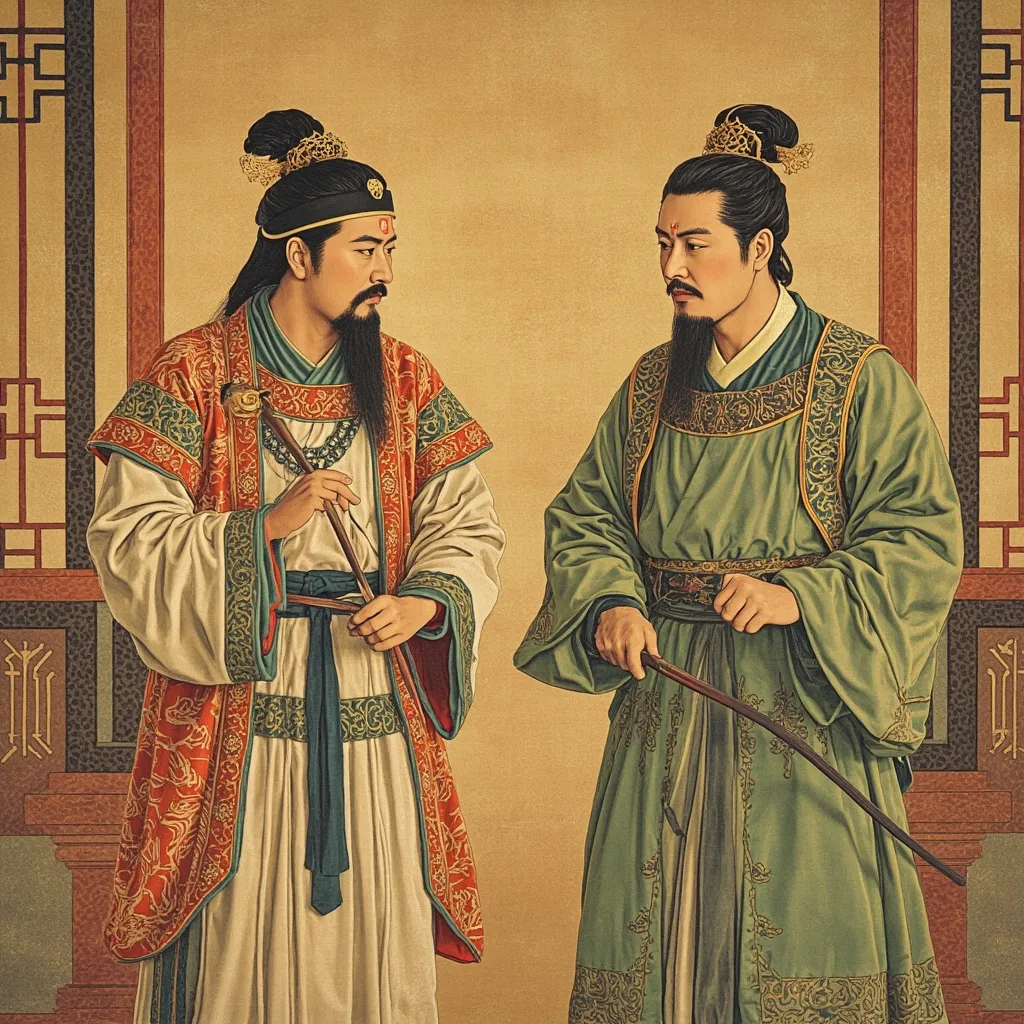
The person who most famously recognized this was Liu Bei, the warlord who would eventually become the founder of the Shu Han kingdom. Liu Bei was not a sophisticated man — he was a soldier and politician whose early life had been spent in the chaotic margins of the Han system, bouncing between minor official positions and military commands that went nowhere. But he had one quality that made him extraordinary in his context: he genuinely understood the value of talent, and he was willing to pursue it with a persistence that more conventional figures found embarrassing.
The Search for the Sleeping Dragon
The story of how Liu Bei found Zhuge Liang has been told so many times that it has acquired the quality of myth, which is perhaps appropriate given the legendary status of both men. Liu Bei had been defeated repeatedly by the powerful warlord Cao Cao, and he was increasingly aware that his military difficulties stemmed from a fundamental absence of strategic sophistication in his command structure. He had brave soldiers and loyal officers, but he lacked the kind of mind that could see the overall pattern of the conflict and design campaigns accordingly. He needed a strategist, and he needed one badly.
His advisor Xu Shu had been helping, but even Xu Shu recognized that there was a level above where his own abilities operated. It was Xu Shu who first told Liu Bei about “the Sleeping Dragon of Longzhong” — a young man of extraordinary talent who lived in relative seclusion in the countryside and who might, if properly recruited, transform Liu Bei’s entire operation. The description was enthusiastic enough to catch Liu Bei’s attention, but cautious enough to avoid promising too much. Xu Shu spoke of a mind that worked in unusual ways, a man who had studied the patterns of political and military conflict with a depth that suggested he might be capable of genuine strategic innovation.
Liu Bei decided to visit Zhuge Liang personally. This was not a casual decision — the journey from Liu Bei’s base to the village where Zhuge Liang lived was substantial, and the social gap between a warlord and a anonymous rural scholar was enormous. For Liu Bei to visit Zhuge Liang in his hut was roughly equivalent to a major corporate CEO making an unannounced visit to a unknown graduate student’s apartment. It was the kind of gesture that said something important about priorities and respect.
The first visit did not result in a meeting. Zhuge Liang was not at home — some versions of the story say he was out collecting firewood, others simply say he was elsewhere. Liu Bei left a message and departed, apparently undeterred by the anticlimactic outcome.
The Meeting That Changed Everything
Liu Bei returned a second time, only to find Zhuge Liang still absent. This time he left a more detailed message expressing his desire to discuss the future of the empire and to hear Zhuge Liang’s thoughts on the strategic situation. Still, no meeting occurred.
The third visit is the one that entered legend. Liu Bei arrived in winter, when the roads were difficult and the weather was cold, and this time he found Zhuge Liang at home — asleep. Rather than waking him immediately, Liu Bei waited. He sat in the humble room, surrounded by Zhuge Liang’s books and scrolls, and contemplated the strangeness of the situation: he, a man who had fought battles and commanded armies, waiting in a peasant’s hut for a young man who was apparently too asleep to greet him properly.
When Zhuge Liang finally woke, he and Liu Bei engaged in a conversation that would last for days — or at least that is how the story goes in the romanticized accounts. Zhuge Liang laid out his analysis of the political situation, his assessment of the various warlords competing for power, and his proposal for how Liu Bei could establish a sustainable kingdom in a region where the great powers would be forced to accept him as a neighbor rather than a target. The conversation covered territory that ranged from high strategy to specific tactical recommendations, and when it was over, Liu Bei knew with absolute certainty that he had found exactly what he had been searching for.
He invited Zhuge Liang to join him as his chief strategist and advisor, and Zhuge Liang accepted. The Sleeping Dragon had been awakened. The Phoenix Chick had found the context it needed to become something greater.
The Legacy of Hidden Potential
The phrase 卧龙凤雏 has survived for nearly two millennia because it captures something that people in every era have recognized intuitively: the problem of unrecognized potential. Every age has its hidden geniuses, its sleeping dragons, its phoenix chicks who never quite get the opportunity to demonstrate what they can do. Some of this is systemic — social structures that prevent talent from rising regardless of its quality. But some of it is also about timing and context: the brilliant strategist who never finds a warlord worth advising, the organizational genius who never encounters the company that needs restructuring, the artist whose moment never arrives.
Zhuge Liang was fortunate in finding a context that let him manifest his abilities. Liu Bei was equally fortunate in finding an advisor whose capabilities matched the scale of his ambitions. The relationship between them was symbiotic in a way that neither could have achieved independently — Liu Bei provided the platform and the resources, while Zhuge Liang provided the strategic vision that made those resources meaningful. Neither would have been complete without the other.
This is perhaps the deepest lesson embedded in the story of the Sleeping Dragon and Phoenix Chick. Talent is necessary but not sufficient. The person who possesses extraordinary abilities must also find the environment in which those abilities can be expressed — the right context, the right challenges, the right relationships. The “sleeping” metaphor is apt precisely because it captures the waiting quality of genuine potential: not absent, not failed, simply not yet activated. The dragon is always a dragon; it merely needs the appropriate moment to reveal what it truly is.
The phrase also carries a warning about how we assess others. Zhuge Liang was easy to underestimate — a rural nobody with no credentials, no official position, no demonstrated accomplishments. His appearance gave no hint of the mind that operated behind his eyes. The people who would have dismissed him based on surface appearances would have been technically correct according to conventional standards, but they would have been catastrophically wrong about what mattered. The lesson is uncomfortable because it suggests that our normal methods of evaluating talent are fundamentally inadequate, that the person sitting across from us might possess capabilities we cannot imagine simply because we have no framework for recognizing them.
The Awakened Dragon’s Impact
Zhuge Liang’s contributions to Liu Bei’s cause were immediate and substantial. Within months of joining the campaign, he had developed strategic frameworks that transformed how Liu Bei’s forces approached the problems they faced. He negotiated alliances that strengthened the Shu position relative to its rivals. He designed campaigns that produced victories against opponents who had previously seemed invincible. He built administrative systems that allowed Liu Bei’s territory to generate the resources needed for sustained military operations.
When Liu Bei died and his son Liu Shan inherited the throne, Zhuge Liang became the de facto ruler of the Shu kingdom, managing both civil and military affairs with a rigor that impressed friend and foe alike. His famous “Memorial on the Northern Campaigns” laid out a comprehensive strategy for restoring the Han Dynasty that he pursued with unwavering dedication for years, even as it became increasingly clear that the objective was beyond the kingdom’s resources to achieve. He died in 234 CE, still pursuing the dream that had animated him since his conversation with Liu Bei in that winter day in the thatched hut.
The Sleeping Dragon had awakened, and the world was different because of it.