There’s a kind of happiness that is also a kind of surrender — the happiness of someone who has stopped fighting, stopped hoping, stopped remembering who they used to be. It shows up in stories across every culture: the person who gets comfortable in captivity, who adapts to exile, who finds a way to smile even in a situation that should make them weep. In Chinese history, no story captures this phenomenon more vividly than the tale of Liu Shan, the last emperor of Shu Han, and the idiom that his name became: 乐不思蜀 — lè bù sī shǔ — “so happy he forgot Shu.”
The irony at the heart of this story is that Liu Shan was born into one of the most dramatic lives in Chinese history. His father was Liu Bei, the “Dragon of the West,” founder of the Shu Han kingdom and one of the three great warlords who divided China in the third century CE. Liu Bei spent decades fighting to build a kingdom worthy of his ambition — losing battles, losing territory, losing people he loved, and never quite giving up on his dream of restoring the Han dynasty. He was a man defined by persistence, by a sense of purpose that outlasted every setback. His son would embody almost the exact opposite qualities.
Liu Shan was not a bad person, by most accounts. He was gentle, kind, and genuinely well-liked by the people around him. But he lacked the steel that his father had in abundance — the drive, the strategic mind, the refusal to accept defeat. When Liu Bei died in 223 CE, he left Shu in the hands of a regent, the legendary Zhuge Liang, who tried for years to will the kingdom forward through sheer force of genius. Zhuge Liang served as Liu Shan’s prime minister and chief military commander, fighting campaigns against Wei while managing the domestic affairs of Shu. Liu Shan, for his part, largely stayed out of the way. He was a symbol — the emperor on the throne — rather than a ruler.
The Fall of Shu: An Inevitable End
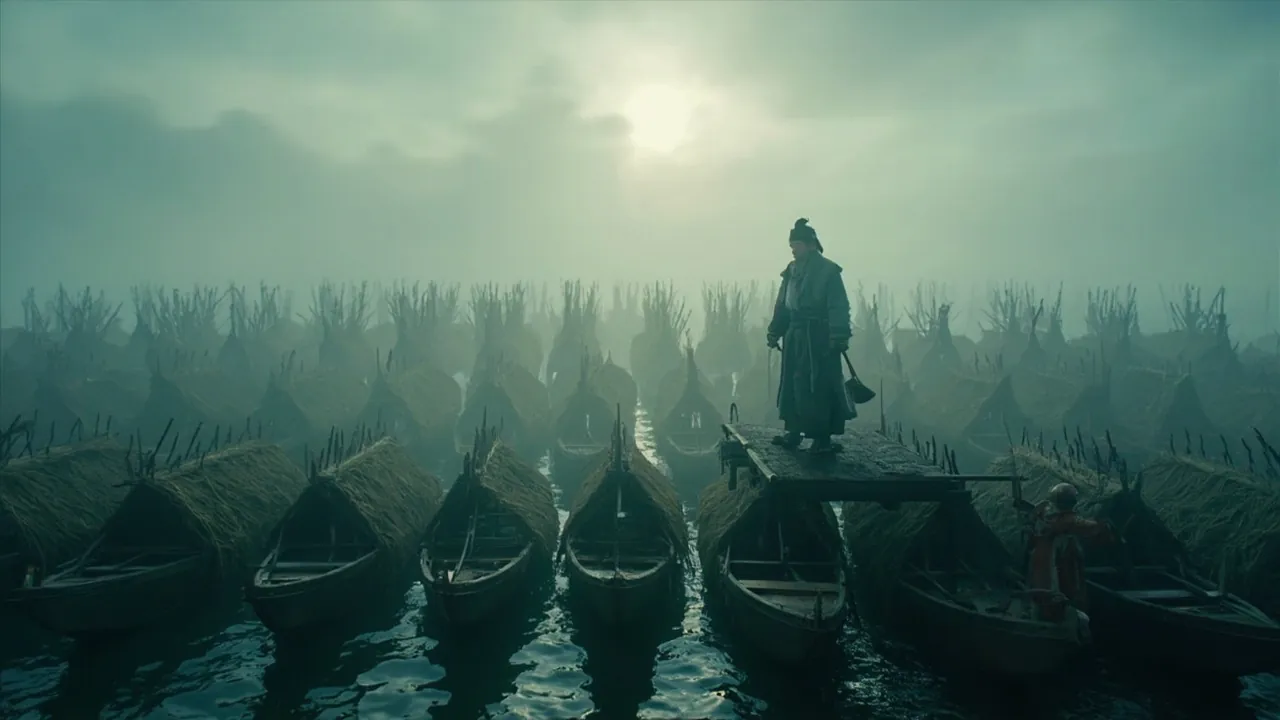
By the year 263 CE, the end had been coming for some time. Shu had always been the smallest and weakest of the Three Kingdoms, tucked into the mountainous terrain of Sichuan but lacking the population and resources of its rivals. Wei, ruled effectively by the Sima family, had grown steadily stronger. When Wei launched a major invasion under the general Deng Ai, Shu’s defenses crumbled. The capital Chengdu fell. Liu Shan surrendered. The kingdom his grandfather had spent a lifetime building ceased to exist.
What happened next is where the story takes its memorable turn. Rather than executing Liu Shan — which would have been the traditional fate for a conquered emperor — the Wei rulers chose a different approach. They granted Liu Shan a title (the “Duke of An Le”) and settled him in the Wei capital of Luoyang with a generous stipend. He was given a residence, servants, money, and freedom to live comfortably. He was, in effect, bought off.
The man behind this decision was Sima Zhao, the de facto ruler of Wei who would soon pass power to his son Sima Yan and trigger the Jin dynasty. Sima Zhao understood something important: a dead Liu Shan would become a martyr, a symbol that rebels could rally around. A live Liu Shan, comfortable and content in Luoyang, would prove that resistance was pointless. The story of 乐不思蜀 was born from this political calculation.
The Famous Question and Its Devastating Answer
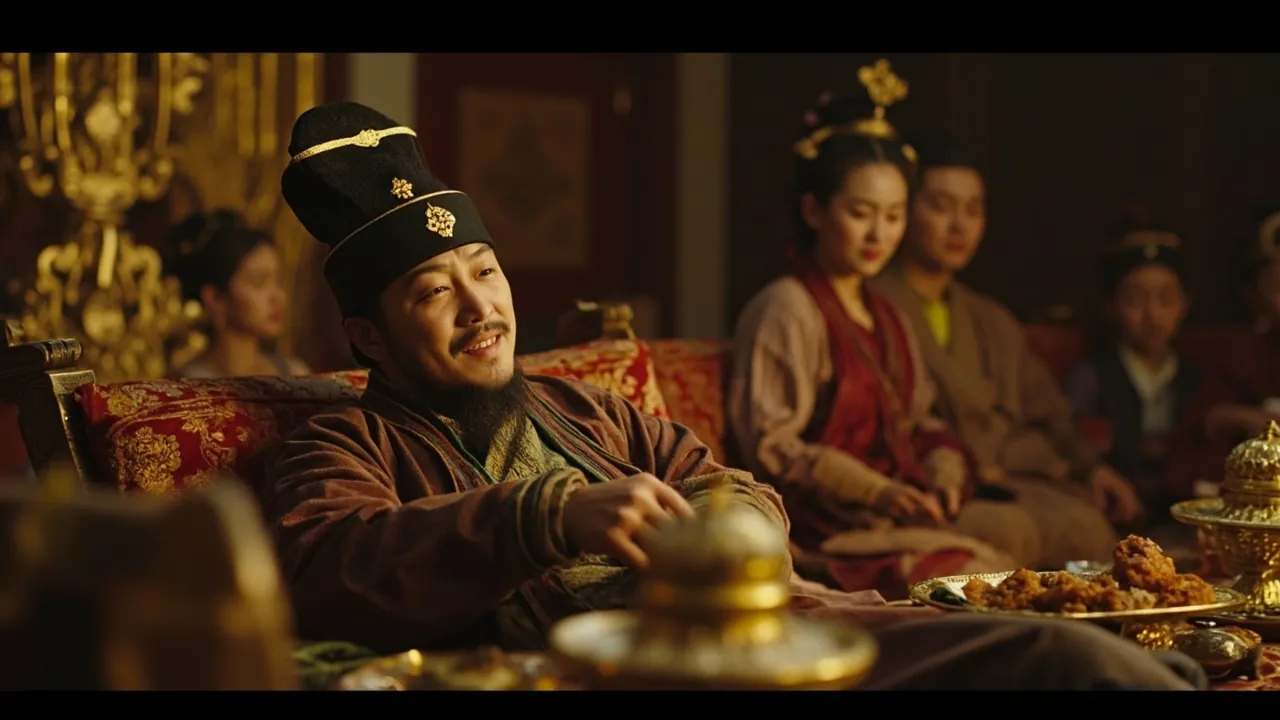
Historical accounts tell of a banquet hosted by Sima Zhao in Luoyang, attended by Liu Shan and a number of former Shu officials who had been captured and brought to the capital along with their former emperor. The atmosphere was tense at first — these were men whose kingdom had just been erased from existence, forced to sit at the table of the conquerors. Sima Zhao, ever the politician, wanted to put everyone at ease and demonstrate that there were no hard feelings. He also, quite possibly, wanted to humiliate Liu Shan a little.
At some point in the proceedings, Sima Zhao turned to Liu Shan and asked a question that most people in the room understood as a trap: “Do you miss Shu?” The room went silent. The question had a right answer and a wrong answer. If Liu Shan said yes — if he admitted that he yearned for his homeland, that he dreamed of the mountains of Sichuan, that he resented his captors — he would reveal himself as a potential threat, someone who had not been fully pacified and might be dangerous if given the chance. If he said no, he would be admitting that he had no loyalty, no dignity, no connection to his own people.
Liu Shan answered: “这里很快乐,我不想回去。” — “It’s so happy here, I don’t want to go back.”
The former Shu officials in the room were reportedly mortified. One of them, named郤正, supposedly quietly signaled to Liu Shan during the banquet, trying to steer him toward a more dignified answer. But Liu Shan repeated his sentiment: there was no desire to return to Shu. He was comfortable. He was happy. He had adapted to his new life.
The Deeper Shame: Not Just Happiness but Complicity
What makes 乐不思蜀 particularly devastating as an idiom is not just that Liu Shan was happy in exile — it’s that his happiness revealed something deeper about his character. A truly noble person, forced to live among enemies, would find ways to preserve their inner life even if they couldn’t act on their feelings. They would carry their homeland in their heart even while smiling at their captors. Liu Shan seems to have had none of that complexity. He wasn’t pretending to be content while secretly plotting. He wasn’t storing away his resentment for later. He simply… stopped caring.
This is what the Chinese mean when they use 乐不思蜀 today. It describes someone so wrapped up in immediate pleasure or comfort that they forget where they came from, what they owe to, or who they really are. It’s used to describe someone who has sold out, given up, or simply failed to take seriously the responsibilities and loyalties that others would consider sacred. In modern Chinese, calling someone 乐不思蜀 is rarely a compliment.
The idiom also carries a warning about the dangers of comfort. Liu Shan had everything he needed in Luoyang — money, food, entertainment, freedom from the burdens of ruling a struggling kingdom. But all of that comfort had anaesthetized him to what should have been a source of profound grief. His kingdom was gone. His father’s legacy was gone. The people who had served Shu were scattered or dead. And Liu Shan was smiling.
The Contrast with Zhuge Liang’s Loyalty
It’s impossible to tell the story of Liu Shan without thinking about Zhuge Liang, whose loyalty to Shu — and to Liu Shan’s father — was absolute and legendary. Zhuge Liang served Shu until his dying breath, fighting impossible campaigns, working himself to exhaustion, and never once considering surrender or compromise. His famous letter to Liu Shan before his final campaign, in which he reflected on his service and his failures, is one of the most moving documents in Chinese literature. He took responsibility for every setback, expressed confidence in eventual victory, and asked only that Liu Shan rule wisely and remember the people.
Liu Shan, by contrast, essentially betrayed everything Zhuge Liang had fought for — not through some dramatic act of treachery, but through the simple act of being fine. The man who was supposed to carry on Liu Bei’s legacy didn’t even bother to miss his kingdom when it was gone.
What 乐不思蜀 Means Today
In contemporary Chinese, 乐不思蜀 is used in several related ways. It might describe someone who has emigrated and shows no interest in returning to their homeland — not because they can’t return, but because they’ve simply settled comfortably into their new life and stopped thinking about where they came from. It might describe someone who has been given a promotion or a new job and is so delighted with their new status that they’ve forgotten their old colleagues and old values. It might even be used self-deprecatingly, when someone is enjoying a vacation so much that they don’t want to think about going back to work.
The common thread is a certain shallowness — a happiness that doesn’t go deep enough to engage with harder truths. There’s an implied criticism in the phrase, a sense that the person being described should know better, should feel something more, should not be quite so easily satisfied.
If this story of loyalty and loss interests you, you might also enjoy our articles on the fall of Shu and the rise of Jin and Zhuge Liang’s final campaign against Wei.