The Song Dynasty: China’s Age of Innovation
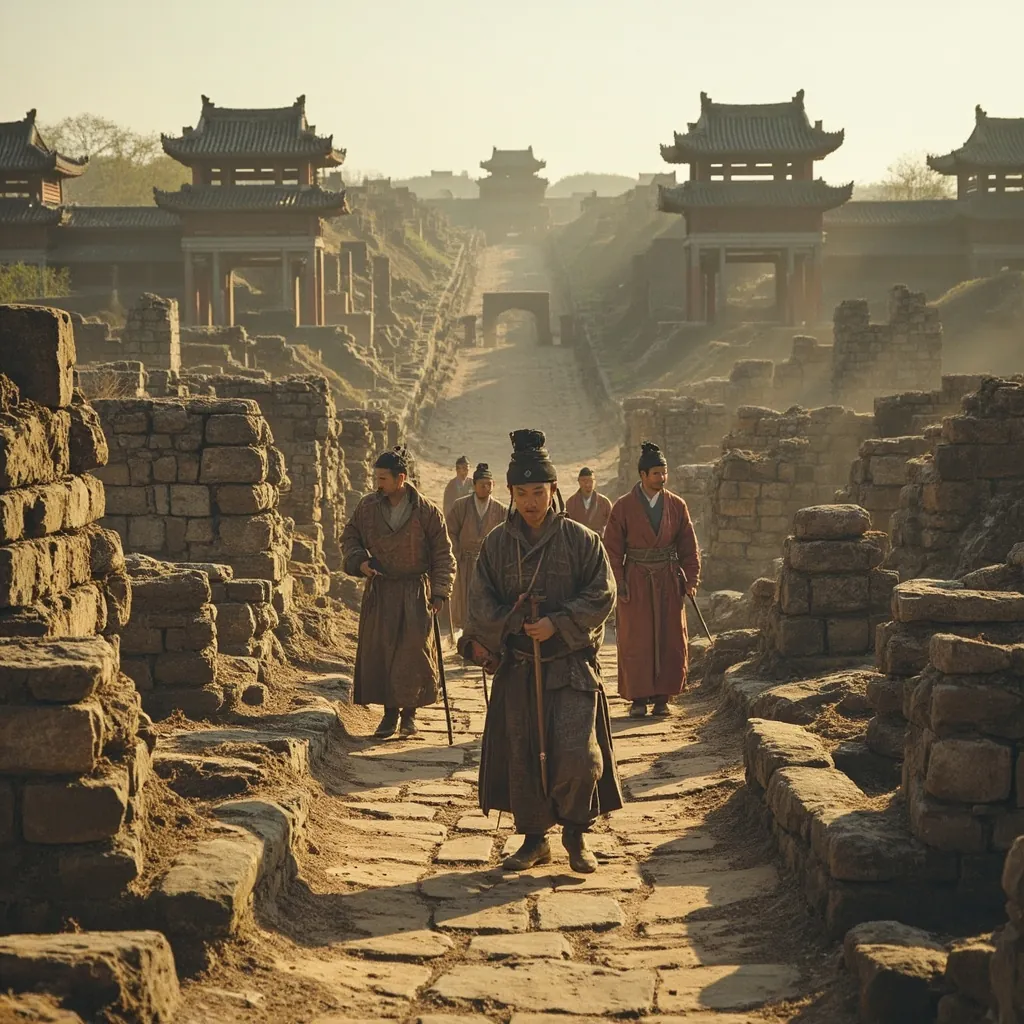
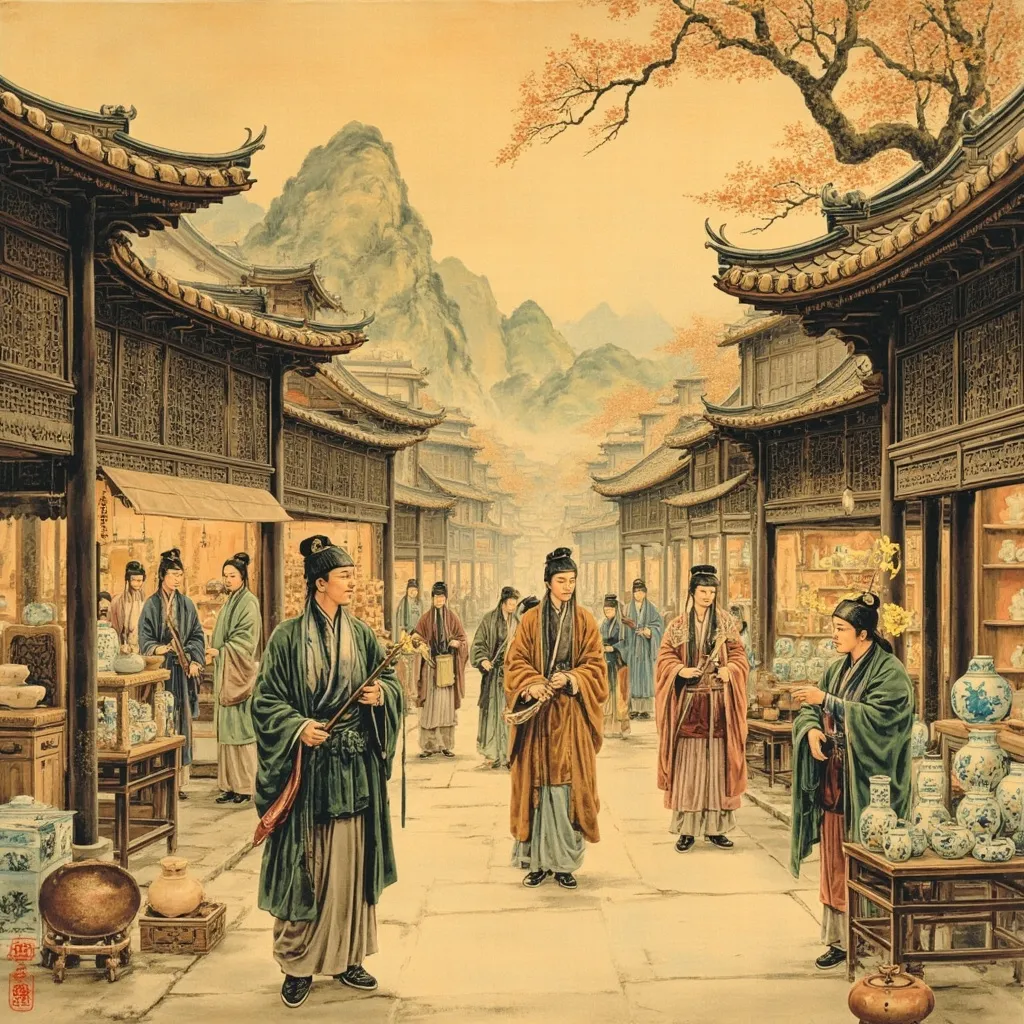
Imagine walking through the bustling streets of Kaifeng, the capital of China around the year 1100. The city stretches before you, a maze of wooden houses with curved tile roofs, their upper floors jutting out over the streets below. Merchants hawk silk, tea, and porcelain from crowded marketplaces. Scholar-officials in flowing robes discuss poetry in tea houses. Somewhere in the city, a craftsman is working on an invention that will change the world—perhaps moveable type, or a new formula for gunpowder, or a system of paper money that would revolutionize commerce.
This was daily life in the Song Dynasty, a period of Chinese history that most Americans have never heard of, yet it represents one of the most remarkable transformations in human civilization. Between 960 and 1279 CE, China experienced what many historians now call the world’s first modern economy. While medieval Europe was still figuring out basic metallurgy and struggling with subsistence farming, the Chinese under the Song were inventing the future.
A New Kind of Empire
The Song Dynasty didn’t begin with a grand vision or a divine mandate from heaven. It started with a military commander named Zhao Kuangyin, who found himself at the center of a political crisis in 960. As the chief military officer of the Later Zhou Dynasty, Zhao was sent to put down a rebellion in the east. Instead, his troops declared him emperor in what historians call a “carefully orchestrated coup.” The story goes that his soldiers gathered around him in the early morning hours, binding him with a yellow robe and insisting he accept the throne—whether he wanted it or not.
Zhao took the throne name Emperor Taizu, founding the Northern Song Dynasty. His first priority was unifying China, which had fragmented into dozens of small kingdoms and warlord states after the fall of the Tang Dynasty in 907. The decade following the Tang’s collapse, known as the Five Dynasties and Ten Kingdoms period, saw constant warfare and political chaos. Taizu and his successors brought most of China under Song control over the next two decades—but they did something differently than the dynasties that came before.
The Tang Dynasty had built its power on military aristocracy and conquest. The great families of the Tang traced their lineages back to ancient noble houses and warrior clans, and military might was the primary measure of power. The Song took a different approach. After unifying the empire, Taizu famously retired the swords of his generals in a dramatic ceremony, offering them land,titles, and wealth in exchange for their political loyalty. This “policy of civil rule” meant that scholars, not soldiers, would run the government. The imperial examination system, which had first appeared centuries earlier during the Sui Dynasty, was expanded and refined to become the primary path to government service. Any man who could pass rigorous tests in Confucian classics could rise to the highest positions in the realm—and this was genuinely open to men from all social backgrounds, though wealthy families certainly had advantages in education.
This changed everything. For the first time in Chinese history, a true meritocracy emerged—not perfect, certainly, with plenty of room for corruption and favoritism, but fundamentally different from the hereditary aristocracies that dominated Europe at the same time. The Song created a government staffed by men who had earned their positions through study and examination, and this bureaucratic class would shape Chinese civilization for the next millennium. The examination halls became battlegrounds of intellect, where thousands of candidates would gather to demonstrate their mastery of the Confucian canon, their poetic abilities, and their understanding of governance.
The early Song emperors also learned from the mistakes of the Tang, which had collapsed partly because powerful military governors had grown too autonomous, essentially becoming independent warlords in their regions. The Song kept tight control over its military, civilian officials held authority over generals, and regional governors were carefully monitored with regular inspections and rotations to prevent any single official from building too much local power. The result was a stable, prosperous empire—but one that would struggle when faced with the powerful nomadic empires emerging on its northern borders. The civil-military balance that the Song established became a model that subsequent dynasties would study and sometimes imitate, sometimes reject.
The Song faced constant pressure from the Liao (a kingdom of the Khitan people who had built a sophisticated state spanning the Mongolian steppes and northern China), the Western Xia (the Tangut people who controlled the strategic Hexi Corridor), and eventually the Jin (the Jurchen people who overthrew the Liao). Rather than trying to conquer these steppe empires—a strategy that had proven costly for the Tang and other dynasties—the Song paid them tribute, exchanging money and goods for peace. It was a pragmatic choice that allowed the empire to flourish internally, even as it ceded territorial ambitions on the frontier. The annual tribute payments, while humiliating to some, were far cheaper than the cost of constant warfare—and they allowed the Song to focus resources on internal development rather than military expansion.
What set the Song apart wasn’t just its government—it was the vibrant civilization that emerged under imperial patronage. The Song capital of Kaifeng was one of the largest cities in the world at the time, home to perhaps a million people in an age when London or Paris might have had 50,000 inhabitants. Its streets were paved with careful attention to drainage, its markets well-organized into distinct districts for different goods, its water and sanitation systems remarkably sophisticated for the era. When the Song emperor wanted to travel across the city, he didn’t ride on horseback—he traveled by palanquin through orderly streets lined with shops and residences, protected from the eyes of the common people by silk curtains.
The population of Song China boomed dramatically during the dynasty’s first century and a half. Estimates suggest that during the Northern Song period (960-1127), China’s population reached 100 million—roughly one-quarter of the world’s population at the time. This growth was fueled by agricultural innovation that would be recognizable to modern farmers. Farmers developed new rice varieties that could be planted twice a year, dramatically increasing yields in the warm southern regions. New crops arrived from Southeast Asia, including fast-maturing rice varieties that could thrive in different climates and soil conditions. The population spread southward into previously unsettled regions of the Yangtze valley and beyond, and the Song government actively encouraged this expansion through colonization programs, infrastructure development, and tax incentives for developing new agricultural land.
But it was in the cities that Song civilization really sparkled. Urban centers weren’t just administrative centers—they were cultural powerhouses where the merchant class grew wealthy and influential, investing their wealth in education, art, and refined tastes. The streets of Kaifeng and other great cities bustled with energy, filled with tea houses where scholars debated philosophy, theaters where actors performed for enthusiastic audiences, and shops selling everything from fine silks to household goods. The famous “瓦子” (wazi), or entertainment districts, offered music, dance, acrobatics, and storytelling well into the night—a nightlife that would have seemed scandalously cosmopolitan to earlier generations.
Tea drinking evolved from a simple beverage custom into an elaborate artistic practice during the Song. The tea ceremony became a sophisticated ritual, with specific implements, precise water temperatures, and refined aesthetics. The famous Song dynasty “建盏” (jian zhan) tea bowls, with their distinctive dark glaze and subtle patterns, remain highly prized by collectors today. Tea wasn’t just drunk—it was contemplated, discussed, and celebrated in poetry and painting.
Ceramics reached new heights of sophistication during the Song, with the famous Song dynasty porcelain still considered among the finest in the world. The “五大名窑” (five great kilns)—Ru, Guan, Ge, Ding, and Jun—produced ceramics so refined that they were reserved for imperial use. The cool, understated elegance of Song ceramics, with their subtle glazes and simple forms, represented a deliberate departure from the more ornate Tang style. These ceramics weren’t just vessels; they were philosophical statements about simplicity, naturalness, and the appreciation of imperfection that would later be called “wabi-sabi” in Japan.
The Song also pioneered social services that wouldn’t appear in Europe for centuries. The government established public granaries to stabilize food prices during famines, recognizing that hungry people were rebellious people. Orphanages cared for abandoned children—a real problem in any pre-industrial society. Hospitals treated the sick, and the Song government even employed officials specifically tasked with monitoring public health. The famous philanthropist and official Fan Zhongyan, known for his advocacy of these social programs, became a cultural hero for his efforts to care for the vulnerable.
Perhaps most remarkably, the Song became the first government in history to issue paper money on a national scale. The innovation arose from a practical problem: copper coins were heavy. A wealthy merchant transporting money across the empire might need to carry thousands of pounds of coins—imagine trying to move a small car’s worth of metal just to pay for a shipment of silk. The solution was “jiaozi,” initially a form of private credit voucher issued by merchants in Sichuan province, where the heavy copper coinage was particularly impractical. These vouchers, promising to pay the bearer a certain amount of copper coins, were soon adopted and standardized by the government. By the 1100s, the Song was issuing paper currency backed by reserves of gold, silver, and copper. This was arguably the world’s first true fiat currency—money that had value because the government said it did, not because it was backed by a physical commodity. The implications for economic development were enormous: suddenly, large-scale commerce became much easier to conduct.
The economic transformation of the Song was extraordinary. The dynasty is sometimes called “China’s commercial revolution,” and it earned that name. Markets that had been strictly regulated under earlier dynasties were liberalized. Merchants could operate freely, trade routes expanded across the empire and beyond, and a genuinely national economy emerged for the first time in Chinese history. The old Tang-era system of government-controlled markets and state monopolies on key goods gave way to a more dynamic commercial economy.
The Song government invested heavily in infrastructure that enabled this commercial boom. Canals connected the north and south, allowing goods to move cheaply by boat rather than being hauled over difficult mountain roads. The Grand Canal, begun centuries earlier under the Sui Dynasty, was expanded and maintained, becoming the arteries of the Song economy. Roads were improved, and the government established a system of postal stations that served both official communications and traveling merchants. The famous “急脚递” (express postal service) could deliver messages hundreds of miles in a single day—a communications network that Europe wouldn’t match for centuries.
Technology drove economic growth in ways that would be familiar to modern observers. The Song period saw refinements in iron and steel production that made these metals cheaper and more available than anywhere else in the world at the time. New furnace designs, better bellows, and improved smelting techniques allowed Chinese metallurgists to produce high-quality steel at scale. Agricultural tools improved, with iron plows and sophisticated irrigation systems spreading across the countryside. Water-powered mills processed grain and textiles, harnessing the power of rivers and streams to do work that would otherwise require human or animal labor.
Perhaps most significantly, the Song witnessed what many historians consider the first industrial revolution in human history—not the steam-powered industrialization that transformed England in the 1700s, but a transformation driven by mass production and technological innovation. The iron industry, for example, produced roughly 125,000 tons of iron per year by the early 1100s—an amount that wouldn’t be matched in Europe until the Industrial Revolution, nearly 700 years later. Chinese steel was being used for everything from agricultural tools to weapons to construction, driving a cycle of innovation and productivity that resembled, in miniature, the later industrial transformations of Europe.
This economic growth created new social classes and transformed Chinese society in fundamental ways. The merchant class, traditionally considered beneath the farmer and the scholar in the Confucian hierarchy (which ranked peasants highest because they produced food, then merchants who merely profited from others’ labor), grew powerful and influential. Commercial cities grew wealthy and began to assert cultural independence from the aristocratic centers of power. A consumer economy emerged, with ordinary people buying goods that had once been luxuries reserved for the elite. A peasant family in Song China might own ceramic dishes, wear cotton clothing, and drink tea—goods that would have been unthinkable for ordinary people in earlier dynasties.
The Song also witnessed the rise of a robust middle class—shopkeepers, artisans, small merchants, educated professionals, and skilled workers who didn’t fit neatly into the traditional scholar-official or peasant categories. This class became the audience for a vibrant popular culture: fiction, theater, music, and art that spoke to everyday concerns rather than aristocratic tastes. The short-story collections that emerged during the Song, written in vernacular Chinese rather than classical literary language, featured tales of love, adventure, mystery, and humor that anyone could enjoy. This democratization of culture was itself a remarkable transformation.
Cultural Flourishing
The Song is often called China’s “golden age of culture”—and it lived up to the name. It was a period when art, literature, philosophy, and technology intersected in extraordinary ways. Poetry reached new heights of expressiveness and emotional depth, with Su Shi (1037-1101) and Li Qingzhao (1084-1155) standing as two of the greatest poets in Chinese history, their works still memorized and celebrated today. Painting became a respected art form practiced by professional artists, not just court amateurs. The famous “Four Great Inventions” of Chinese civilization—paper, printing, the compass, and gunpowder—all either originated or saw transformative improvements during the Song period, and these innovations would reshape the world.
The Song pioneered moveable type printing, invented by a man named Bi Sheng around 1040. Earlier Chinese printing had used carved wooden blocks, where an entire page had to be carved in reverse for each edition—an art form that could take years to master and weeks to produce a single page. Bi Sheng’s system used individual clay characters that could be arranged, used, and then rearranged for other texts. Though this technology would be refined later (with metal type in the 1200s and later in Korea), it represented a crucial breakthrough in information dissemination—the medieval equivalent of the printing press that wouldn’t appear in Europe for another four centuries.
The impact of printing was profound and far-reaching. Books became cheaper and more available, transforming knowledge from the exclusive property of the elite into something accessible to the growing middle class. Schools and academies proliferated across the empire, and the Song arguably had the highest literacy rate of any pre-industrial society in the world. Young men from modest backgrounds could now study for the civil service examinations using books that cost a fraction of what hand-copied manuscripts had once cost. The democratization of knowledge had begun.
Gunpowder, discovered by Chinese alchemists searching for immortality elixirs (as often happens in history, one of the most transformative discoveries came from what was essentially a failed scientific experiment), found its primary use during the Song in weapons. The Song military developed bombs, rockets, and early firearms—technologies that would eventually transform warfare worldwide. The famous “fire lances” of the Song period were early gunpowder weapons, and Chinese engineers continually refined explosive devices, poison gas bombs, and rocket-propelled arrows. The famous “震天雷” (zhen tian lei, “thunder crash heaven bomb”) was a particularly terrifying invention—an iron container filled with gunpowder that would explode with devastating effect.
The magnetic compass, originally developed for divination and geomancy, was adapted for navigation during the Song. Chinese sailors used compasses to navigate the dangerous waters of the South China Sea and the Indian Ocean, opening trade routes that would connect China to the wider world. These compasses were far more sophisticated than the simple magnetized needles that would appear in Europe centuries later, often featuring elaborate designs and decorative elements. The Song maritime fleet was arguably the most advanced in the world at the time, with ships that could sail thousands of miles from the Chinese coast to East Africa.
Chinese painting during the Song reached a level of sophistication and aesthetic refinement that remains influential today. Artists like Fan Kuan and Guo Xi created monumental landscape paintings that captured the spiritual grandeur of nature—huge mountains rendered in meticulous detail, with mists cascading through valleys and tiny figures lost in the immensity of the landscape. The “Four Great Masters” of the Song period—Li Cheng, Fan Kuan, Guo Xi, and Ma Xia—established artistic conventions that would define Chinese landscape painting for centuries. Meanwhile, the genre of “bird-and-flower” painting celebrated the natural world in exquisite detail, with artists like Huang Quan and Xu Xi spending years studying live specimens in the imperial gardens to capture the precise details of flowers, birds, and insects.
Painting wasn’t just an elite art form during the Song—it was a subject of serious theoretical discussion. Artists wrote treatises about technique, color, and composition. The famous critic and historian Liu Tao compiled comprehensive records of painting styles and artists, establishing the framework for art criticism that would persist for centuries. The Song imperial painting academy, one of the world’s first institutions dedicated to the serious study and practice of painting, trained generations of artists and preserved techniques that might otherwise have been lost.
Philosophy also flourished during the Song in ways that would shape East Asian thought for nearly a millennium. The Song period saw the development of Neo-Confucianism, a philosophical synthesis that combined traditional Confucian ethics with elements of Buddhist meditation and Daoist naturalism. Scholars like Zhu Xi (1130-1200) and Cheng Yi (1033-1107) created a comprehensive intellectual framework that would dominate Chinese thought through the imperial era and beyond, eventually spreading to Korea, Japan, and Vietnam. Neo-Confucianism emphasized self-cultivation, moral discipline, and the harmonious ordering of society—ideas that shaped Chinese education, government, and family life for hundreds of years. The philosophical debates of the Song scholars, particularly the famous “debate on the nature of principle” (li) versus material force (qi), remain relevant in Chinese philosophical discussions today.
Literature in the Song went beyond the refined classical poetry of the elite. The period also saw the flourishing of popular vernacular literature—short stories, novels, and dramatic works written in the language that people actually spoke, not the classical Chinese that had been the standard for centuries. These stories dealt with everyday concerns: love, money, justice, adventure, and the sometimes foolish behavior of officials and commoners alike. The genre of “話本” (huaben, “story books”) established narrative conventions that would influence Chinese fiction for centuries and eventually contribute to the development of the novel.
The Southern Song and Resilience
The Northern Song Dynasty’s greatest vulnerability was its northern frontier. For over a century and a half, the Song had maintained a precarious balance—paying tribute to the powerful Liao Empire to the north while focusing its energies on internal development and southern expansion. This strategy worked until a new power rose in the northeast: the Jin Dynasty, founded by the Jurchen people who had previously been subjects of the Liao.
In 1125, the Jin conquered the Liao. In 1127, they turned their attention southward, capturing Kaifeng in a devastating surprise attack that caught the Song defenses completely off guard. The Jin sacked the capital, looted the imperial palaces, and took the emperor and much of the royal family captive in what historians call the “Jingkang Incident”—one of the most humiliating catastrophes in Chinese history. The emperor who was taken, Emperor Huizong, was a talented artist and calligrapher but not a skilled military leader, and his capture symbolized the failure of Song defensive policy.
But the Song didn’t die—a remarkable fact that speaks to the dynasty’s resilience and the loyalty of its people. As the Jin armies marched south, one of the surviving princes, Zhao Gou, escaped to the south and established a new capital at Hangzhou, founding the Southern Song Dynasty (1127-1279). The new emperor took the throne name Gaozong, meaning “founder,” and began the daunting task of rebuilding an empire from the ruins of the north.
The Southern Song controlled less territory than its predecessor—it had lost the fertile northern plains to the Jin, including the great Kaifeng and the heartland of Chinese civilization—but it was arguably an even more prosperous and culturally vibrant society. Without the burden of the northern territories, the Song could focus on developing the extraordinary economic potential of the south. The Yangtze River delta and the coastal regions became the economic heart of the empire, producing wealth through trade, manufacturing, and agriculture.
Hangzhou, a city built around the beautiful West Lake and surrounded by forested hills, became perhaps the most refined city in the world at the time. Marco Polo, who visited China during the Yuan Dynasty (the dynasty that followed the Song), reportedly called Hangzhou “the most beautiful and elegant city in the world”—though whether Marco Polo actually visited China remains debated among historians, his descriptions of Chinese cities and their sophistication influenced European imagination for centuries. The city was said to have over a million inhabitants, with elegant bridges spanning its numerous canals, towering pagodas marking the skyline, and gardens and temples providing serene escapes from the commercial bustle.
The Southern Song period saw continued economic growth and technological innovation that would have seemed impossible to earlier generations. Maritime trade expanded dramatically, with Chinese merchant ships traveling throughout Southeast Asia, India, the Arabian Peninsula, and even East Africa. The government established official “市舶司” (shibo si, “trade superintendencies”) at major ports to manage foreign commerce, collect taxes, and maintain diplomatic relations with overseas powers. Chinese ports became hubs of international exchange, filled with foreign merchants from Japan, Korea, Southeast Asia, Persia, and the Arab world. The famous maritime trade routes, sometimes called the “Maritime Silk Road,” made the Song one of the most commercially connected civilizations in the world.
The Southern Song also developed a more aggressive military posture than its predecessor. Whereas the Northern Song had largely bought peace with tribute payments to the Liao—a policy that, while pragmatic, had a certain humiliation to it—the Southern Song invested heavily in building a professional standing army and a modern navy that could defend the long coastline. The famous “fire arrow” rockets and other gunpowder weapons were refined during this period, and the Song navy employed massive war junks equipped with cannons that could devastate enemy ships. Military theorists developed new strategies for fighting on multiple fronts—land and sea, against steppe cavalry and river navies.
The Song military even went on the offensive at times. Under the great general Yue Fei (1103-1142), Song forces scored impressive victories against the Jin, recapturing territory and boosting morale. Yue Fei became a national hero, his story retold in operas, novels, and eventually films for centuries. Unfortunately, peace negotiations with the Jin led to Yue Fei’s recall and eventual execution—he was imprisoned and killed through a false accusation of treason, becoming a martyr for Chinese nationalism. The song “Man Jiang Hong” (“Full River Red”), supposedly composed by Yue Fei in prison, remains one of the most famous patriotic poems in Chinese history.
Despite these military efforts, the Southern Song could not ultimately resist the Mongol conquest. In 1206, a Mongol chieftain named Temüjin had united the steppe tribes and taken the title Genghis Khan, launching a wave of conquest that would create the largest contiguous land empire in history. In 1271, one of Genghis Khan’s grandsons, Kublai Khan, established the Yuan Dynasty, declaring himself emperor of China. Over the next decades, Mongol armies pressed southward with overwhelming force.
The final act of the Song drama was both tragic and heroic. The Song navy was defeated in a series of battles along the Yangtze River and the sea, where the Mongols’ superior naval tactics and larger fleets gradually wore down Song resistance. In 1279, the last Song emperor—only eight years old, the child emperor Bing—was placed in a boat by his ministers during the final battle at Yaishan. When defeat became inevitable, the loyal minister Lu Xiufu carried the child into the sea, and both drowned. The Song Dynasty had lasted 319 years, one of the longest imperial dynasties in Chinese history, and its end marked the conclusion of an era.
Legacy
What did the Song leave behind? In some ways, its legacy is hidden in plain sight, woven into the fabric of modern life in ways that most people never consider. The economic structures, commercial practices, and technological foundations that emerged during the Song would shape Chinese civilization through the Ming, Qing, and into the modern era. Paper money, printing, gunpowder weapons—these innovations, born in the Song, would eventually transform not just China but the entire world.
The Song also established cultural patterns that persist in Chinese society today. The emphasis on education, examination, and meritocratic selection of officials—a system that had begun earlier but reached its mature form under the Song—would define Chinese government for nearly a thousand years, until the imperial examination system was finally abolished in 1905. The refinement of tea culture, which became an elaborate ritual during the Song, remains central to Chinese social life. The aesthetic traditions in painting, poetry, and ceramics, all codified during the Song, continue to influence Chinese artistic taste. The philosophical framework of Neo-Confucianism, which shaped not just China but Korea, Japan, and Vietnam, has only begun to fade from East Asian culture in the modern era.
Yet the Song is often overlooked in Western historical narratives, its achievements hidden behind the more dramatic stories of Roman legions or medieval European knights. When Americans think about medieval history, they think of Europe—the Norman Conquest, the Crusades, the Black Death. China during this period is largely invisible, despite containing perhaps a quarter of the world’s population and possessing an economy and technological capacity far beyond anything in Europe. The great civilization of the Song, one of the most sophisticated and innovative in human history, remains largely unknown to most Western readers.
Part of this neglect reflects the Song’s ultimate military failure. The dynasty was conquered, first by the Jin and then by the Mongols, and Chinese historiography has often emphasized these defeats over the period’s many achievements. The Song were seen as “weak”—a label that obscures the genuine innovations and accomplishments of the era, and one that reflects a bias toward military strength as the only measure of a civilization’s worth.
Modern historians have begun to recover the Song’s significance with increasing urgency. The economist and historian Robert Marks, in his book “The Origins of the Modern World,” argues that Song China represents the world’s first “modern” economy—a society that had overcome the Malthusian constraints that limited most pre-industrial civilizations through technological innovation, trade, and economic restructuring. Other scholars have traced the technological and economic roots of the European Industrial Revolution back to Song-era innovations, particularly in metallurgy, manufacturing, and commercial infrastructure.
The story of the Song Dynasty reminds us that the history of human civilization is far more complex and global than the Eurocentric narratives that have traditionally dominated Western education. Nearly a thousand years ago, on the other side of the world from medieval Europe, Chinese civilization was inventing technologies, building economies, and creating art that would shape the modern world. The next time you use a compass while hiking, read a printed book, watch a fireworks display, or pay for something with paper money (or its digital equivalent), you are participating in innovations that began nearly a thousand years ago in the markets, workshops, and courts of Song China.
📚 Recommended Reading & Products
Disclosure: This article contains affiliate links.