There is a particular kind of loneliness that comes when you realize everyone around you has switched sides. Not the polite kind of abandonment where people make excuses and slip away quietly — no, this is the brutal kind, the kind where you can hear your former people singing the songs of your enemy from all directions, and you understand that the world you knew is genuinely gone. That is what 四面楚歌 means, and that is exactly what happened to Xiang Yu on the banks of the Gi River more than two thousand years ago.
The story of 四面楚歌 is the story of how the Chu-Han rivalry ended — not with a grand negotiated settlement or a clean military victory, but with a slow crushing of morale that left one man surrounded by the ghost of his own former glory. To understand why this moment still echoes in the Chinese language today, you need to understand who Xiang Yu was before he became the desperate figure trapped at Gaixia, and you need to understand what he lost.
The Tiger of Chu: Xiang Yu’s Rise to Power
Xiang Yu was not the kind of person who faded quietly into history. Born in 232 BCE into the nobility of the Chu state, he was a physical giant — reportedly standing over six feet tall, with extraordinary physical strength that he demonstrated publicly from a young age. The famous story goes that at just eight years old, he watched a demonstration of swordsmanship and declared it pointless compared to the art of commanding thousands of men. His uncle, Xiang Liang, was intrigued enough by the boy’s ambition to nurture it carefully.
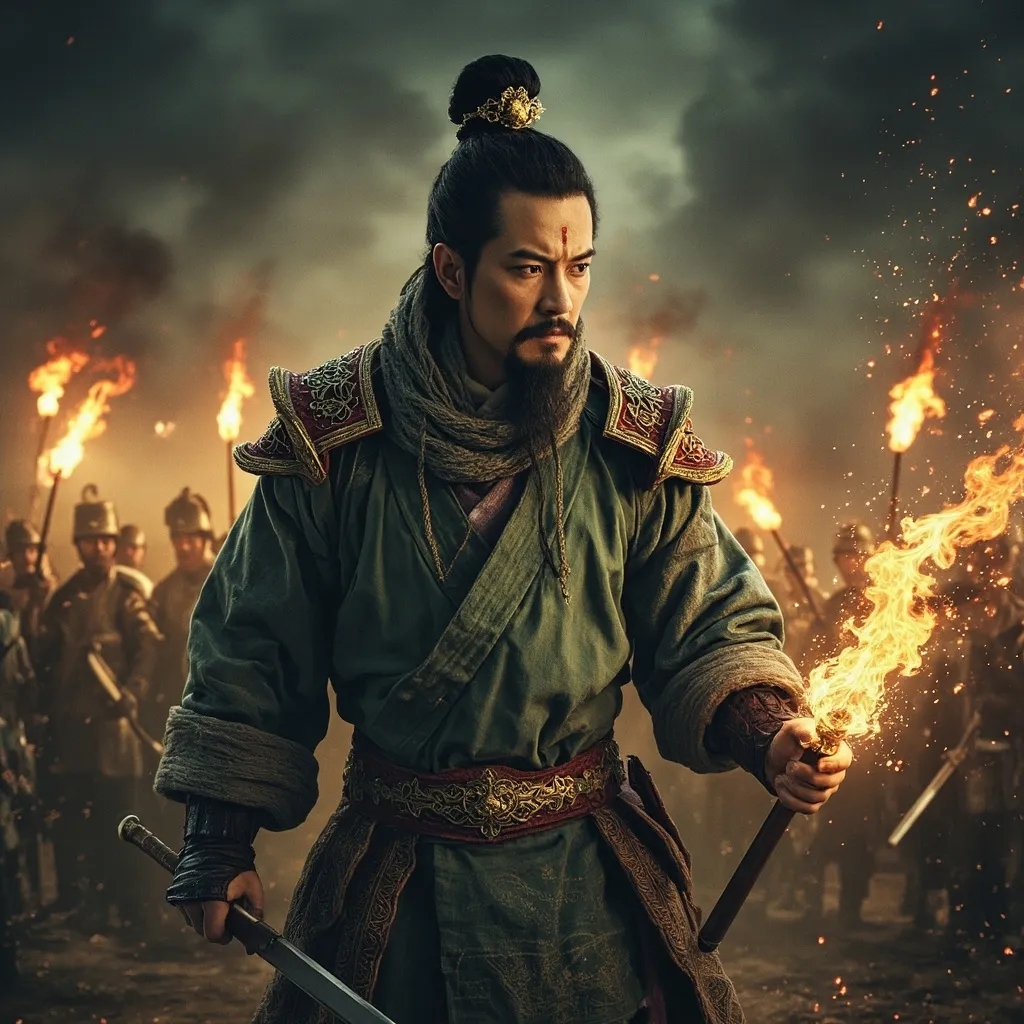
When the Qin Dynasty began to collapse under the weight of its own tyranny, Xiang Yu and his uncle joined the rebellion. The young nobleman proved himself a devastating military commander, winning battle after battle against Qin forces. At the Battle of Julu in 207 BCE, Xiang Yu achieved something that seemed impossible: he destroyed the bulk of the Qin army, earning a reputation that made his name synonymous with invincibility. His army, drawn largely from his native Chu region, was fanatically loyal. He had earned the nickname “the Tiger of Chu” for his ferocity in battle.
His counterpart in the struggle against Qin was Liu Bang — a man who could not have been more different. Where Xiang Yu was aristocratic, Liu Bang was common-born. Where Xiang Yu was a brilliant battlefield commander, Liu Bang was a savvy political operator. Where Xiang Yu inspired loyalty through raw personal power, Liu Bang inspired it through something subtler: the sense that following him might actually pay off in the end.
After the fall of the Qin Dynasty, the two men carved up what remained of the empire between them. Xiang Yu took the title “Hegemon-King of Western Chu” and ruled from彭城 (modern Xuzhou). Liu Bang was given the much less prestigious title “King of Han” and sent to the relatively poor and remote region of Sichuan. The arrangement was deeply unfavorable to Liu Bang, who chafed under it almost immediately.
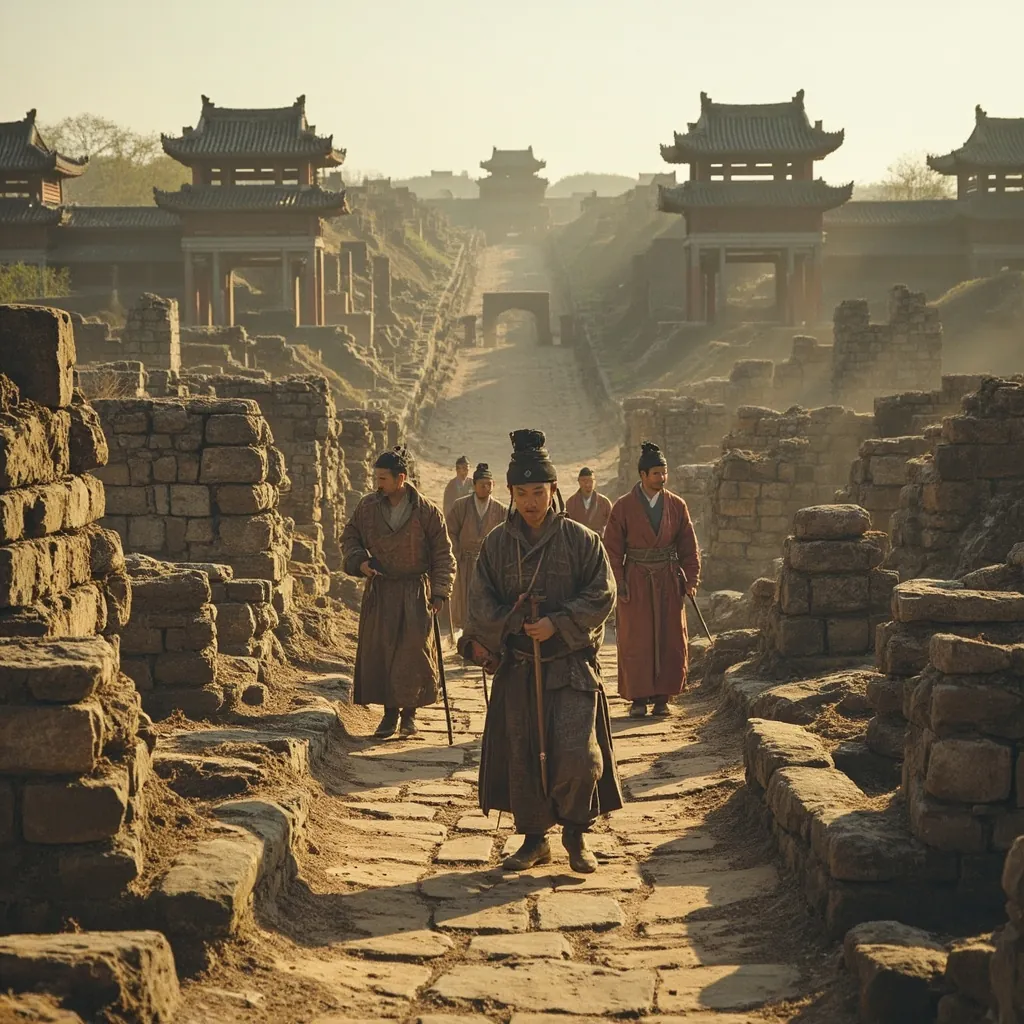
What followed was four years of brutal civil war — the Chu-Han Contention — during which neither man could land a decisive blow against the other. They fought up and down the Yangtze River valley, through the plains of Henan, across the old battlefield of Julu where Xiang Yu had won his greatest triumph. Neither could destroy the other. And yet, as the years dragged on, the balance began to shift in a direction that Xiang Yu did not fully appreciate until it was too late.
Liu Bang’s Patient Strategy
The crucial thing to understand about Liu Bang is that he was never in a hurry. Where Xiang Yu wanted decisive battles and clear victories, Liu Bang was content to fight slowly, to lose battles when necessary, to give up territory in exchange for time. He understood something that Xiang Yu apparently did not: that the real war was not being fought on any single battlefield, but in the political space around those battlefields.
Liu Bang’s great advantage was his team. He had recruited some of the finest minds of the era. The most important of these was Zhang Liang, a strategist of extraordinary cunning who had once served Xiang Yu’s family before switching sides. Zhang Liang helped Liu Bang see the bigger picture: that the real keys to victory were not military strongholds but political alliances, not killing Xiang Yu’s soldiers but convincing Xiang Yu’s allies to abandon him.
Slowly, methodically, Liu Bang worked at these alliances. He promised lands and titles to anyone who would help him. He cultivated relationships with the major figures in the various former Qin territories. He let Xiang Yu exhaust himself on the battlefield while he built a coalition that was slowly strangling the Chu king politically.
Xiang Yu, for his part, responded to this strategy with contempt. He believed in direct action. When things went wrong, he fought harder. When allies wavered, he threatened them into staying. When Liu Bang gained ground, Xiang Yu marched to confront him personally, expecting to crush him the way he had crushed so many others. The approach had worked magnificently against the Qin Empire. It would not work against Liu Bang.
By 202 BCE, the situation had deteriorated badly for Xiang Yu. His army was smaller than it had been at the height of his power. His supply lines were stretched. His allies — the lords and generals who had supported Chu at the beginning of the conflict — were peeling away one by one, drawn by Liu Bang’s promises. The Hegemon-King of Western Chu was increasingly alone.
The Trap at Gaixia
The end came at Gaixia, a region in modern Anhui Province near the banks of the Gi River. Liu Bang had finally maneuvered Xiang Yu into a position where his army was surrounded on three sides by Han forces. The trap was not purely military — it was also psychological. Liu Bang had made sure that the various troops encircling Xiang Yu were not just Han soldiers, but men who had once served under Xiang Yu himself, soldiers from the Chu region who knew the old songs and would sing them around their campfires at night.
This is where the 四面楚歌 comes in. The phrase literally means “songs of Chu on all four sides.” As Xiang Yu sat in his camp, surrounded and increasingly desperate, he could hear singing from the enemy camps — and the songs were Chu songs. Folk melodies, war songs, the kind of music that soldiers from the Chu region would have known since childhood. To Xiang Yu, lying awake in his tent, it must have sounded like the entire world had turned against him.
The historical records describe Xiang Yu’s reaction with a particular phrase: 泣数行下 — “tears flowing down several rows.” Here was a man who had never been defeated in open battle, who had shattered the Qin Empire with his own hands, who had looked death in the face a hundred times without flinching — and he was brought to tears by the sound of his own people’s music coming from the enemy camps. He understood what it meant: his soldiers were hearing those songs too, and those songs were telling them that the cause was lost.
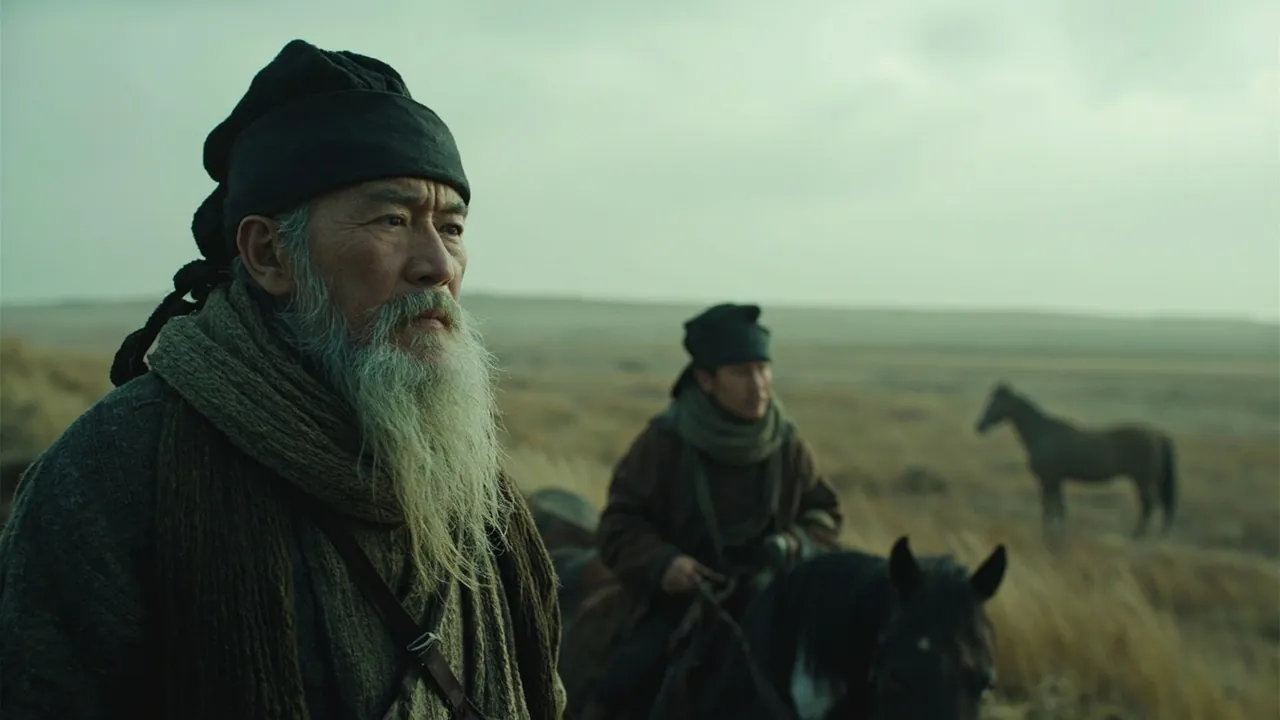
The morale of the Chu army collapsed. Men began to desert in the night. The perfect fighting machine that had conquered the Qin heartland was dissolving from within, not because it had been beaten in battle, but because it had been psychologically dismantled. Xiang Yu tried to rally his forces one last time. He challenged Liu Bang to single combat — a proposal Liu Bang wisely declined. In the darkness, he led a desperate cavalry charge to break through the encirclement, managing to reach the bank of the Gi River with only eight hundred loyal men.
By morning, even this remnant had been caught. Xiang Yu found himself cornered in a field, his horse killed beneath him, surrounded by Han soldiers. He killed several of them himself — even at the end, he was formidable — before finally falling on his own sword. He was thirty years old. His empire died with him.
What 四面楚歌 Tells Us About Power
The story of 四面楚歌 endures because it captures something true about how power works, particularly in the context of war and political ambition. Xiang Yu was not defeated by a smarter general or a better army. He was defeated because he could not adapt to a type of conflict that did not reward his particular gifts. He was a man who excelled at decisive confrontation, who believed that military victory was the only currency that mattered. When the war shifted to a different plane — the political, the psychological, the relational — he found himself lost.
This is a lesson that military historians and business strategists alike still grapple with. The brilliant tactician who cannot read the larger strategic environment. The company that wins every product comparison but loses the market anyway because it missed the shift in customer priorities. The individual who is so good at their job that they cannot see when the job itself is changing.
Liu Bang, for all his lack of martial brilliance, understood something fundamental: that people follow incentives, and that those incentives can be shaped. He built a coalition not through force of arms but through the patient construction of a network of interests. When the coalition was complete, even Xiang Yu’s legendary military prowess could not break through. The surround was not just physical — it was social, psychological, and ultimately political.
The Legacy of a Phrase
Today, 四面楚歌 is used in Mandarin Chinese to describe any situation where someone finds themselves surrounded by enemies on all sides, particularly when those enemies share some common cultural or social identity that makes the包围 feel like a betrayal. The phrase carries a particular emotional weight — it is not just about being outnumbered, but about the specific pain of hearing your own culture turned against you.
You might hear it used to describe a corporate executive who discovers that everyone in a meeting is secretly working against them. Or a political figure whose own party has turned hostile. Or a person going through a divorce who realizes that mutual friends have all chosen sides. In every case, the core image is the same: the lonely figure in the dark, surrounded by voices that should have been on their side.
The story also serves as a cautionary tale about the limits of personal power. Xiang Yu had everything — birth, strength, intelligence, courage — and he lost because he could not share power with others, could not build the kind of coalition that survives the inevitable reversals of fortune. Liu Bang, for all his mediocrity as a warrior, succeeded because he was willing to give others what they wanted in exchange for their loyalty.
This is the strange, sad wisdom of 四面楚歌: sometimes the man who hears the songs from all sides is not the weakest man in the room, but the strongest one who forgot that strength alone does not make a kingdom.
Recommended Reading & Products
Want to explore the Chu-Han Contention and the tragic story of Xiang Yu further? Here are some resources to deepen your understanding of this pivotal period in Chinese history:
Romance of the Three Kingdoms by Luo Guanzhong — The classic 14th-century novel that dramatizes the Chu-Han Contention and the broader Three Kingdoms era. While the novel focuses primarily on the later Three Kingdoms period, the Chu-Han conflict and the figures of Xiang Yu and Liu Bang figure prominently in its opening chapters. Essential reading for anyone interested in Chinese historical literature.
The Records of the Han Dynasty by Ban Gu — The official history of the Han Dynasty, compiled in the 1st century CE. Contains detailed accounts of the Chu-Han Contention, including the battle at Gaixia and Xiang Yu’s final days. The primary historical source for events described in this article.
The First Emperor’s Army: China’s Terracotta Warriors — A beautifully illustrated book exploring the army that Xiang Yu famously destroyed and that represents the Qin power that both he and Liu Bang rose to overthrow. Helps contextualize the world these two rivals were fighting over.
Total War: Three Kingdoms — Han Campaign DLC — Creative Assembly’s strategy game lets you replay the Chu-Han Contention as either Xiang Yu or Liu Bang. Experience firsthand how their different approaches to warfare and politics play out across dozens of turns. Particularly illuminating if you’ve ever wondered why Xiang Yu’s military genius wasn’t enough.
Chinese Traditional Qin Opera Performance Art — The songs of Chu that Xiang Yu heard around his camp at Gaixia would have been similar in style to traditional Qin opera, a form that preserves melodies and performance traditions from the same era. This collection of traditional Chinese opera recordings gives a sense of the soundscape that surrounded Xiang Yu in his final days.