Picture a China where there is technically one emperor—the Zhou King, sitting in his capital at Luoyang—but where that emperor’s power has evaporated. He is a figurehead, a ritual symbol, someone whose titles and ceremonies still matter enormously in theory, but who in practice controls nothing. Now picture hundreds of local lords, dukes, marquesses, and counts, each ruling their own territory, each fighting their neighbors, forming and breaking alliances, and operating with a level of impunity that would have horrified their ancestors.
This was the Spring and Autumn Period, named after the Spring and Autumn Annals—the official chronicle of the state of Lu, which covered roughly the years from 770 to 476 BC. It was a time of extraordinary violence, political instability, and moral crisis. And paradoxically, it was also one of the most intellectually fertile periods in human history.
In roughly three hundred years, China produced Confucius, Laozi (traditionally), Sun Tzu, the foundational texts of Confucianism and Daoism, and the intellectual movement known as the Hundred Schools of Thought. The chaos was not incidental to this achievement. The chaos was the engine that drove it.
The mechanism was essentially competitive evolution. Each state that survived in the Spring and Autumn Period had to innovate or perish. The states that developed better administration, more effective military organizations, or more productive agricultural systems survived. Those that did not were conquered and absorbed. This competition produced a pressure for intellectual innovation as well. Lords who wanted to survive needed clever advisors, effective bureaucracies, and new ideas. The philosophers who could provide those ideas attracted patronage. The philosophers who could not had to move to states where their talents were valued. This created a genuine market for ideas—one of the most productive intellectual environments in human history.
The connection between political fragmentation and intellectual innovation is not unique to China. The ancient Greeks produced their greatest philosophers during the city-state period, when no single power dominated the Greek world. The Italian Renaissance emerged from the competitive independence of Italian city-states. In each case, the absence of a dominant central authority created intellectual space for new ideas—and the competition between political units created incentives to embrace useful innovations. China’s Spring and Autumn Period follows this pattern with remarkable precision.
The Collapse of Zhou Order and the Rise of Hegemons
The Zhou Dynasty had begun in 1046 BC with the overthrow of the Shang Dynasty, a revolution that the Zhou justified through the concept of the Mandate of Heaven. For the first few centuries, the system worked. The Zhou established a complex feudal hierarchy—kings, dukes, marquesses, counts, and barons, each bound to the king through ritual obligations and blood ties.
By the 8th century BC, that dominance was gone. A series of weak kings, coupled with an invasion by the Rong barbarians in 771 BC that killed King You and sacked the Zhou capital, forced the surviving Zhou court to relocate eastward. The real power now rested with the lords.
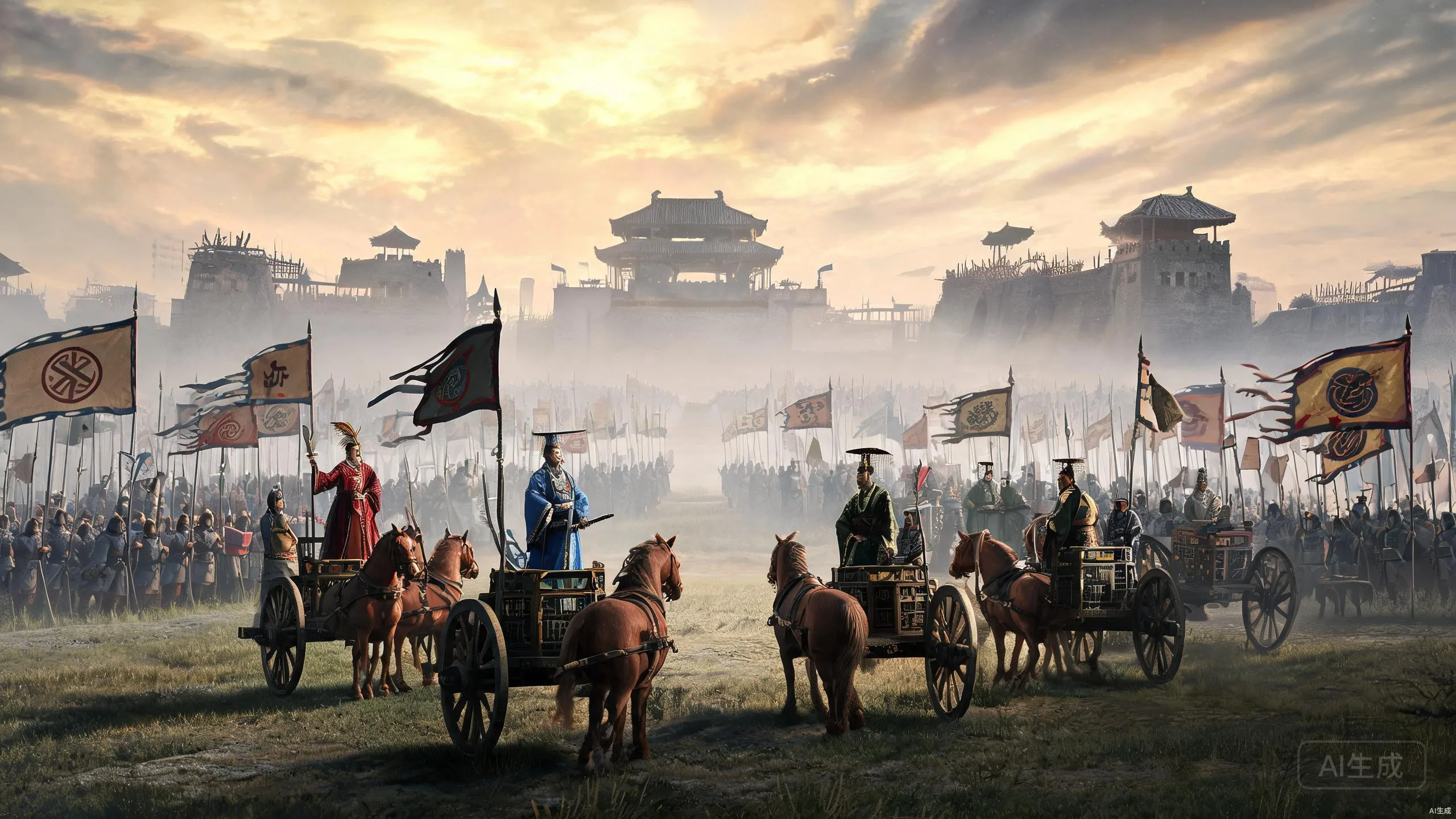
What followed was the gradual emergence of the hegemon system. Rather than a single emperor dominating all, the most powerful lords positioned themselves as hegemons, first among equals. The first great hegemon was Duke Huan of Qi (r. 685–643 BC), recognized by the Zhou King as the leading lord of China. His successors—Duke Wen of Jin, Duke Zhuang of Zheng, and the great King Wu of Chu—each claimed the title of hegemon, each using it to justify military campaigns against rivals, each eventually being displaced by the next challenger.
What kept the system from total collapse was a shared commitment to ritual propriety—a belief that even in war, certain rules mattered. Battles were supposed to be conducted according to ritual forms: two armies facing each other, exchanging formal challenges, fighting until one side acknowledged defeat. Massacres and sieges were considered barbaric violations of the cosmic order. This belief in ritual restraint would gradually erode as the period progressed, leading into the even more brutal Warring States era, but even in decline the idea that warfare had rules remained influential.
Confucius and the Hundred Schools
The most famous product of the Spring and Autumn chaos was Kong Qiu—better known in the West as Confucius.
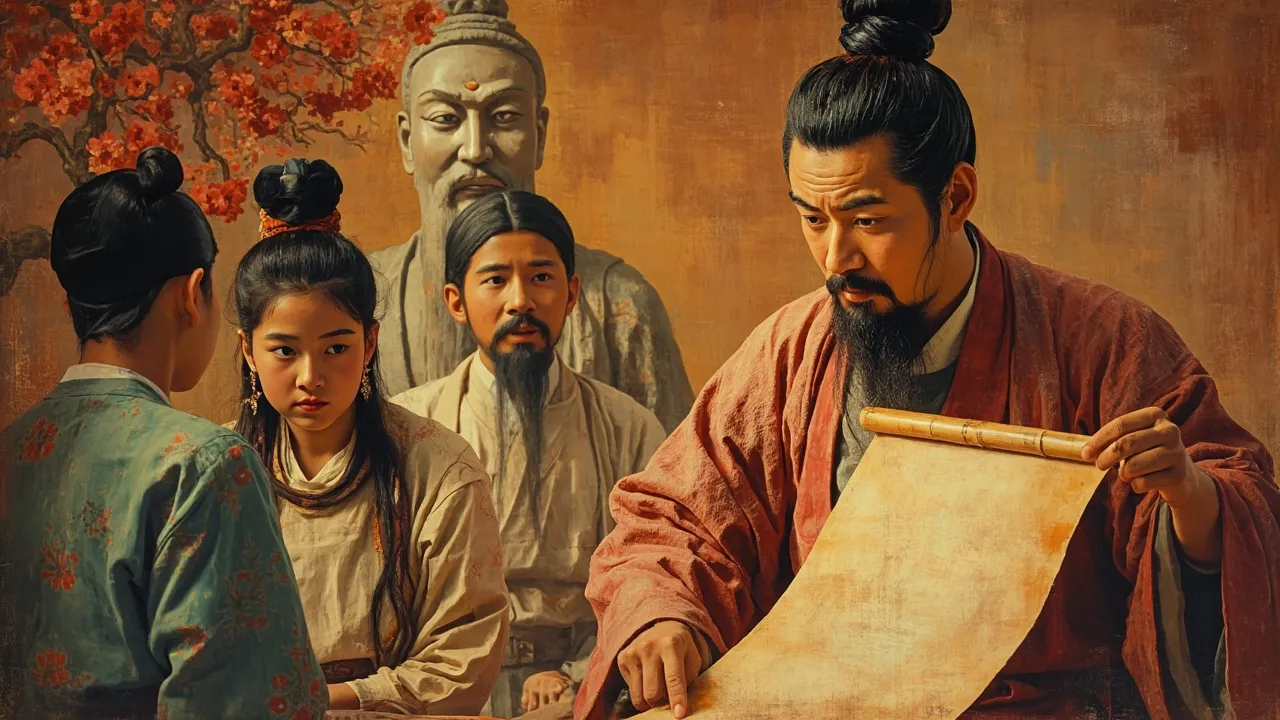
Confucius was not simply a philosopher in the abstract sense. He was a political actor who believed that philosophical ideas had direct practical applications. He genuinely believed that if a ruler would follow the principles of proper governance—virtue, ritual, and moral example—the state would prosper and chaos would end. His fourteen-year journey through the various Chinese states was not a philosophical pilgrimage. It was a job search. He was looking for a ruler who would appoint him to a position of real power so that he could implement his ideas. He never found one. This failure haunted him. But the body of work he produced in response to that failure—the Analects, the edited classical texts, the pedagogical methods—became one of the most influential intellectual legacies in human history. He was born around 551 BC in the state of Lu, in what is now Shandong Province. He came from a family that had once been aristocratic but had fallen into poverty. As a young man, he served in minor administrative posts, rising quickly due to his intelligence and moral reputation. He was appointed Minister of Justice in Lu, and for a brief moment it seemed that he might translate his intellectual authority into political power. When the Duke of Lu showed more interest in a performance of ceremonial music than in governing, Confucius left, embarking on what became a fourteen-year journey through the various states of China, seeking a ruler who would put his philosophy into practice.
No ruler did. Confucius spent his final years back in Lu, teaching a generation of students who would carry his ideas forward, and editing the classical texts that he believed contained the wisdom of the ancient sage-kings.
His philosophy was rooted in a diagnosis of the crisis of his time. Confucius believed that the chaos of the Spring and Autumn Period was the result of moral decay: rulers had abandoned the rituals and virtues that the ancient sage-kings had practiced, and the entire social order was collapsing as a consequence. His solution was deceptively simple in concept and extraordinarily demanding in practice: everyone—rulers, ministers, fathers, sons—should fulfill their obligations to others with sincerity and care. The concepts of filial piety, ritual propriety, and humaneness (ren) became the foundation of what would become Confucianism.
Confucius was not alone. The Spring and Autumn and subsequent Warring States periods saw an explosion of competing philosophical schools. The Daoists, traditionally founded by Laozi, offered a radically different response: the wise man does not strive or compete but follows the natural flow of things, like water finding its path downhill. The Legalists argued that human beings were naturally selfish and driven by fear of punishment—the only way to maintain order was through strict laws and severe punishments. Military thinkers like Sun Tzu argued that the highest form of generalship was winning without fighting—by deception, by maneuver, by understanding the enemy and the terrain. The Mohists advocated universal love—loving all people equally. Each school challenged the others, and none could suppress the others while the Zhou system remained fragmented.
Why the Chaos Was Necessary
Here is the paradox at the heart of the Spring and Autumn Period: the violence, the political fragmentation, and the moral crisis created exactly the conditions for intellectual flourishing.
If the Zhou system had remained stable—if there had been a powerful central authority suppressing dissent—Confucianism, Daoism, and the other traditions might never have developed. It was the competition among states, the constant pressure to find advantages over rivals, that drove rulers to seek out clever philosophers and strategists. A lord in one state who ignored useful ideas would lose ground to a lord in another state who embraced them. This created an intellectual marketplace of extraordinary richness.
At the same time, the absence of a dominant central authority meant that no single philosophical school could suppress the others. Unlike the Qin Dynasty, which would later burn books and bury Confucian scholars alive, the Spring and Autumn lords generally tolerated diversity. The result was an intellectual environment of extraordinary richness—one that laid the foundations for virtually every subsequent development in Chinese philosophy, political theory, and cultural practice.
The Legacy
The Spring and Autumn Period produced not only military strategists but an extraordinary range of intellectual traditions. Confucianism and Daoism are the best known today, but the period also saw the development of Legalism—the philosophy that would eventually guide the Qin unification—with its stark insistence that human beings must be governed through strict law rather than moral example. It produced Mohism, with its argument for universal love as the foundation of social order. It produced the school of Yin-Yang, which sought to explain the natural world through the interaction of complementary forces. Each of these traditions emerged from the specific conditions of the Spring and Autumn and Warring States periods—their urgency, their practical focus, their concern with questions of governance and survival that were literally life-and-death for the states that adopted or rejected them.
The Spring and Autumn Period ended around 476 BC, when the state of Qi fell into internal chaos and was effectively taken over by the Tian clan. The period that followed—the Warring States—was even more violent, even more chaotic, and even more intellectually fertile. And it ended in 221 BC with the unification of China under Qin Shi Huang, the First Emperor, who tried to end the philosophical diversity with brute force.
But Confucianism, Daoism, and the other traditions of the Spring and Autumn had already taken root too deeply to be destroyed. They would survive the Qin, resurface in the Han Dynasty, and continue to shape Chinese civilization for the next two thousand years. When modern visitors walk through the Confucian temple in Qufu, or read the Art of War, or encounter the concepts of Daoist philosophy in daily life in China, they are encountering the legacy of three hundred years of chaos that produced ideas powerful enough to outlast empires.
The period also saw the development of Legalism—the philosophy that would eventually guide the Qin unification—with its stark insistence that human beings must be governed through strict law rather than moral example. It produced Mohism, with its argument for universal love as the foundation of social order. It produced the school of Yin-Yang, which sought to explain the natural world through the interaction of complementary forces. Each of these traditions emerged from the specific conditions of the Spring and Autumn and Warring States periods—their urgency, their practical focus, their concern with questions of governance and survival that were literally life-and-death for the states that adopted or rejected them.
For American readers, the Spring and Autumn Period offers a striking parallel to the European Enlightenment, which emerged from the chaos of the Religious Wars and the political fragmentation of 17th and 18th century Europe. In both cases, the experience of prolonged conflict created the conditions for a profound rethinking of human nature, governance, and the good society. The chaos was not a failure of civilization. In China, it was civilization’s greatest achievement. What the Chinese produced in three centuries of war and disorder—the philosophical frameworks that still underpin Chinese civilization today—was not despite the chaos but because of it. The lesson is one that remains relevant in any age: intellectual freedom and political fragmentation often go together, and the most transformative ideas often emerge from the spaces that powerful central authorities cannot control.
Image Prompt: Traditional Chinese ink painting showing scholars in flowing robes gathered in a mountain pavilion discussing philosophy, with rolling hills and bamboo forests in the background, soft muted ink tones representing the Spring and Autumn period intellectual atmosphere.
Related Articles:
- Confucius and the Analects: Core Teachings Explained — deeper exploration of Confucian philosophy
- Sun Tzu’s Art of War: Timeless Military Principles — the military philosophy born in this era
Affiliate Products:
Explore the philosophical traditions born in the Spring and Autumn chaos:
- Chinese Classics Collection — Includes the Analects, Daoist texts, and the Annals that define this era.
- Confucian Analects — The direct record of Confucius’s teachings, essential for understanding Chinese philosophy.
- Sun Tzu’s Art of War — The most translated Chinese philosophical text in the world.
- Chinese History: A Comprehensive Survey — Context for the Spring and Autumn period within Chinese history.
- Chinese Calligraphy Practice Set — Practice the brush calligraphy style that defined this era’s written culture.