Su Shi: The Polymath of the Song Dynasty
Su Shi (1037–1101), also called Su Dongpo, is the kind of historical figure who refuses to stay in one category. He was a poet, essayist, calligrapher, painter, government official, exile, prison survivor, and enthusiastic eater. If you approach him only as a literary genius, you miss the practical man who worked on flood control and argued about public policy. If you approach him only as a statesman, you miss the wit, loneliness, and appetite that animate his writing.
Su Shi lived under the Northern Song, a period known for printing, commerce, urban life, and intense political debate. He passed the civil service examinations and entered a bureaucracy split by arguments over reform. His disagreements with powerful officials repeatedly cost him his position. Exile was not a single dramatic banishment followed by a triumphant return. It was a pattern of transfer, surveillance, illness, and adaptation.
What makes Su Shi appealing today is his ability to make room for pleasure without pretending that life is fair. He could write a serious political memorial, then describe a meal, a moonlit boat trip, or a joke among friends. His famous prose poem about the Red Cliffs turns a historical battlefield into a conversation about time, mortality, and the pleasure of being alive for one more evening.
Education, exams, and political arguments
Su Shi was born in Meizhou, in what is now Sichuan, into a family that valued learning. His father, Su Xun, became a respected essayist, and Su Shi’s younger brother, Su Zhe, also became a major writer and official. The family was unusually literary, but their success did not come from an easy path. They studied, traveled, wrote, and pursued the examination system that connected scholarship with government service.
In 1057, Su Shi passed the metropolitan examination under the examiner Ouyang Xiu, one of the most influential writers of the day. His essays impressed readers with their energy and clarity. The examination success opened a door, but Song politics quickly showed him how narrow the hallway could be. Government officials debated whether the state should impose new economic measures, expand direct intervention, or rely more heavily on older administrative habits.
Su Shi did not fit comfortably into either political camp. He could agree with a reform’s goal while objecting to its effects on farmers, merchants, or local communities. His criticism was not always tactful. A poem or memorial could be read as a policy argument by one reader and as an insult by another. In a court where factional loyalties mattered, literary skill increased both his influence and his risk.
He served in different local posts and gained a reputation for taking practical problems seriously. Local government meant dealing with grain, taxes, water, roads, disease, and disputes. These were not glamorous subjects, but they shaped his understanding of ordinary life. His writing about officials often carries an impatient question: does a policy help the people who must live under it, or does it only look good in a document?
The answer could make him unpopular. Su Shi was not a detached philosopher watching politics from a safe study. He wanted public work to function, and that desire put him in conflict with those who thought political loyalty mattered more than local evidence. His career became a series of appointments and removals, with periods of authority followed by abrupt loss.
Red Cliffs and the freedom of the short life
Su Shi wrote two famous prose poems associated with the Red Cliffs, or Chibi, along the Yangtze. The historical Red Cliffs was linked to the Three Kingdoms period and the naval battle of 208, when forces associated with Sun Quan and Liu Bei defeated Cao Cao. By Su Shi’s time, the site had become a place where history, landscape, and literary imagination could meet.
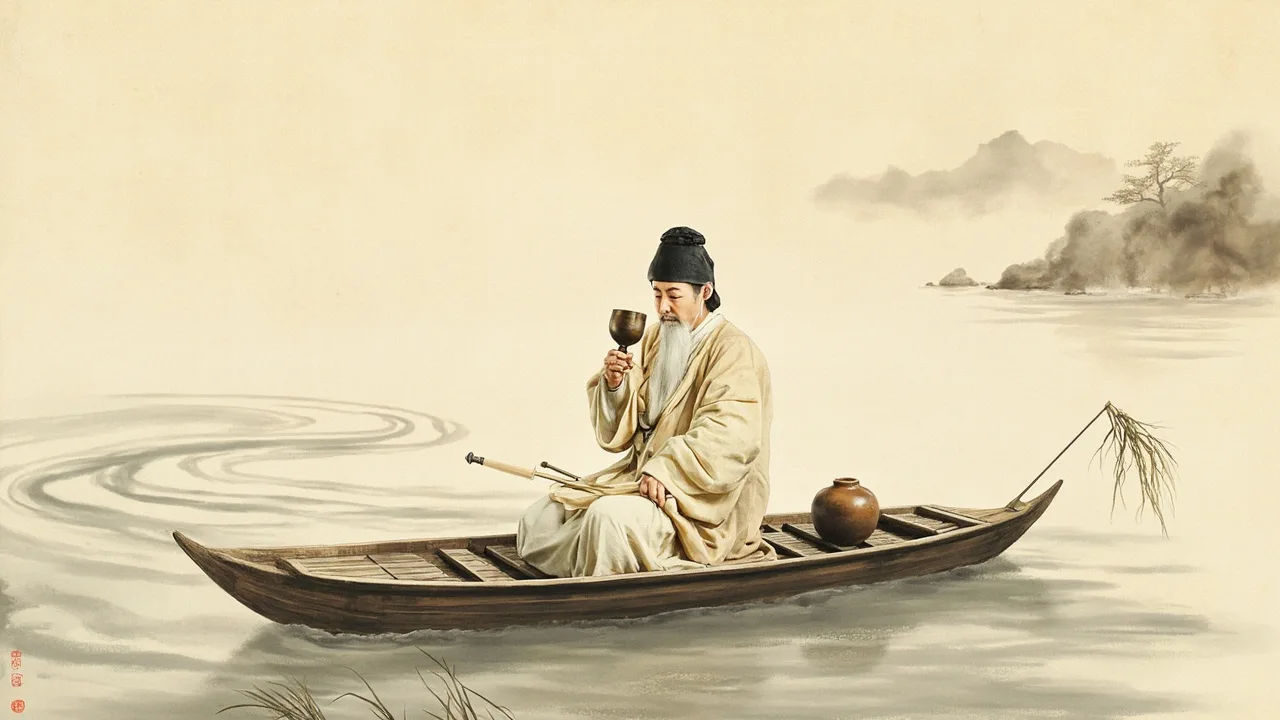
The first “Former Ode on the Red Cliffs” describes a boat trip with friends under the moon. The scene is relaxed but not empty. Music, wind, water, and conversation create a mood that changes when the companions reflect on the brevity of human life. The river continues; human beings pass away. The contrast could have become a gloomy lecture. Instead, Su Shi lets the conversation move toward another view.
The water does not belong to anyone permanently, but people can enjoy its sound and light. The moon changes shape, yet its light can be shared. These reflections do not deny mortality. They make space for experience within mortality. Su Shi’s famous point is not “nothing matters.” It is closer to this: because life is temporary, attention and friendship matter now.
The writing is one reason Su Shi’s work travels well into English. You can follow the boat, the night air, and the shift in conversation even without knowing every classical reference. At the same time, the original prose is carefully balanced, full of parallel lines and rhythmic turns. Translation gives you the argument and much of the image, but the Chinese reveals how tightly the sentences move.
Su Shi’s Red Cliff writing also shows his habit of turning banishment into a chance to see differently. He was living away from political power, yet the poem does not sound like a defeated official begging to return. It sounds like a person who has been forced to revise his measure of a good life. The state can remove his office. It cannot entirely remove the river, the moon, his friends, or his ability to write.
There is a danger in making this too inspirational. Su Shi’s exile included real fear, illness, loneliness, and uncertainty. The poem’s freedom is not proof that hardship is secretly good for everyone. It is an example of a writer finding a usable form of freedom inside conditions he did not choose. That distinction matters.
Calligraphy, painting, and a mind that kept moving
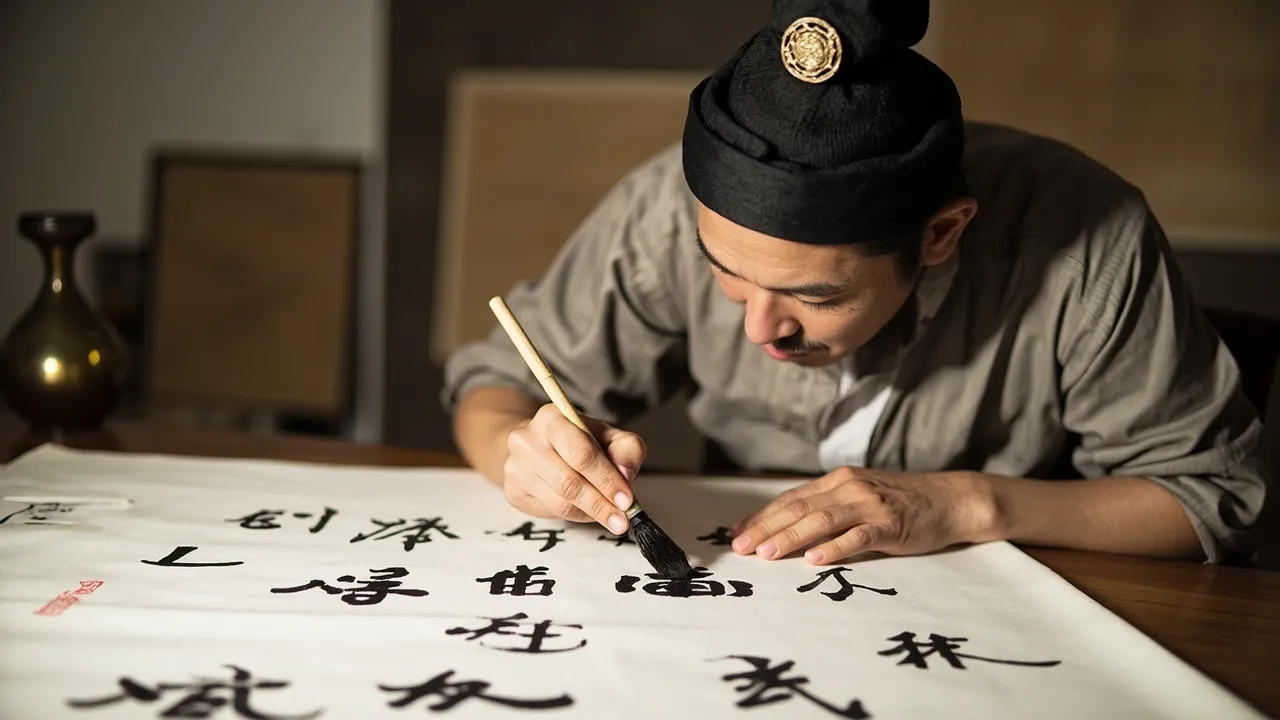
Su Shi is counted among the great calligraphers of the Song. His style is often associated with a broad, individual approach rather than a rigid attempt to imitate old masters line for line. His handwriting could look energetic, irregular, and personal. For him, calligraphy was not decoration added after thought. The movement of the brush showed something about the writer’s mind, education, and character.
He also wrote about painting and practiced it himself. Song intellectual culture did not always divide the arts into the modern professional categories we use today. Poetry, painting, calligraphy, music, and essay writing could support one another. A poem might be written on a painting. A painting might suggest a poem. Calligraphy could turn a political or private text into a visual object.
Su Shi valued what later readers often call “scholar-official” art. That does not mean he rejected skill. It means he cared about the mind and temperament behind technique. A technically perfect line without thought could feel lifeless, while a slightly unusual stroke could carry conviction. His writing on art often returns to the question of whether the artist understands the subject rather than merely reproducing its surface.
This view is easy to connect to his poems. He notices the grain of bamboo, the shape of a rock, the movement of water, and the quiet of a night. He is not collecting pretty images. He is testing how perception works. The same attention that helps him describe a landscape also helps him notice the effects of a tax policy or the embarrassment of an official who has lost power.
His calligraphy became part of his social life. Friends exchanged inscriptions, copied works, and preserved fragments. A piece of handwriting could carry memory and relationship. For modern readers, reproductions can make him look like a distant master. It helps to remember that his writing was once handled, discussed, criticized, and enjoyed by people who knew the circumstances of its creation.
If you try beginner calligraphy, you will discover how difficult his apparent looseness is. The brush does not reward casual imitation. Pressure, speed, ink moisture, and the pause before a turn all matter. That difficulty can make Su Shi’s work more understandable. The spontaneity you see is built on years of practice.
Exile, Dongpo pork, and ordinary happiness
Su Shi’s political troubles intensified during the so-called Crow Terrace Poetry Case in 1079. Officials accused him of using poems to criticize the government. He was arrested and interrogated, and the case became a frightening example of how literary expression could be treated as political evidence. He survived, but his career and sense of security changed.
He was sent away from the center and spent years in places officials considered remote. Huangzhou was one of the most important locations in his life. There he adopted the name Dongpo, meaning “Eastern Slope,” connected with land he cultivated. He worked, cooked, wrote, and built relationships. The official who had once operated within the imperial system had to learn how to live with fewer resources and less status.
This is where the food stories become more than charming trivia. Su Shi wrote about cooking in a way that made thrift and pleasure meet. Pork, once less prized than other cuts in some elite contexts, could be slow-cooked until tender. The dish later known as Dongpo pork carries his name, though the exact origin story has been polished by later culinary tradition. It is safer to say that Su Shi became associated with an approach to food: use what is available, cook it patiently, and enjoy it with friends.
He also wrote about vegetables, wine, tea, seafood, and local ingredients. Food gave him a language for adaptation. Exile could make the world smaller, but a local ingredient could still be interesting. A meal could be modest without being miserable. That attitude helped him preserve a sense of self when official titles disappeared.
Later exile took him even farther, including Huizhou and Hainan. These places were not romantic retreats. Travel was difficult, communications were slow, disease was a real threat, and returning to the capital was uncertain. Yet Su Shi kept writing letters, essays, poems, and practical observations. He taught, exchanged gifts, helped communities when he could, and found moments of amusement.
When he was recalled to political service, the pattern of appointment and removal continued. He never became a simple rebel living outside the system. He remained a scholar-official who wanted government to work, even after the system punished him. That tension is part of his appeal. He could criticize power without pretending he had no connection to it.
A few useful ways to keep learning
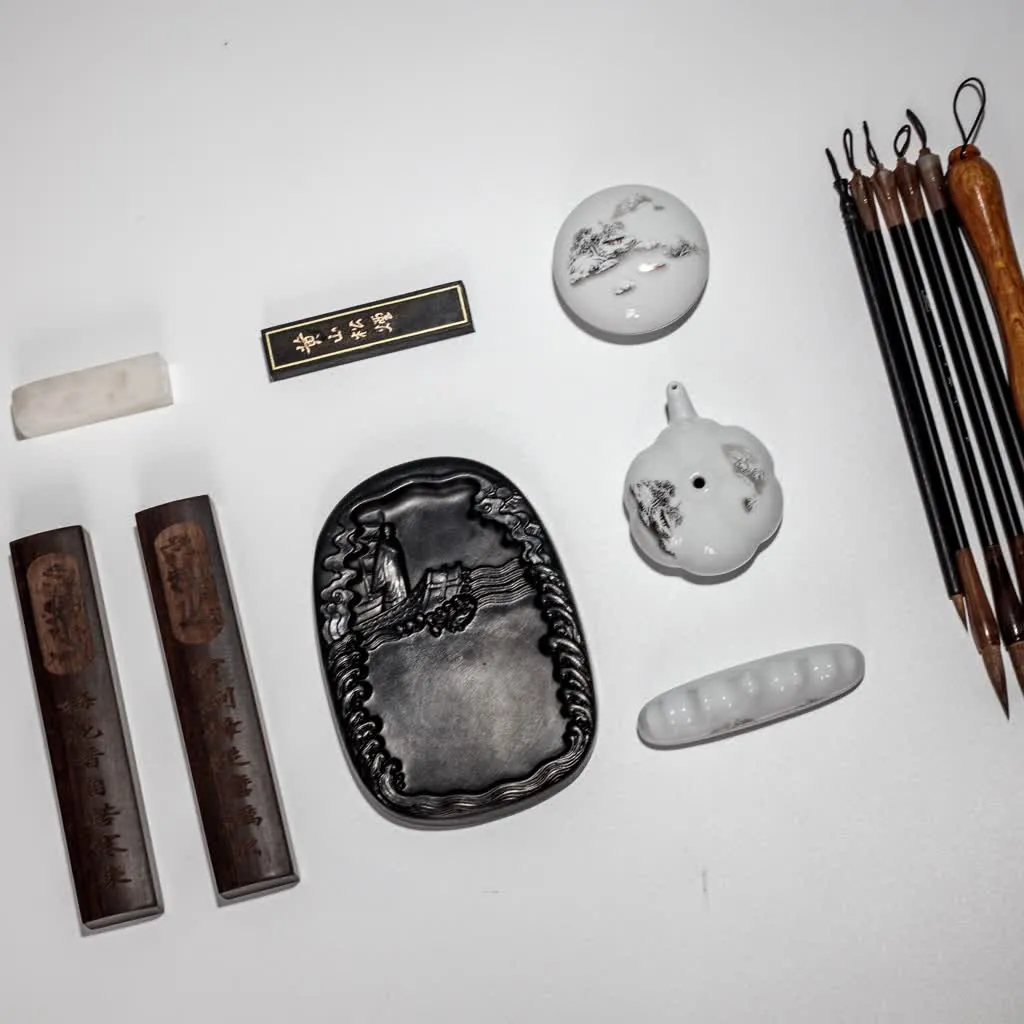
A bilingual anthology of Song dynasty poetry and prose is the best place to begin. Look for translations of both the Red Cliff pieces and his shorter lyrics, with notes explaining historical references. A Chinese calligraphy practice set can make his visual art less abstract. Start with a brush, ink, ink stone, and inexpensive practice paper rather than an expensive collector’s kit. A Song dynasty art book will help you see the world of scholar-official culture, while a Chinese food history cookbook can put Dongpo pork in the wider story of regional cooking. These are affiliate recommendations; a retailer may pay a small commission without changing your price.
A Chinese history atlas is useful because Su Shi’s life stretched across many locations. Mark Meizhou, Kaifeng, Hangzhou, Huangzhou, Huizhou, and Hainan. The map makes his banishments feel physical rather than symbolic. A grid-paper language notebook is handy for copying place names and a few lines of poetry, especially if you want to compare several translations.
Su Shi does not ask you to choose between seriousness and enjoyment. He writes about politics, grief, calligraphy, friendship, food, and moonlight as parts of one life. That is why he remains such an inviting guide to the Song dynasty.
Closing thoughts
Su Shi’s biography is not a tidy success story. He was brilliant, difficult, politically vulnerable, and repeatedly displaced. He also knew how to make a meal, enjoy a river, write a letter, and laugh at the absurdity of his situation. His work gives you a model of cultural life that is broad without being shallow. You can read one poem, look at one calligraphic line, cook one dish, and still have more to discover.