The story of Chinese silk begins, if you believe the legends, with a woman named Leizu who lived around 2700 BC. According to Chinese tradition, Leizu—also known as Xihe, the goddess of the sun—was sitting beneath a mulberry tree when a cocoon fell into her hot tea. She reached in to pull it out and found herself holding a thread so fine, so lustrous, and so strong that it seemed almost magical. She learned to unwind it, to spin it, to weave it. And from that moment, China had silk.
Whether or not Leizu actually existed—and most historians treat her as a mythological figure—the legend captures something true about silk’s deep roots in Chinese civilization. By the time archaeologists uncovered silk fabric fragments at the site of Qianshan in 1921, they had already known for decades that silk production in China stretched back thousands of years. Carbon dating of those Qianshan fragments confirmed what the legend suggested: Chinese sericulture is at least 5,000 years old.
Suzhou, in Jiangsu Province, became one of silk’s great centers—and its particular variety of silk, weaving, and embroidery developed a reputation that endured for more than a millennium.
The Silk Road’s Eastern Origin: Why Suzhou Became Silk’s Capital
Suzhou’s relationship with silk is written into the city’s geography. The Grand Canal, the massive waterway connecting Beijing to Hangzhou, passes through Suzhou, and in the Ming and Qing dynasties this waterway carried more than grain and timber—it carried bolts of silk, shipped in enormous quantities for centuries. Suzhou’s weaving workshops sat within walking distance of the canal’s banks, and their output moved efficiently to ports and overland routes that would eventually connect Chinese silk to Rome, Constantinople, and beyond.
The city’s advantages were not only logistical. Suzhou sat in the Yangtze River Delta, a region of mild climate, abundant water, and extensive mulberry cultivation—the mulberry leaf is the sole food of the silkworm (Bombyx mori), and the quality of the leaves directly affects the quality of the silk they produce. The delta’s low-lying fields and gentle rainfall created ideal conditions for mulberry groves, and the region’s dense network of canals provided the clean water needed for the washing and processing of raw silk.
The historical record confirms Suzhou’s prominence by at least the Tang dynasty (618-907 AD). By the Ming dynasty (1368-1644), Suzhou had become the undisputed center of Chinese silk production, with the Imperial Silk Workshops (Jingji Ju) operating directly under the control of the court. The phrase “Suzhou’s sun rises on ten thousand households, clothing the world beneath heaven” (日出万匹, 衣被天下) captured the city’s sense of its own importance: every morning, Suzhou’s looms produced enough silk to dress the world. The workshops employed thousands of weavers, dyers, and finishers, organized under a guild system that regulated quality, prices, and apprenticeship. Suzhou silk was not merely a commodity—it was a state interest.
The Four Great Silk Varieties of Suzhou
Not all Suzhou silk is the same. Over centuries of specialization, weavers in and around Suzhou developed several distinct varieties, each with its own technique, texture, and aesthetic character.
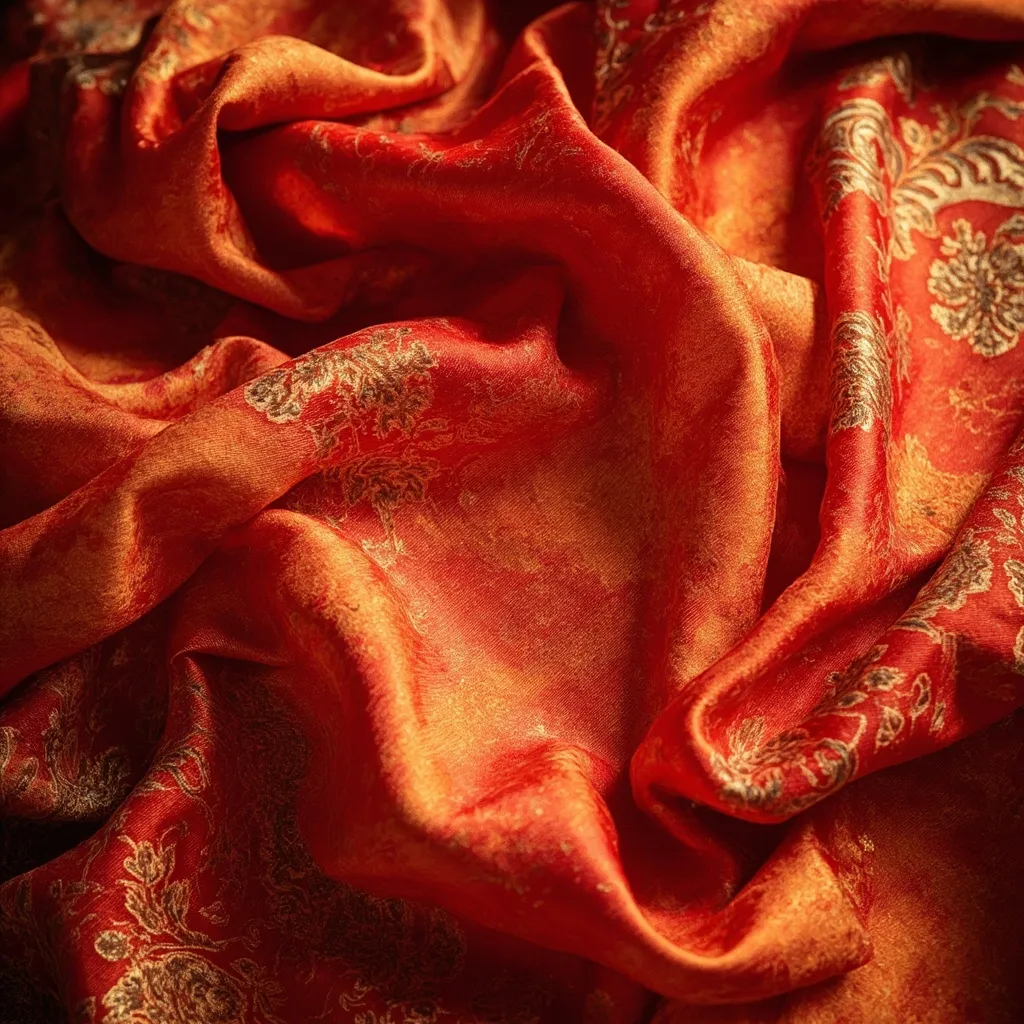
The most famous is song brocade (宋锦, Sòngjǐn), named for the Song dynasty during which it reached its highest development. Song brocade uses multiple shuttles to create complex patterns with multiple colors and layers. Unlike simpler weaves that use a single weft thread running horizontally, song brocade uses a supplementary weft that floats across the back of the fabric, creating a rich surface with patterns visible on both sides. The technique was originally used for formal robes and official documents, but by the Ming and Qing dynasties it had become the preferred fabric for imperial rank badges, ceremonial banners, and high-status gifts. In 2006, song brocade was designated a National Intangible Cultural Heritage item, and in 2009 it was inscribed on UNESCO’s Representative List of the Intangible Cultural Heritage of Humanity.
The second variety is kunsun silk (缂丝, Kèsī), sometimes described as “the queen of Chinese silk” for its extraordinary technique. Kunsun is a style of weaving in which the design is created by packing colored weft threads tightly around warp threads, with each color bound only where the design requires that color. The result is a fabric in which the design appears on both sides with equal clarity—unlike embroidered silk, where the back shows a tangle of threads. The technique is extraordinarily labor-intensive: a single large kunsun panel might take months to complete, and the weaver must know the pattern by heart rather than following a chart. Historical kunsun works from the Song dynasty are among the most prized textile artifacts in the world, with major museums competing to acquire them.
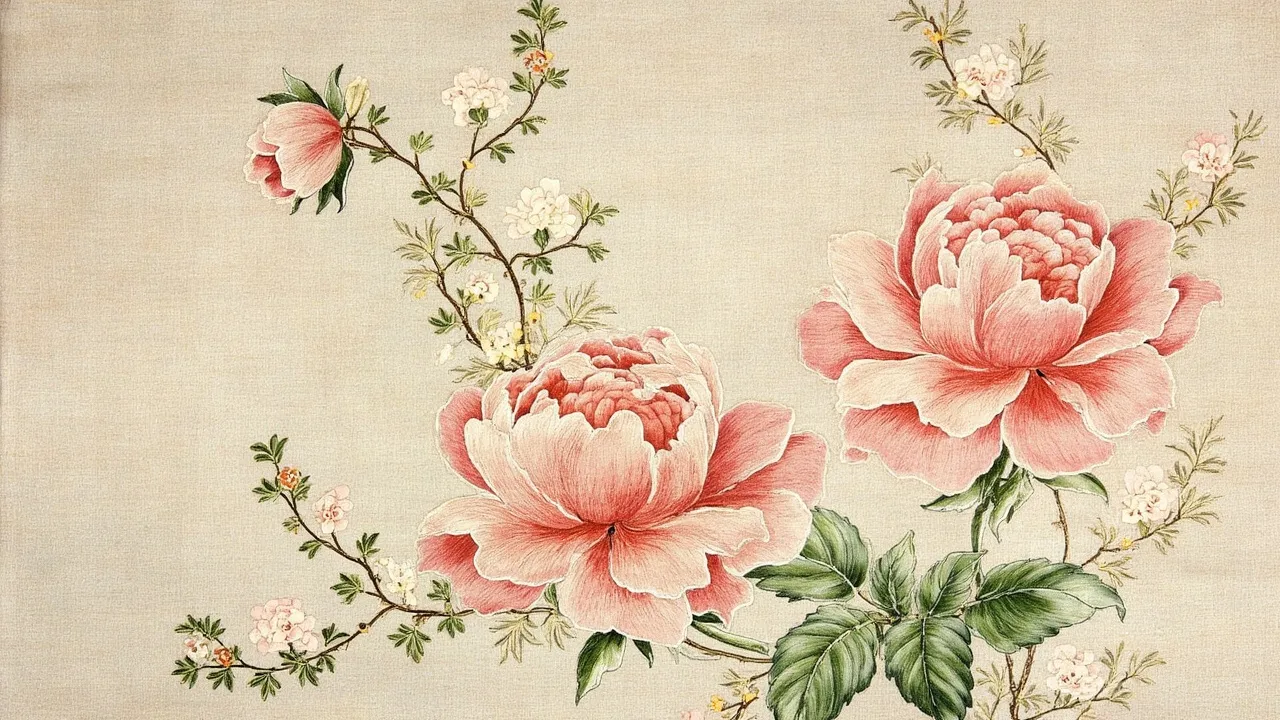
The third variety is su-style satin (苏绣, Sūxiù), which is technically embroidery rather than weaving but is inseparable from Suzhou’s silk culture. Suzhou embroidery uses extremely fine silk threads on a silk ground fabric, creating images of remarkable delicacy and depth. The defining characteristic of Suzhou embroidery is its “painting with needles”—the ability of skilled embroiders to create effects of light, shadow, and color gradation that rival brush paintings. The Suzhou embroidery tradition developed two major schools: the Wu School, known for its realistic depictions of flowers, birds, and scenery; and the Su School, known for its elegant, stylized patterns and calligraphy work.
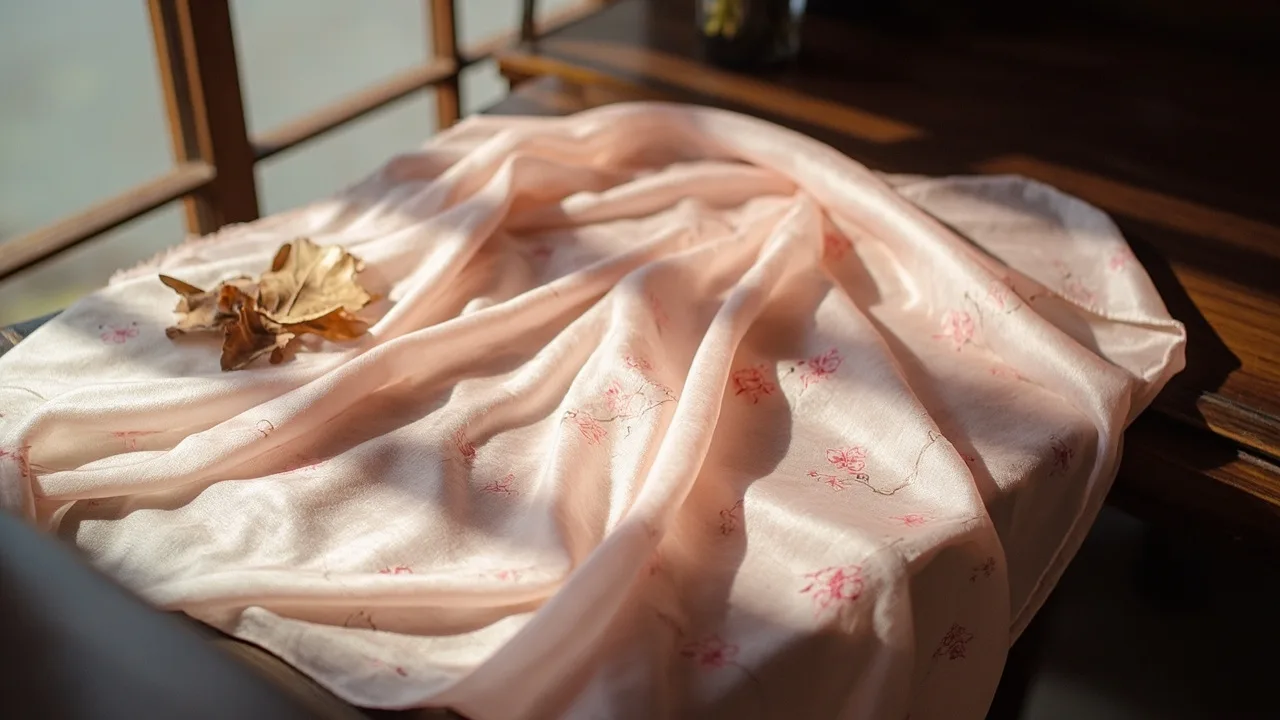
The fourth variety is sparrow wing gauze (罗纹, Luówén), a open-weave fabric with a distinctive diagonal texture created by twisting the warp threads. The weave pattern creates small geometric openings that give the fabric a lightweight, airy quality while maintaining strength. In the imperial period, sparrow wing gauze was used for summer robes because its open weave allowed air circulation while its silk construction maintained a dignified appearance.
The Silkworm’s Diet: Why Mulberry Matters
The quality of silk begins not in the loom but in the mulberry grove. Silkworms are among the most specialized feeders in the insect world: they eat nothing but mulberry leaves, and the chemical composition of those leaves—including the concentration of amino acids and moisture—directly affects the diameter, strength, and luster of the silk thread the worm produces.
In the Qing dynasty, the Taihu Lake region around Suzhou became famous for its high-quality mulberry leaves, and specific villages developed reputations for producing the best leaf quality. The connection between terroir and silk quality is not so different from the relationship between grape variety and wine: just as wine connoisseurs speak of the characteristics that specific vineyards impart to their grapes, silk experts spoke of the distinctive qualities of Suzhou silk that came from Suzhou mulberry leaves.
The breeding of silkworms themselves became a sophisticated science in the Suzhou region. The Qing dynasty saw the development of systematic breeding programs to improve silk yield and quality, and the region became a center for silkworm genetics. Families that maintained superior silkworm breeding lines kept their methods secret and passed them down through generations—a form of agricultural intellectual property that was both economically vital and culturally significant.
The collapse of the silk industry in the 20th century caused by the Second Sino-Japanese War and subsequent civil conflict was in part a collapse of these mulberry groves, which were not replanted for decades. Restoring the traditional silkworm breeding stock and mulberry cultivation has been a slow process, and some heritage varieties of silkworm have been lost entirely.
Surviving Examples: What Remains of Imperial Suzhou Silk
Some of the finest examples of historical Suzhou silk are not in Suzhou at all but in museums around the world—and the stories of how they got there are as remarkable as the fabrics themselves.
In 1900, the Eighth Route Army discovered a cache of silk manuscripts in the Mogao Caves of Dunhuang, on the edge of the Gobi Desert. Among the manuscripts were examples of Tang dynasty silk weaving that had been sealed in a hidden cave for nearly a millennium. The discovery included song brocade fragments, kunsun panels, and embroidery work of extraordinary quality. Many of these items were subsequently dispersed to museums in London, Paris, Berlin, and St. Petersburg, where they remain today.
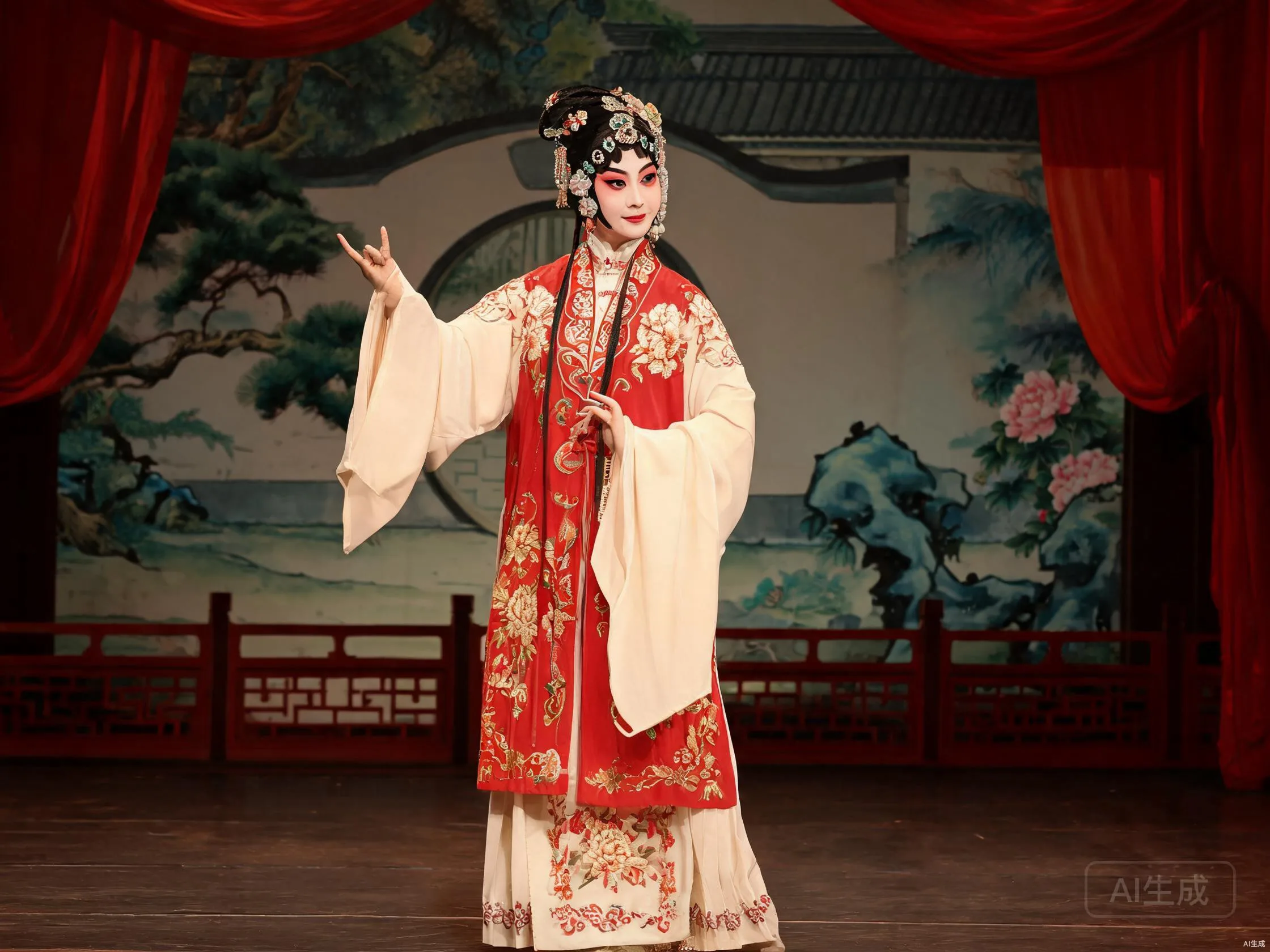
In the Palace Museum in Beijing, the collection includes robes, rank badges, and ceremonial textiles from the Ming and Qing dynasties, many of which were produced in Suzhou’s Imperial Silk Workshops. These items show the full range of Suzhou’s silk techniques: the vivid colors of song brocade, the delicate translucency of kunsun, the painterly subtlety of Suzhou embroidery. The robes are particularly striking for their scale—the large-format weaving required for an imperial robe demands a loom and workshop organization far more complex than anything used for smaller textile formats. Each robe required months of coordinated work from multiple specialists: dyers, spinners, pattern designers, and weavers, all working to specifications set by the Imperial Household Department.
In 2014, researchers analyzing silk fragments from a tomb in Mawangdui, Hunan Province, discovered that some of the fabrics showed traces of a red dye derived from safflower that had remained vivid for over 2,000 years. The preservation was attributed to the anaerobic conditions of the sealed tomb, but the discovery also underscored how central Suzhou’s dyeing techniques were to the broader Chinese silk tradition—even fabrics produced far from Suzhou often used dyes and processing methods that originated in the region.
The Modern Survival of an Ancient Craft
In the 21st century, Suzhou’s silk industry is a fraction of its historical size, but it has not disappeared. The city still has active workshops producing song brocade, kunsun, and Suzhou embroidery, and the government has designated certain masters as Intangible Cultural Heritage inheritors—recognition that carries both prestige and funding for training the next generation of apprentices.
The challenges are significant. The most skilled work—hand-weaving kunsun, for example—takes years to master and a lifetime to perfect. Young people in contemporary China have many more career options than their grandparents did, and the economics of handmade silk cannot compete with mass-produced alternatives in most market segments. A kunsun panel that might take a master weaver six months to complete commands prices that put it beyond all but the wealthiest collectors. Yet the craft survives because the demand for authentic handmade work, even at high prices, has grown as China’s middle class has developed a new appreciation for artisanal heritage, passed down for generations.
Several of the major Suzhou silk workshops have become tourist destinations, with visitors able to observe weavers at work and purchase smaller items—scarves, pouches, small panels—at accessible price points. The hope is that this exposure generates enough market demand to sustain the workshops while the most demanding work continues to be produced by master craftspeople who trained for decades. The fabric that dressed emperors and crossed the Silk Road has found a new role: as a living reminder of what human hands can do when they commit themselves to a single craft for a lifetime.