Tai Chi: The Gentle Art of Moving Meditation
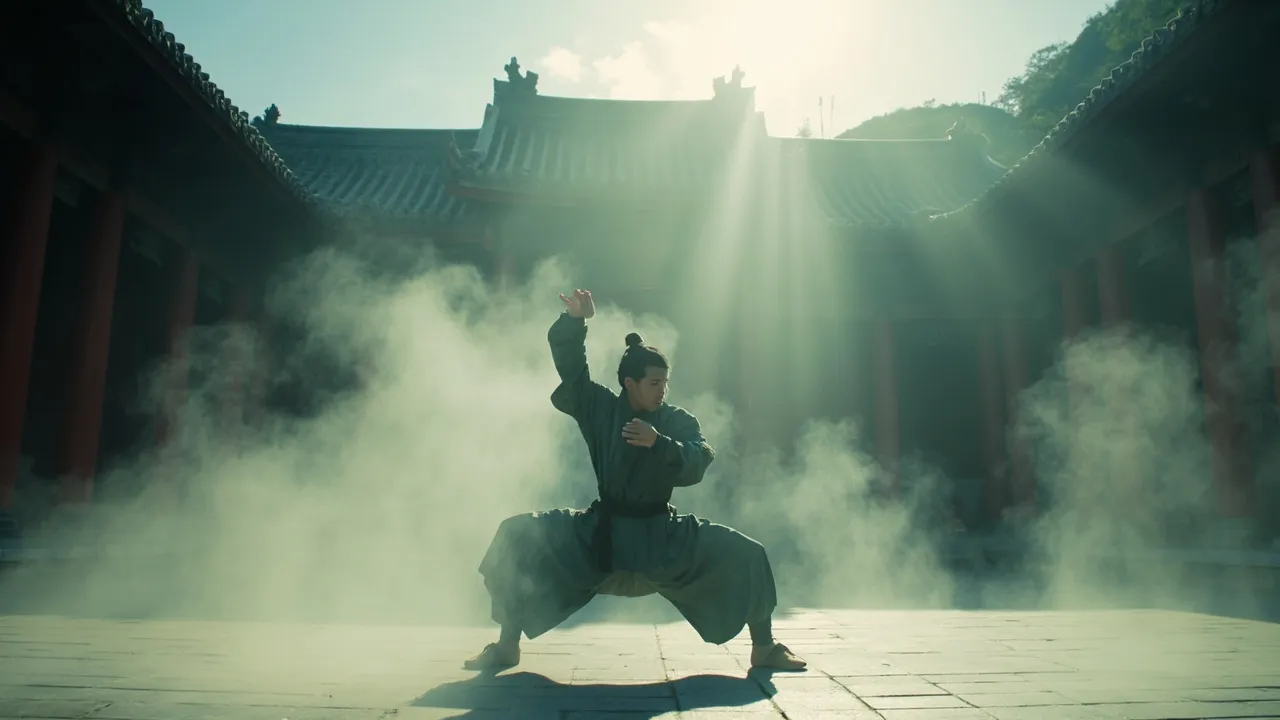
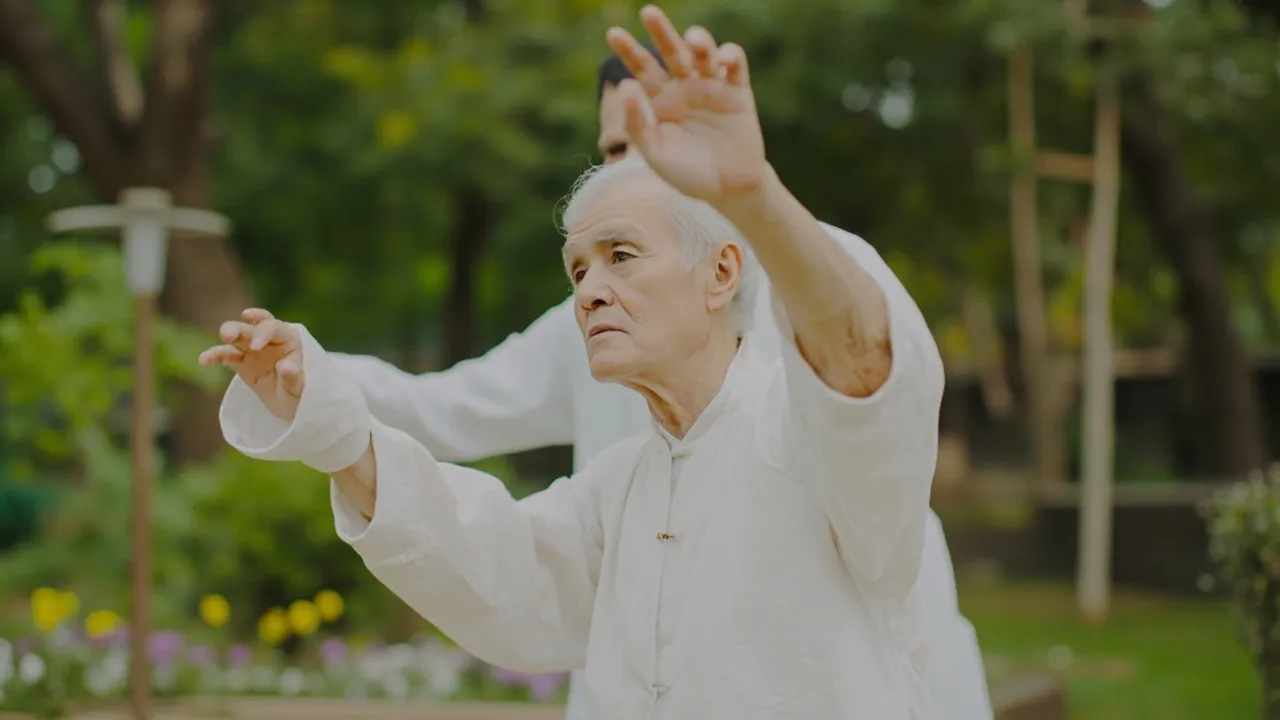
If you’ve ever watched people moving slowly and gracefully in a park during early morning hours, you’ve probably seen Tai Chi in action. This ancient Chinese practice looks almost like a beautiful dance, but there’s far more happening beneath the surface than simple movement. Tai Chi, known formally as Taijiquan (太极拳), represents one of China’s greatest gifts to the world—a practice that transforms the body, calms the mind, and nurtures the spirit all at once.
Walking through any Chinese city at dawn, you’ll find groups of people in parks and public spaces, moving in synchronized slow motion, their bodies flowing through elegant sequences that seem almost choreographed. They’re practicing Tai Chi, and what might look like a gentle dance is actually one of the most sophisticated martial arts systems ever developed, along with being a powerful health practice that has drawn millions of practitioners worldwide.
What Makes Tai Chi Different From Other Martial Arts
Unlike the explosive kicks and powerful punches you might see in action movies, Tai Chi takes a radically different approach to martial arts. Practitioners move in slow, flowing sequences that can take years to master completely. The movements blend seamlessly one into another, like water flowing downstream, never stopping, never jarring. This “soft” style contrasts sharply with the “hard” martial arts that rely on muscular strength and aggressive techniques.
The philosophy behind Tai Chi stems from Taoist concepts of yin and yang—opposite but complementary forces that exist in everything around us. The yin quality represents yielding, softness, and receptivity, while yang represents hardness, activity, and assertion. Rather than meeting force with force, Tai Chi practitioners learn to yield, redirect, and neutralize incoming attacks. They work with an opponent’s energy rather than against it. This principle, called “四两拨千斤” (using four ounces to move a thousand pounds), represents the essence of the art. A skilled Tai Chi practitioner can deflect and control a much stronger opponent by understanding and manipulating energy rather than matching strength with strength.
Tai Chi belongs to a category of Chinese martial arts known as the “internal” styles (内家拳, neijiaquan). These arts emphasize mental focus, breath control, and inner energy (called “qi” or “chi”) over external physical display. The opposite would be “external” styles like Shaolin Kung Fu, which develop physical power through rigorous outer training. Internal arts work on the principle that true power comes from the mind directing internal energy, which then manifests as external physical force. The training looks gentle on the surface, but it develops deep, sustainable power that external methods often cannot match.
The Two Major Styles: Chen and Yang
While several distinct regional styles of Tai Chi exist, two have become the most widely practiced around the world. Understanding their differences helps explain why this art has such broad appeal across different populations and interests.
Chen style (陈式太极拳) represents the oldest surviving form, originating in the Chen village of Henan Province, where the Chen family has preserved and passed down the art for generations. This style features explosive power mixed with gentle flow, creating a dynamic practice that alternates between stillness and powerful movement. Practitioners might be moving slowly and smoothly, then suddenly burst into a rapid, powerful sequence that includes jumps, stamps, and sudden releases of energy. The breathing patterns coordinate precisely with these changes, creating a practice that builds both internal strength and external power. Many people who see Chen style for the first time are surprised by its martial application—it definitely isn’t just “slow movement for relaxation.” The style retains the combative edge that gave Tai Chi its original purpose.
Yang style (杨式太极拳) became the most popular version worldwide, largely thanks to Yang Chengfu, who refined and simplified the forms during the early twentieth century. Where Chen style keeps its explosive elements, Yang style emphasizes the slow, gentle movements that most Western practitioners recognize immediately. The forms are longer and more flowing, with less distinction between “gentle” and “power” sections. The movements are performed at a consistent, unhurried pace that allows practitioners to focus on relaxation, breathing, and proper alignment. This accessibility helped spread Tai Chi globally, making it the version most people learn in parks, community centers, and martial arts schools worldwide.
Other significant variations include Wu (or Wu Jianquan) style, which features more oblique body angles and compact movements, making it suitable for smaller spaces and more subtle applications. Sun style (孙式太极拳), created by Sun Lutang, incorporates martial applications from the related art of Xingyiquan along with more active footwork and higher stances. Each style maintains the core principles while offering slightly different emphases for practitioners to explore. The serious student might eventually study multiple styles to gain a comprehensive understanding of the art.
The Health Benefits That Attract Millions
Scientific research has increasingly validated what Chinese practitioners have known for centuries—regular Tai Chi practice brings remarkable health benefits. Studies from major universities worldwide have documented improvements across multiple areas of physical and mental well-being, bringing this ancient practice into modern medical contexts.
The slow, deliberate movements improve balance and reduce fall risk, particularly important for older adults. Research published in the New England Journal of Medicine found that Tai Chi significantly reduced the risk of multiple falls in elderly participants compared to regular stretching exercises. The constant weight shifting and single-leg balance positions train the body’s proprioceptive systems in ways that conventional exercise often misses. These systems tell your brain where your body parts are in space, and Tai Chi develops this awareness remarkably well. Falls are a leading cause of injury and death among the elderly, making Tai Chi’s balance benefits potentially life-saving.
Practitioners consistently report reduced stress and improved mental clarity. The meditative aspect of Tai Chi—the focus on breath, the flowing attention from one movement to the next—creates a moving meditation that calms the nervous system. Research on cortisol levels (the stress hormone) shows measurable reductions after consistent practice. Many describe entering a “flow state” during forms practice, where the usual mental chatter quiets and movement becomes effortless. This mental state mirrors what meditators spend years attempting to achieve through sitting practice.
The gentle, continuous nature of Tai Chi makes it accessible to people who might struggle with more demanding exercise. Those dealing with chronic conditions, joint problems, or recovering from injuries often find Tai Chi provides benefits where more vigorous activities cause pain. The low impact nature protects joints while still building strength, flexibility, and cardiovascular fitness. Doctors increasingly recommend Tai Chi for patients managing conditions from arthritis to hypertension to anxiety. Studies have shown improvements in cardiovascular health, immune function, and even symptoms of depression and anxiety.
Research has also demonstrated benefits for people with chronic pain conditions, including fibromyalgia and lower back pain. The gentle movement helps maintain joint mobility while the meditative aspect helps practitioners manage their relationship to discomfort. Unlike aggressive exercise that can exacerbate pain conditions, Tai Chi works with the body’s natural rhythms rather than against them.
Understanding the Forms
At the heart of Tai Chi practice lie the “forms” (套路, taolu)—structured sequences of movements that practitioners learn and refine over years, even decades. These forms aren’t just exercises; they’re living textbooks containing centuries of martial and philosophical wisdom, compressed into sequences that encode understanding through physical practice.
The most commonly learned form, the Yang style “Long Form” (or 108 movements), typically takes beginners several months to learn at a basic level. Mastery, however, takes a lifetime. Students discover new nuances in familiar movements as their bodies develop greater sensitivity and their understanding deepens. The form becomes a mirror reflecting their current level of skill and awareness, showing them what they need to work on next. What seemed simple reveals hidden depths as they progress.
Each movement has specific applications for self-defense, though advanced practitioners often keep these hidden from newer students. A simple “wave hands like clouds” contains multiple ways to redirect an attacker. The seemingly defensive “ward off” position can become an offensive joint lock with slight adjustments. This hidden depth gives Tai Chi practitioners continued motivation to explore their art throughout their lives—there is always more to discover, always another layer of meaning to uncover.
The forms are traditionally divided into several categories. Hand forms (手法, shoufa) use primarily the arms and upper body. Weapon forms employ various traditional weapons including the sword (剑, jian), broadsword (刀, dao), spear (枪, qiang), and staff (棍, gun). Each weapon extends the principles learned in empty-hand practice while introducing new movement challenges and combat applications.
Push hands (推手, tuishou) represents the bridge between solo form practice and actual martial application. Partners work through structured exercises that develop sensitivity to incoming force, practice redirecting techniques, and test their understanding of the principles learned through form practice. Competition push hands adds elements of sport while remaining true to the underlying martial concepts. Advanced practitioners can defend against multiple attackers using principles developed through push hands training.
The Philosophy and Mind-Body Connection
Beyond the physical movements and health benefits, Tai Chi embodies a complete philosophy of life that many practitioners find equally valuable. The art teaches patience, persistence, and the wisdom of yielding. These aren’t just martial principles—they’re life principles that transform how practitioners approach challenges both on and off the mat.
The concept of “relaxation” (放松, fang song) in Tai Chi goes far beyond physical relaxation. It involves letting go of unnecessary tension throughout the body and mind, which paradoxically generates more power than muscular effort alone. This principle translates to daily life—people who practice Tai Chi often report becoming less reactive to stress, more capable of remaining calm in challenging situations. The mind learns to direct without forcing, to intend without straining.
Breath awareness forms another crucial component. Tai Chi breathing emphasizes the lower abdomen (the “dan tien” or energy center), coordinating exhalation with movements that “sink” energy downward and inhalation with movements that “raise” energy. This breathing pattern, once developed unconsciously through practice, carries over into daily life, improving respiratory efficiency and calming the nervous system.
The Taoist worldview underlying Tai Chi emphasizes living in harmony with nature and natural principles. Rather than fighting against circumstances, practitioners learn to flow with them, finding the path of least resistance that still achieves their goals. This doesn’t mean passivity—rather, it’s an intelligent efficiency that accomplishes more with less effort.
Starting Your Own Practice
Beginning a Tai Chi journey requires little equipment—a comfortable, loose-fitting outfit and flat shoes with flexible soles work well. Many practitioners start by learning from videos or local classes before eventually seeking more advanced instruction. The internet has made quality instruction more accessible than ever, though nothing truly replaces learning from a knowledgeable teacher who can correct posture and explain nuances that videos cannot capture.
The most important advice for beginners: patience. Progress in Tai Chi comes slowly, and that’s intentional. The slow pace isn’t a limitation; it’s the training method itself. By moving slowly, you develop awareness, precision, and the ability to control your body with subtle intentions. Those who approach Tai Chi expecting quick results often become frustrated and quit. Those who embrace the gradual journey discover one of life’s most rewarding practices, a skill that deepens continuously throughout a lifetime.
When looking for a teacher, observe a class before committing. Good teachers emphasize proper structure over complex movements. They should be able to explain the “why” behind each movement, connecting physical actions to underlying principles. The teacher should correct students kindly but thoroughly—proper habits formed early prevent problems later.
Morning practice catches the fresh air and quiet atmosphere that many practitioners prefer, though any time of day works. Many find that even fifteen minutes of form practice transforms their entire day, providing a moving meditation that sets a calm, focused tone for whatever follows. The important thing isn’t perfect execution—it’s consistent practice and genuine attention to what you’re doing. Even imperfect practice carries benefit; the practice itself is the point.
Consider this: in a world of rushing, noise, and constant stimulation, Tai Chi offers something increasingly rare—the opportunity to move slowly, breathe deeply, and discover what real presence feels like. Whether you’re seeking martial skill, better health, stress relief, or simply a refuge from modern life’s chaos, Tai Chi welcomes you. The path is long, but every step brings reward. Step onto the mat and begin—your journey of a thousand miles starts with a single slow movement.