Taoist Alchemy: The Ancient Chinese Quest for Immortality and Inner Transformation
Imagine spending your entire life searching for a pill that would make you live forever. That is exactly what countless scholars, emperors, and hermits did in ancient China, driven by a fascinating blend of spirituality, science, and sheer desperation. Taoist alchemy stands as one of the most remarkable intellectual traditions in human history, a practice that shaped not only Chinese culture but also influenced medical thinking across East Asia. This is the story of how an ancient quest for immortality evolved into something far more valuable: a deep understanding of the human body, breath, and spirit that still resonates today.
The Origins of Taoist Alchemy in the Han Dynasty
The foundations of Taoist alchemy were laid during the Han Dynasty, which ruled China from 206 BCE to 220 CE. This was a period of tremendous intellectual ferment, when Confucian scholars, Taoist thinkers, and early mystics all competed for the attention of the imperial court. It was within this environment that the earliest alchemical texts began to appear, drawing from earlier shamanic traditions, folk medicine, and the philosophical writings attributed to Laozi and Zhuangzi.
The Han Dynasty saw its share of emperors who were absolutely obsessed with finding the elixir of life. Emperor Wu of Han (156–87 BCE) was particularly notorious, spending enormous resources on alchemists who claimed they could produce immortality potions. He was eventually poisoned by one of the mercury-based concoctions his court alchemists had prepared, a grim reminder that the line between medicine and poison was dangerously thin in these early experiments.
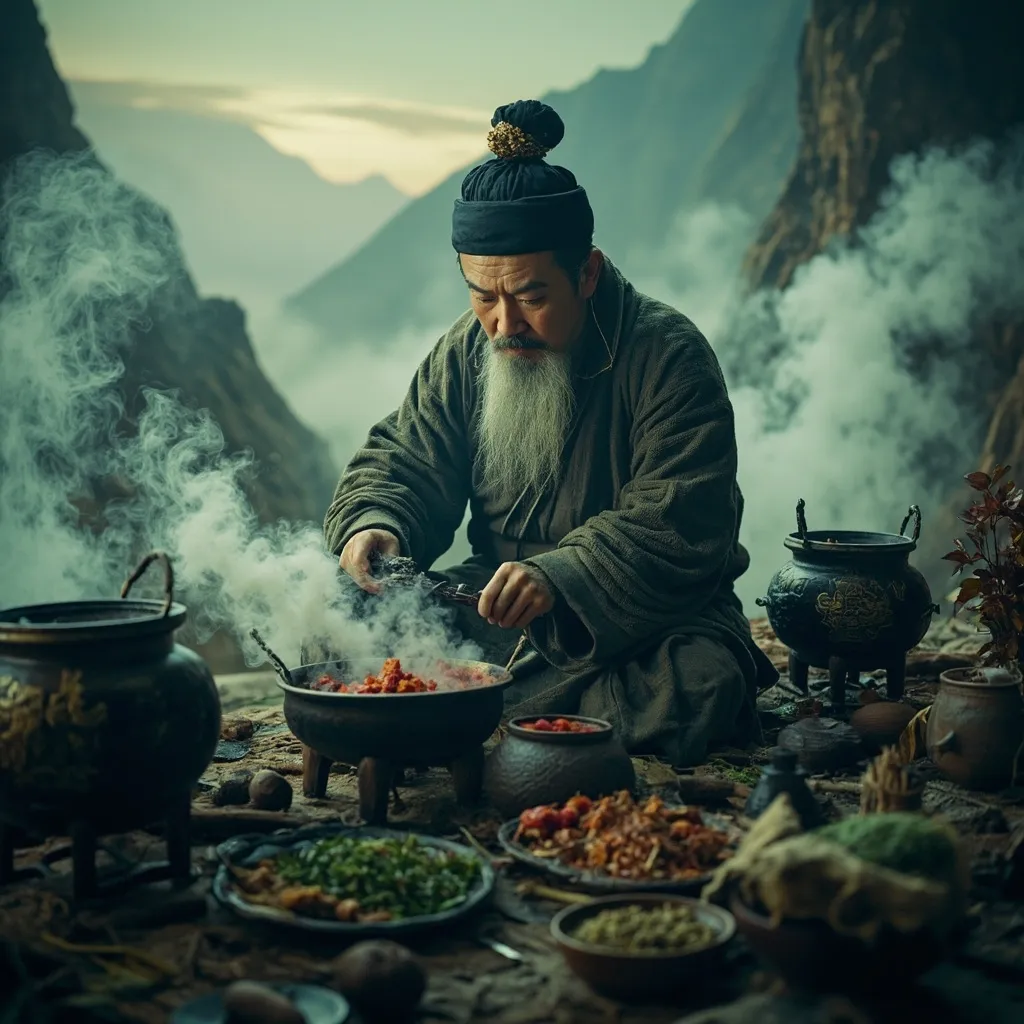
The historical texts tell us that the earliest practitioners worked primarily with external alchemy, known as waidan in Chinese. This involved mixing and heating various substances—mercury, cinnabar, lead, arsenic, and numerous herbs—in elaborate rituals designed to create the “elixir of immortality.” The philosophical foundation rested on a belief that these metallic substances contained pure essence that could be concentrated and transferred to the human body, essentially purifying and eternalizing the flesh. Cinnabar, a bright red mineral compound of mercury sulfide, became the most prized ingredient, partly because it was visually dramatic and partly because it seemed to transform when heated, making it appear almost magical.
Yet the Han Dynasty was also the period when the more introspective branch of Taoist alchemy began to emerge. The text known as the Cantongqi, or “Awakening the Power of the Heart,” attributed to Wei Boyang in the 2nd century CE, began to shift emphasis away from purely external processes toward understanding the body’s internal transformations. This subtle pivot would eventually revolutionize the entire tradition.
Understanding Qi: The Vital Force Behind the Practice
No discussion of Taoist alchemy can proceed without explaining qi, a concept so fundamental to Chinese thought that it permeates everything from martial arts to medicine to philosophy. Qi is often translated as “vital energy” or “breath,” but those translations barely scratch the surface of what ancient Chinese practitioners understood by the term.
In the context of Taoist alchemy, qi was understood as the fundamental substance flowing through all things in the universe. It moved through the body along specific channels and centers, nourishing organs, warming the extremities, and maintaining the balance between opposing forces known as yin and yang. Health, in this view, was not merely the absence of disease but the free and balanced flow of qi throughout the body. Death occurred when this flow ceased entirely.
The alchemists believed they could cultivate, refine, and transform qi through specific practices involving breathing exercises, meditation, sexual practices, and the consumption of certain herbs and mineral preparations. The goal was to gather qi from the universe and draw it inward, where it would be “refined” through visualization and breath control into a purer form called jingqi, or “transformative essence.” This refined essence was then circulated through the body, nourishing organs and ultimately producing what alchemists called the “spiritual embryo” or shengti, a kind of enlightened consciousness that would survive the death of the physical body.
This internal cultivation practice became known as neidan, or inner alchemy, and it represented a profound shift from external manipulation of substances to internal manipulation of energy. Where external alchemists sought to create immortality in a furnace, inner alchemists sought to create it within the crucible of their own bodies, using nothing but breath, intention, and the subtle energies already present in the cosmos.
Famous Practitioners and Their Contributions
The history of Taoist alchemy is populated by colorful, sometimes eccentric, and often tragic figures whose lives read like adventure novels. Their stories reveal both the genuine spiritual aspirations and the dangerous misconceptions that drove this tradition.
Zhang Daoling (34–156 CE) founded the Way of the Celestial Masters movement, one of the earliest organized Taoist religious communities. Though primarily known for his spiritual teachings and healing practices, Zhang Daoling and his followers practiced forms of alchemy that combined external substances with intense ritual and meditation. His movement attracted tens of thousands of followers and established a template for organized Taoist practice that persists to this day.
Ge Hong (283–343 CE) wrote the famous text Baopuzi, which attempted to systematize alchemical knowledge while remaining skeptical of many popular claims. Ge Hong was a government official who studied under famous masters and collected alchemical formulas, but he also expressed considerable doubt about the ability of external alchemy alone to produce immortality. His honest wrestling with these questions makes his writings particularly valuable for understanding how serious intellectuals approached the subject.
Wei Boyang, mentioned earlier, is credited with the text that became the foundation of inner alchemy. The Cantongqi he wrote analyzed the relationships between various natural forces and substances using the framework of yin-yang theory and the Five Elements (wood, fire, earth, metal, water). Later commentators would spend centuries trying to interpret its dense, metaphorical language, making it one of the most debated texts in the Taoist canon.
Zhongli Quan and Zhang Guolao, two legendary figures often depicted in Chinese folk art as the “Eight Immortals,” were both traditionally associated with alchemical teaching. According to legend, Zhongli Quan transmitted the secrets of inner alchemy to Zhang Guolao after centuries of practice, and Zhang Guolao in turn shared these teachings with worthy students. Whether historical or mythological, these figures shaped the spiritual aspirations of countless practitioners.
The Influence on Traditional Chinese Medicine
The most enduring legacy of Taoist alchemy is not the search for physical immortality but rather its profound influence on traditional Chinese medicine, or TCM. The concepts, diagnostic methods, and therapeutic approaches that emerged from alchemical thinking became woven into the fabric of Chinese medical practice and remain influential to this day.
The understanding of the body as a system of channels (meridians) through which qi flows originated in part from alchemical visualizations of energy moving through specific pathways. The famous acupuncture charts that show these channels were developed and refined by practitioners who were simultaneously engaged in alchemical practice. They observed correlations between stimulating certain points and experiencing specific internal sensations, gradually mapping what they understood as the body’s energy geography. These maps were not mere anatomical drawings but represented functional relationships between different parts of the body, reflecting a fundamentally different medical paradigm than the anatomical approach that would later develop in the West.
The concept of the dantian, or “elixir field,” three energy centers located in the lower abdomen, chest, and head, emerged directly from alchemical practice. Taoist meditators discovered that focusing attention on these areas produced unusual physical sensations and altered states of consciousness. These experiences were interpreted as evidence of energy cultivation and became central to Daoist meditation practices. The lower dantian, located in the lower abdomen, was considered the most important for storing and cultivating vital essence. The middle dantian in the chest was associated with emotional balance and spiritual insight, while the upper dantian near the crown of the head was considered the gateway to transcendent states. Modern qigong and many martial arts traditions still teach exercises designed to activate and circulate qi through the dantian, demonstrating the continuing vitality of these ancient practices.
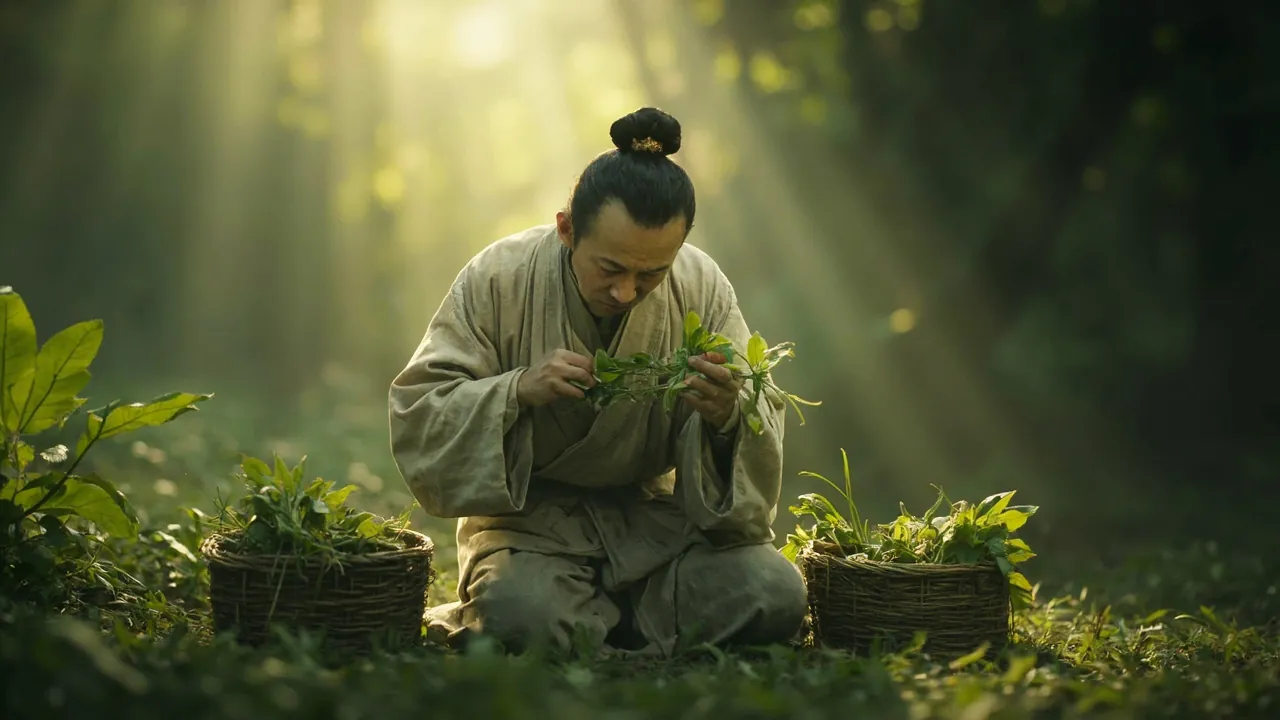
Herbal medicine in China was similarly shaped by alchemical experimentation. Alchemists tested thousands of substances, cataloging their effects with meticulous detail. Many formulas considered standard in TCM today were originally developed in alchemical contexts, designed not merely to cure specific ailments but to “tonify” the body’s fundamental energies, much as the alchemists had sought to refine and strengthen the body itself. The famous Liu Jun Zi Tang, or Six Gentleman’s Decoction, and other classic formulas were developed through this process of experimental refinement. These formulas typically combine multiple herbs in precise proportions, with each ingredient playing a specific role in the overall effect—a approach that mirrors the alchemical principle of combining substances to create something greater than their simple sum.
The preventive orientation of traditional Chinese medicine also reflects alchemical thinking. Rather than waiting for illness to manifest and then treating it, the alchemical perspective emphasized continuous cultivation and maintenance of the body’s vital energies. This is why TCM places such strong emphasis on diet, exercise, breathing, and seasonal routines—all practices derived ultimately from the alchemist’s conviction that the body could be continually refined and strengthened. The idea that health requires ongoing maintenance rather than simply the absence of disease represents a fundamentally different approach to medicine than the crisis-intervention model that often dominates modern healthcare systems.
Modern Practice and Continued Relevance
Taoist alchemy in its traditional form has largely faded from mainstream Chinese life, but its influence persists in surprising ways. Qigong and tai chi, practiced by millions worldwide, draw directly from the breathing, movement, and meditation techniques that emerged from the alchemical tradition. The health benefits of these practices have attracted serious scientific attention in recent decades, with studies suggesting improvements in cardiovascular health, stress reduction, and immune function.
Traditional Chinese medicine remains a significant part of healthcare in China, Japan, Korea, and increasingly in Western countries. The theoretical framework underlying TCM—yin-yang balance, five-element theory, qi circulation through meridians—derives substantially from concepts first articulated by Taoist alchemists. When a modern TCM practitioner asks about your energy levels, recommends dietary changes to balance your constitution, or suggests acupuncture to improve the flow of qi, they are drawing on a tradition whose roots lie in the ancient laboratories and meditation chambers of Han Dynasty scholars.
For those interested in exploring these practices today, the options are more accessible than ever. Traditional training still exists in temples and remote mountain retreats throughout China, where dedicated students learn under the guidance of master practitioners. More commonly, people encounter Taoist concepts through qigong studios, TCM practitioners, meditation centers, and the vast body of translated texts and modern interpretations.
Recommended Products
If you’re interested in exploring the traditions discussed in this article, the following affiliate recommendations may be helpful:
The Taoist Alchemy of Ge Hong – A comprehensive translation and analysis of Ge Hong’s foundational text, ideal for serious students of Taoist practice.
High-Quality Cinnabar Meditation Beads – Traditional cinnabar beads are used in meditation practices to symbolize the alchemical transformation process.
Traditional Chinese Medicine Herbal Reference Set – A comprehensive guide to TCM herbs and formulas, including historical context on their alchemical origins.
Qigong and Tai Chi Starter Kit – Everything needed to begin practicing the movement and breathing exercises descended from Taoist alchemical traditions.
Jade Meditation Cushion Set – Traditional jade cushions provide proper support for extended meditation practice, honoring the ancient connection between meditation and spiritual cultivation.
This article is for educational purposes only and does not constitute medical advice. Always consult with qualified healthcare professionals before beginning any new health or wellness practice.