In the mountainous borderlands between China and Tibet, there is a path that does not appear on most maps. It winds through river gorges so deep that sunlight barely reaches the bottom, crosses passes where the wind cuts through you like a knife, and climbs to altitudes where breathing itself becomes difficult. This is the Tea Horse Road (茶马古道, Chama Gudao) — one of the oldest, most dangerous, and most romantic trade routes in human history.
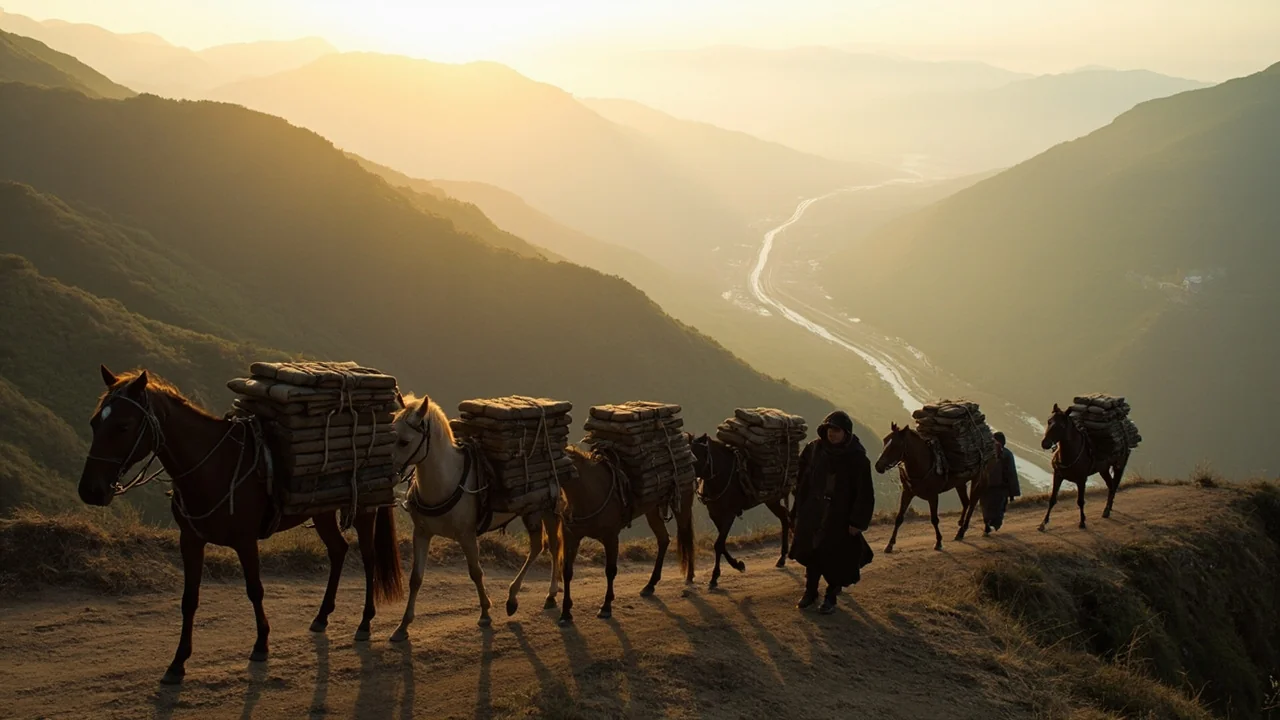
For more than a thousand years, caravans walked this path carrying a peculiar cargo: compressed tea bricks from the lush gardens of Yunnan and Sichuan provinces, destined for the plateau of Tibet, where tea was not a luxury but a necessity — a source of nutrients, warmth, and a compound called caffeine that helped Tibetans survive at altitudes where most outsiders struggled. In exchange, the Chinese received horses — strong, sturdy Mongolian horses that the Song dynasty urgently needed for its cavalry against the northern nomads.
The Tea Horse Road was never a single road. It was a network of trails, branching and reconnecting like the veins of a leaf, spreading across the high plateaus and deep valleys of southwest China. Some routes took months. Many travelers never completed them. But those who did became part of one of the most remarkable systems of long-distance exchange the ancient world ever produced — a system that shaped the cultures of China, Tibet, Nepal, Myanmar, and beyond.
Today, the caravans are gone. But the tea is still growing, the horses are still running, and the trail is being rediscovered by travelers, historians, and tea lovers who want to walk in the footsteps of the ancient muleteers.
Why Tea and Horses Were Worth Dying For
To understand the Tea Horse Road, you first need to understand something counterintuitive: in ancient Tibet, tea was not a drink. It was food.
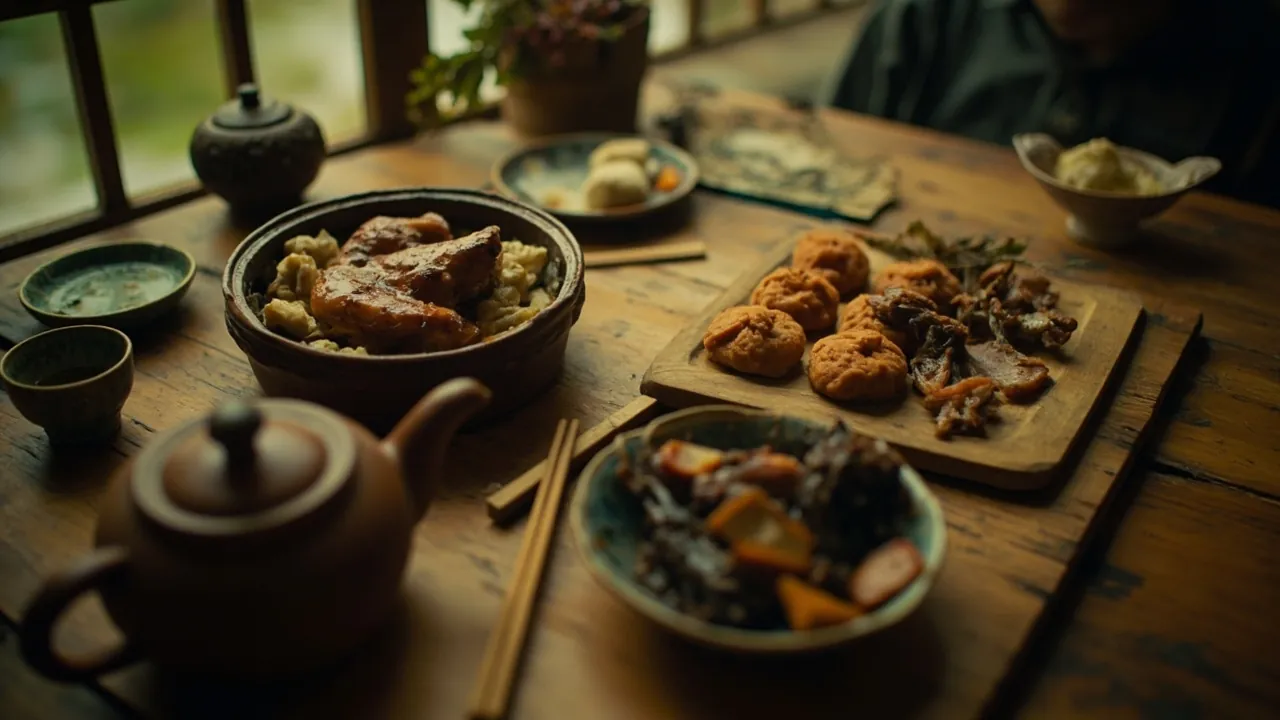
Tibet’s high-altitude climate made agriculture a challenge. Barley was the staple, but it was heavy on carbohydrates and light on the vitamins and minerals that a body needed to function at 12,000 feet above sea level. Tea — specifically the strong, fermented, brick-pressed tea that came from Yunnan and Sichuan — filled the gap. Mixed with yak butter and salt in a traditional Tibetan butter tea, it provided essential nutrients, helped digest the heavy grain, and supplied the caffeine that kept muscles working in thin air.
The Tibetan word for tea, ja, was borrowed directly from Chinese. This alone tells you how central tea was to Tibetan life. The demand was insatiable, and the only supply was in the warm, humid south — hundreds of miles away across the most difficult terrain in Asia.
Meanwhile, in China, the imperial armies had a problem of their own. The Song dynasty (and later dynasties) faced relentless pressure from nomadic peoples to the north — the Khitan, the Jurchen, the Mongols. To fight cavalry, you need cavalry. But the Chinese plains horse was too small and light for military use. The horses that could handle the job — the tall, sturdy, powerful horses bred on the Tibetan plateau — were only available through trade.
So a deal was struck. Chinese tea for Tibetan horses. And the Tea Horse Road was born.
The exchange rate was negotiated with the precision of a commodities market. In the Tang and Song dynasties, one horse could fetch between 40 and 120 pounds of tea, depending on the horse’s quality and the political moment. At various points, the Song government ran dedicated “horse markets” (马市) along the border specifically to manage this trade. It was one of the earliest and most sustained examples of international barter commerce in the world.
The Route: Three Trails Through the Mountains
The Tea Horse Road split into several main branches, each with its own character and challenges.
The Sichuan-Tibet route (川藏线) ran north from Sichuan’s tea-growing regions, pushing through the Hengduan Mountains — a series of parallel mountain ranges separated by deep river gorges. The Dujian River gorge, where the river runs more than a mile below the surrounding plateau, was so deep and treacherous that travelers described it as entering another world. This route was the older of the two main branches, used during the Tang and Song dynasties.
The Yunnan-Tibet route (滇藏线) branched south from Yunnan’s tea gardens, winding through the land of the Naxi, Bai, and Tibetan peoples before climbing toward Lhasa. This was the route that carried pu-erh tea — the dark, fermented, aged tea that Yunnan is still famous for today. The Yunnan-Tibet route became increasingly important during the Ming and Qing dynasties as Yunnan’s tea industry expanded.
A third, shorter route connected Yunnan directly to Myanmar and beyond, carrying tea into Southeast Asian markets. And branches also extended into Sichuan’s eastern neighbor, forming connections with the broader silk road network that stretched westward.
Altogether, the Tea Horse Road network covered more than 2,000 kilometers of difficult terrain. The main Sichuan-Tibet and Yunnan-Tibet routes alone took between three and six months to traverse on foot. Pack horses and mules carried between 60 and 90 pounds of tea each. Caravans could include hundreds of animals and dozens of muleteers — and every single one of them was betting their life on the trail.
The People of the Road
Who walked the Tea Horse Road? The muleteers were typically poor farmers from Sichuan or Yunnan who signed on with a caravan owner for a season’s work. They carried minimal possessions: a sleeping roll, a cooking pot, some grain, and perhaps a small Buddhist prayer wheel or string of prayer beads for the long stretches of solitude. Walking 20 to 30 miles a day at high altitude, they faced landslides, bandits, freezing nights, and river crossings that could sweep away entire caravans.
The caravan owners were another matter — they were merchants, often quite wealthy, who organized the trade and bore the financial risk. Some families had been running caravans for generations, passing down routes, contacts, and knowledge of safe passages like a family inheritance. The caravan owner’s house in Chengdu or Kunming might be quite comfortable, but the owner himself often traveled with the caravan for the most difficult stretches, personally overseeing the most valuable cargo.
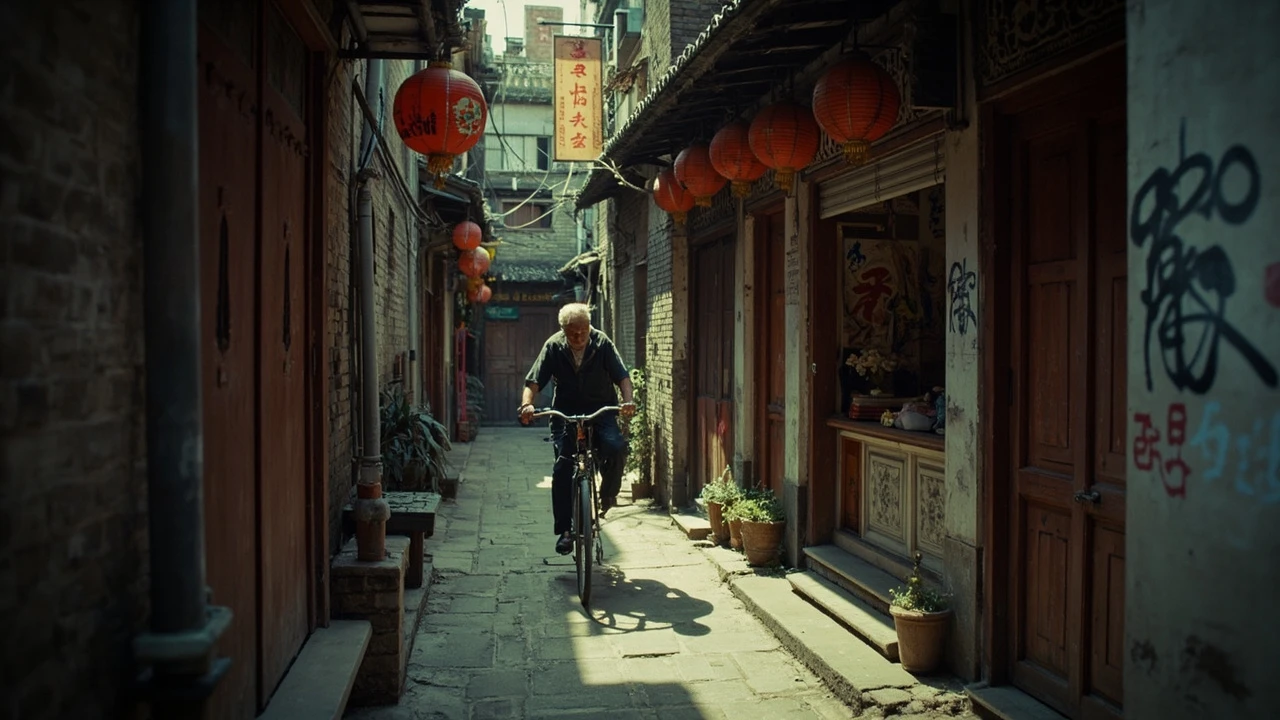
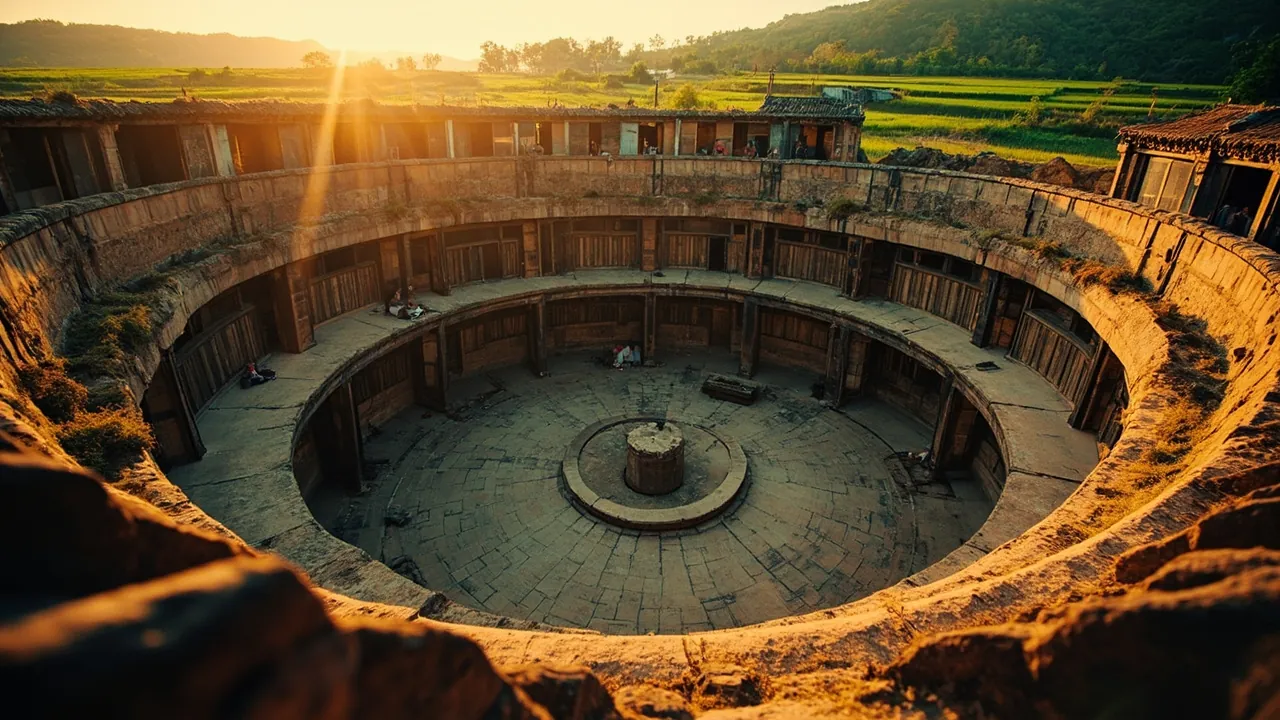
Along the route, travelers stopped at roadside inns called chai-suo (茶所, tea stations) — simple stone buildings where tea could be purchased, horses could be rested, and muleteers could sleep under a roof for the night. These stations were spaced roughly one day’s walk apart, forming a chain of hospitality across the wilderness. Some grew into towns. Others remained nothing more than a building and a well for a thousand years.
Women played important roles in the tea trade that are often overlooked in the standard narratives. In Yunnan, tea-picking was overwhelmingly women’s work. In the border markets, Tibetan women were active traders, bringing horses down from the plateau and returning with tea. The gender dynamics of the trade were complex and varied by ethnic group and region — a reminder that ancient economies were not just men’s worlds.
Tea as Currency: The Tea Brick
One of the most distinctive features of the Tea Horse Road trade was the physical form of the tea itself. This was not loose leaf in a package. This was tea compressed into hard bricks — called 茶砖 (cha zhuan, tea bricks) or 紧茶 (jin cha, compressed tea) — designed for transport on horseback.
The bricks were made by steaming tea leaves, pressing them into molds, and letting them dry into a dense, rock-hard cake. A single brick weighed about 1.5 to 2 pounds and could sustain a Tibetan family for weeks. Because the compression removed most of the air and moisture, the bricks were remarkably durable — they could survive months of rain and rough handling without spoiling. Some ancient tea bricks recovered from Tibetan monasteries are still technically edible (though not recommended).
The bricks were not just practical — they were monetary. In some border markets, tea bricks circulated as a form of currency, accepted in payment for other goods. A tea brick was worth so many grams of silver, so many measures of barley, so many sticks of incense. The tea itself had become a unit of account.
This tradition continues today in some form. Tibetan butter tea is still made with brick tea, though modern logistics mean fresh tea is more available than it once was. And in Yunnan’s tea markets, you can still buy aged pu-erh tea cakes that trace their lineage directly to the ancient caravans. A 50-year-old pu-erh cake can be worth thousands of dollars — a direct descendant of the commodity that once bought a warhorse.
The Decline and Rediscovery
The Tea Horse Road began to decline in the early 20th century, squeezed between multiple forces.
The opening of the Burma Road (a modern highway linking Sichuan to Myanmar) in 1938 gave caravans a faster, safer alternative. The establishment of the People’s Republic of China in 1949 brought state-controlled trade and modern transportation, eliminating the economic basis for the caravan trade. The construction of the Sichuan-Tibet Highway (built in the 1950s and requiring the deaths of an estimated 4,000 workers) finally opened the plateau to trucks and buses.
By the 1970s, the Tea Horse Road had essentially ceased to function as a trade route. The last of the old muleteers were aging out. The caravans had given way to vehicles. The ancient paths were overgrown or paved over.
But the Tea Horse Road refused to disappear entirely. In the 1990s, historians and cultural preservationists began to research and document the route. In 1990, Chinese and international scholars organized the first modern expedition along the ancient trail. In 2013, the Chinese government designated the Tea Horse Road as a UNESCO World Heritage candidate, and parts of the route have been developed as cultural tourism destinations.
Today, you can walk sections of the old trail as a tourist. The old chai-suo buildings are being restored. Tea houses along the route serve travelers the same tea that the ancient caravans carried. In the tea markets of Yunnan, vendors still sell aged pu-erh cakes with the same ancient presses their great-grandfathers used.
What Americans Should Know About the Tea Horse Road
Here is what is remarkable about the Tea Horse Road for an American audience: it is essentially the same story as the Oregon Trail, the Santa Fe Trail, and the other great American trade routes — but older, longer, and with worse terrain.
Americans understand the romance of the overland caravan. We have movies about wagon trains, novels about mountain men, songs about the cattle drive. We have a cultural intuition for what it means to load up your goods, face an uncertain wilderness, and walk toward a distant market.
The Tea Horse Road had all of that — plus the element of genuine cultural exchange across a profound civilizational divide. American wagon trains were mostly carrying American goods to American markets. The Tea Horse Road was connecting two completely different civilizations, each with their own language, religion, cuisine, and way of life, and allowing them to do business. The tea caravans were, in the most literal sense, bridges between worlds.
And the legacy is not just historical. The tea you drink today — particularly if you are a pu-erh enthusiast — is part of a continuous tradition stretching back over a thousand years. The Yunnan tea farmers who still grow pu-erh in the same region are producing tea that is, in a meaningful sense, the direct descendant of the tea that crossed the mountains to fuel Tibetan civilization. That is not metaphor. That is a supply chain.
If you want to connect with this history at home, start with the tea itself. A good aged pu-erh from Yunnan is unlike anything most Americans have tasted — earthy, complex, slightly musty in the way of aged things, with a sweetness that emerges after years of fermentation. It is the flavor of the Tea Horse Road in a cup.
Practical Tips: Exploring the Tea Horse Road Today
If you are planning to explore the Tea Horse Road route, here are some practical notes.
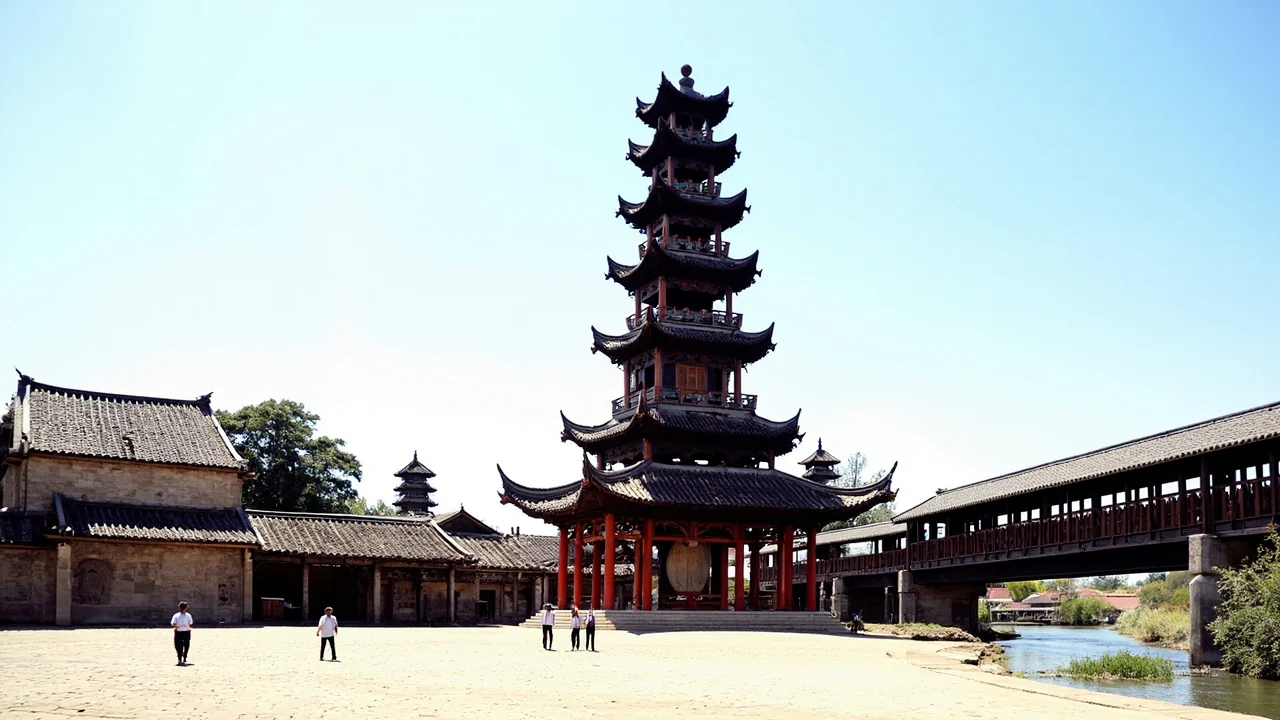
The best time to walk or bike the accessible sections is between April and October, when the mountain passes are clear. The most popular trekking sections are in Yunnan, particularly around Dali and Shaxi, where old towns on the route have been preserved. The Shaxi Old Town in Yunnan was a major chai-suo (tea station) and retains much of its historic character.
For tea enthusiasts, the tea markets in Pu’er City, Yunnan, are a must-visit. This is where pu-erh is grown, processed, traded, and aged. You can tour tea gardens, see the traditional presses, and purchase tea directly from producers. A trip to Pu’er City gives you the origin story of the Tea Horse Road in a single afternoon.
In Sichuan, the old route through the Hengduan Mountains is more challenging but dramatically beautiful. Roadside towns along the old Sichuan-Tibet Highway still serve butter tea and maintain the tradition of the chai-suo, even if the caravans are long gone.
Related Products
If you want to bring the Tea Horse Road into your home, here are some recommendations:
Pu-erh Tea Cake — The most direct connection to the ancient trade. A 357-gram pu-erh cake from Yunnan is the same format that was loaded onto horses a thousand years ago. Aged pu-erh develops the complex, earthy flavor that made Tibetan tea traders willing to cross mountains for it.
Yunnan Tea Collection — For those wanting to explore the range of Yunnan teas beyond pu-erh, a curated collection lets you compare the different tea types that grew along the old routes.
Traditional Tibetan Tea Cup — Tibetan tea cups are typically wooden, sometimes carved with Buddhist symbols. Using one to drink your own pu-erh is a small act of cultural connection across centuries.
The Silk Road and Its Routes (scholarly) — For understanding the Tea Horse Road in the context of the broader ancient trade network, a good silk road history provides the comparative framework.
Chinese Tea Ceremony Set — The tea culture of the Tea Horse Road is part of a continuum with the broader Chinese tea tradition. A simple gongfu tea set lets you prepare pu-erh in the traditional style.
Conclusion
The Tea Horse Road is one of history’s great underdog stories — a network of paths carved through impossible terrain by people who needed something from the other side of the mountain. They got up every morning, loaded their mules, and walked into the unknown. What they built was not just a trade route but a bridge between civilizations, a thousand-year conversation conducted in tea and horses.
We live in an age of instant delivery and global logistics. It is worth pausing, occasionally, to remember that for most of human history, getting something from one place to another required someone to physically carry it — or walk beside it — through whatever stood in the way. The Tea Horse Road is a monument to that effort, and to the remarkable things that become possible when people decide that what is on the other side of the mountain is worth getting to.
The tea is still there. The mountains are still there. The path is still there, if you know where to look.