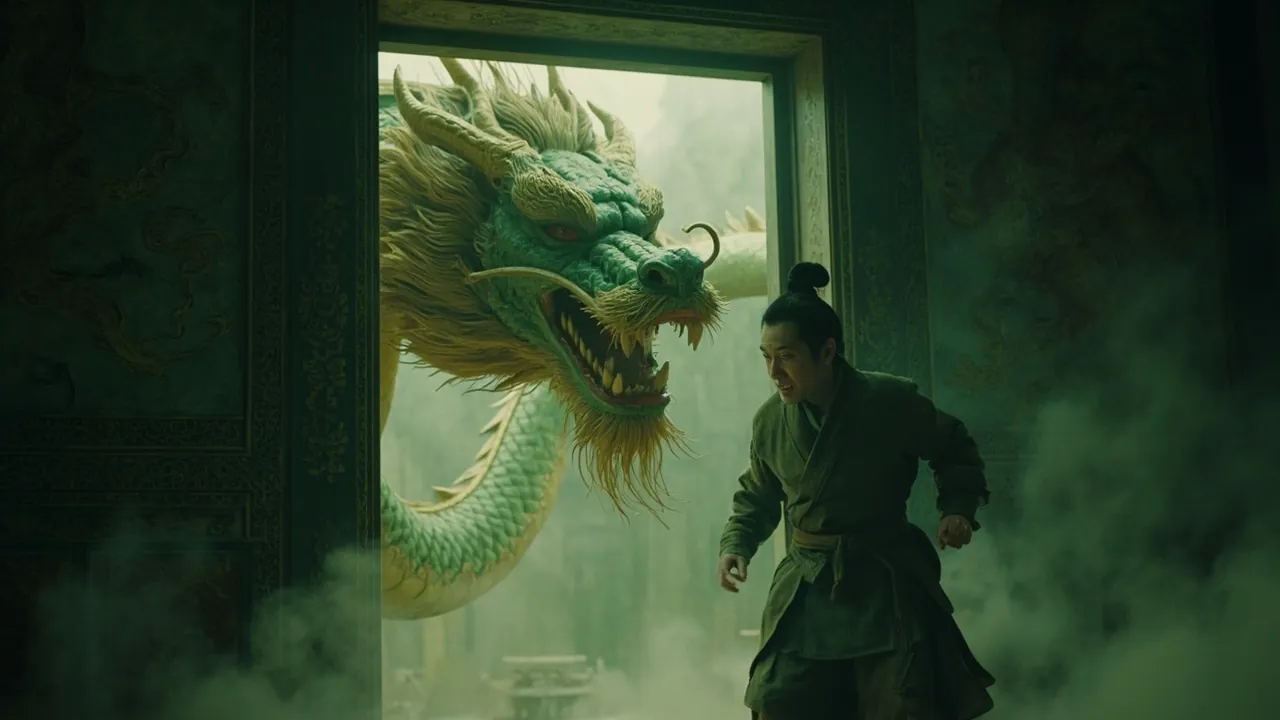
After the fall of every empire, there comes a moment when someone has to decide what comes next. The Qin Dynasty had been the first unified empire in Chinese history, and it had been destroyed by its own cruelty — a regime so obsessed with control that it crushed its people under the weight of endless laws, brutal punishments, and massive public works projects that killed hundreds of thousands. When Liu Bang’s forces entered the capital city of Xianyang in 206 BCE, he faced a blank slate. He could have ruled as the Qin emperors had, through fear and force. Instead, he did something that no conqueror had done before: he promised to govern with just three simple laws.
That promise became the idiom 约法三章 — “agreeing on three laws” — and it established a template for just governance that Chinese rulers have been measured against for more than two thousand years. To understand why this moment matters so much, you need to understand the context: what the Qin had done, what the people had suffered, and why something as simple as three laws felt like a revolution.
The Legacy of Qin’s Cruelty
The Qin Dynasty lasted only fifteen years, but it reshaped China permanently. Emperor Qin Shi Huang unified the country for the first time, standardized weights and measures, built roads and canals, and created a centralized bureaucracy that would define Chinese governance for centuries. These were genuine achievements. But the cost was staggering.
Qin law was notoriously harsh. The Legalist philosophy that guided Qin governance believed that human beings needed to be controlled through strict laws and severe punishments — that virtue and moral instruction were weaknesses compared to the power of deterrence. Minor crimes were punished with mutilation. Speaking against the emperor was a capital offense. The famous burning of books in 213 BCE was an attempt to silence intellectual dissent and consolidate control over historical memory.
The people of Xianyang had lived under this regime for decades. They had watched their neighbors arrested for minor infractions. They had seen the public executions. They had labored on the massive construction projects — the Great Wall, the emperor’s mausoleum with its terracotta army, the roads connecting the empire — and they had buried friends and family who did not survive the work. When Liu Bang entered the city, he found a population that was not merely tired of war but actively traumatized by the government that had preceded it.
The contrast with Liu Bang’s approach could not have been more stark.
The Entry into Xianyang
Liu Bang had led his forces into Xianyang ahead of Xiang Yu’s army, which was still approaching from the east. The Han forces met little resistance — the Qin court had effectively collapsed under the weight of its own tyranny, with the emperor surrendering power to his son just months earlier. When Liu Bang’s soldiers rode through the gates of the capital, they found a city that did not know what to expect from its new rulers.
The old playbook for conquering armies was well established: loot the treasury, seize valuable goods, impose harsh martial law, and extract whatever wealth you could before moving on. Liu Bang did the opposite. He ordered his troops to stand down. He prohibited them from harming the local population. He sealed the treasury and palace warehouses, posting guards to protect them rather than looting them.
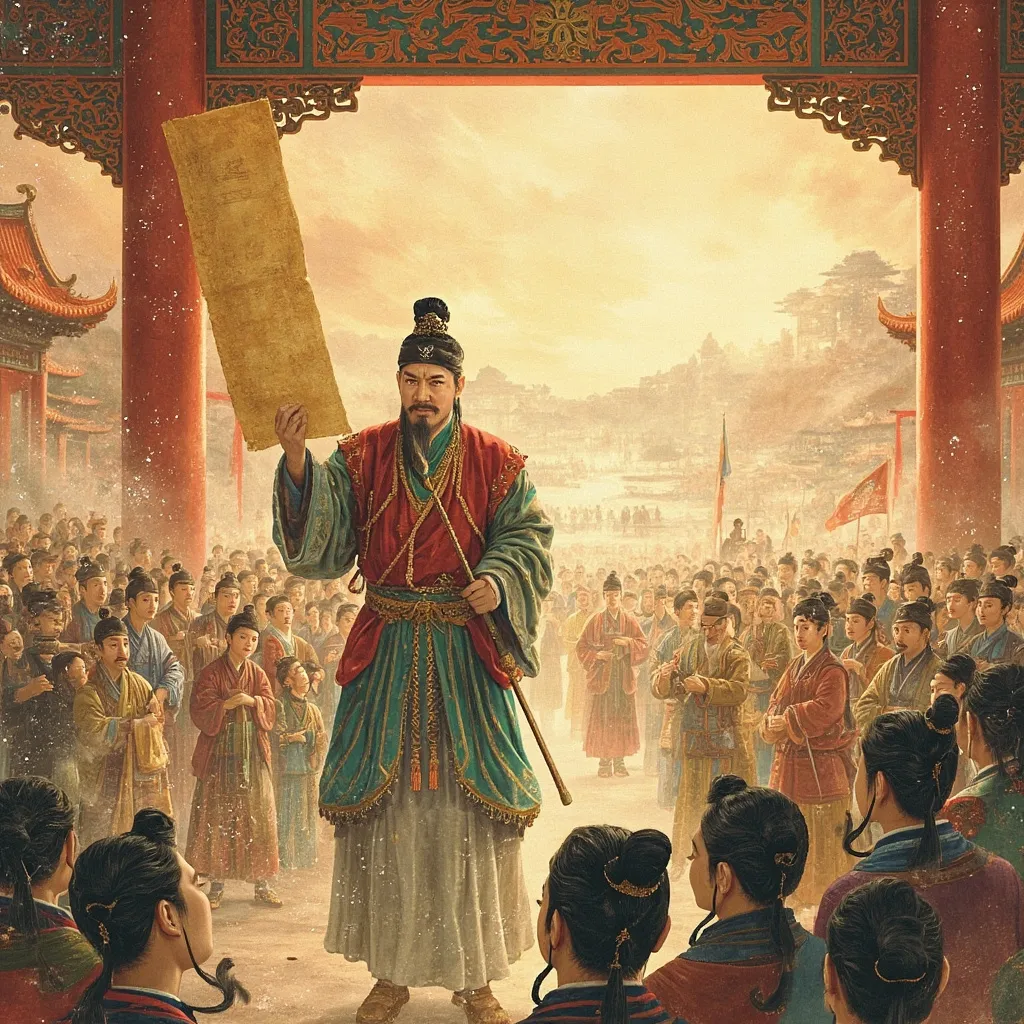
Then he went to the marketplace of Xianyang and did something that no Qin official had ever done: he sat down with the local elders and asked them what they wanted. What laws were they tired of? What punishments did they consider too cruel? What would make them feel safe under new management?
Their answers formed the basis of 约法三章.
The Three Laws
The exact wording of the three laws has varied slightly across historical accounts, but the substance is consistent. Liu Bang proclaimed:
First — 杀人者死 — anyone who kills another person will be put to death. Second — 伤人抵罪 — anyone who injures another person will be punished proportionally to the injury. Third — 盗系贼罪 — anyone who steals will be punished accordingly.
That was it. Three laws. No elaborate criminal codes. No list of dozens of specific offenses with specific punishments. No mention of political crimes like speaking against the emperor, because Liu Bang was not interested in controlling speech — he was interested in controlling the most basic forms of harm that people actually feared.
The people of Xianyang were stunned. For generations, they had lived under regimes that punished them for the smallest infractions, that carved words into their faces, that made them work to exhaustion on public projects. Now a conquering general had walked into their city and promised them something almost impossibly simple: if you do not kill, injure, or steal, nothing bad will happen to you.
Word spread quickly. The announcement was displayed prominently in the city. People gathered to read it, to discuss it, to make sure they understood correctly. Was this a trick? Was this a temporary measure that would be reversed once the Han forces had consolidated power? The skepticism was understandable — trust in government had been thoroughly destroyed by the Qin, and it would take time to rebuild.
But the immediate result was exactly what Liu Bang intended: the people of Xianyang felt safe. They had lived in fear for so long that safety itself felt like a gift. And they began to associate Liu Bang’s name with the absence of terror.
Why This Was Revolutionary
You have to understand how unusual this was for ancient China. The dominant political philosophy of the era, Legalism, held that human beings were naturally disorderly and needed to be controlled through law — specifically, harsh law that made the consequences of disobedience so terrible that people would think twice before breaking the rules. The Qin had taken this philosophy to its logical extreme, and the result was a population that was controlled but not loyal, afraid but not content.
Liu Bang’s three laws represented something different. They were not about control — they were about establishing a baseline of acceptable behavior beyond which the government would not intrude. They assumed that most people were not criminals and did not need to be watched constantly. They promised that the state’s primary interest was protecting people from each other, not monitoring their thoughts or punishing their words.
This approach would eventually evolve into the broader Confucian model of governance that dominated Chinese political thought for the next two millennia — a model that emphasized moral example from rulers, the importance of popular consent, and the idea that government existed to serve the people rather than the other way around. Liu Bang did not consciously set out to create this philosophy; he was responding to the immediate political situation, trying to win support in Xianyang before Xiang Yu arrived. But his instinctive generosity planted a seed that would grow into something much larger.
The historian Sima Qian, writing in the 1st century BCE, recorded Liu Bang’s meeting with the Xianyang elders and noted that the people celebrated the three laws with music and dancing — 弹冠相庆, literally “dusting off their caps to celebrate.” This phrase itself became an idiom in Chinese, used to describe the joy of people who see a new opportunity after a long period of hardship.
The Political Genius of Simplicity
There is a lesson here that extends well beyond ancient China: sometimes the most powerful political act is the promise to leave people alone.
Liu Bang understood something that many rulers have failed to grasp throughout history: the gap between what a government can demand and what it actually needs from its people. The Qin had tried to mobilize every resource, monitor every thought, and punish every deviation — and the result was a revolution born of desperation. Liu Bang asked for almost nothing, and in return, he got something the Qin never had: genuine popular support.
This does not mean that Liu Bang was a saint or that the Han Dynasty that emerged from the Chu-Han conflict was a utopia. The early Han still had serfdom, still had inequality, still had rulers who abused their power. But the baseline established at Xianyang — the idea that governance should be simple, proportional, and focused on protecting people rather than controlling them — created a standard against which later rulers were judged. Emperors who followed the spirit of 约法三章 were remembered fondly. Those who abandoned it and returned to Qin’s style of brutal control were remembered as tyrants.
The Broader Legacy
约法三章 has become one of the most recognizable idioms in Chinese, used to describe any situation where someone establishes simple, clear rules upfront to build trust or cooperation. A business partnership might operate on 约法三章 — three basic agreements that govern the relationship. A new manager might announce 约法三章 on their first day — three core principles that will guide their decisions.
The phrase carries a positive connotation that surprises some learners of Chinese. In Western political philosophy, the idea of a ruler making promises upon taking power is often treated skeptically — promises are made to be broken, and the test of a ruler is not their initial declarations but their subsequent actions. In the Chinese tradition, however, 约法三章 carries real weight precisely because Liu Bang actually followed through. His early Han Dynasty did govern with relative gentleness, especially compared to the Qin. The three laws became a founding myth of the Han — proof that power could be exercised with restraint.
The Han Dynasty that Liu Bang founded lasted more than four centuries, making it one of the longest-lasting dynasties in Chinese history. It solidified the idea of a unified Chinese state, expanded the empire’s borders, and established cultural and political traditions that persist to this day. The dynasty’s name — Han — became the word that non-Chinese people used to describe Chinese people and culture. And it all began with three simple laws promised to a traumatized city in the aftermath of empire.
What We Can Learn From This Story
The story of 约法三章 offers a particular kind of insight — the kind that comes from watching something small and simple have an outsized impact. Liu Bang did not have a sophisticated political philosophy. He did not write treatises on governance or hold symposiums to debate the nature of justice. He had a conversation with some elders, heard what they feared most, and promised to address it. The gesture was almost absurdly modest.
And yet it changed everything.
The lesson is not that simple governance is easy — it is not — but that the relationship between a government and its people is built on something more basic than laws and institutions. It is built on whether people feel safe. Whether they feel seen. Whether they believe that the people in power have any understanding of what daily life is actually like for those beneath them.
Liu Bang came from a humble background himself. He had worked as a minor official, had experienced the gap between rulers and ruled, and when he walked into Xianyang, he did not see subjects to be managed. He saw people who had suffered and who needed a reason to believe that the future would be different from the past.
Three laws. That was his answer. And two thousand years later, we are still talking about them.
Recommended Reading & Products
Interested in exploring the Han Dynasty’s founding and the philosophy of simple governance further? Here are some resources to deepen your understanding of this pivotal period:
Records of the Grand Historian by Sima Qian — The foundational history of early China, written by the great historian Sima Qian in the 1st century BCE. Contains detailed accounts of Liu Bang’s rise to power, his entry into Xianyang, and the establishment of the three laws. Essential reading for anyone serious about Chinese history.
The Han Dynasty: A Very Short Introduction — A concise and accessible overview of the Han Dynasty, its achievements, its challenges, and its lasting legacy. Places Liu Bang’s three laws in context of the broader Han approach to governance, which drew on Confucian ideals while maintaining practical Legalist tools.
Chinese Calligraphy Brush Set for Beginners — The three laws that Liu Bang announced would have been written in formal calligraphy and posted publicly throughout Xianyang. This premium brush set lets you practice the art of Chinese calligraphy that preserved these historical moments for future generations.
The Early Chinese Empires: From Qin to Han — Part of the Penguin History of Ancient China series, this book examines the transition from Qin to Han rule in detail, including the governance philosophies that shaped both dynasties and the lasting impact of the three laws on Chinese political culture.
Traditional Han Dynasty-Style Robe — The early Han period saw the development of distinctive styles of dress that distinguished Han officials from their Qin predecessors. This traditional robe captures the aesthetic of the era when Liu Bang and his generals were building a new kind of empire.