There is a kind of person that every leader hopes to find: the genuinely extraordinary mind, the strategic genius who can see solutions that no one else can see, the kind of talent that transforms an entire operation from ordinary to exceptional. Most leaders know intellectually that such people exist. Far fewer actually go out and find them. And of those who recognize the need, fewer still are willing to do what it takes to recruit such a person once they’ve been identified. The gap between knowing you need help and actually securing it is where most ambitions quietly die.
Liu Bei was not most leaders. He had his weaknesses — he was not a sophisticated strategist, not a natural administrator, not a man whose intellectual gifts gave him any particular advantage over his rivals. But he had one quality that more than compensated for these limitations: an absolute commitment to finding and cultivating genuine talent, combined with a willingness to humble himself completely in the pursuit of it. He would not let social convention, practical inconvenience, or repeated rejection stand between him and the advisor he needed.
The story of how Liu Bei recruited Zhuge Liang — the three visits to a humble thatched hut in the countryside — became one of the most celebrated examples of respect for talent in all of Chinese history. The phrase that emerged from this episode has been used for nearly two thousand years to describe the kind of sincere, persistent effort that extraordinary goals require.
三顾茅庐 (sān gù máo lú). Three visits to the thatched hut. A journey made three times to the same humble place. The effort to seek out and secure exceptional ability through patient, respectful persistence.
The Desperate Warlord
To understand why Liu Bei’s visits were so remarkable, you have to understand the situation he was in during the years before he finally met Zhuge Liang.
The early third century CE was one of the most chaotic periods in Chinese history. The Han Dynasty had been crumbling for decades, and the imperial court had become a battleground for competing factions of eunuchs, officials, and military commanders who were essentially running the empire for their own benefit. The emperor was a puppet; the real power belonged to whoever controlled the capital and the armies that surrounded it. In this environment, ambitious men built followings, gathered armies, and competed for territorial control in a endless series of conflicts that killed hundreds of thousands and left vast regions of China depopulated and devastated.
Liu Bei had been fighting for survival in this environment for decades. He claimed descent from the imperial clan — a lineage that gave him some legitimacy in a world where bloodlines still mattered — but he had none of the natural advantages that his rivals enjoyed. He was not from a wealthy family. He had no independent military base. He had no powerful patron at court. What he had instead was an unusual ability to inspire loyalty in the people around him, a quality that manifested in the genuine affection his followers showed for him even in the most desperate circumstances.
By the time he was in his forties, Liu Bei had been defeated more times than he could count. He had served as a minor official, been driven out of one territory after another, watched his armies destroyed and his allies scattered. He had spent years as a refugee, moving from warlord to warlord seeking protection and a chance to rebuild. He was tired, frustrated, and acutely aware that his military problems were fundamentally a problem of insufficient strategic sophistication. He had brave soldiers and loyal friends, but he lacked the kind of mind that could see the overall picture clearly enough to design a path toward genuine success.
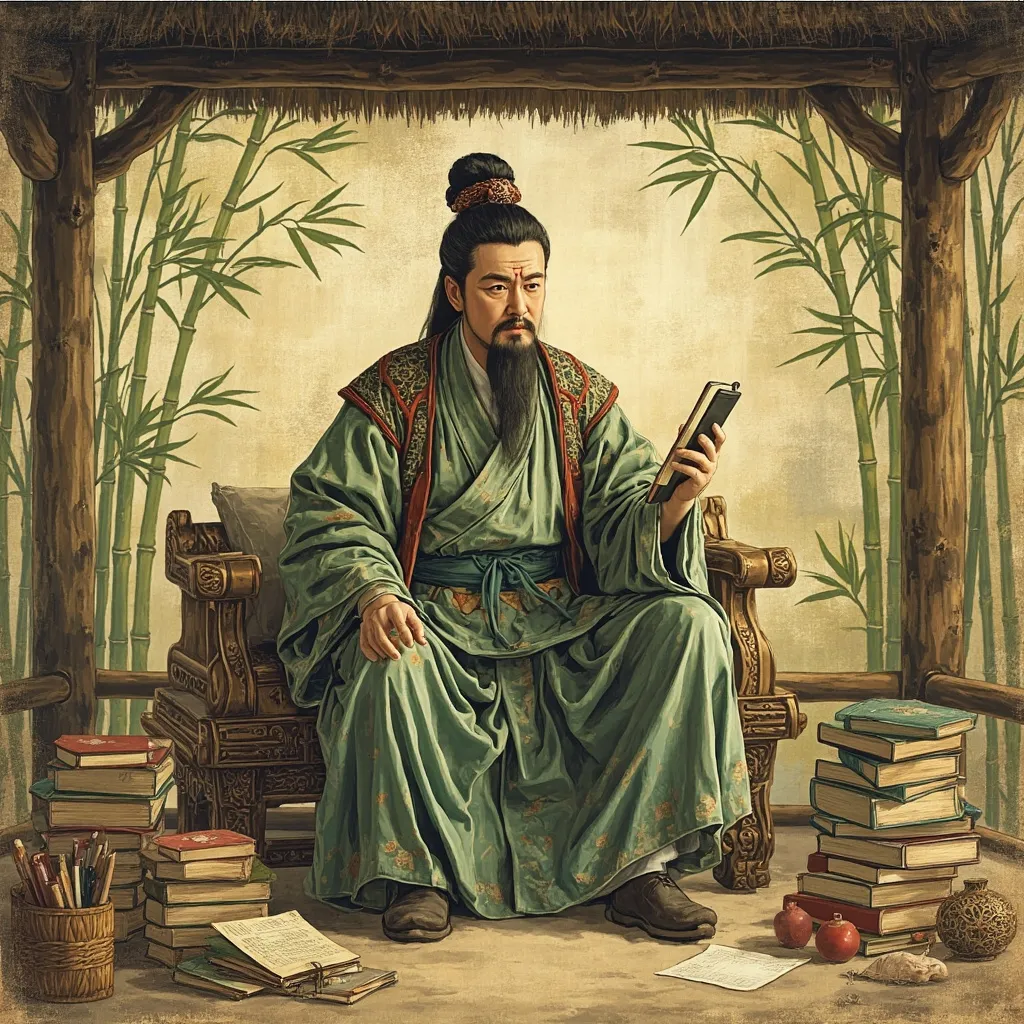
His advisor Xu Shu had been helpful, but even Xu Shu recognized that he was not the level of strategist that Liu Bei really needed. It was Xu Shu who first mentioned the name that would change everything: Zhuge Liang, a young man living in relative seclusion in the countryside of Jing Province, widely regarded by those who knew him as a mind of extraordinary capability. “If Your Highness wishes to see a true dragon,” Xu Shu reportedly said, “you should visit the Sleeping Dragon of Longzhong.”
The First Journey
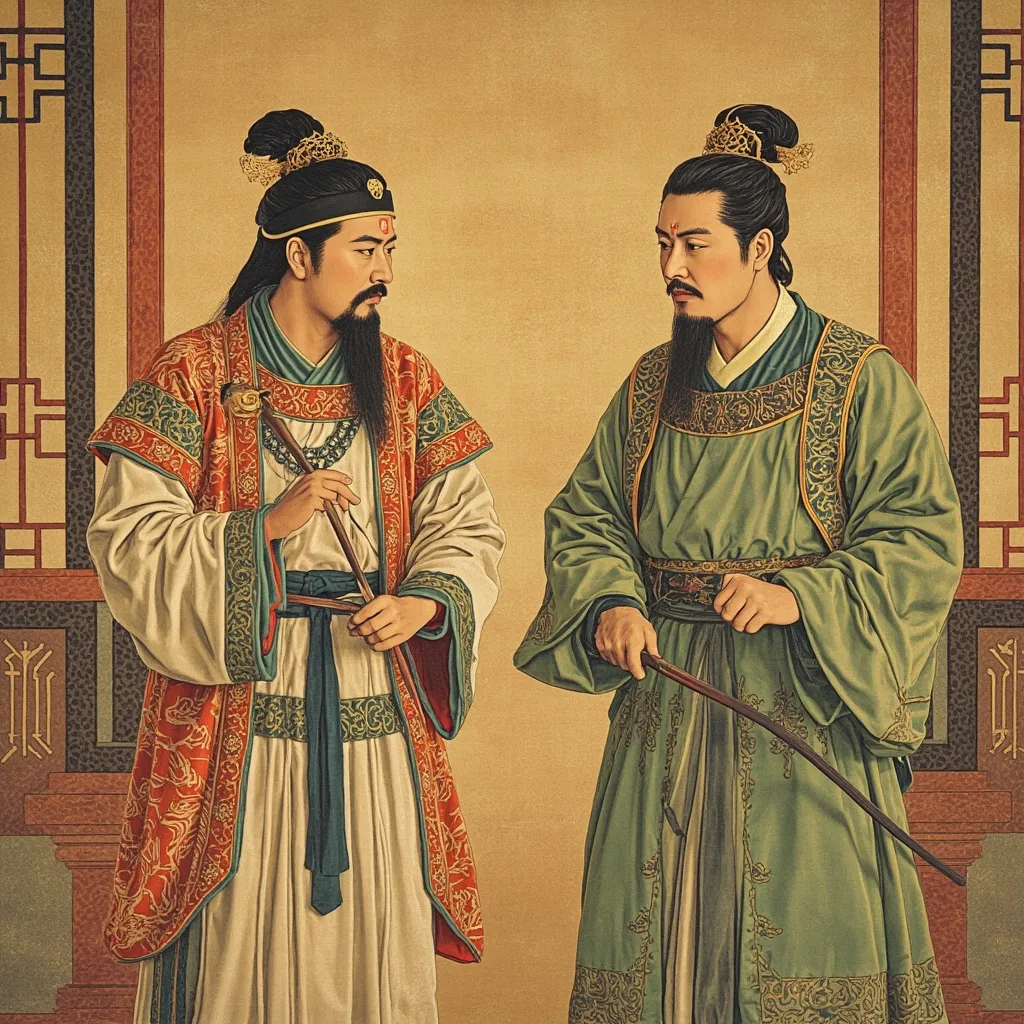
Liu Bei took Xu Shu’s recommendation seriously — more seriously than most busy warlords would have. He gathered his things and set out for the rural area where Zhuge Liang lived, accompanied only by his two sworn brothers, the fearsome warriors Guan Yu and Zhang Fei. The journey was not trivial: it required traveling away from Liu Bei’s base, through territory that was at best uncertain, to a village that was essentially in the middle of nowhere.
When they arrived at Zhuge Liang’s hut, they found the door closed. Zhuge Liang was not at home — some accounts say he was out tending to his farm, others that he was visiting a friend in another village. The details vary, but the basic shape is consistent: Liu Bei arrived, found no one to speak with, and was forced to leave without accomplishing his purpose.
Zhang Fei, the famously hot-tempered warrior, was irritated by this anticlimactic outcome. He suggested that Liu Bei simply send soldiers to drag the reclusive scholar back to their camp. Why should his lord, a man fighting for control of the empire, humiliate himself by traveling to a remote village only to find nobody home? The suggestion was reasonable from Zhang Fei’s perspective, but Liu Bei rejected it firmly. If they wanted to recruit a genuine genius, they would have to approach him with the respect such a person deserved. Coercion would not work, and even if it did, it would produce an advisor whose heart wasn’t in the effort.
Liu Bei left a message expressing his desire to meet and discuss the future of the empire. Then he departed, with no guarantee that his efforts would be rewarded.
The Second Attempt
Liu Bei returned to Zhuge Liang’s hut after a certain interval — the sources differ on exactly how much time passed, but it was probably a matter of weeks rather than days. The journey was the same: difficult, inconvenient, requiring the warlord to leave his responsibilities and travel through uncertain territory to a destination that offered no guarantees.
This time, Liu Bei was informed that Zhuge Liang was at home. But when he approached the hut and attempted to enter, he found that Zhuge Liang was asleep. Not the peaceful sleep of a well-rested man, but apparently the deep, unresponsive sleep of someone who would not be easily awakened. Liu Bei faced a choice: he could wake the young scholar and insist on an immediate audience, demonstrating his authority and making clear that his time was valuable. Or he could do something far more unusual.
He sat down and waited.
The image of Liu Bei sitting quietly in Zhuge Liang’s humble room while the young scholar slept has become one of the most celebrated scenes in Chinese cultural memory. Here was a man who commanded armies, who had fought in dozens of battles, who carried the blood of imperial ancestors in his veins — sitting in a peasant’s hut like a supplicant, demonstrating through his patience that he understood something profound about what he was seeking. He was not just looking for a strategist. He was looking for the right strategist, the person whose mind operated at a level that ordinary recruitment methods could never reach. And such people could not be rushed, could not be pressured, could not be convinced through ordinary means. They had to be shown that the person seeking them understood what they actually were.
Zhang Fei, predictably, was furious at this indignity. His brother was sitting in a hut, waiting for a peasant to wake up, when there were armies to command and battles to fight. The absurdity of the situation offended his sense of proper hierarchy. But Liu Bei again refused to be moved. He would wait, and he would do so willingly, because the potential value of what he might gain by this patience was worth any amount of present inconvenience.
When Zhuge Liang finally woke and the two men spoke, the conversation did not produce the results Liu Bei had hoped for. Zhuge Liang, apparently not yet convinced that this particular warlord was worth his services, gave him some general advice and then let him leave. Some accounts suggest that Zhuge Liang was testing Liu Bei’s sincerity, measuring whether his reported respect for talent was genuine or merely strategic posturing. Others suggest that Zhuge Liang simply needed more time to consider the offer. Whatever the reason, Liu Bei departed without having secured his prize.
The Third Visit: Persistence Rewarded
Most people would have given up at this point. Two journeys, two failures, a clear indication that the person being sought was not particularly interested — these would have been enough to convince any sensible leader to move on to other options. Liu Bei was not a sensible leader in the way that term is usually understood. He was something rarer: a man whose goals were large enough to require methods that sensible leaders would never employ.
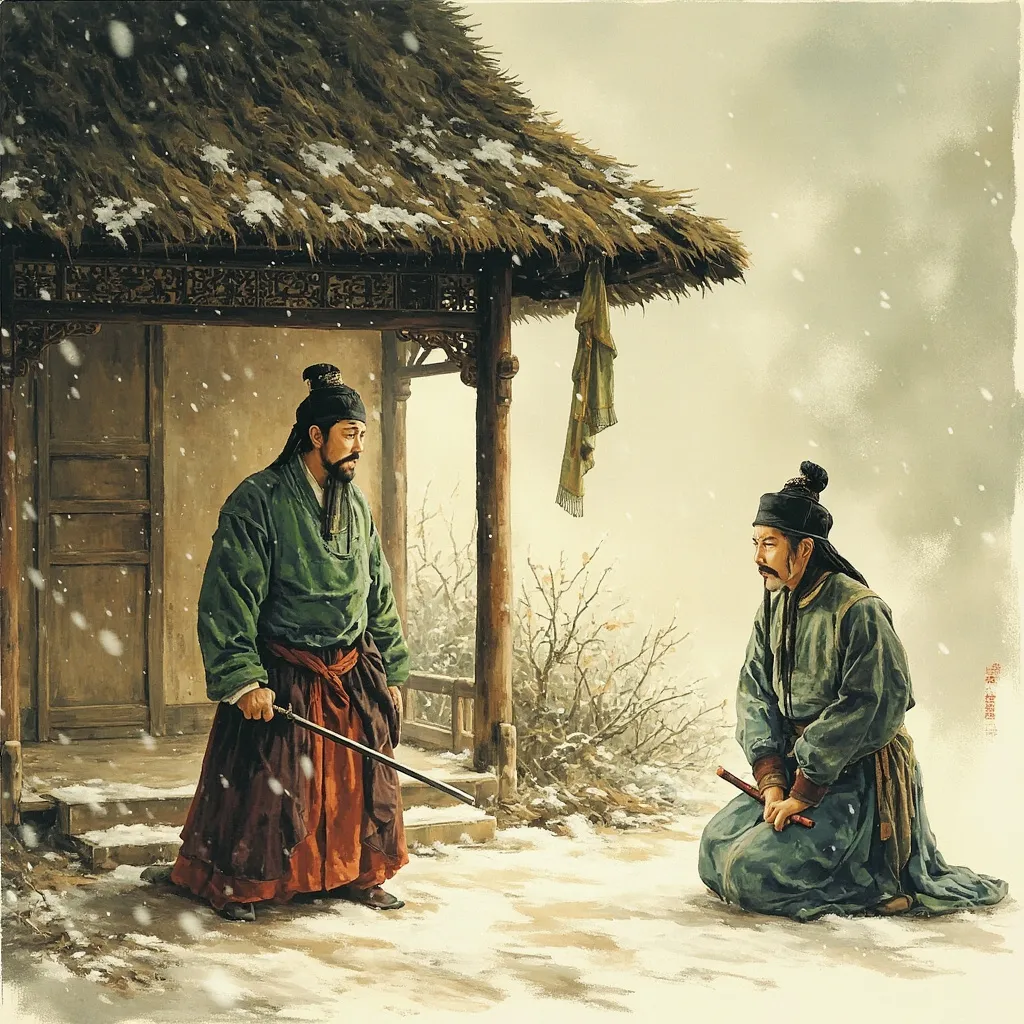
He returned a third time. The journey was made in winter, when the roads were at their worst and the weather was cold enough to make outdoor travel genuinely uncomfortable. Snow had fallen in the region, making the mountain paths treacherous and the journey significantly more difficult than it had been in previous seasons. Liu Bei made this journey anyway, understanding on some level that the difficulty of the path was part of the message he was sending.
This time, when Liu Bei arrived at the hut, Zhuge Liang was awake and, apparently, prepared to have a serious conversation. What happened next has been described and analyzed for nearly two thousand years, but the essential shape of it is clear enough. Liu Bei laid out his situation honestly: he was fighting for survival, he recognized that his current capabilities were insufficient for his ambitions, and he believed that Zhuge Liang was the person who could make the difference between failure and success. He was not offering wealth or status — he had little of either to give. He was offering something more valuable to a man like Zhuge Liang: a blank canvas, an opportunity to test ideas against reality, a context in which genuine strategic thinking could produce concrete results.
Zhuge Liang accepted.
The famous dialogue that followed — often called the “Longzhong对话” or the “Longzhong Plan” — laid out Zhuge Liang’s comprehensive analysis of the political and military situation of the age. He described the strengths and weaknesses of the major warlords, identified the geographic and economic factors that would shape the coming conflicts, and laid out a strategic vision for how Liu Bei could establish a sustainable kingdom that would eventually challenge the dominant powers of his time. It was a remarkable document: analytical, comprehensive, and demonstrating a quality of strategic thinking that Liu Bei had never encountered before.
From that moment forward, everything changed. Liu Bei had found the advisor he needed, and Zhuge Liang had found the platform he had been waiting for. The alliance that resulted would reshape the political map of China, establishing the Shu kingdom as a major power and producing some of the most celebrated military campaigns in Chinese history.
What 三顾茅庐 Teaches About Respect and Persistence
The phrase 三顾茅庐 entered the Chinese language as a direct reference to Liu Bei’s three visits, and its meaning has never strayed far from that origin. It describes the kind of sincere, persistent effort that extraordinary achievements require — the willingness to make the same journey multiple times when the stakes are high enough to justify the inconvenience.
The idiom is used in contexts that range from business negotiations to personal relationships, but its core meaning is always about demonstrating respect through effort. When someone says they “三顾茅庐” to recruit a key employee, they are saying that they understood what that employee was worth and were willing to demonstrate their respect through actions rather than merely words. The visits themselves are the message: I know you are extraordinary, and I am willing to humble myself to secure your services because I understand that ordinary methods would be inadequate for extraordinary circumstances.
This lesson is harder to apply than it sounds. Most people recognize talent that is already widely acknowledged — credentials, track records, visible accomplishments. Far fewer can identify extraordinary potential in someone who hasn’t yet had the chance to prove themselves. And even those who can spot such potential rarely want to make the sustained effort that recruiting it requires.
Liu Bei’s example shows what genuine recognition actually looks like. He didn’t just add Zhuge Liang to his roster. He restructured his entire approach to leadership around the understanding that the right advisor could transform everything, and he demonstrated that conviction through the simple act of making the journey three times, physical evidence of how seriously he took what he was seeking.
The Transformation That Followed
The results of Liu Bei’s persistence are well documented. Within years of recruiting Zhuge Liang, Liu Bei’s fortunes transformed dramatically. He established a territorial base that he had never previously achieved. He built alliances that significantly improved his strategic position relative to his rivals. He won battles that he had previously been losing consistently. The transformation was not coincidental — it was the predictable result of finally having the right strategic mind in place to guide decisions that had previously been made without adequate analysis.
Zhuge Liang, for his part, found in Liu Bei the opportunity he had been cultivating through years of isolated study. He had been preparing his mind for precisely this kind of challenge, developing frameworks and analytical approaches that he had never had the opportunity to test against real-world complexity. Liu Bei gave him that opportunity, and the results spoke for themselves. Within a relatively short period, Zhuge Liang had gone from anonymous rural scholar to the most influential military and political figure in one of China’s three major kingdoms.
The lesson is not simply that persistence pays off — though it does, when directed at worthy goals. The deeper lesson is about the nature of extraordinary talent and what it requires to be activated. Zhuge Liang was brilliant, but his brilliance would have remained theoretical without Liu Bei’s willingness to create the conditions in which it could be expressed. The talent was necessary but not sufficient; the context had to be created as well, and creating that context required exactly the kind of humble, sustained effort that Liu Bei demonstrated through his three visits.
The Lasting Impact on Chinese Culture
The story of 三顾茅庐 has been retold countless times over the centuries, and its influence extends far beyond the original historical context. It shaped how Chinese culture thinks about leadership, talent recruitment, and the relationship between genuine ability and the people who recognize and activate it.
The phrase comes up in contexts as varied as corporate recruiting and personal relationships, but its emotional core stays the same: a leader humbling himself before a genius, demonstrating through patience that he understands what he is seeking. Recruiting extraordinary talent is itself an extraordinary act. You cannot post a job listing and wait for the right person to apply. You have to go to them, show through repeated effort that your context is worth leaving. Words are cheap; only actions prove genuine respect.
The next time you need something that requires another person’s genuine commitment, remember Liu Bei in the thatched hut.