Imagine a civilization that has held together for over five thousand years. Through wars, invasions, revolutions, and massive social changes, something has kept Chinese society from falling apart. What is that something? Many answers are possible, but I’d argue that one of the most important is a shared set of values — a moral framework that has been taught to children, celebrated in stories, and practiced in daily life for millennia.
These are the traditional Chinese virtues, and they’re more than just abstract philosophical concepts. They’re practical guidelines for how to be a good person, a good family member, a good neighbor, and a good citizen. And here’s the thing: while some of these values might sound old-fashioned to modern ears, they still deeply influence how Chinese people think, act, and relate to each other today. Understanding them is essential to understanding China itself.
The Foundation: Confucian Values
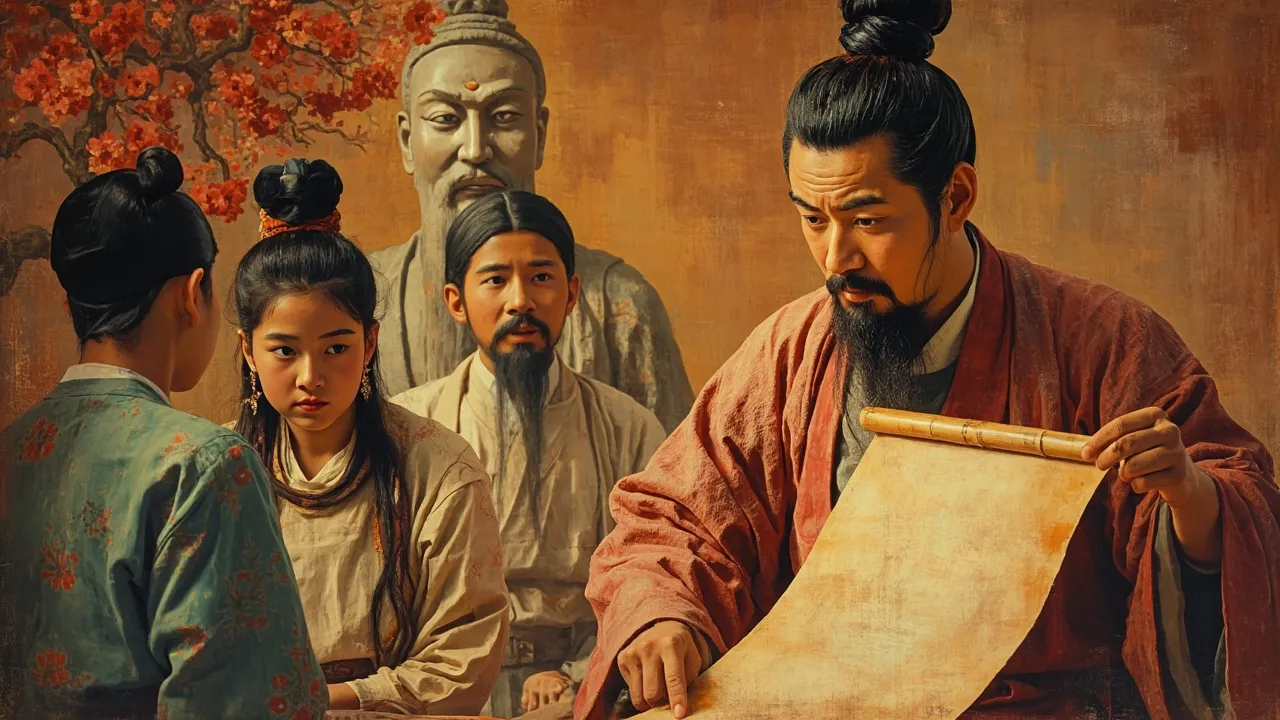
To talk about traditional Chinese virtues, you have to start with Confucius. Kongzi (孔子), as he’s known in Chinese, lived in the 5th century BCE and spent his life teaching about morality, proper conduct, and social harmony. His ideas became the foundation of Chinese ethical thought for over two thousand years.
Confucius wasn’t interested in abstract philosophy or metaphysical debates. He was a practical moralist who wanted to create a better society through better people. His teachings focused on how individuals should behave — in families, in communities, and in government. And central to all of his teachings were what we might call the “five constant virtues”: ren (benevolence/humaneness), yi (righteousness), li (propriety/etiquette), zhi (wisdom), and xin (faithfulness).
Ren is arguably the most important. It’s often translated as “benevolence” or “humaneness,” but it means much more than just being nice. It’s about treating others with kindness and compassion, about putting yourself in someone else’s shoes, about genuinely caring about the well-being of other people. Confucius believed that ren was the ultimate moral quality — the one that encompassed all others.
Yi means doing what’s right, even when it’s hard. It’s about having a moral sense that tells you what your duty is, and then having the courage to act on it. A person with yi won’t cheat even when they could get away with it, won’t lie even when the truth is uncomfortable, and won’t abandon their principles just because it’s convenient.
Li is about proper conduct — the rituals, ceremonies, and everyday behaviors that show respect for others and maintain social harmony. This includes everything from how you bow to an elder to how you hold your chopsticks. Confucius believed that proper behavior培养 (cultivates) moral character, and that the two are inseparable.
Zhi is wisdom — not just intellectual knowledge, but practical understanding of how to live well and make good decisions. It’s the ability to see situations clearly, to understand people’s motivations, and to choose the right course of action.
Xin is faithfulness — keeping your word, being reliable, following through on your commitments. In a society where relationships and trust are everything, xin is absolutely essential.
These five virtues weren’t just theoretical ideals. They were taught to every child, reinforced through education and civil service exams, and celebrated in literature and art. For over two millennia, they shaped how generations of Chinese people understood what it meant to be good.
The Most Important Virtue: Filial Piety
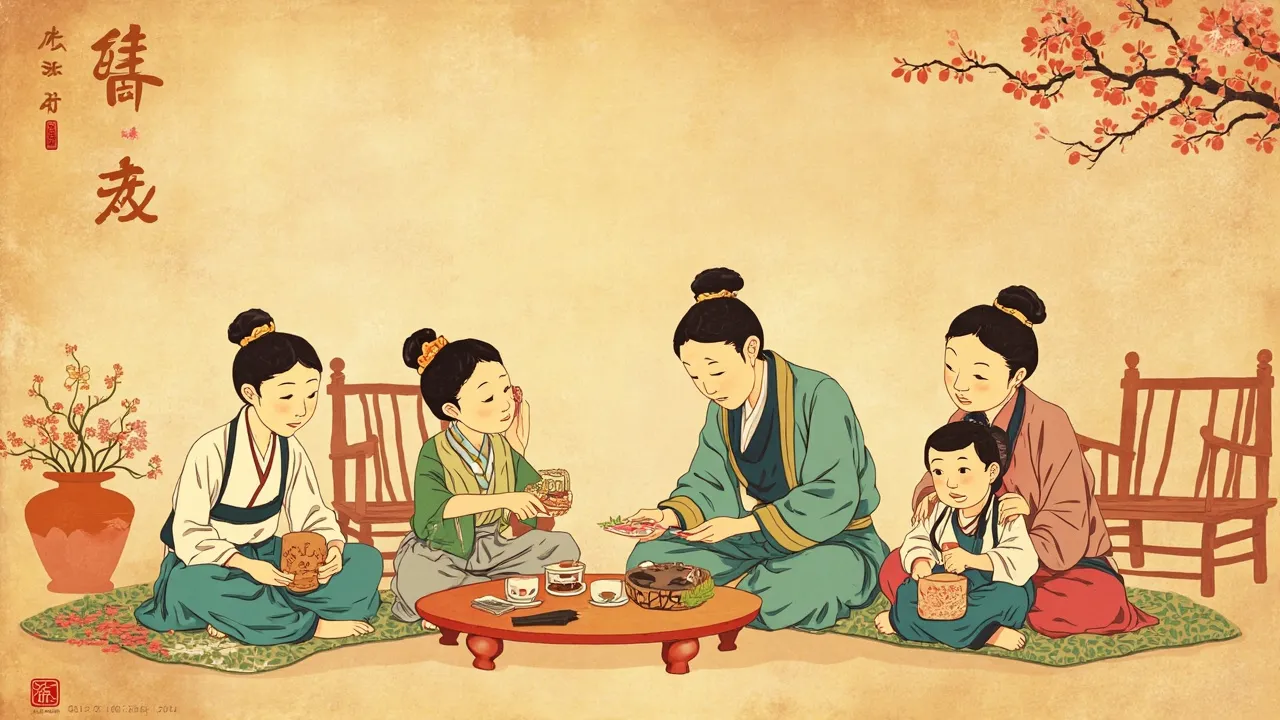
If you had to pick the single most important virtue in traditional Chinese culture, it would be filial piety — or xiao (孝) in Chinese. This is the virtue of respecting and caring for your parents and elders, and it goes far beyond what we might think of as “being nice to your parents.”
Filial piety was considered the foundation of all virtue. Confucius taught that if you can’t properly respect and care for your own parents, you can’t be expected to care about anyone else. The family was seen as the basic unit of society, and the relationship between parents and children was the most fundamental of all human relationships.
In practice, filial piety meant several things. First, it meant obeying your parents — not just as a child, but potentially throughout your life. Traditional Chinese families operated on a strict hierarchy, with parents having authority over children, older siblings having authority over younger ones.
Second, it meant caring for your parents in their old age. This wasn’t optional or left to the state. It was considered each child’s sacred duty to ensure their parents were fed, clothed, comfortable, and happy in their final years. There were even legal consequences for neglecting this duty.
Third, it meant honoring your parents through your actions. This included things like taking care of your own health (so you don’t bring shame to the family), succeeding in your career (so your parents can be proud), and having children (to continue the family line and perform the necessary ancestral rituals).
Fourth, it meant sacrificing for your parents when necessary. Traditional stories are full of children who gave up their own comfort, their own dreams, even their own lives to care for or avenge their parents. These were celebrated as the highest moral examples.
Now, I want to be clear: this doesn’t mean every single Chinese family lived up to this ideal perfectly. Like any moral teaching, it was an aspiration rather than a reality. And in modern China, these expectations have relaxed significantly — younger generations have more autonomy, and the one-child policy created unprecedented pressures on the traditional family structure. But the cultural weight of filial piety is still enormous. Even today, Chinese adults often make major life decisions with their parents’ opinions in mind, and caring for elderly family members is still seen as a fundamental duty rather than an optional choice.
Respect for Elders and Hierarchy
Filial piety extends naturally into a broader respect for hierarchy and age. In traditional Chinese society, age brought authority. Older people were expected to guide and mentor younger people, and younger people were expected to listen, learn, and defer.
This played out in countless everyday situations. You always greeted elders first. You offered your seat to older people on buses. You used different forms of address depending on someone’s age and position. You didn’t argue with your seniors, especially not in public. The whole social fabric was woven around these expectations of respect.
In the family, this meant older generations held decision-making power. In the classroom, it meant teachers were treated with almost parental reverence. In business, it meant seniority mattered more than ability. In government, it meant wisdom came with age. The whole society was organized around these hierarchies, and violating them — being disrespectful to elders, challenging your superiors, acting like you were above your station — was considered deeply shameful.
Now, this doesn’t mean traditional China was some rigid dystopia where young people had no voice. There were always ways for younger generations to express themselves, and in practice, relationships were more nuanced than strict rules suggest. But the cultural framework was clear: respect your elders, know your place, and don’t rock the boat.
Additional Core Virtues
Beyond the Confucian framework, traditional Chinese culture embraced several other key virtues that shaped how people lived their lives. These weren’t abstract philosophical ideas that stayed in textbooks — they were practical guidelines that people tried to live by every single day.
Loyalty (忠, zhong) was considered essential in all relationships — between ruler and minister, between friends, between family members. It meant being faithful to your obligations, standing by those who depended on you, and putting the group’s interests above your own. A disloyal person was one of the worst things you could be. In the famous story of The Romance of the Three Kingdoms, characters who switched sides or betrayed their lords were universally condemned, while those who remained faithful to their masters — even to the point of death — were celebrated as heroes. This emphasis on loyalty created a culture where one’s word was sacred and abandoning your commitments was a source of deep shame.
Honesty (诚, cheng) was prized as a fundamental character trait. Keeping your word, being truthful, not deceiving others — these were non-negotiable for a person of good character. Confucius said something like: “Don’t do to others what you don’t want done to yourself,” which sounds a lot like the Golden Rule and reflects this emphasis on honest, reciprocal treatment of others. There was a strong cultural taboo against lying or cheating, not because there were always immediate punishments, but because your reputation was everything. Once you lost people’s trust, it was nearly impossible to recover.
Righteousness (义, yi) meant knowing the difference between right and wrong and having the courage to act on it, even when it was costly. It wasn’t just about following rules — it was about having moral conviction and being willing to stand up for what’s right, even against opposition. This virtue often required sacrifice. The classic Chinese stories are full of people who chose righteousness over convenience, who accepted personal suffering to do what they believed was right.
Modesty (谦, qian) was valued over boastfulness. Traditional Chinese culture frowned upon bragging, showing off, or calling attention to your own achievements. The ideal was to be humble, to keep learning, and to recognize that there’s always someone better than you. This connects to the broader emphasis on continuous self-improvement. Even the most successful scholar or wealthy merchant would describe themselves as “still learning” or “not accomplished enough.” This wasn’t false modesty in most cases; it was a genuine belief that there was always more to understand, more to achieve, more to become.
Perseverance (忍, ren) — often translated as “endurance” or “forbearance” — was seen as a crucial virtue, especially in difficult times. Life is hard, things don’t always go your way, and a person of character doesn’t give up or fall apart when faced with adversity. They endure, they adapt, they keep going. The famous Chinese story of Yu the Great, who spent years taming floods that devastated the countryside, exemplified this virtue. He didn’t give up even when setbacks seemed insurmountable. This idea of perseverance — of quietly bearing hardships while working toward a greater goal — remains deeply embedded in Chinese cultural psychology today.
How These Virtues Manifest Today
Here’s what’s fascinating: despite all the changes China has undergone in the 20th and 21st centuries — the fall of the empire, the revolution, the economic reforms, the globalization — these traditional virtues haven’t disappeared. They’ve adapted, they’ve combined with new ideas, and they’re still very much alive.
Modern Chinese families might be smaller and more nuclear, but the expectation that children will care for their parents remains strong. There are even laws now requiring adult children to visit their aging parents — a reflection of how seriously this cultural value is taken.
The respect for education and for teachers, the emphasis on hard work and self-improvement, the importance of saving and planning for the future — these all have roots in traditional values. Even in China’s hyper-competitive modern society, you can see the echoes of old virtues: the drive to succeed for your family’s honor, the long-term orientation, the network of obligations and reciprocities that makes Chinese business and social life work.
At the same time, young Chinese people are negotiating these traditions with new ideas. They’re more individualistic than their grandparents, more questioning of authority, more likely to prioritize their own happiness over family expectations. But even that tension is characteristically Chinese — it’s the old values adapting and evolving, as they always have.
Why This Matters
You might be thinking: “Okay, this is interesting historically, but why should I care about ancient Chinese virtues?” The answer is that these values are the DNA of Chinese society. They’re not just dusty relics from the past — they’re the operating system that millions of people still run on, whether they realize it or not.
If you’re doing business in China, understanding these values helps you navigate relationships. If you’re studying Chinese history, they provide essential context. If you’re trying to understand why Chinese families make the decisions they do, or why certain social customs exist, or why certain phrases keep coming up in conversation — the virtues are the key.
And there’s something else: these aren’t just Chinese values. They’re human values that have been recognized across cultures and throughout history. Every society that has lasted more than a few generations has had to grapple with questions like: How should we treat our parents? How should we behave toward our elders? What do we owe to our communities? How do we raise children to be good people?
The Chinese tradition offers one comprehensive answer to these questions — one that’s been tested, refined, and passed down for millennia. Whether you agree with every element of it or not, there’s something to learn from a civilization that took these questions as seriously as any society ever has.