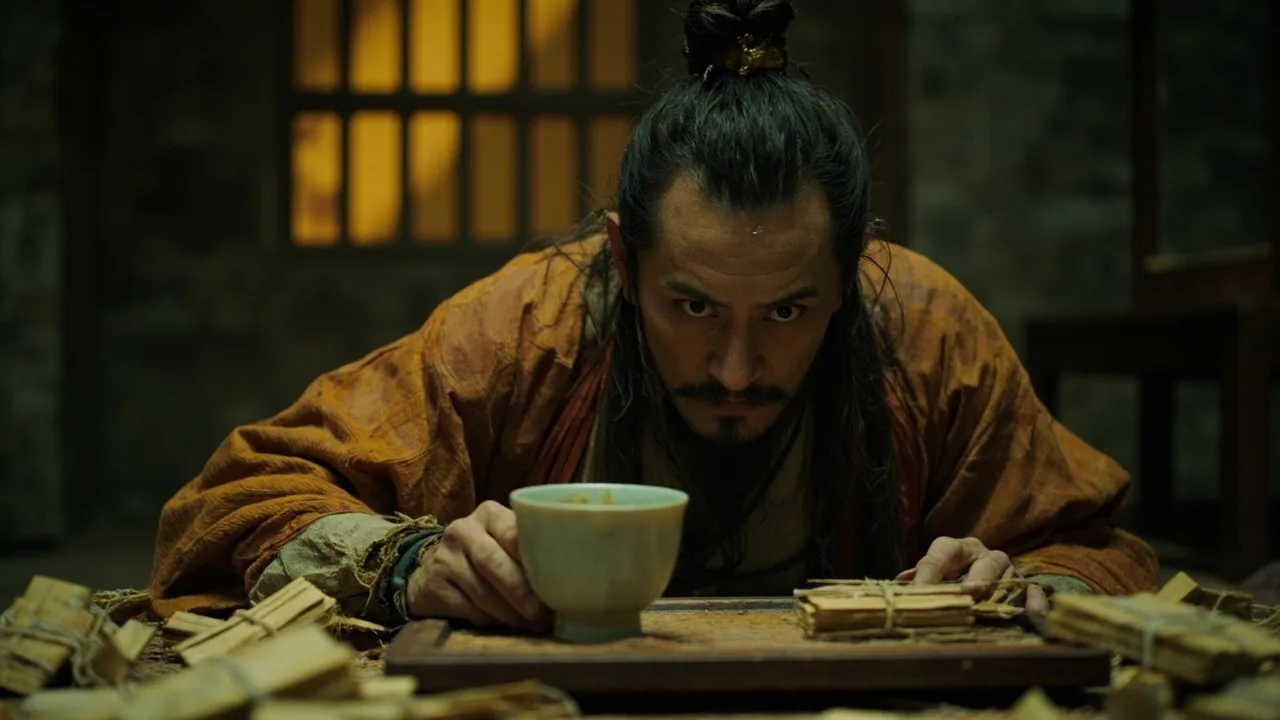
In 1505, a 33-year-old official named Wang Yangming submitted a memorial to the 15-year-old Emperor Wuzong of Ming. His subject was the state of the empire’s military defenses. His argument was that the northern frontier was dangerously undermanned and that the court’s practice of appointing eunuchs to military posts was weakening the entire structure of defense.
This was, as memorials go, both accurate and politically catastrophic. The emperor’s favorite eunuch, Liu Jin, effectively controlled the government at this point. Criticizing eunuch power was not a career-enhancing move. Wang Yangming knew this. He submitted the memorial anyway.
He was immediately beaten by the emperor’s guards — a standard punishment for overly bold officials — and exiled to a minor post in the southwest of the empire. He would spend the next three years in one of the most remote and malaria-ridden regions of China, with little prospect of return.
It was in Guizhou, in the middle of this exile, that Wang Yangming had the philosophical breakthrough that would make him one of the most important figures in Chinese intellectual history. He didn’t just survive the experience. He thought his way through it and emerged with a new understanding of mind, knowledge, and action that would challenge the entire Confucian tradition.
The Education That Led to the Wall
Wang Yangming — his given name was Wang Shouren; Yangming is his courtesy name — was born in 1472 in Yuyao, in what is now Zhejiang province. His family was prosperous, cultured, and deeply invested in the Confucian educational tradition. His father was a senior official who had passed the jinshi examination — the highest level of the civil service — and served in the Hanlin Academy.
Young Wang showed the usual signs of exceptional ability: he was reading classical texts by age five, composing poetry shortly after, and displaying the kind of intellectual confidence that makes teachers nervous. He was also, by all accounts, a restless and somewhat undisciplined student. He was interested in everything at once — Buddhism, Daoism, military strategy, calligraphy — and struggled to commit to any single path.
At age 17, he got married. On his wedding day, he disappeared for most of the ceremony. He had been walking through the streets of his new wife’s hometown when he noticed a a calligrapher at work and stopped to watch. He was so absorbed that he forgot the wedding entirely. His wife’s family eventually found him and sent him back, considerably embarrassed. This kind of absorption — in things that caught his attention to the exclusion of social obligation — would define his life.
He passed the jinshi examination in 1499, at age 27, and entered the civil service. He was posted to various offices in Beijing, where he became involved in the factional politics of the Ming court and began his slow collision with the power of the eunuch Liu Jin.
The Guizhou Breakthrough
The events of 1505-1506 — the memorial, the beating, the exile — have the character of a disaster. Wang Yangming was sent to a posting in Guizhou province, in the remote southwest, as a low-ranking official in a region that the Ming government essentially administered as a frontier territory. The climate was brutal. Malaria was endemic. The local population was largely outside Confucian cultural influence. And Wang Yangming, stripped of his position and prospects, had nothing to do but think.
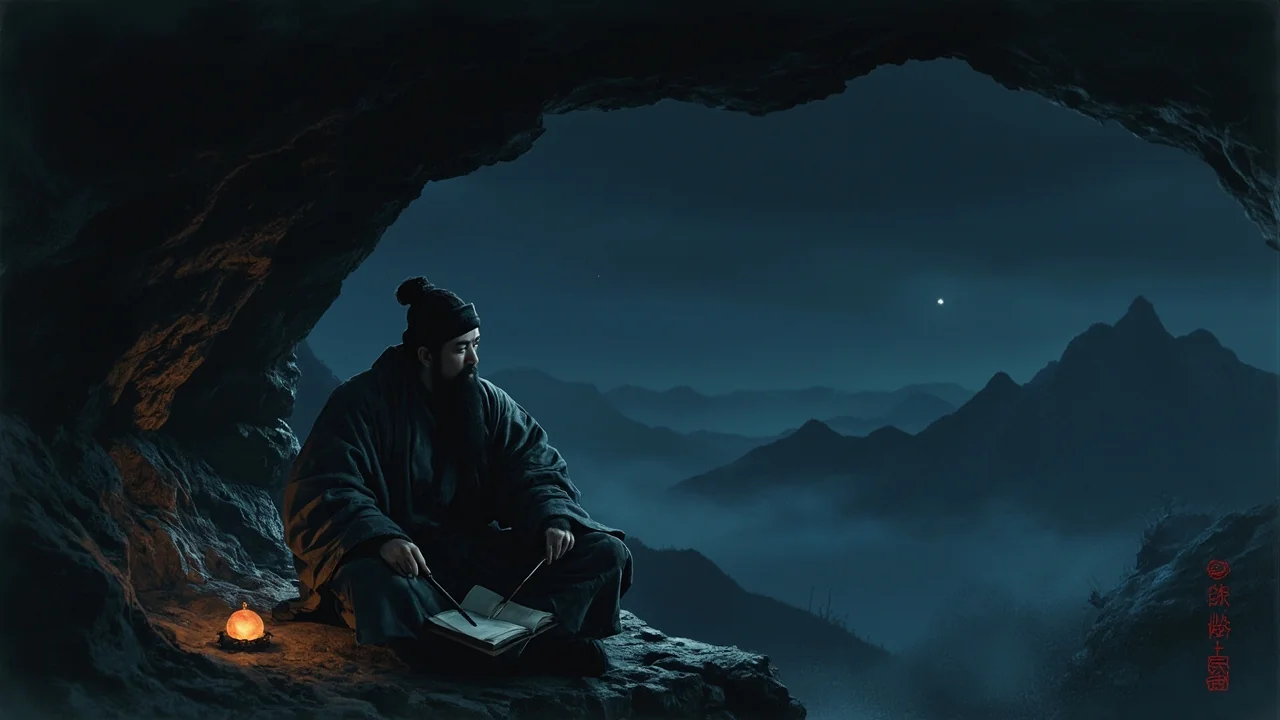
The traditional story of his philosophical breakthrough is famously specific. He was living in a mountain cave — some accounts say he was seriously ill at the time — when he suddenly realized that the problem with Zhu Xi’s philosophical system, which dominated Confucian thought at the time, was that it placed the principle (li) of things outside the mind (xin) of the person studying them.
Zhu Xi’s interpretation of Confucianism held that everything in the universe has an underlying principle — the proper way it should be, the pattern it follows. The job of the scholar was to investigate these principles, to study the world until you understood how everything was ordered and where it belonged. This was called ge wu (格物) — “investigating things.” The more you investigated, the more you understood, and the better you became as a person.
Wang Yangming, sitting in that Guizhou cave, concluded that this was backwards. The principle wasn’t outside the mind. It was the mind. When you looked at a tree, the nature of the tree wasn’t something you had to go investigate separately from yourself. The tree and your understanding of the tree were both products of the same fundamental reality — the human mind, which was itself continuous with the universe.
This sounds abstract, but it had enormous practical implications. If the principle was in the mind, then moral knowledge wasn’t something you acquired by reading books and accumulating information. It was something you already possessed, buried under layers of distraction and false desire. The task of self-cultivation was not to investigate the external world but to clear away the obstacles to the innate knowledge that was already present.
The Doctrine of Unity of Knowledge and Action
The most famous of Wang Yangming’s doctrines is zhi xing he yi (知行合一) — the unity of knowledge and action. The conventional reading of Confucian self-cultivation was sequential: you first acquire knowledge through study, and then you put it into action through proper behavior. Knowledge came first; action followed.
Wang Yangming argued that this separation was false. Knowledge that did not produce action was not genuine knowledge. If you truly understood something — truly knew it in the moral sense — you would automatically act on it. The moment of knowing and the moment of acting were the same moment.
His famous example: everyone “knows” that they should not entertain a selfish desire. But as soon as a selfish desire arises, most people indulge it anyway. According to Wang Yangming, this proves that they did not truly “know” it was wrong — they only knew it in the abstract, the way you know a fact from a book. True knowledge, the kind that matters morally, is action itself. If you truly knew stealing was wrong, you would not steal. The knowledge would be inseparable from the non-stealing.
This is a devastating argument, and it has been debated by Chinese philosophers for five hundred years. Critics said Wang Yangming was abolishing the distinction between knowledge and action entirely — making all action seem like knowledge and all knowledge seem like action. Defenders said he was making a specific point about moral knowledge: it has a different character than intellectual knowledge, and confusing the two is dangerous.
Wang Yangming himself put it this way: “To know and not to act is not yet to know.” In other words, if you say you know something is right but you don’t do it, the evidence shows you don’t really know it in the moral sense. This became one of the most quoted lines in Chinese philosophy, and it continues to generate discussion about the relationship between moral understanding and moral behavior.
The General Who Beat the Rebellion
Wang Yangming’s philosophical reputation sometimes overshadows the fact that he was also a genuinely effective official and military commander. After his exile ended, he went on to hold several provincial posts and became one of the most capable administrators in the Ming government.
His most famous military achievement came in 1519, when the Prince of Ning — one of the emperor’s own relatives — launched a rebellion. The prince had been building his military forces for years and now moved to seize the throne. The emperor, characteristically impulsive, dispatched armies that were promptly defeated. The situation looked serious.
Wang Yangming, who was then the governor of Jiangxi province, did something unusual: he improvised. He rallied local forces, spread false information about the size of government armies, negotiated with the prince’s wavering supporters, and within roughly six weeks had completely dismantled the rebellion. The Prince of Ning was captured. The rebellion was over. Wang Yangming had done it with a combination of military organization, psychological manipulation, and political negotiation that would have impressed Sun Tzu.
The court rewarded him by demoting him. The emperor’s advisors were suspicious of anyone who achieved too much success, and Wang Yangming found himself stripped of his position and sent to another provincial posting. This pattern — brilliant service followed by political punishment — would repeat throughout his career.
The Yangming School and Its Legacy
Wang Yangming’s philosophy became known as the “Mind School” (Xinxue) of Confucianism, in contrast to the “School of Principle” (Lixue) associated with Zhu Xi. The debate between their followers — which was intense, sometimes bitter, and lasted for generations — was essentially about where moral knowledge comes from and how it is cultivated.
The Zhu Xi tradition held that moral development required careful study of the external world and its principles, through reading, observation, and gradual accumulation. The Wang Yangming tradition held that moral knowledge was innate — present in every person’s mind as liangzhi (良知), “innate knowing” or “conscience” — and that the cultivation task was to remove the obstacles (personal desire, selfishness) that prevented this innate knowledge from manifesting.
By the late Ming period, Wang Yangming’s influence had become dominant in Chinese intellectual life. The “Four Masters of the Ming” — four leading philosophers of the late 16th century — were all influenced by him to varying degrees. His ideas spread to Japan, where they became enormously influential in the Edo period, particularly among samurai and Neo-Confucian thinkers. The Japanese term sechi (切磋, “mutual sharpening”) captures the way Wang Yangming’s emphasis on action resonated with the pragmatic, martial culture of Tokugawa Japan.
In Korea, the Silhak (“Practical Learning”) movement of the 18th century drew on Wang Yangming’s emphasis on actual social utility over pure scholarship. In Vietnam, his influence similarly shaped the development of Neo-Confucian thought in the Le and Nguyen dynasties.
The Sage in the Street
Wang Yangming’s deepest claim was that everyone had the capacity for sagehood — not just the educated elite, but farmers, merchants, women, and children. If the mind was fundamentally continuous with the universe, then the same innate moral knowledge that Confucius and Mencius possessed was present in every human being. The job was not to acquire it from outside but to remove what was blocking it from inside.
This was, in the context of Ming Dynasty social hierarchy, a radical claim. The Confucian system was deeply hierarchical — the educated gentleman was presumed to be morally superior to the common person by virtue of his education and cultivation. Wang Yangming’s philosophy threatened to dissolve that distinction. If a farmer could achieve sagehood through inner awakening rather than classical education, what exactly was the basis of elite privilege?
Wang Yangming did not draw this political conclusion explicitly. His followers sometimes did. The Taizhou school of Wang’s disciples — particularly the philosopher Li Zhi, known as the “heretical monk” — pushed the implications of Wang’s thought in increasingly radical directions, arguing that social conventions and received morality were themselves obstacles to the innate knowledge that everyone possessed. Li Zhi was eventually imprisoned for his views and died in prison. The Taizhou school was suppressed.
Wang Yangming himself died in 1529, at age 52, while traveling to a new posting in Jiangxi. He was buried near his hometown in Zhejiang. His last words, reportedly, were: “This heart is sufficient. There is nothing else.”
Why Wang Yangming Still Matters
Wang Yangming is one of those figures who keeps coming back because his questions keep coming back. Is moral knowledge something you learn or something you already have? What is the relationship between understanding something and actually doing it? Can ordinary people achieve moral excellence, or is that only for the educated few?
His answer to the first question — that moral knowledge is innate — sounds counter-intuitive to modern ears trained on the idea that ethics must be learned. But his point is subtler: the capacity for moral knowledge is innate, but the obstacles to it are also powerful, and removing those obstacles requires real work. It’s not that you don’t need to study or practice; it’s that the study and practice are directed inward as much as outward.
His answer to the second question — that knowledge without action is not genuine knowledge — remains genuinely challenging. How often do we “know” that something is right and fail to do it? Wang Yangming would say: not truly known, in the sense that matters. The knowledge was not yet complete.
For Americans encountering Wang Yangming for the first time, the useful comparison is to the American philosophical tradition of pragmatism — particularly William James and John Dewey. Both traditions emphasize that ideas are tools for action, not abstract representations of reality. Both are suspicious of knowledge that doesn’t connect to life. The difference is that Wang Yangming’s framework is still fundamentally Confucian — about moral self-cultivation, social responsibility, and the development of human character — while American pragmatism tends toward instrumental problem-solving. Same instinct, different cultural clothing.
Visiting Wang Yangming’s World
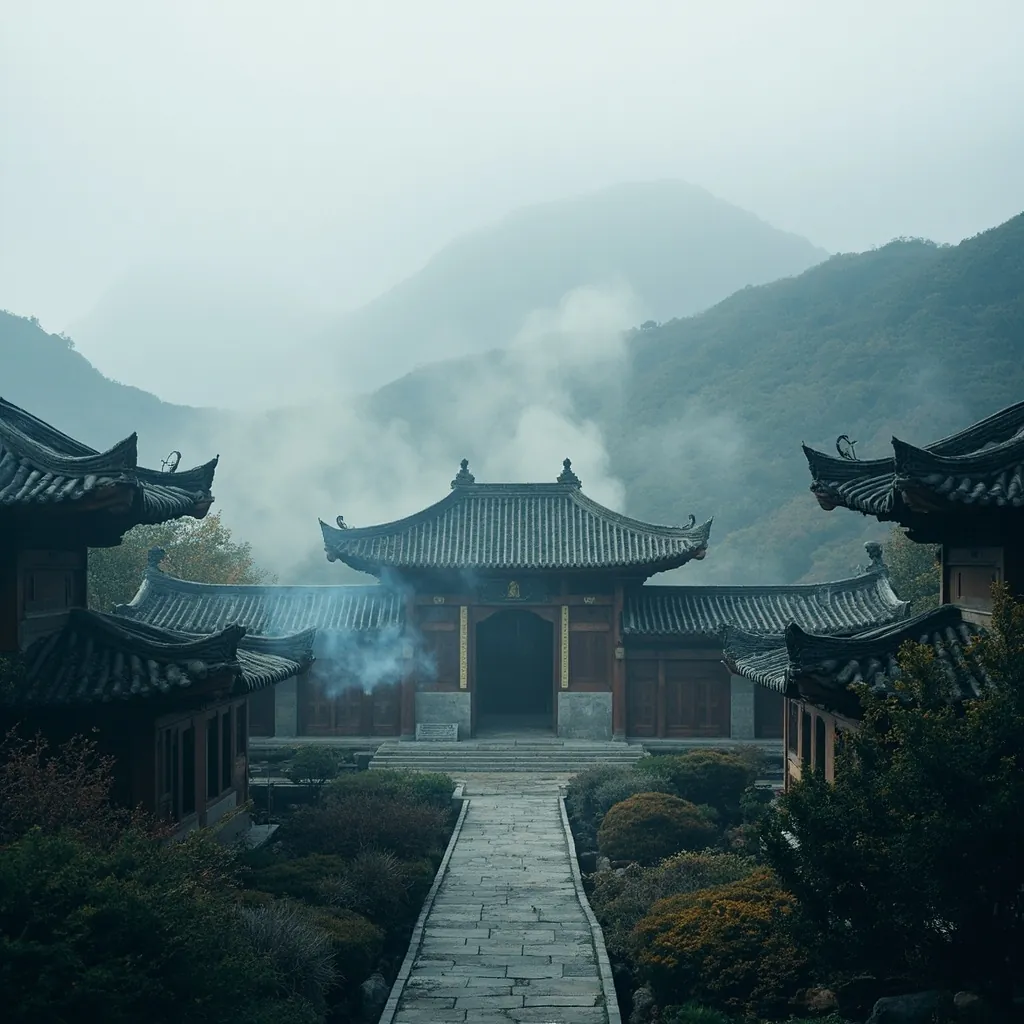
If you want to explore Wang Yangming’s historical world, the best starting point is his hometown of Yuyao in Zhejiang province, which has a museum and memorial dedicated to him. The site includes his childhood home, the study where he developed his early philosophical ideas, and the family’s ancestral hall. The Zhejiang coast around Ningbo and the Yangtze Delta are beautiful and historically rich — Wang Yangming’s world was one of the most prosperous and culturally active regions in Ming China.
His time in Guizhou is commemorated at the site of the “Dreaming of the Dragon Pool” (Mao Dong) cave where he reportedly had his breakthrough. The Guizhou region is mountainous, remote, and dramatically beautiful — the same qualities that made it a place of exile also make it one of China’s most striking landscapes.
Wang Yangming’s Record of the Great Learning (Daxue Yan) and various letters and essays are available in translation. For philosophical context, the best background reading is anything on Zhu Xi’s Neo-Confucianism, which Wang Yangming was explicitly responding to. The Cambridge History of China volume on the Ming Dynasty provides excellent political and cultural context for understanding why his ideas landed with such force.
His core insight — that the obstacle to knowledge is usually not information but the interference of desire and habit — has not aged. Every person who has ever sat down to meditate, or to practice an instrument, or to change a behavior, and discovered that the hardest part is not learning what to do but actually doing it, has encountered the problem Wang Yangming was describing. The mind is not a passive receiver of information. It is an active agent that must be trained, cleared, and focused. That was his message in a Guizhou cave five hundred years ago, and it is still his message now.