Imagine you were hiring for the most important job in the country — one that would determine the fate of millions. You ask two of the smartest people you know to evaluate the same candidate. One says, “He’s a sleeping dragon. Put him in charge and he’ll reshape the world.” The other says, “He’s a phoenix chick. Brilliant, yes — but he’ll burn alive if you send him into the wrong fire.”
And then? Both turn out to be completely right.
That’s exactly what happened in ancient China more than 1,800 years ago, and it’s how one of Chinese culture’s most evocative idioms was born: 卧龙凤雏 (wò lóng fèng chú) — “sleeping dragon and phoenix chick.”
Two Scholars, One Candidate
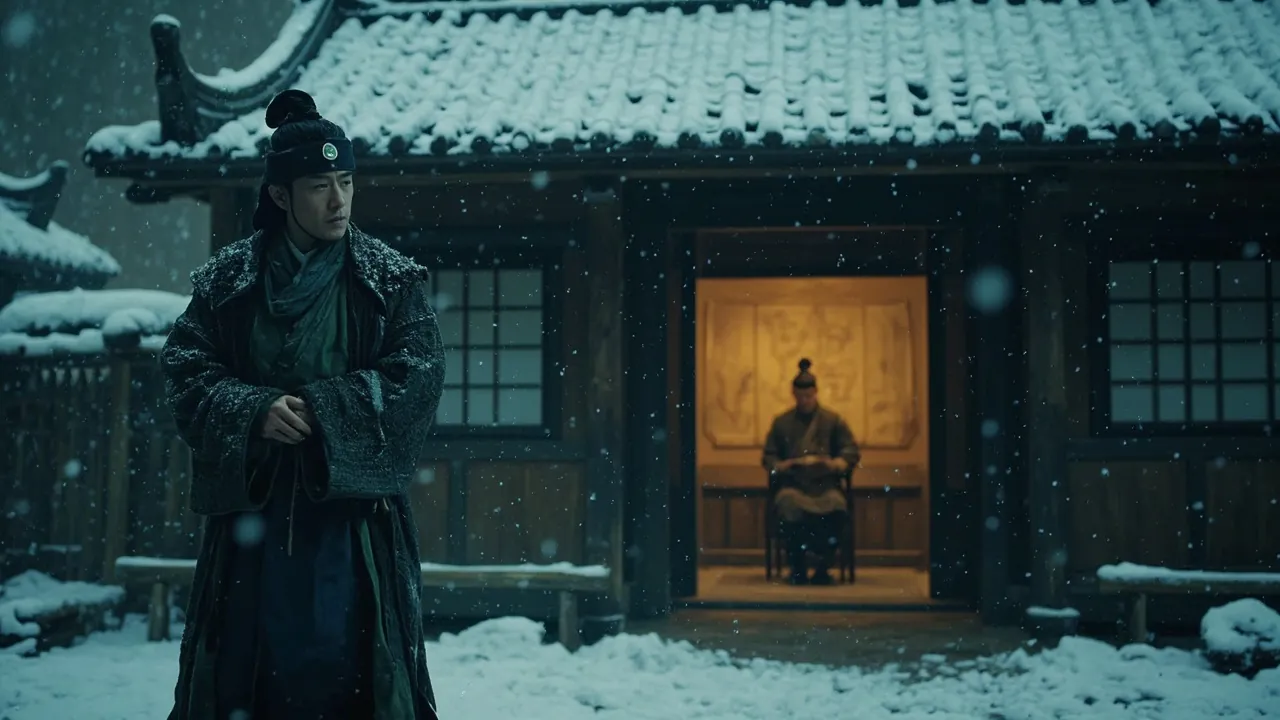
The year is around 207 CE. China is in the chaos of the late Han Dynasty, and a warlord named Liu Bei is desperately searching for a strategist brilliant enough to help him compete with rivals like the mighty Cao Cao. Liu Bei has two close advisors: a reclusive scholar named Zhuge Liang (诸葛亮), and a younger strategist named Pang Tong (庞统), also known by his courtesy name, Tong (统).
Both men were widely recognized as geniuses — among the sharpest minds of their generation. And both had independently reached the same conclusion about a young man living in the countryside near Longzhong: Zhuge Liang himself.
But here’s where it gets interesting. When Pang Tong finally met Zhuge Liang face to face, his assessment was… complicated.
According to historical records and the classic novel Romance of the Three Kingdoms, Pang Tong looked at Zhuge Liang — watched him handle conversation, observed his manner, studied his bearing — and concluded that while Zhuge Liang was undeniably brilliant, he had a flaw. Zhuge Liang was, Pang Tong felt, too cautious. Too careful. Too slow to act when the moment demanded boldness. Pang Tong reportedly said that Zhuge Liang would succeed in peaceful times but might struggle when circumstances called for daring, dramatic action.
Zhuge Liang, for his part, reportedly assessed Pang Tong with equal frankness: he felt Pang Tong was talented but impatient — that his brilliance was real but his judgment was unreliable. Zhuge Liang is said to have warned that Pang Tong was a “phoenix chick” — someone with extraordinary potential who nonetheless needed the right conditions to survive.
Neither assessment was wrong. And that tension — between two kinds of brilliance, two temperaments, two ways of being exceptional — is what makes 卧龙凤雏 resonate so deeply in Chinese culture.
What the Idiom Means Today
In modern Chinese, 卧龙凤雏 is used to describe two types of exceptional talent that complement each other:
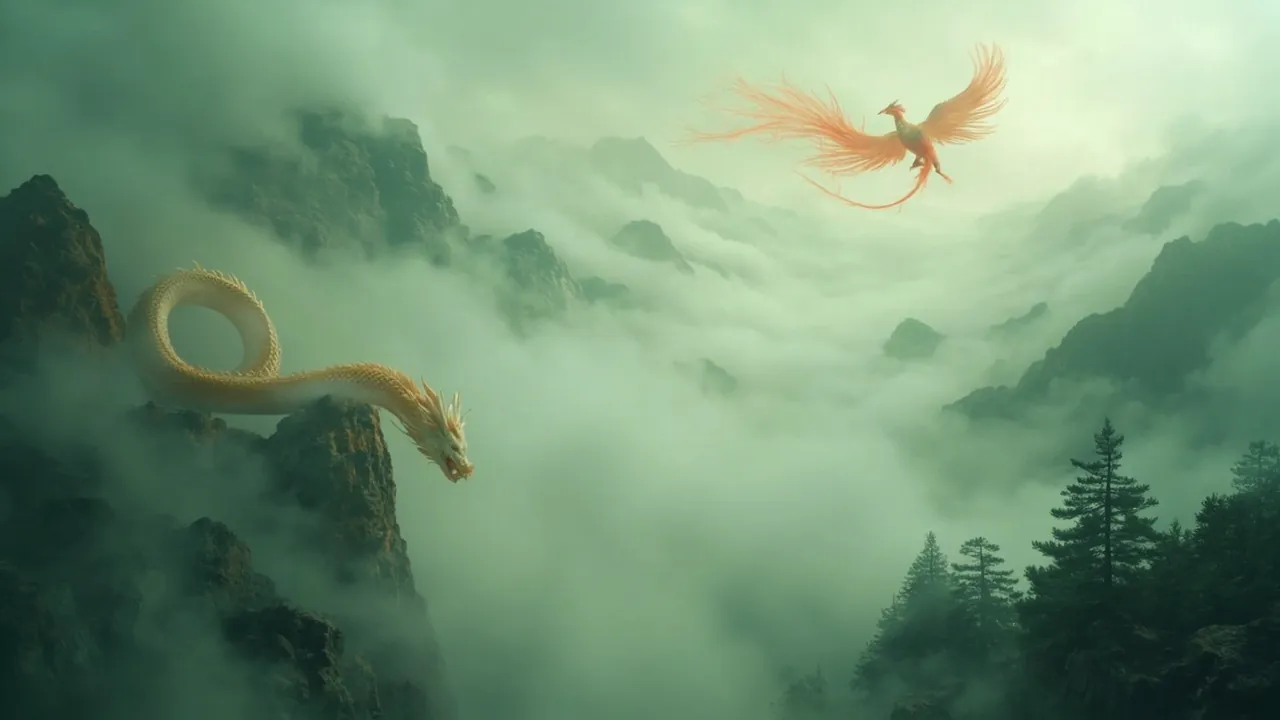
卧龙 (sleeping dragon) — someone with immense, dormant ability. Someone who seems quiet, even ordinary, but who possesses the capacity to do extraordinary things when the moment calls for it. The “sleeping” quality speaks to patience, to waiting for the right circumstances.
凤雏 (phoenix chick) — someone equally brilliant but more volatile. A phoenix chick has all the potential of a great bird, but it’s not yet fully formed. It can rise magnificently — or it can be destroyed by the very fire that fuels its transformation.
The idiom is often used as a pair: “卧龙凤雏” to describe the combination of two rare talents, or the coexistence of two kinds of genius in one person. It’s also used ironically, sometimes, to describe someone who is brilliant in theory but untested in practice.
The Tragic Ending That Made the Idiom Eternal
Here is the cruel irony at the heart of this story: Pang Tong’s warning about Zhuge Liang — that he was too cautious — came true in the worst possible way.
After Liu Bei finally recruited Zhuge Liang (after the famous “three visits” that gave us another idiom, 三顾茅庐), both Zhuge Liang and Pang Tong served in his court. But in 214 CE, Pang Tong was sent by Liu Bei to attack a city called Lu (雒). Zhuge Liang had misgivings. He warned Pang Tong — gently, carefully — that the campaign was risky. But Pang Tong, confident in his own brilliance and eager to prove himself, pressed forward anyway.
He was killed in battle. He was only 36 years old.
Zhuge Liang wept when he heard the news. The “phoenix chick” had indeed burned himself, unable to survive the fire he walked into.
And Zhuge Liang himself? He spent the rest of his life serving Liu Bei and his son, implementing the legendary strategic plan that would eventually establish the Shu Han kingdom. He became the most celebrated strategist in Chinese history — the “sleeping dragon” who awakened at exactly the right moment and reshaped an era.
The Cultural Weight of Two Birds
What makes 卧龙凤雏 enduring isn’t just the story of two men — it’s the truth it captures about talent itself.
Every organization has both kinds of exceptional people. The person who waits, watches, and acts with precise timing. And the person who burns bright, moves fast, and occasionally overruns the runway before takeoff. The idiom reminds us that both are precious, both are rare, and both need to be understood on their own terms.
In American culture, we might say someone is “a diamond in the rough” or “a prodigy with a short fuse.” But 卧龙凤雏 captures something more nuanced: the idea that two people can both be extraordinarily gifted, and yet one needs patience while the other needs protection. Greatness doesn’t come in only one shape.
How to Remember It
Think of it this way: a dragon is ancient, powerful, and best observed in stillness — you don’t rush a dragon. A phoenix is young, fiery, and magnificent — but a chick phoenix is still learning to fly without getting singed.
When someone is a 卧龙, they need opportunity. When someone is a 凤雏, they need guidance. And when a team or organization has both? That’s when history gets made.
The Bottom Line
The story of 卧龙凤雏 is a story about how even the smartest people in the room can assess the same person and see something different. It’s about how two kinds of brilliance — careful and bold, patient and fiery — can coexist in the same era and serve the same cause. And it’s about how, sometimes, the assessments turn out to be prophetically accurate.
Zhuge Liang became the sleeping dragon who transformed an empire. Pang Tong died young, a phoenix who burned too bright for the battle he chose. Together, they remind us that talent is never simple — and that understanding how someone is brilliant is just as important as recognizing that they are.
So the next time you meet someone who seems to have extraordinary potential, ask yourself: are they a sleeping dragon waiting for the right moment? Or a phoenix chick who needs the right fire? The answer matters more than you might think.