There is a particular kind of urgency that does not make sense on paper. You are a prime minister — the second most powerful person in your government — and the king is having breakfast in an hour. You have reports to review, a war to manage, a kingdom to hold together. And instead of doing any of those things, you are galloping down a dusty road in the middle of the night, chasing a man who left camp without permission, because you are absolutely certain that if you do not catch him, you will have committed the greatest error of your life.
That is the story of 萧何月下追韩信. Xiao He, one of the founding figures of the Han Dynasty, running through moonlight to bring back a soldier who had decided to desert. The soldier was named Han Xin, and he would eventually become the greatest general in Chinese history. But in the moment when Xiao He chased him down, Han Xin was just another man slipping away in the dark, and the future of the empire hung on whether Xiao He could catch him before sunrise.
This is a story about recognizing talent — not the abstract idea of recognizing talent, but the messy, urgent, uncertain reality of it. The reality of looking at someone who has failed repeatedly, who others dismiss as a fraud or a fool, and seeing something that nobody else can see. It is also a story about loyalty — not the loyalty of soldiers to their commander, but the stranger kind: the loyalty of a great man to another great man whom he has barely met but knows, with absolute certainty, that he cannot lose.
Who Was Han Xin
To understand why Xiao He was willing to drop everything and chase a deserter through the night, you need to understand who Han Xin was — and more importantly, who he appeared to be before he became who he actually was.
Han Xin had been a nobody for most of his life. Born into poverty, he had spent his youth wandering from place to place, unable to hold down any kind of steady employment. He had been a淮阴亭长 — a minor local official — and had been fired from that position for incompetence. He had tried to join the army and been assigned to the lowest rank, where his military knowledge was ignored by commanders who could not see past his humble origins. He had been insulted, mocked, nearly executed for offenses he did not commit. The famous story of his胯下之辱 — crawling through a man’s legs in the marketplace to avoid a fight he could not win — captures the essence of his early years: a man of extraordinary ability forced into humiliating circumstances because nobody would give him a chance to prove otherwise.
When the Chu-Han Contention began, Han Xin attached himself to Xiang Yu’s camp. Here was a chance, he thought, to serve under the greatest warrior of the age. But Xiang Yu, for all his military brilliance, had a fatal blind spot: he could not recognize talent that did not look like his own. Han Xin was not a giant who commanded through physical presence. He was a quiet, bookish man who studied maps and tide tables and the histories of previous wars. He had ideas about strategy that his commanders did not understand and did not want to hear.
Han Xin left Xiang Yu’s camp in frustration and made his way to Liu Bang’s territory, where he was assigned to the logistics corps — one of the lowest positions in the army, responsible for managing supplies and provisions. It was, in every sense, the last place where his talents could possibly be recognized. He was feeding grain to soldiers while his strategic mind went to waste.
The Desertion
According to the historical records, Han Xin eventually concluded that he had made another mistake. Liu Bang’s camp was not different from Xiang Yu’s. He was still invisible, still unappreciated, still watching his gifts go to waste. And so, one night, he made a decision: he would leave. He would find somewhere else to go, someone else to serve, some other path to the kind of impact he knew he was capable of making.
He slipped away from the camp quietly, without notifying anyone, and began walking toward a destination that the historical records do not specify. Perhaps he was heading east, back toward Chu territory, or perhaps he had some other destination in mind. What matters is that he was leaving, and that if he succeeded, Liu Bang’s army would lose the one man who could eventually dismantle Xiang Yu’s forces and secure the empire.
Xiao He, who had been observing Han Xin closely, noticed the absence almost immediately.
The Prime Minister’s Instinct
Xiao He was not the kind of man who acted on impulse. As Liu Bang’s chief administrator, he was responsible for the day-to-day governance of the Han territory — managing the bureaucracy, keeping the records, ensuring that supplies reached the troops. It was a job that required patience, precision, and an almost obsessive attention to detail. Impulsive decisions were the enemy of good administration.
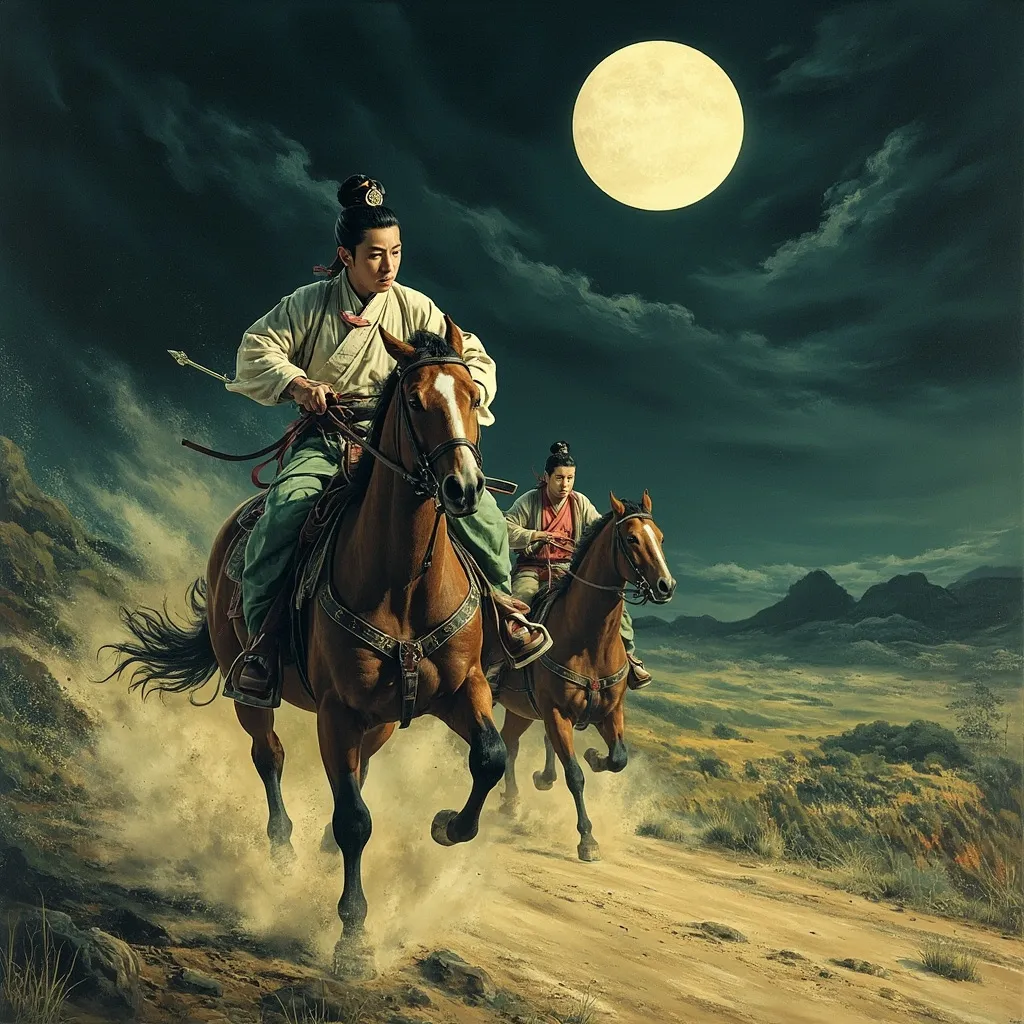
And yet, when Xiao He realized that Han Xin was gone, he did not send a messenger or dispatch a cavalry patrol. He went himself. He grabbed a horse, rode out of his quarters in the middle of the night, and began chasing down the road that Han Xin had taken.
Why? The historical records suggest that Xiao He had come to believe, through months of observation, that Han Xin was not merely competent but extraordinary — a once-in-a-generation strategic mind who could change the course of the war. Xiao He had watched Han Xin in his subordinate role, had seen how he analyzed problems, had heard the ideas he proposed in conversations with other officers. What Xiao He saw was a man who understood warfare at a level that nobody else in the Han camp could match.
But Xiao He also understood something about Liu Bang. The king was practical, suspicious of grand theories, and deeply skeptical of men who claimed to have exceptional abilities. If Han Xin simply disappeared, Liu Bang would never know what he had lost. The only way to make Liu Bang understand was to bring Han Xin back personally and make the case directly — to stake Xiao He’s own reputation on the claim that this one man was worth more than any strategic advantage the Han currently possessed.
So Xiao He rode. All night. Through the darkness, down roads that were not designed for fast travel, until he caught up with Han Xin somewhere along the route.
The Conversation Under the Moon
The historical records do not give us the exact words exchanged between Xiao He and Han Xin during their moonlit meeting. But they do record the essential substance: Xiao He begged Han Xin to return. He argued that Liu Bang needed him. He promised that he, Xiao He, would personally vouch for Han Xin and ensure that he received the position he deserved. He made it clear that this was not a request but an urgent personal appeal — that Xiao He was staking something important on Han Xin’s return.
Han Xin, according to the sources, was persuaded. He came back with Xiao He to the Han camp, where Xiao He immediately requested an audience with Liu Bang.
What happened next is one of the most famous conversations in Chinese history. Xiao He told Liu Bang that Han Xin was the kind of general who could win the entire war — that with Han Xin leading the army, Xiang Yu could be defeated and the empire secured. He urged Liu Bang to promote Han Xin to supreme commander, regardless of his lack of seniority or connections.
Liu Bang was skeptical. Han Xin had no track record of success. He had no military accomplishments that anyone could point to. He was, as far as Liu Bang could tell, just another man making grand claims about his own abilities. But Xiao He was persistent. He had never begged Liu Bang for anything before. He had never staked his own reputation on a single appointment. Liu Bang, recognizing that something unusual was happening, eventually agreed to meet with Han Xin directly.
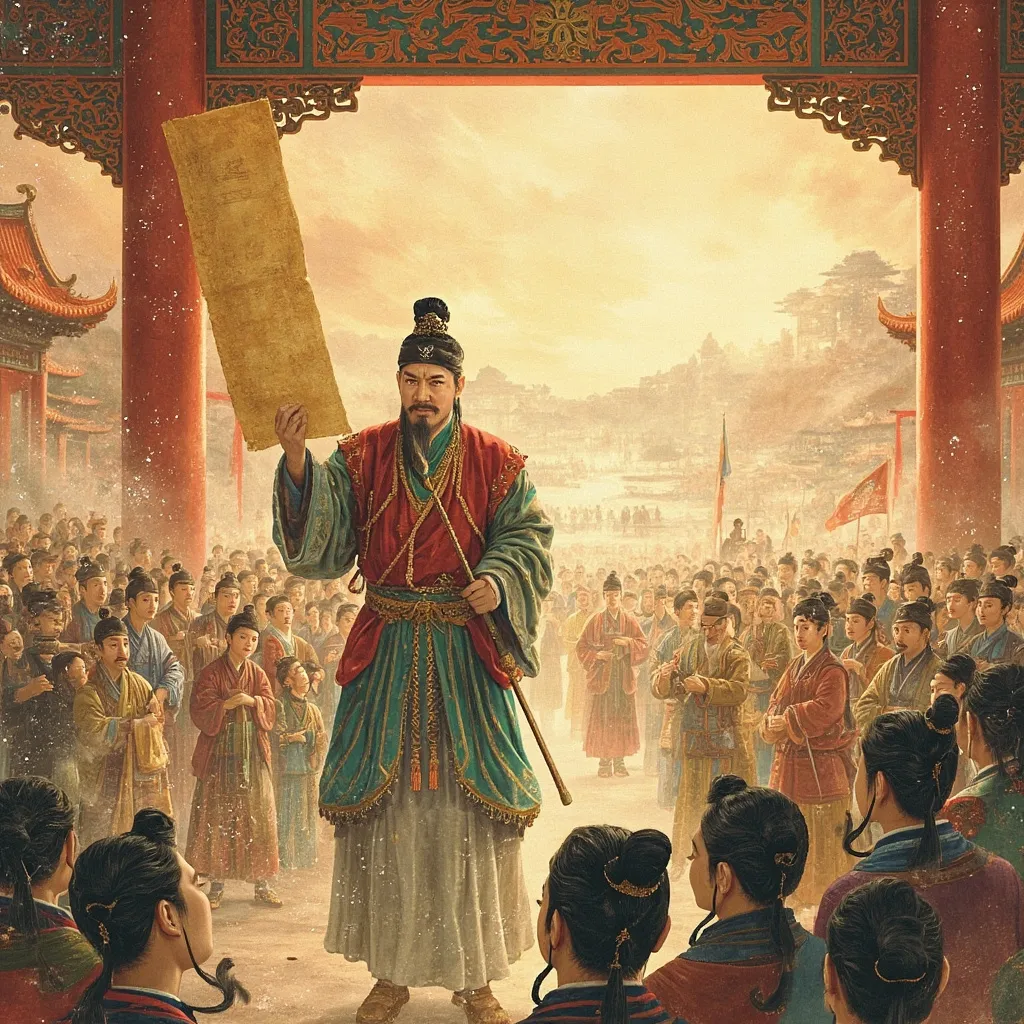
The meeting convinced him. Han Xin laid out a strategic vision for the war that impressed Liu Bang profoundly — a plan that identified Xiang Yu’s weaknesses, mapped the territorial objectives that would cripple Chu power, and described a path to victory that no one else had articulated. Liu Bang promoted Han Xin to supreme commander on the spot.
What Followed
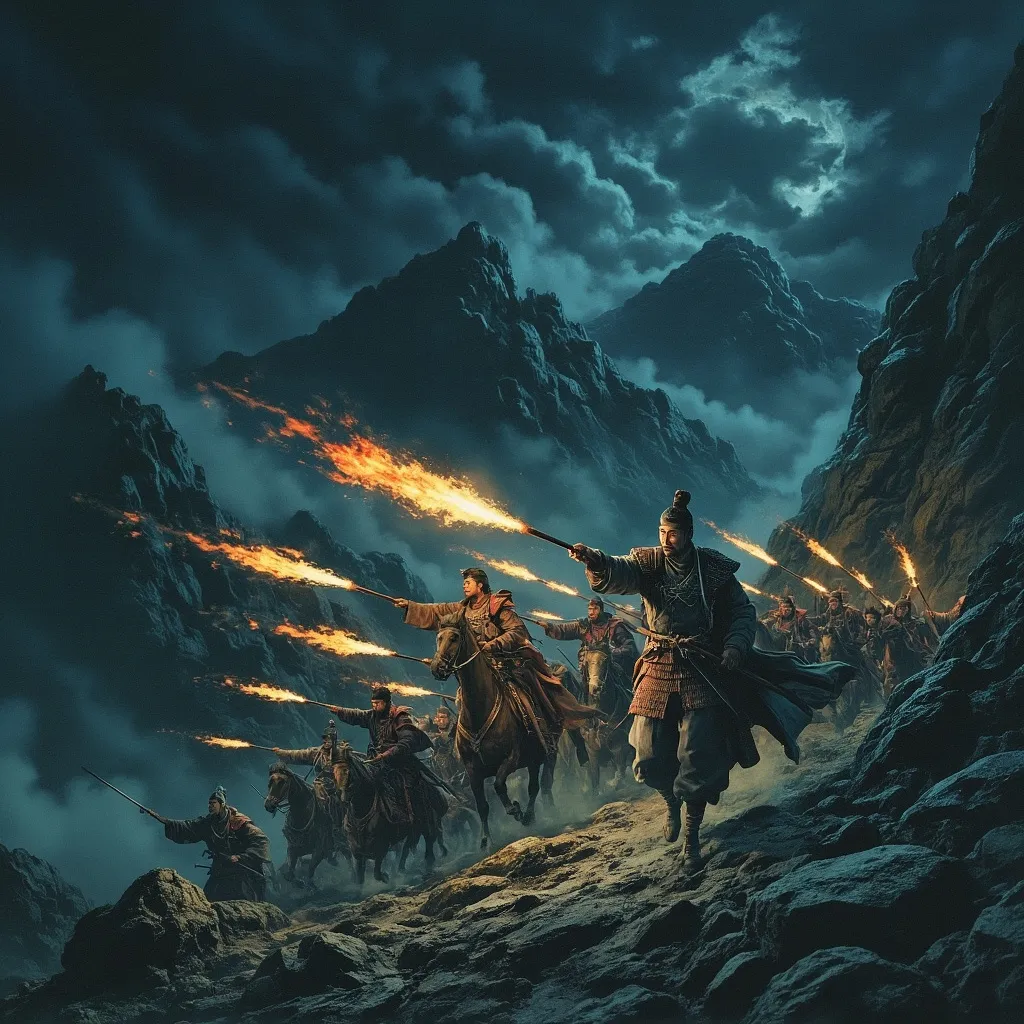
What followed validated Xiao He’s judgment in a way that few talent recognitions ever have. Han Xin won battle after battle against Chu forces. He captured the strategic city of Chen Cang using the famous deception that gave us the idiom 暗渡陈仓. He systematically dismantled Xiang Yu’s military advantages through a combination of speed, terrain manipulation, and psychological strategy. Within a few years, the Chu forces that had seemed invincible were in retreat, and Xiang Yu was trapped at Gaixia hearing songs of Chu from every direction.
The empire that Liu Bang built — the Han Dynasty that would define Chinese civilization for the next four centuries — existed because Xiao He chased a man down a dark road in the middle of the night and refused to let him disappear.
The Meaning of the Idiom
萧何月下追韩信 has entered Chinese usage to describe the act of someone going to extraordinary lengths to recruit or retain exceptional talent. It implies urgency, personal commitment, and the willingness to act on judgment that others cannot share. When a modern Chinese speaker uses this phrase, they are evoking a very specific image: the prime minister on horseback in the darkness, racing against time to save a man whose value he alone fully understood.
The idiom also carries a secondary meaning related to the importance of timing. Xiao He caught Han Xin before sunrise, before it was too late. The phrase is sometimes used to describe situations where decisive action at the right moment prevented an irreversible loss. It is about recognizing the critical window — the moment when intervention can still改变 outcome — and seizing it without hesitation.
What Made Xiao He Different
The story of 萧何月下追韩信 raises a question that remains relevant across cultures and centuries: why was Xiao He able to see what others could not?
Part of the answer lies in Xiao He’s role. As chief administrator, he spent more time observing Han Xin than anyone else. He saw the daily work, the conversations, the small moments of competence and insight that did not make it into official reports. He was in a position to notice talent that was hiding in plain sight.
But position alone does not explain it. Many administrators would have noticed something unusual about Han Xin and concluded that it was not their problem. Xiao He went further: he recognized the talent, understood its significance, and acted on that understanding at personal cost. He spent an entire night chasing a deserter because he believed — truly believed — that the future of the kingdom depended on bringing this one man back.
This kind of judgment requires something more than intelligence or observation. It requires a willingness to be wrong, publicly, in service of a conviction that you cannot fully prove. Xiao He was staking his reputation on Han Xin. If Han Xin had failed — if the promotion had been a mistake — Xiao He would have been blamed for pushing it. He chased Han Xin anyway, because he was certain enough of his judgment to accept the risk.
The Lesson About Talent
There is a lesson in 萧何月下追韩信 that applies to every domain where human beings try to accomplish difficult things together. Exceptional talent often looks unexceptional until it is given the context to succeed. Han Xin had failed at every position he had held not because he lacked ability but because he had never been placed in a role that matched his abilities. His earlier failures were not evidence of his limitations — they were evidence of the gap between his actual talents and the opportunities available to him.
Recognizing this kind of hidden talent requires something that most organizations struggle to build: a culture where people at every level feel empowered to advocate for what they genuinely believe, even when their judgment runs against consensus. Xiao He was able to chase Han Xin because he had enough autonomy to act on his convictions. In a more rigid hierarchy, he might have filed a report, waited for approval, and lost Han Xin to some other cause.
The story also reminds us that talent recognition is often not a clean or rational process. Xiao He could not prove, with evidence that would satisfy a skeptic, that Han Xin was the strategic genius he believed him to be. He had observed carefully, reasoned carefully, and arrived at a conclusion that he could not fully defend with facts. He acted on faith — not blind faith, but faith grounded in months of careful observation and deep expertise in military affairs.
That combination — observation, expertise, and the courage to act on incomplete information — is what separates the people who discover exceptional talent from the people who let it walk out the door.
Recommended Reading & Products
Want to explore the story of Han Xin, Xiao He, and the founding of the Han Dynasty further? Here are some resources to deepen your understanding of this extraordinary period:
Records of the Grand Historian: Biographies of Han Xin and Xiao He — Sima Qian’s detailed biographies of both Han Xin and Xiao He, including the famous moonlit chase. The primary historical source for virtually everything we know about this period, written with extraordinary narrative power by China’s greatest historian.
The Han Dynasty: A Very Short Introduction — A concise and accessible overview of the Han Dynasty’s founding, including the Chu-Han Contention and the roles played by Han Xin, Xiao He, and Liu Bang. Places the moonlit chase in broader context of the dynasty’s establishment.
The Art of War by Sun Tzu — The strategic text that shaped Han Xin’s military thinking. Understanding Sun Tzu helps explain why Han Xin’s approach to warfare was so different from Xiang Yu’s — and why he was able to win battles that should have been unwinnable.
Traditional Chinese Silk Painting: Moonlit Chase Scene — A reproduction of a classical Chinese painting depicting the moonlit chase between Xiao He and Han Xin. Traditional Chinese art captures the atmosphere and drama of historical scenes in ways that words alone cannot convey.
Total War: Three Kingdoms — Han Xin Campaign DLC — The strategy game lets you take control of Han Xin’s campaigns as Xiao He, experience the strategic brilliance that justified the moonlit chase. See firsthand why Xiao He was willing to stake everything on this one man’s abilities.