- “Buddhist Scripture Study Sets”
- “Silk Road Travel Guides”
- “Great Wild Goose Pagoda Books”
- “Tang Dynasty History Collection”
- “Meditation Cushions and Supplies”
Xuanzang: The Monk Who Walked 17 Years to Transform Buddhist China
In the year 629 CE, a young Chinese monk named Xuanzang (玄奘) made a decision that would alter the course of religious history across all of East Asia. Disatisfied with the Buddhist texts available in China, which he felt contained contradictions and omissions, he resolved to travel westward to India—the birthplace of Buddhism—where he would study the original Sanskrit scriptures and bring them back to enrich his homeland’s understanding of the dharma. What followed was one of the most extraordinary journeys in human history: seventeen years of travel across some of the most hostile terrain on Earth, through deserts and over mountain passes that had claimed the lives of countless travelers before him.
When Xuanzang finally returned to China in 645 CE, he brought with him 657 Buddhist texts, a wealth of knowledge that would transform Chinese Buddhism from a somewhat fragmentary collection of doctrines into a comprehensive spiritual tradition with deep philosophical foundations. He spent the remaining years of his life translating these texts into Chinese, making them accessible to the growing Buddhist community in Tang Dynasty China. His translation work at the Great Wild Goose Pagoda in Chang’an produced texts that would later spread to Korea, Japan, and Vietnam, making Chinese Buddhism the vehicle through which the faith was transmitted across East Asia.
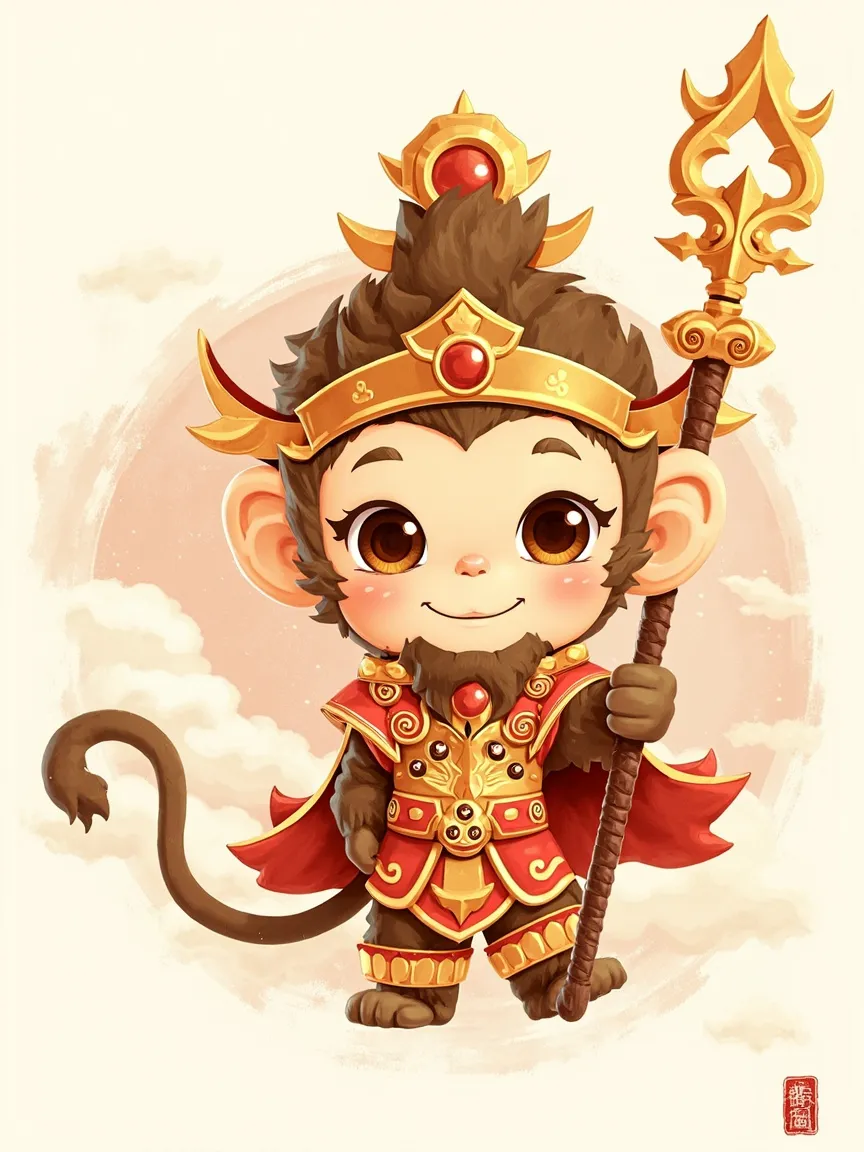
But Xuanzang’s influence extended far beyond mere translation. His travels and his writings inspired one of the greatest works of Chinese literature—the mythological novel “Journey to the West” (西游记), in which the monk is reimagined as a central character accompanied by three disciples, including the famous Monkey King. In that story, Xuanzang’s physical weakness becomes a virtue, as he relies on his disciples’ martial prowess while maintaining his moral authority and spiritual dedication. The real Xuanzang, while perhaps less fantastically assisted, was no less remarkable in his actual achievements.
The Making of a Pilgrimage: Xuanzang’s Early Life and Decision to Travel
Xuanzang was born in what is now Luoyang, Henan Province, around 602 CE, during the Sui Dynasty—a period of temporary unification that preceded the even more glorious Tang Dynasty. His family was respectable but not aristocratic, and his father held a minor government position. Tragedy struck early in Xuanzang’s life when he lost both parents, but this personal loss may have contributed to his spiritual sensitivity. By the age of eight, he was already studying Buddhism with unusual intensity, and by his teens he had become a monk, devoting himself to understanding the Buddhist teachings that were spreading throughout China.
In the monasteries of Chang’an and elsewhere, Xuanzang encountered a Buddhist tradition that was vibrant but, to his analytical mind, incomplete. Different schools taught different doctrines, often contradicting each other, and no one seemed to have a definitive answer to which interpretation was correct. The Buddhist texts available in Chinese were translations—sometimes poor ones—of original Sanskrit works, and important passages were often missing or unclear. For a mind as precise and curious as Xuanzang’s, this was deeply unsatisfying.
The solution that presented itself to Xuanzang was radical: travel to India, the land where the Buddha had lived and taught, study Sanskrit, learn from Indian Buddhist masters, and return with texts that would resolve the contradictions plaguing Chinese Buddhism. It was an astonishingly ambitious plan for a single individual. The journey from China to India and back covered roughly 10,000 miles, passing through some of the most forbidding terrain on Earth—the Taklamakan Desert, the Pamir Mountains, the Himalayas. Countless pilgrims had attempted similar journeys; many had died along the way.
When Xuanzang applied for official permission to travel abroad, he was refused. The Sui Dynasty had recently collapsed and the Tang Dynasty was still consolidating its power; travel abroad was discouraged as potentially destabilizing. But Xuanzang was not to be deterred. In 629 CE, he joined a group of merchants traveling westward and slipped out of China through the Yumen Pass, beginning a journey that would consume nearly two decades of his life.
Seventeen Years Along the Silk Road: Triumphs and Perils
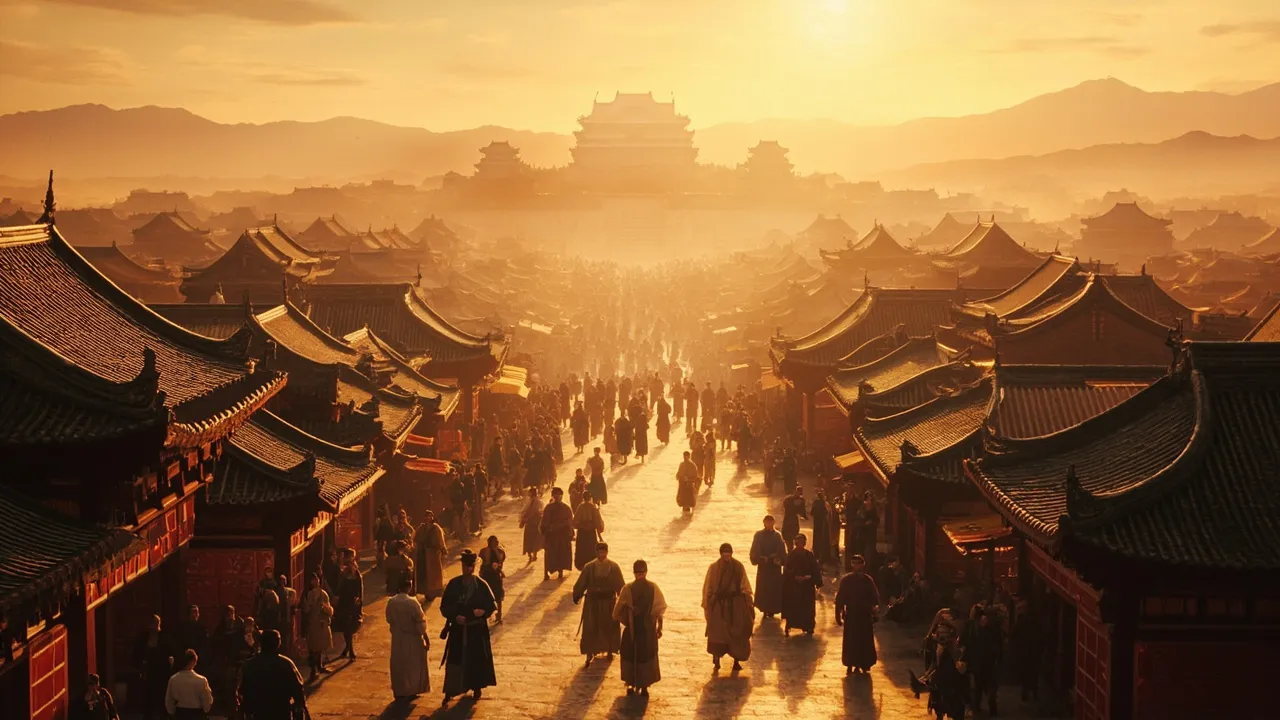
The first leg of Xuanzang’s journey took him through the oasis cities of the Western Regions—places like Turpan, Kashgar, and Khotan—that marked the transition between Chinese civilization and the nomadic and imperial cultures of Central Asia. Each oasis was a small island of cultivation in a sea of desert, and each had its own Buddhist community, its own monasteries, its own texts and traditions. Xuanzang spent time at each location, studying with local teachers, copying manuscripts, and gathering information about the routes ahead.
The dangers he faced were constant and varied. Crossing the Taklamakan Desert—a vast sea of sand with virtually no water—was a test of endurance that killed many travelers. Xuanzang nearly died there more than once. On one occasion, he ran out of water and collapsed, only to recover and press on when he glimpsed a patch of vegetation that indicated the presence of an underground spring. The desert winds could bury a traveler in moments; the bandits who preyed on caravans were a constant threat. In the high mountain passes of the Pamirs, Xuanzang faced altitudes that made breathing difficult and temperatures that could kill in hours.
Yet despite these hardships, Xuanzang kept meticulous records of everything he saw and experienced. His travel diary, the “Great Tang Records on the Western Regions” (大唐西域记), remains one of the most valuable historical documents we have for understanding the cultures and societies along the Silk Road in the seventh century. He describes the customs, religions, political systems, and daily practices of the dozens of peoples he encountered with an anthropologist’s precision and a traveler’s wonder. For modern historians studying medieval Central Asia, Xuanzang’s account is indispensable.
After years of travel, Xuanzang finally reached India—the object of his quest. He studied at the great monastery of Nalanda, which was perhaps the most prestigious Buddhist university in the world at that time, with thousands of scholars pursuing every aspect of Buddhist learning. He studied under renowned masters, debated with fellow scholars, and immersed himself in the Sanskrit texts that had been the goal of his entire journey. He traveled extensively throughout India, visiting the sacred sites associated with the Buddha’s life and teachings, and collecting texts wherever he found them.
Return with Treasure: The 657 Sacred Texts
When Xuanzang finally began his return journey to China, he carried with him 657 Buddhist texts—a collection of sutras, commentaries, philosophical treatises, and ritual manuals that represented the accumulated wisdom of Indian Buddhism. The texts weighed enormous quantities; they required multiple horses and camels to transport, and their safe passage home became a matter of intense personal concern for Xuanzang.
His return was something of a triumph. Word of his scholarly achievements in India had reached China, and by the time he arrived back at the border in 645 CE, Emperor Taizong was well aware of who he was and what he had accomplished. The emperor who had initially refused him permission to travel now welcomed him with honor, providing facilities for his translation work and supporting his scholarly efforts for the remainder of his life. The Tang Dynasty was at that moment at its height—a cosmopolitan empire that valued learning and culture, and Xuanzang’s achievement fit perfectly within that context.
The texts Xuanzang brought back transformed Chinese Buddhism. Many of the sutras he returned with had never been translated into Chinese before; others existed in incomplete or unsatisfactory translations that he now replaced with more accurate renderings. He brought back philosophical treatises from the Yogacara school that would become enormously influential in East Asia, and he provided the foundation for the creation of a comprehensive Chinese Buddhist canon that could stand alongside anything India had produced.
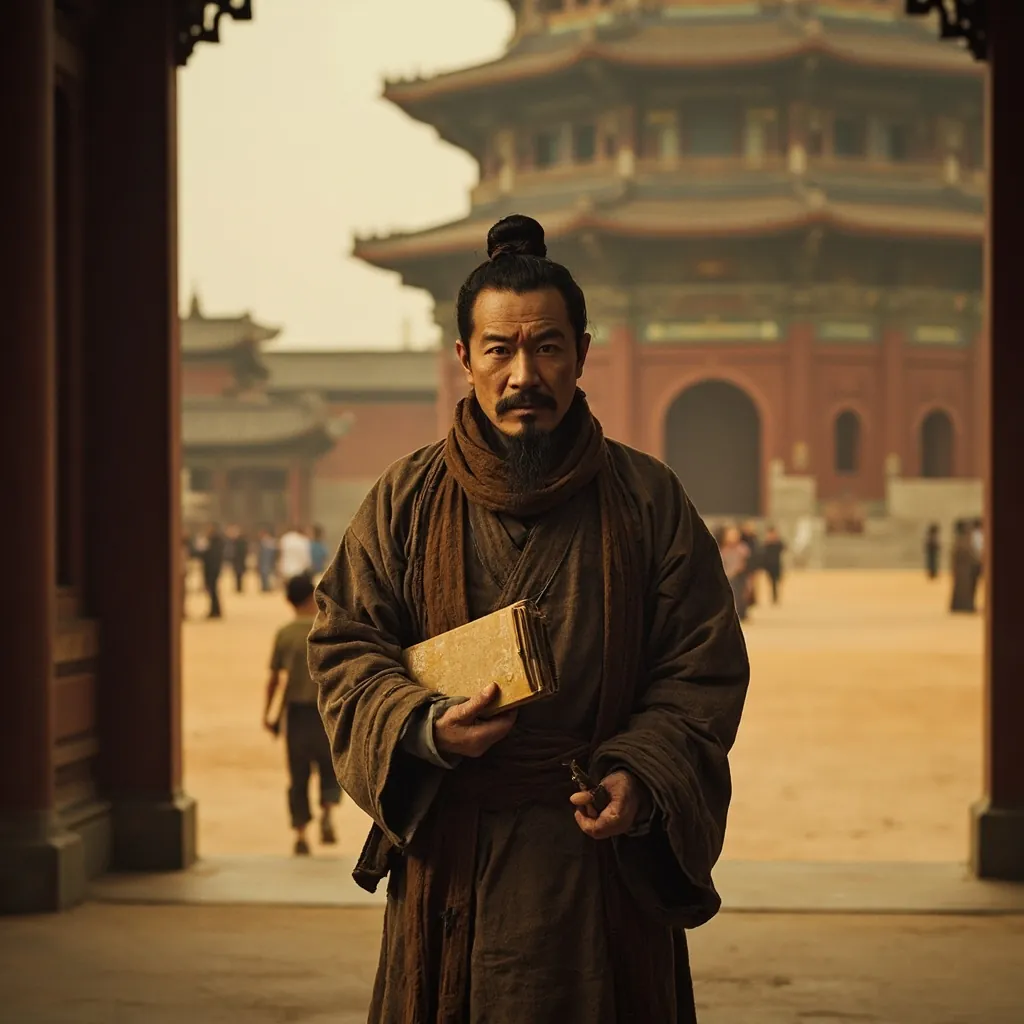
But Xuanzang’s contribution was not merely to bring texts back; it was to translate them. The translation work alone occupied the last nineteen years of his life, from 645 CE until his death in 664 CE. He established a translation bureau at the Great Wild Goose Pagoda in Chang’an, where he worked with teams of assistants—Chinese monks who helped with the mechanical aspects of translation and Sanskrit scholars who assisted with the original texts. His approach to translation was rigorous and systematic; he developed standardized terminology for Buddhist concepts, creating a technical vocabulary in Chinese that is still used today.
The Great Wild Goose Pagoda: Center of Buddhist Learning
The Great Wild Goose Pagoda (大雁塔) in Chang’an stands today as a monument to Xuanzang’s achievement. Built in 652 CE under Emperor Gaozong, the pagoda was constructed specifically to house the Buddhist texts and statues that Xuanzang had brought back from India. It has been rebuilt and renovated many times over the centuries, but its essential form—a tiered pyramid rising nine stories into the sky—remains much as it was in Xuanzang’s time.
At the pagoda, Xuanzang presided over a community of scholar-monks engaged in the massive project of translation. He personally supervised the translation of many of the most important texts, checking every line, resolving every ambiguity, ensuring that the Chinese renderings captured the full meaning of the Sanskrit originals. The work was painstaking and slow; translation of complex Buddhist philosophical texts requires not just linguistic competence but deep spiritual and intellectual understanding, and Xuanzang was one of the few people in China with both.
The texts that came from Xuanzang’s translation bureau spread throughout East Asia, carried by monks and pilgrims to Korea, Japan, and Vietnam. When those countries developed their own Buddhist traditions, they drew heavily on the Chinese translations that Xuanzang had produced—translations that remain the standard versions of many sutras to this day. In this way, a single monk’s determination to resolve the contradictions in Chinese Buddhism became the foundation for the entire Buddhist tradition across East Asia.
From Reality to Myth: Xuanzang in Journey to the West
Perhaps the most remarkable measure of Xuanzang’s cultural impact is the way he was transformed in Chinese literature and folklore. The historical Xuanzang was a determined, methodical scholar with exceptional linguistic abilities and spiritual dedication. The Xuanzang of “Journey to the West” (西游记), written by Wu Cheng’en in the sixteenth century, is a rather different figure—a kind, gentle, and physically frail monk who is repeatedly captured by demons and must be rescued by his disciples.
In the novel, Xuanzang’s purity of heart becomes his defining characteristic. He is so virtuous that evil spirits are attracted to him, hoping to eat his flesh and gain immortality, but he is also so innocent that he repeatedly falls into their traps. His three disciples—Sun Wukong (the Monkey King), Zhu Bajie (Pigsy), and Sha Wujing (Sandy)—serve as his protectors, using their supernatural powers to defend him against the monsters and difficulties of the journey.
The novel is on one level an adventure story, full of fantasy and humor, but it is also a profound allegory of the spiritual journey. Each of the disciples represents a different aspect of human nature that must be mastered before enlightenment can be achieved. Sun Wukong, for all his rebellious energy, must learn discipline; Zhu Bajie must overcome his greed and lust; Sha Wujing must abandon his tendency toward despair. Xuanzang’s role is to be the moral center—the embodiment of the goal toward which all spiritual aspirants strive.
The contrast between the historical and literary Xuanzang is striking, but both figures capture something essential about his legacy. The historical Xuanzang demonstrated that spiritual dedication could overcome any obstacle—that the human will, properly directed, could accomplish journeys that seemed impossible. The literary Xuanzang represents the object of that dedication: the pure dharma that draws the pilgrim forward and transforms everyone who encounters it.
Legacy and Enduring Influence
Xuanzang died in 664 CE, at the Great Wild Goose Pagoda, surrounded by his students and fellow monks. He had spent the last nineteen years of his life in translation work, producing texts that would shape East Asian Buddhism for centuries to come. His influence extended far beyond his lifetime; the Buddhist tradition as it exists today in China, Korea, Japan, and Vietnam bears his mark in ways both obvious and subtle.
In India, Xuanzang is remembered as one of the great Buddhist pilgrims—one of the few Chinese monks whose travels are known and celebrated. The accounts he left of Indian Buddhism, written before the religion’s decline on the subcontinent, provide invaluable information about how Buddhism was practiced in the seventh century, during what we now understand to have been a golden age of Indian Buddhist civilization.
In China, Xuanzang became a cultural hero whose story was told and retold for generations. His journey became a symbol of what human determination could achieve, and his translation work became the foundation for centuries of Buddhist scholarship. The Great Wild Goose Pagoda remains one of China’s most famous landmarks, drawing visitors who come to see the place where a single monk’s vision transformed a civilization’s spiritual life.
The story of Xuanzang is ultimately a story about the power of asking questions. He looked at the Buddhism of his time and saw contradictions he could not accept. Rather than ignoring those contradictions or accepting easy answers, he set out to resolve them—even if resolution required walking 10,000 miles through some of the most dangerous terrain on Earth. His example suggests that genuine spiritual understanding requires courage, dedication, and a willingness to go to extraordinary lengths in pursuit of truth.
Recommended Reading and Products
Whether you’re interested in exploring Xuanzang’s journey, studying Buddhist teachings, or visiting the sites associated with his legacy, these resources can help you on your way:
Buddhist Scripture Study Sets — Explore the texts that Xuanzang brought to China. Quality editions of sutras with annotations help modern readers engage with the teachings that shaped East Asian civilization.
Silk Road Travel Guides — Plan your own journey along the route Xuanzang traveled. From Chang’an to Kashgar to the markets of Samarkand, the Silk Road offers one of the world’s great travel experiences.
Great Wild Goose Pagoda Books — Learn more about the site where Xuanzang conducted his translation work. These guides provide historical context and cultural insights for visitors to this iconic monument.
Tang Dynasty History Collection — Understand the era that made Xuanzang’s achievement possible. The Tang Dynasty was one of the most cosmopolitan and culturally vibrant periods in Chinese history.
Meditation Cushions and Supplies — Follow in Xuanzang’s spiritual footsteps with a meditation practice. Traditional zafu cushions provide the proper foundation for seated meditation.