- “Tang Dynasty Fashion and Textiles”
- “Chinese Historical Romance Novels”
- “Traditional Chinese Makeup Sets”
- “Tang Dynasty History Books”
- “Chinese Silk Fans and Handcrafts”
Yang Guifei: The Beauty Who Shook an Empire and Redefined Chinese Aesthetics
She was, by all accounts, one of the most beautiful women in Chinese history—a woman whose face, according to poets who saw her, could humiliate flowers and cause the moon to hide in shame. But Yang Guifei (杨贵妃) was far more than a pretty face. She was a dancer of extraordinary grace, a musician who mastered instruments that took decades to learn, and a woman whose presence at the Tang Dynasty court became the pivot around which an empire’s fate turned. Her story is a tale of love, beauty, political disaster, and artistic legacy—a story that has been told and retold for over a thousand years, inspiring some of the most beautiful poetry in Chinese literature.
Yang Guifei’s life intersected with one of the most dramatic periods in Chinese history: the reign of Emperor Xuanzong, whose early years saw the Tang Dynasty reach its golden peak, and whose later years witnessed its catastrophic decline. She entered the imperial harem not as a conquest but as a daughter-in-law of the emperor’s choosing—first married to his son, then taken by the emperor himself in a scandal that would have consequences no one could have predicted. Her influence over Xuanzong was legendary; she reportedly had him wrapped around her finger, and his neglect of state affairs in favor of her company became the stuff of cautionary tales.
But to reduce Yang Guifei to mere beauty or mere political influence is to miss what made her truly remarkable. She was an artist of the highest order—a dancer and musician whose talents were essential to her identity, not mere ornaments to her beauty. When she danced, the palace itself seemed to come alive. When she played the guqin, even the most jaded courtiers fell silent. It was this combination of physical beauty and artistic excellence that made her truly unforgettable, and it is this combination that Chinese poets have celebrated for centuries.
A Unique Beauty: The Woman Who Made the Moon Hide
The traditional accounts of Yang Guifei’s appearance are almost certainly exaggerated through centuries of retelling, but they give us a sense of how she was perceived by contemporaries and later generations. She was said to have “face like a flower” and a complexion so pure that it seemed to glow from within. Her eyebrows were compared to distant mountains; her eyes were said to sparkle like autumn waters. One poet wrote that when she walked, the very peonies in the palace garden seemed to bow their heads in deference.
What distinguished Yang Guifei from other beautiful women at court was not just her physical appearance but her extraordinary talents. She was a gifted dancer, particularly skilled in the graceful, flowing movements of palace dance that required years of training to master. Her performances in the Huaqing Pool, the imperial bathing complex near Chang’an, became legendary—during festivals, she would dance on a platform that seemed to float on the water’s surface, her movements so light that observers sometimes wondered if she was human or spirit.
Her musical abilities were equally impressive. She is said to have mastered the guqin, the seven-stringed zither that was considered the most sophisticated of Chinese instruments, requiring decades of practice to play properly. She also had a beautiful singing voice, and her renditions of court music were prized above all others. In a society where artistic accomplishment was highly valued, Yang Guifei was not merely beautiful—she was brilliant, and her beauty was inseparable from her artistry.
The famous incident that most clearly illustrates her effect on Emperor Xuanzong involves peaches. According to the story, Xuanzong once had some especially fine peaches brought to the palace. When the fruit was presented to Yang Guifei, she bit into it and found it sweet beyond expectation. The emperor, delighted by her enjoyment, ordered that half of the peach be brought to his own lips—but even this intimate gesture seems to have been insufficient, for the story goes on to say that he then placed his lips where hers had touched. This story, whether literally true or not, captures something essential about the relationship between Xuanzong and Yang Guifei: a passion that transcended the normal boundaries between emperor and consort.
Love at the Imperial Court: The Emperor and His Pearl
The romance between Emperor Xuanzong and Yang Guifei has become one of the great love stories of Chinese history, depicted in countless poems, paintings, and operas over the centuries. But it was also a relationship that existed within and was shaped by the peculiar pressures of imperial politics—pressures that would ultimately destroy both of them.
Xuanzong, whose reign began in 712 CE, was initially one of the most capable emperors in Chinese history. During his early years, he reformed the government, reduced taxes, promoted talented officials, and generally governed with wisdom and restraint. The Tang Dynasty reached its zenith during this period; Chang’an was the largest and most cosmopolitan city in the world, and Chinese culture flowered in ways that would influence the entire East Asian region. It was into this world of prosperity and cultural achievement that Yang Guifei was born, around 719 CE.
Her path to the imperial harem was unusual. Initially, she became a lady-in-waiting to Princess Yicheng, one of Xuanzong’s daughters. While serving at the princess’s residence, she caught the eye of the princess’s son, Li Mao, and the two fell in love. They were married, and for a time it seemed that Yang Guifei would live out her days as the wife of a royal prince—comfortable but not extraordinary.
Then, for reasons that have never been fully explained, Xuanzong became aware of his daughter-in-law’s beauty and talents. Whether he was drawn by her physical appearance alone, or by reports of her artistic abilities, or by some combination of factors, the emperor decided that he wanted her for himself. The circumstances of this decision remain murky—some accounts suggest manipulation by court officials who wanted to gain favor, others suggest the emperor’s own uncontrollable desire. What is clear is that Xuanzong arranged for his son to divorce Yang Guifei, and she was inducted into the imperial harem, eventually rising to the position of Guifei, or Imperial Consort—one of the highest ranks available to a woman in the Tang Dynasty hierarchy.
The relationship between Xuanzong and Yang Guifei was marked by intense passion, but also by frequent quarrels and reconciliations. According to historical accounts, Yang Guifei was not above using her influence to gain advantages for her family members, and she could be jealous and possessive. Xuanzong, for his part, was sometimes so besotted that he neglected state affairs. Yet for all the dysfunction in their personal relationship, there was clearly a genuine connection between them—the kind of love that poets write about, the kind that transcends mere political arrangement.
Political Storm: The An Lushan Rebellion and the Fall from Grace
The An Lushan Rebellion, which began in 755 CE, stands as one of the most catastrophic events in Chinese history—a nine-year civil war that killed millions and fundamentally altered the trajectory of the Tang Dynasty. And at the center of the political storm that helped precipitate this disaster was Yang Guifei, whose family members had risen to positions of enormous power and influence during her time as imperial consort.
Yang Guifei’s adopted cousin, Yang Guozhong, had become chief minister—a position he was arguably not qualified for, having risen primarily through family connections rather than demonstrated competence. The Yang family had accumulated enormous wealth and influence, and their arrogance had made them many enemies at court. When An Lushan, a powerful military governor of Turkic descent, launched his rebellion against the Tang Dynasty, he presented himself as a defender of the emperor against the corrupt Yang family—a framing that, whatever its accuracy, found receptive ears among those who had suffered under Yang Guozhong’s misrule.
The rebellion caught the Tang government completely unprepared. An Lushan’s forces swept down from the north, capturing the capital Chang’an in 755 CE and forcing Xuanzong and his court to flee. As the imperial convoy fled westward, the anger of the soldiers—many of whom blamed the Yang family for the disaster—reached a boiling point. They demanded justice; they demanded blood. Yang Guozhong was killed by the mob. And then they turned their attention to Yang Guifei herself.
The tragedy at Mawei Mountain is one of the most poignant scenes in all of Chinese history. As the imperial convoy paused at this remote location, the soldiers refused to continue until Yang Guifei was punished for the disaster that had befallen the empire. Xuanzong, faced with the choice of losing his beloved or losing his throne—and perhaps his life—ultimately chose to sacrifice her. According to the most famous account, Yang Guifei was strangled by a palace maid, and her body was buried by the roadside in a simple grave. She was thirty-seven years old.
The pain this caused Xuanzong was immense. He mourned her for the rest of his days, composing poems about her beauty and his loss. In the versions of the story that have come down to us, there is a sense that Xuanzang never really recovered from this moment—that a part of him died with her on that mountain road. The empire was eventually saved by other generals, and the Tang Dynasty limped on for another century and a half, but the golden age had ended, and everyone knew it.
Artistic Legacy: The Most Beautiful Woman in Chinese Literature
If the historical Yang Guifei was destroyed by the political circumstances she found herself in, the legendary Yang Guifei has lived forever in Chinese art and literature. She became a symbol—of beauty, of passion, of the danger that beauty and passion can bring, and of the way that individual lives can become entangled with the fate of empires.
The most famous literary treatments of Yang Guifei are undoubtedly those by the great Tang poet Bai Juyi, whose long poem “Song of Lasting Sorrow” (长恨歌) is considered one of the masterpieces of Chinese literature. Written more than half a century after Yang Guifei’s death, the poem recreates her story with extraordinary emotional power. It dwells on the romance between Xuanzong and Yang Guifei, the happiness they found together, and the tragedy that destroyed them. But it also imagines what happened after her death—the emperor’s grief, his attempts to find her in the afterlife, and the eternal bond that connects them across the divide of mortality.
In Bai Juyi’s telling, Yang Guifei becomes something more than a historical figure—she becomes an archetype of tragic love, a woman whose beauty and passion were both her glory and her destruction. The poem was so influential that it shaped the way Chinese readers understood Yang Guifei for centuries afterward. Later poets and novelists drew on his imagery, his themes, and his interpretation of events, creating a tradition of treatment that fixed her place in the Chinese cultural imagination.
Yang Guifei also appears frequently in visual art, particularly in the blue-and-white porcelain that became a major Chinese export from the Tang Dynasty onward. Paintings depicting her life and death have been created by countless artists over the centuries, each bringing their own interpretation to her story. These visual representations often emphasize different aspects of her legacy—the beauty, the tragedy, the romance, or the political warning—depending on the period and the artist’s purpose.
The Eternal Question: Beauty, Blame, and Historical Justice
For centuries, Chinese historians and moralists have debated Yang Guifei’s role in the An Lushan Rebellion. Was she responsible for the disaster that befell the Tang Dynasty? Did her influence over the emperor lead him to neglect state affairs and appoint incompetent officials? Or was she simply a woman who happened to be beautiful and talented, caught up in political forces far beyond her control?
The traditional view, which dominated for many centuries, blamed Yang Guifei for the rebellion. She was seen as a femme fatale whose beauty and influence had corrupted the emperor and destabilized the government. This view found expression not only in historical accounts but also in the popular saying “The empire’s destruction was blamed on the beauty of one person” (一笑倾城,再笑倾国), which associated her with the downfall of the Tang.
More modern interpretations have tended to see Yang Guifei as a victim rather than a cause. She was, by this reading, a talented and beautiful woman who became the consort of a weak emperor, and whose association with the Yang family’s political machinations made her a convenient scapegoat for a disaster that had many causes. The real villains, from this perspective, are An Lushan himself, the incompetent Yang Guozhong, and the system that gave military governors too much power and the emperor too little oversight.
Perhaps the truth lies somewhere between these extremes. Yang Guifei almost certainly had influence over the emperor’s appointments and decisions, and that influence was not always exercised wisely. But it is also true that no single person—not even an imperial consort—could have caused the collapse of a dynasty that had internal contradictions going back decades. The An Lushan Rebellion was the product of systemic weaknesses as much as personal failures, and to blame it entirely on one woman is to misunderstand both history and human nature.
What is undeniable is that Yang Guifei’s story remains powerfully compelling more than a thousand years after her death. She represents something essential about the human experience—the way that love and beauty can bring both joy and tragedy, the way that individual lives can be swept up in forces larger than themselves, and the way that art can transform even the most painful experiences into something beautiful and enduring.
Recommended Reading and Products
Explore the world of Tang Dynasty beauty, romance, and tragedy with these curated resources:
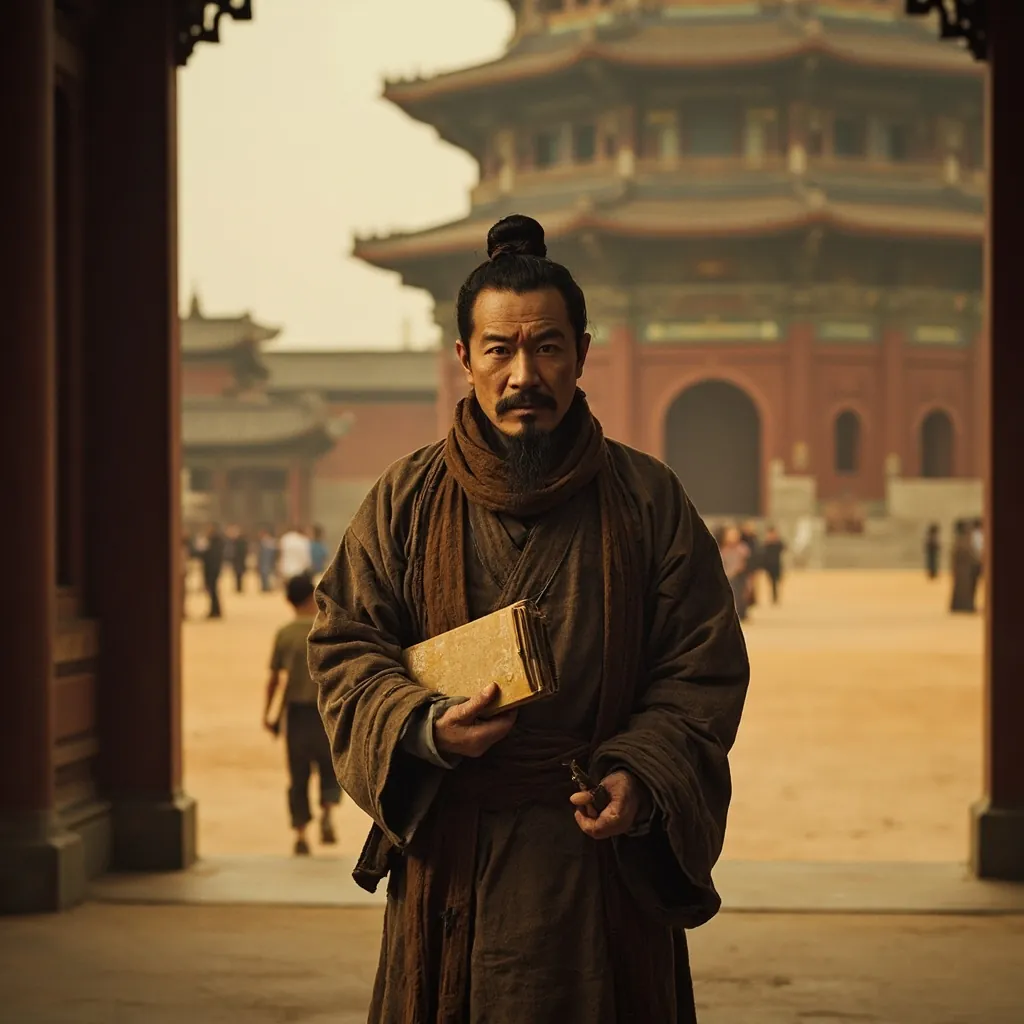
Tang Dynasty Fashion and Textiles — Discover the elaborate costumes and flowing silks that made Tang Dynasty court dress the envy of the ancient world. Modern reproductions allow you to experience something of the elegance that Yang Guifei would have known.
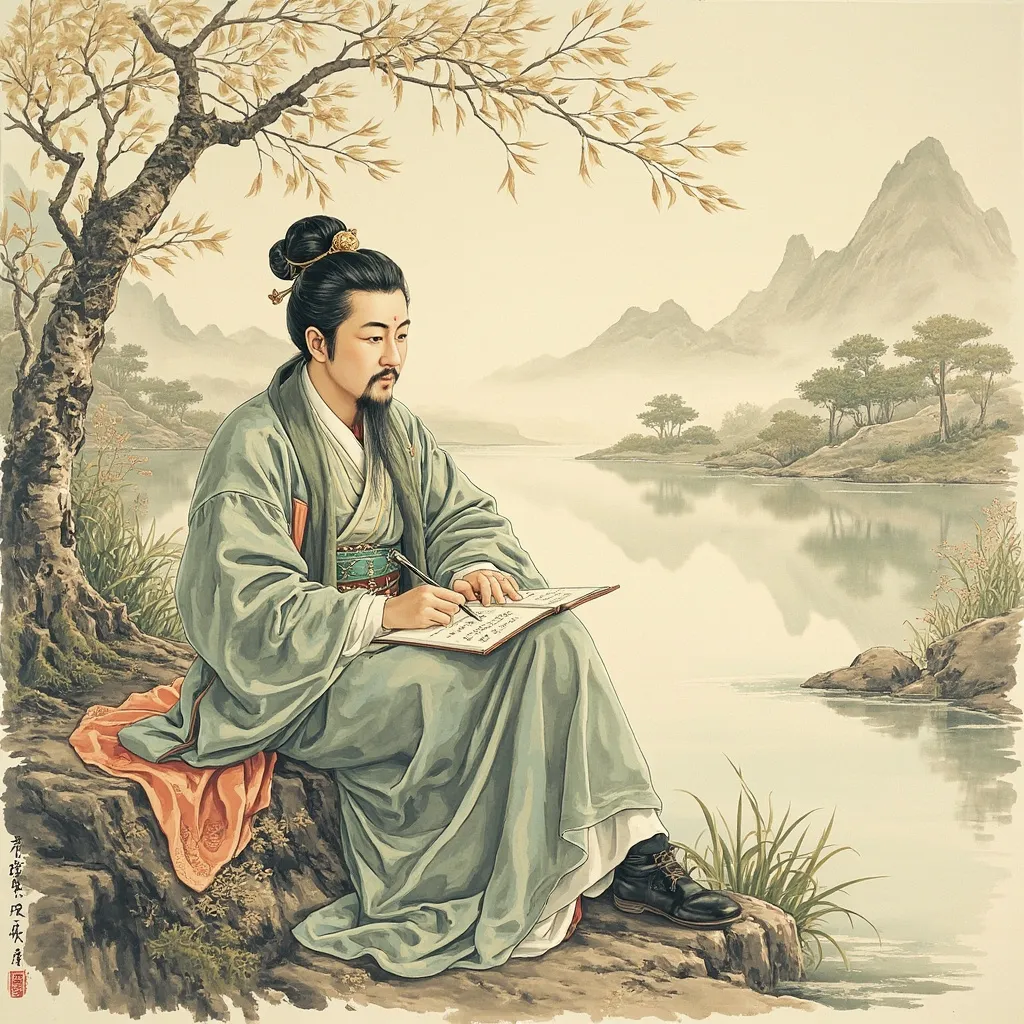
Chinese Historical Romance Novels — Continue the story of Yang Guifei and Emperor Xuanzong through fiction. These novels bring the romance and tragedy of their relationship to life in vivid detail.
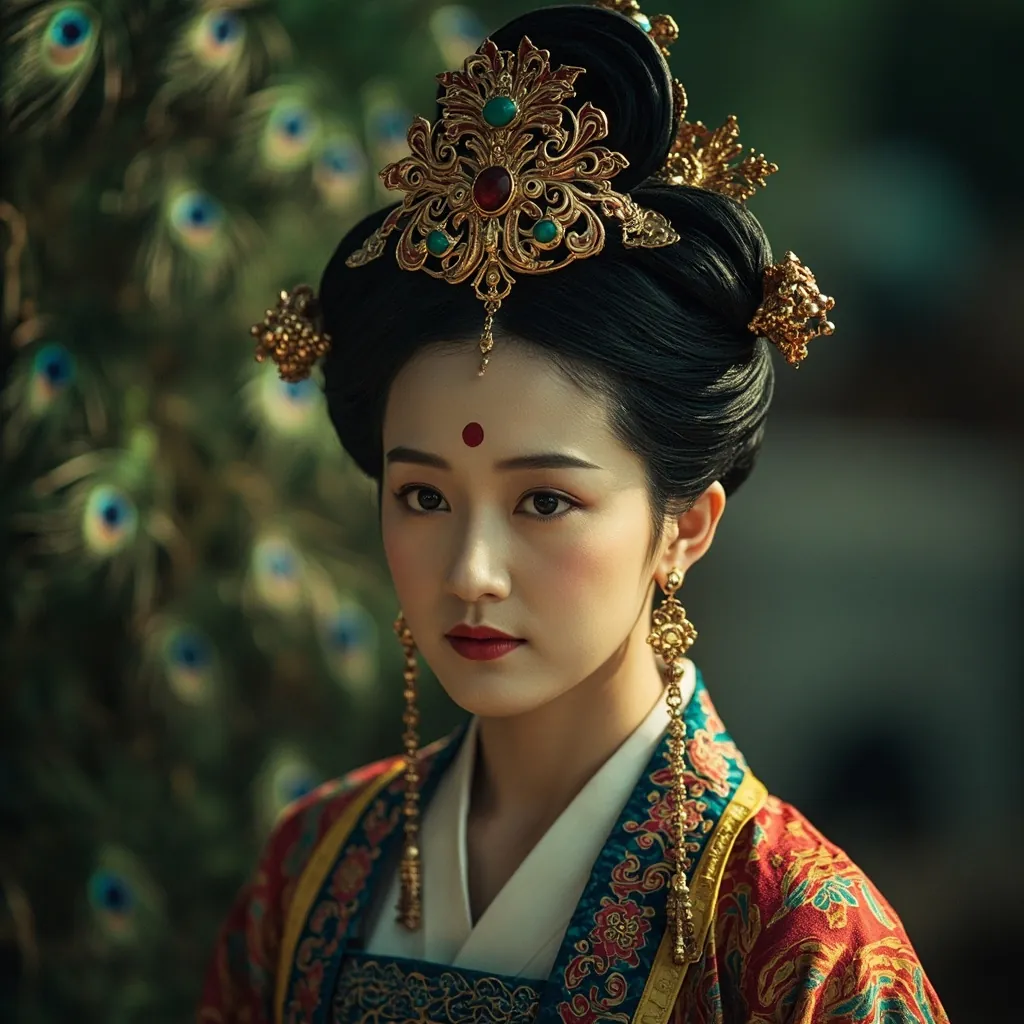
Traditional Chinese Makeup Sets — Recreate the legendary beauty looks of Tang Dynasty court women. Traditional cosmetics using natural ingredients offer an authentic alternative to modern products.
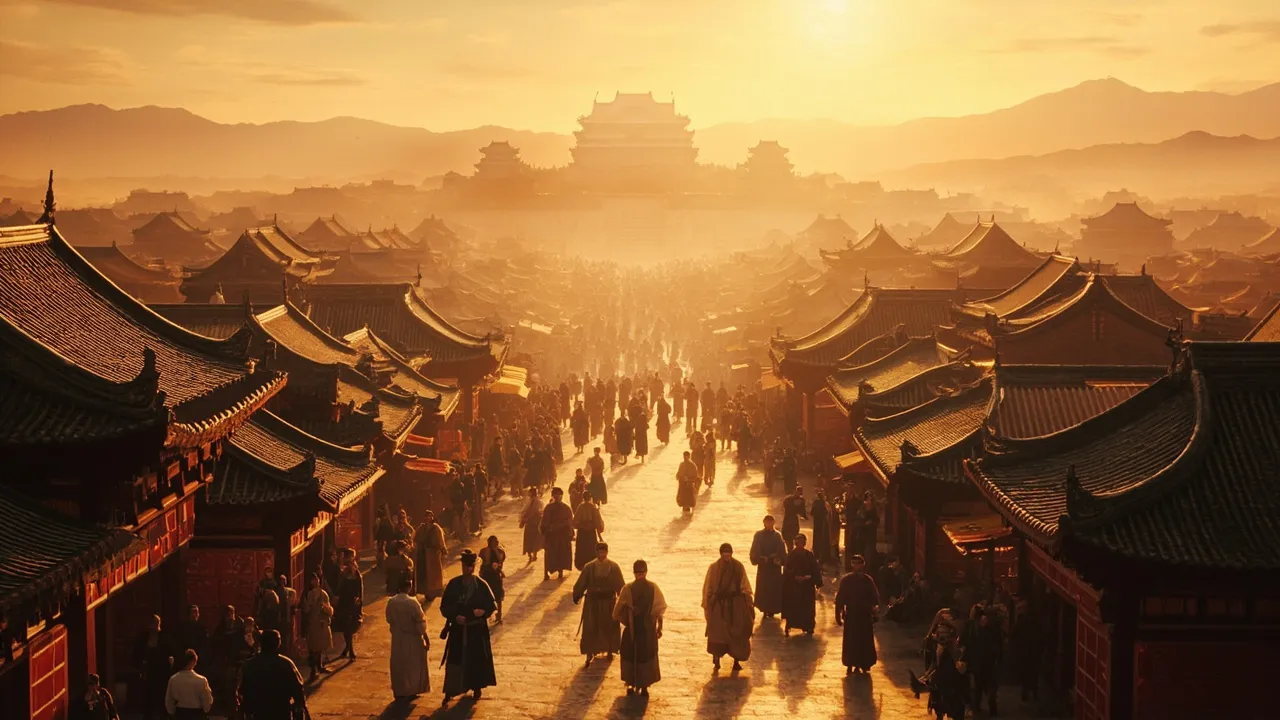
Tang Dynasty History Books — Understand the broader context of Yang Guifei’s life. The Tang Dynasty was one of the most culturally vibrant periods in Chinese history, and these books help you explore its wonders.
Chinese Silk Fans and Handcrafts — The silk fan was an essential accessory for Tang Dynasty court women. Quality silk fans make beautiful display pieces and functional works of art.