In 1987, a team of Chinese archaeologists was excavating the remains of a Buddhist temple complex near the city of Xi’an when they made a discovery that sent shockwaves through the world of Chinese art history. Buried in a stone chamber beneath what had been the temple’s main hall, they found thirteen pieces of ceramic ware so beautiful and so technologically advanced that they challenged everything historians thought they knew about the history of Chinese porcelain.
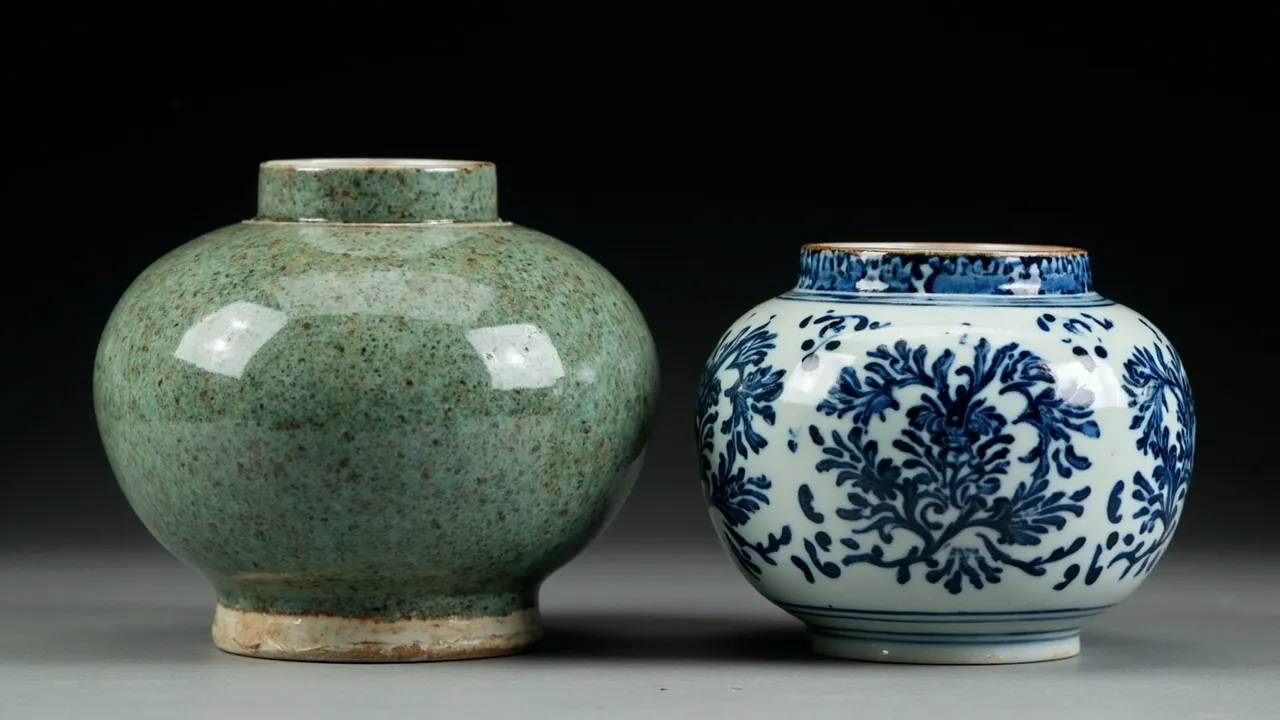
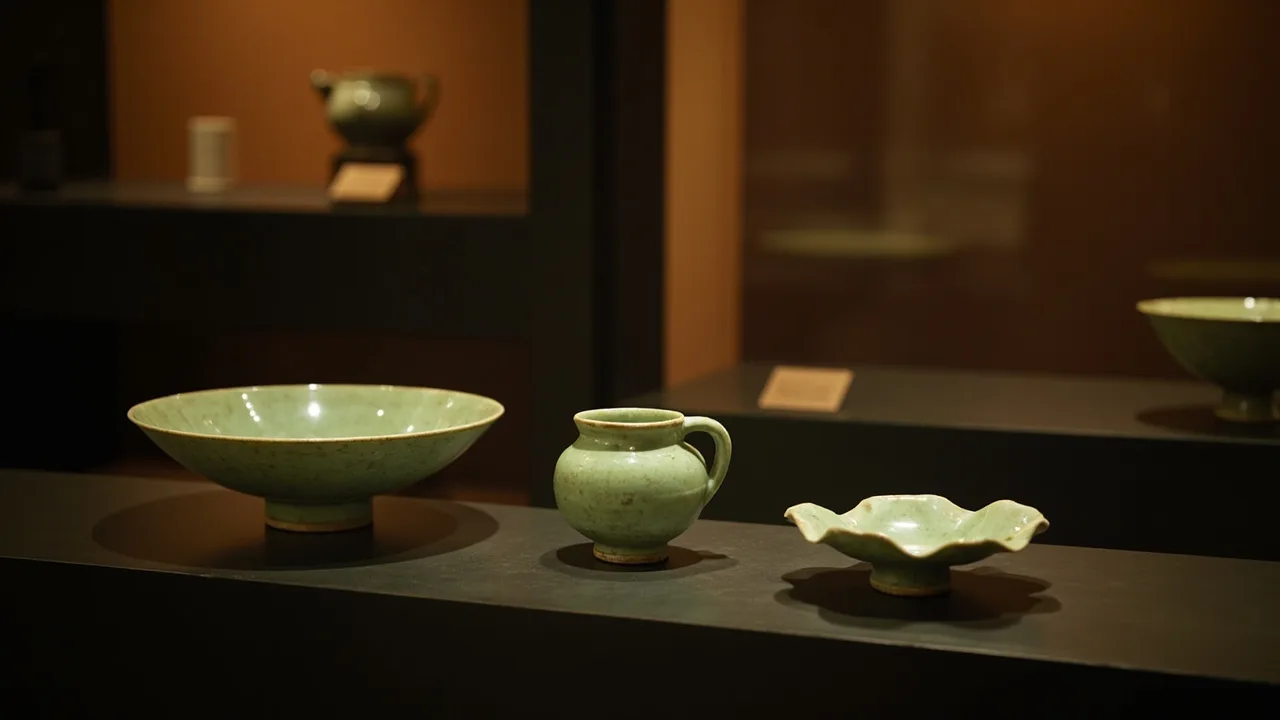
The pieces were celadon — a type of ceramicware with a distinctive pale green glaze that resembles the color of jade. They were dated to the early Tang dynasty, around the seventh century CE, and their quality was extraordinary: the glaze was uniformly applied, the body was thin and translucent, and the color was a pure, even olive-green that had not been matched by any known kiln from that period.
But here is what made the discovery truly remarkable: thekiln site that had produced these pieces was located more than 800 kilometers away, in the coastal province of Zhejiang. The ceramics had been transported hundreds of miles inland to the imperial capital — and they had been considered valuable enough to bury in a temple foundation as a consecrated offering.
The pieces were identified as Yue Ware, one of the oldest and most influential porcelain traditions in Chinese history. And the discovery confirmed what scholars had long suspected: Yue Ware was the source of the “secret color” that had obsessed Tang dynasty aristocrats for centuries — a pale green glaze so coveted that it inspired imitations across the known world.
Where It All Began: Shanglin Lake in Zhejiang
The story of Yue Ware begins in the mountains of Zhejiang province, in the region around Shanglin Lake, about 30 kilometers southwest of the modern city of Ningbo. This area had been producing ceramics for more than a thousand years before the Yue Ware tradition emerged, and the skills of local potters had reached a level of sophistication that was unmatched anywhere else in China.
The geography of the region was crucial to the development of porcelain-making. Zhejiang had abundant deposits of high-quality porcelain stone — a type of rock that, when ground into a powder and fired at high temperatures, produces a white, translucent ceramic body that is the foundation of true porcelain. The region also had extensive forests that provided fuel for the kilns, and a network of rivers and coastal waterways that allowed finished products to be transported to markets across China.
The earliest Yue Ware was produced during the Eastern Han dynasty (25–220 CE), though the term “Yue Ware” specifically refers to the tradition that flourished between the third and tenth centuries CE. The earliest pieces were relatively simple: small bowls, jars, and storage vessels with a pale green or gray-green glaze applied over a gray-white body. They were functional objects, made for everyday use.
But over time, the quality improved dramatically. By the sixth century CE, Yue Ware potters had developed techniques for producing thin-walled vessels with a smooth, even glaze that was waterproof and had a pleasant, jade-like appearance. The glazes ranged in color from a pale gray-green to a deep olive-green, depending on the iron content of the clay and the firing conditions in the kiln. The most prized color — the one that commanded the highest prices and the most elaborate imitations — was a pure, even olive-green that was described in contemporary texts as “mi se,” which translates as “secret color” or “numinous color.”
The “Secret Color”: Why Yue Ware Was So Coveted
The phrase “mi se,” or “secret color,” appears in Tang dynasty poetry and prose as a way of describing the most beautiful and desirable shade of green — a color that seemed to glow from within the ceramic body, that changed slightly depending on the light, and that had an almost supernatural quality of serenity and depth.
What made this color so special? The answer lies in the chemistry of the glaze. Yue Ware celadon gets its green color from iron oxide, which is present in small quantities in the glaze mixture. When the kiln is fired at high temperature in a reduction atmosphere (where there is not enough oxygen to support complete combustion), the iron oxide transforms into a compound that produces the characteristic green color. The exact shade depends on the amount of iron, the temperature, and the duration of the firing — and getting it right requires extraordinary precision.
The finest Yue Ware pieces achieved a color that was both subtle and striking: a green that was warm without being yellow, deep without being murky, and that seemed to capture the essence of nature in a way that no other ceramic color could match. Tang dynasty aristocrats prized these pieces above all other luxury goods — they were given as gifts to emperors, displayed in the most important rooms of the wealthiest households, and used in the rituals of the imperial court.
The demand far exceeded the supply. Shanglin Lake was remote from the imperial capital, and transportation was slow and expensive. Only the wealthiest and most powerful families could afford authentic Yue Ware, and even they had to wait months for a commission to be completed and delivered.
This created an enormous market for imitations. Kilns across China began experimenting with techniques to reproduce the Yue Ware look, and in the process they developed new ceramic traditions that would eventually surpass the original. The most famous of these were the Yaozhou Ware kilns in Shaanxi province and the Ding Ware kilns in Hebei province, both of which produced high-quality celadon inspired by the Yue Ware original.
The Mother Kiln: Yue Ware’s Place in the Celadon Family
Chinese ceramic historians often describe Yue Ware as the “mother kiln” of the celadon tradition — the original from which all other celadon types descended. This is not just a matter of chronology, though Yue Ware is indeed the oldest of the major celadon traditions. It is also a matter of technique and aesthetics.
Yue Ware potters pioneered several innovations that became standard features of celadon production across China. The use of porcelain stone as the primary body material established the technical foundation for all later Chinese porcelain. The reduction firing technique, which creates the characteristic green color, was refined in the Yue Ware kilns and then transmitted to other production centers. The aesthetic vocabulary of celadon — the idea that beauty lies in subtlety, in the interplay of color and light, in the suggestion rather than the statement — was established in the Yue Ware tradition and remained influential for more than a thousand years.
The “mother kiln” metaphor is also apt in another sense: Yue Ware was the source of the skilled craftsmen who spread celadon production across China. As the Tang dynasty expanded and the demand for luxury ceramics grew, potters trained in the Shanglin Lake tradition were recruited by new kiln sites to establish celadon production in their own regions. They brought with them their knowledge of materials, their firing techniques, and their aesthetic sensibility. The result was a family of related but distinct regional traditions, all of which traced their lineage back to Yue Ware.
By the Song dynasty (960–1279), the center of celadon production had shifted north to the official Guan Ware kilns near Hangzhou, which produced the famous “Imperial Celadon” considered by many collectors to be the pinnacle of Chinese ceramic achievement. But the Guan Ware potters openly acknowledged their debt to the Yue Ware tradition, calling their own kilns “offspring” of the Shanglin Lake furnaces.
The thirteen Yue Ware pieces discovered in Xi’an in 1987 are now recognized as among the finest examples of early Chinese celadon in existence. They include bowls, jars, and a spectacular peony-shaped dish that is considered a masterwork of the tradition. Foundation burials were a form of consecration — by placing valuable objects beneath the cornerstones of important buildings, builders believed they were ensuring the structure’s stability and longevity. The Yue Ware pieces found in the Xi’an temple had been carefully arranged in a stone chamber before the building was constructed over them, suggesting that they were intended as a permanent offering.
Yue Ware in Daily Life and the Preservation of a Tradition
The Yue Ware tradition did not survive into the modern era as a living craft. The last Shanglin Lake kilns closed in the Song dynasty, and by the time the Ming dynasty began in 1368, the specific techniques required to produce authentic Yue Ware had been largely forgotten. The kilns were re-discovered by archaeologists in the twentieth century, and modern ceramicists have made some progress in reconstructing the methods used by ancient Yue Ware potters, but the tradition remains a historical artifact rather than a living practice.
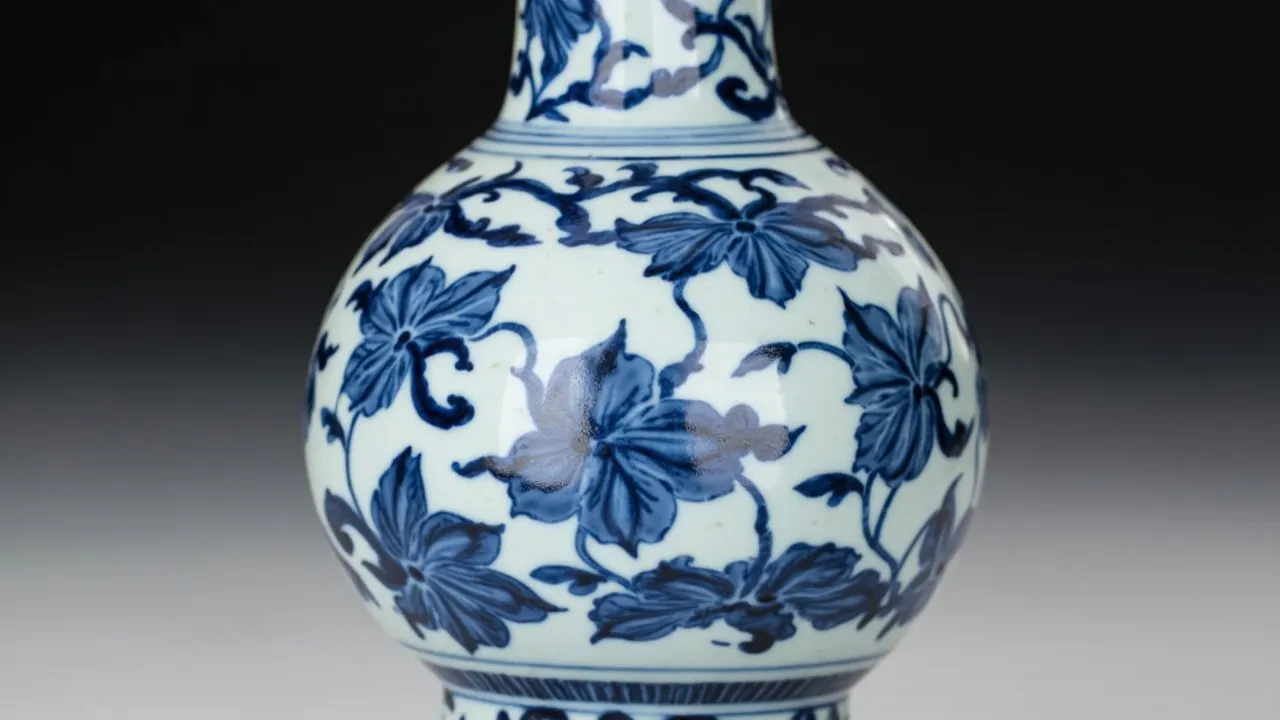
What survives is the aesthetic. The pale greens and olive-greens of Yue Ware, the elegant simplicity of the forms, the sense of refinement and restraint — these qualities became permanent features of Chinese ceramic aesthetics. They appear in the finest pieces produced by every subsequent kiln tradition, from the Guan Ware of the Song dynasty to the Langhao Ware of the Ming dynasty to the export porcelain produced for European markets in the eighteenth and nineteenth centuries.
For collectors and museum visitors, Yue Ware pieces offer a direct connection to the origins of Chinese ceramic art. Holding a piece of Yue Ware — even a small bowl or jar — is holding a piece of technology and aesthetic philosophy that shaped the course of art history across Asia. The fact that it was produced more than a thousand years ago, using techniques that remained secret for centuries, makes it one of the most remarkable achievements of human craftsmanship.
Why Yue Ware Still Matters
The story of Yue Ware is ultimately a story about human ingenuity and the power of beauty to transcend its original context. The potters of Shanglin Lake did not set out to create a tradition that would influence Chinese art for a thousand years. They were craftspeople responding to market demand, refining their techniques to meet the expectations of increasingly sophisticated customers.
But in the process of meeting that demand, they discovered something about the nature of beauty. They found that the most effective way to create beauty in ceramics was not through complexity or elaboration, but through subtlety and restraint — through a glaze that captured the color of spring leaves, through a form that suggested rather than declared, through a surface that rewarded close attention.
This insight has proven to be remarkably durable. The aesthetic principles that Yue Ware established remain influential in Chinese art and design today, nearly two thousand years after the first Yue Ware pieces came out of the kiln. The “secret color” is no longer a secret, but it has lost none of its power to fascinate and delight.
When you look at a piece of Yue Ware in a museum — or at one of the many modern ceramics that have been influenced by the tradition — you are seeing the result of an unbroken chain of aesthetic discovery that stretches back to the Eastern Han dynasty. The chain has been broken and re-forged many times, and the techniques have been lost and rediscovered, but the underlying vision remains constant: the belief that the most profound beauty is the most subtle, and that the finest ceramics are those that invite contemplation rather than demand it.