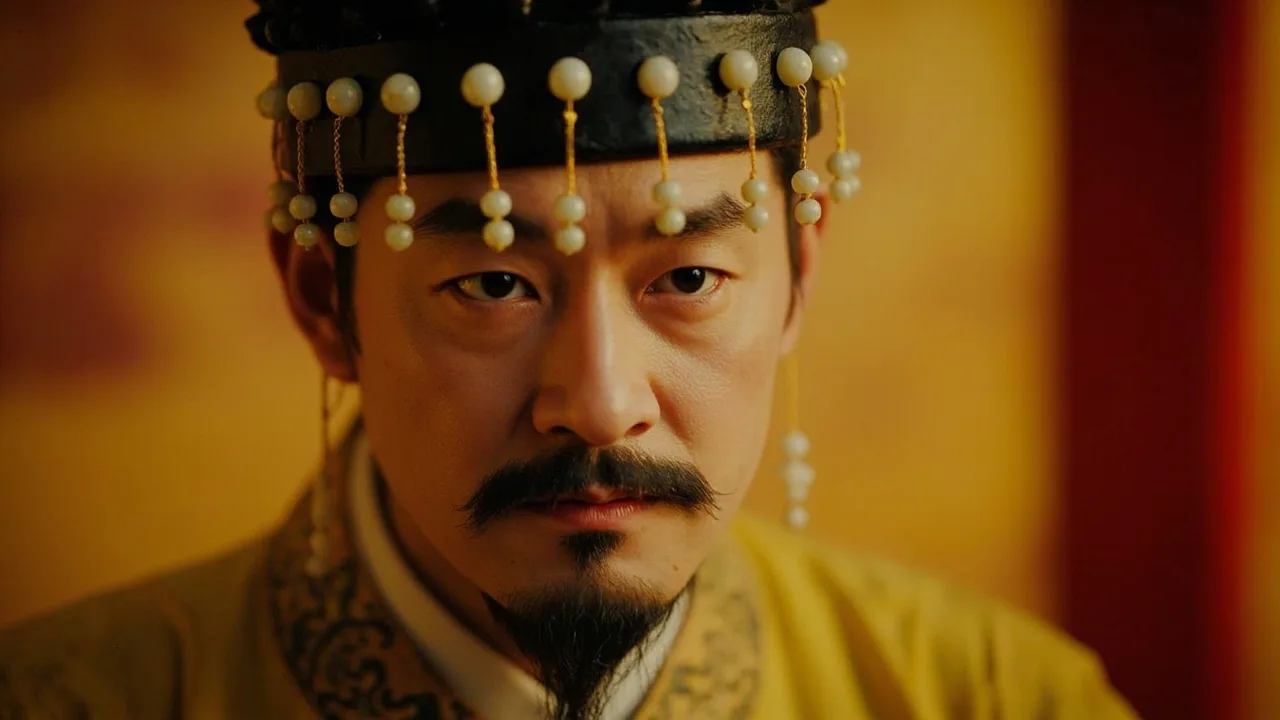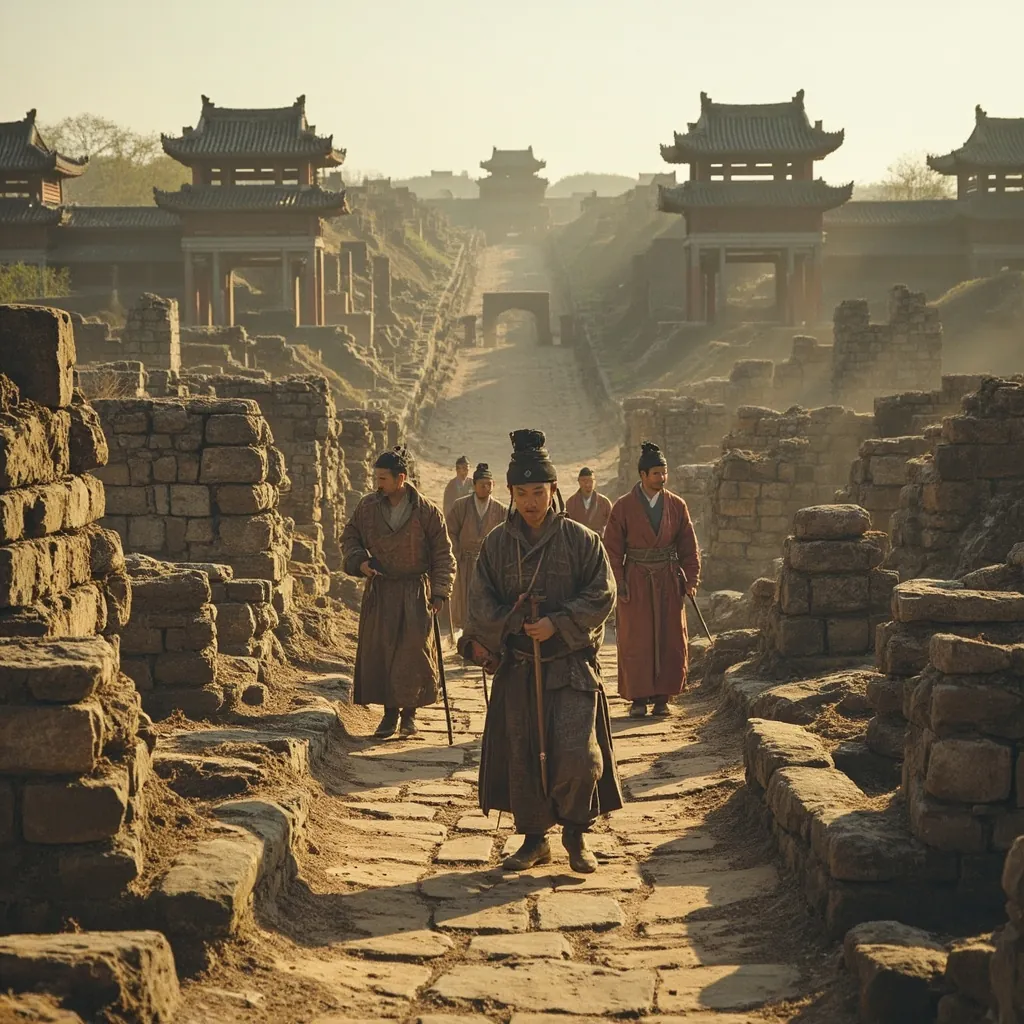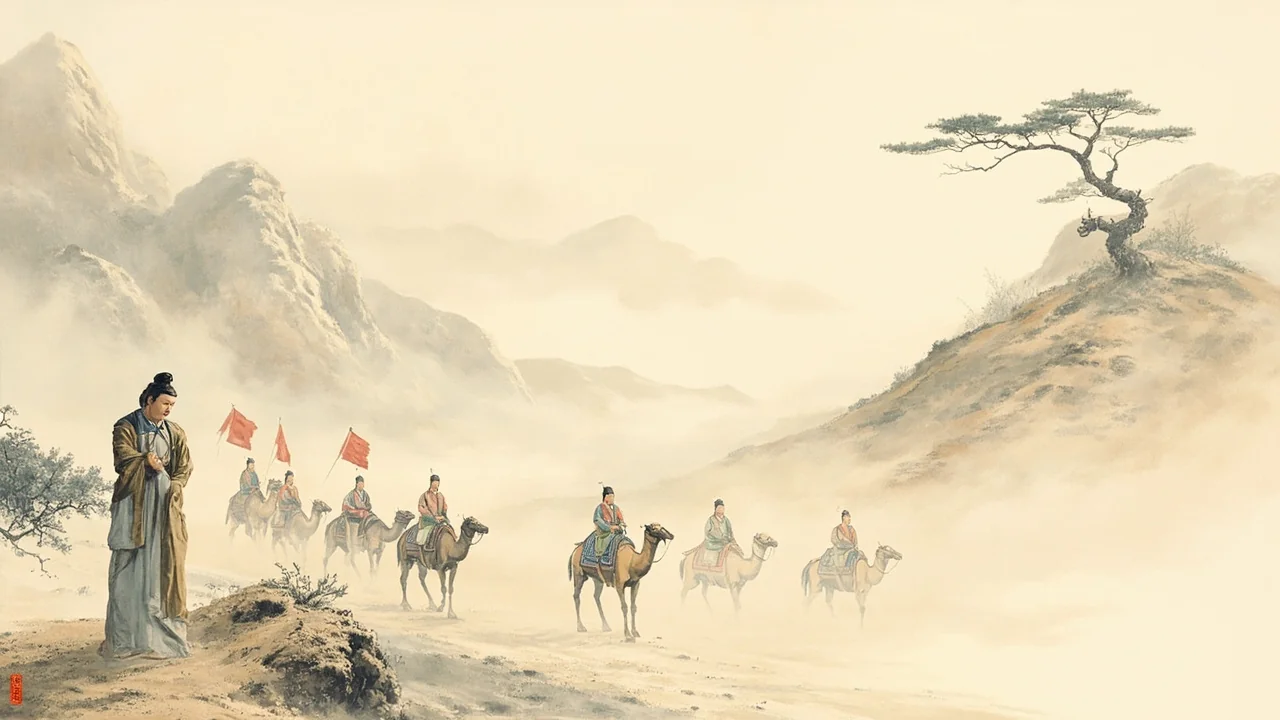
There’s a version of world history that starts in a courtroom in Chang’an around 138 BCE, when an imperial envoy named Zhang Qian was being briefed before a mission that every advisor in the room assumed was a death sentence. The Han Emperor Wu needed allies against the Xiongnu nomads pressing China’s northern frontier, and Zhang Qian was going to find them — 4,000 miles away, through territory controlled by the very enemy he was trying to circumvent. He had no map. He had no army. He had a staff and a few dozen men, and that was supposed to be enough.
Zhang Qian walked out of the palace gates and didn’t come back for thirteen years.
When he finally returned to Chang’an, the allies he was supposed to recruit had been uselessly defeated. But what he brought with him was worth infinitely more: geographic knowledge, trade contacts, and a vision of a world far bigger than the Chinese had imagined. The Silk Road didn’t start with a decree or a military campaign. It started with one man’s willingness to walk into the unknown and report back honestly about what he found.
The Man Before the Myth
Zhang Qian was born in the Hanzhong region of what is now Shaanxi province, likely in the mid-2nd century BCE. He served as a宫廷武官 — a sort of imperial protocol officer — before Emperor Wu selected him for the mission that would define his life. The Han Dynasty at this point had been spending decades and enormous treasure trying to manage the Xiongnu through a mix of diplomacy and tribute payments. Emperor Wu was tired of it. He wanted a different approach: find allies in the Western Regions, the territory beyond the Taklamakan and Gobi deserts that included modern Xinjiang, Central Asia, and the lands stretching toward Persia and the Mediterranean.
The specific target was the Yuezhi people, nomadic warriors who had been driven out of their homeland by the Xiongnu and were now settled somewhere to the west. An alliance with them could create a two-front pressure on the Xiongnu. Simple in theory. Catastrophically difficult in practice.
Zhang Qian left Chang’an with a small party that included a guide who was himself a former Xiongnu captive — a man who had every reason to betray the mission the moment things got hard. And things got hard immediately. Within days of crossing the northern frontier, Zhang Qian’s party was ambushed by Xiongnu forces. Most of his men were killed or captured. Zhang Qian himself was taken alive, which turned out to be both a curse and a kind of miracle.
Ten Years in Xiongnu Captivity
The Xiongnu, like many nomadic peoples of the Eurasian steppe, had a sophisticated approach to captured foreigners. They didn’t simply kill useful prisoners, and they didn’t always execute enemyenvoys out of hand — there was a diplomatic logic to keeping certain captives alive. Zhang Qian was taken to the Xiongnu leader’s court and kept there, given a wife and children, watched constantly. He spent roughly ten years in captivity.
This part of Zhang Qian’s story is easy to skim over, but it matters enormously. Ten years is a long time to be a prisoner of a people your own emperor is trying to defeat. Zhang Qian maintained his cover — the Xiongnu never seem to have fully understood who he was or what he was planning. He learned the Xiongnu language. He learned their routes, their customs, their internal politics. He watched how the Xiongnu moved their armies, where they were strong, where they were not. When he eventually escaped, he carried with him an intelligence dossier on the Xiongnu that no Han spy had ever compiled before.
He also, tellingly, did not try to escape at the first opportunity. He waited until circumstances gave him a real chance. That patience would characterize everything he did.
The Mission That Changed Everything
When Zhang Qian finally escaped — reportedly during a hunting trip, slipping away with whatever supplies he could carry — he did the opposite of what a sensible man would do. He didn’t head home to report failure. He kept going west, toward the Yuezhi, because he had promised the emperor he would find them.
He traveled through the region of modern Xinjiang, crossing the Taklamakan Desert and the Pamir Mountains, eventually reaching Bactria (around modern northern Afghanistan), where the Yuezhi had settled. The Yuezhi, by this point, had no interest in going to war with the Xiongnu. They had been driven from their lands, yes, but they had built a new civilization in Bactria, and they were not about to march back east for a Han emperor they’d never met. Zhang Qian spent about a year with them, collected what intelligence he could, and began the long journey home.
On the way back, he was captured again — by the Xiongnu again — and spent another year or two as a prisoner before the internal chaos of Xiongnu politics allowed him to slip away a second time. He finally reached Chang’an in 126 BCE, thirteen years after he had left.
The emperor must have been stunned. Most men don’t come back from missions like this. The few survivors of Zhang Qian’s original party who made it back with him could be counted on one hand. But Zhang Qian came back with something nobody had expected: a detailed understanding of the world beyond China’s western frontier.
What Zhang Qian Saw
The report Zhang Qian delivered to Emperor Wu, known as the Zhang Qian’s Memoir on the Western Regions, was a document that genuinely expanded the Chinese world. Among the things Zhang Qian described:
The Western Regions were not a wasteland. Contrary to Han assumptions, the area beyond the deserts was populated by sophisticated city-states, kingdoms, and trading peoples. Zhang Qian reported on the Yuezhi, the Dayuan (in the Ferghana Valley, roughly modern Uzbekistan), the Anxi (Parthian Empire), and others. He described their wealth, their goods, their military capabilities.
Horses from the west were extraordinary. Zhang Qian was particularly struck by the “blood-sweating” horses of Dayuan — what were likely Akhal-Teke horses, a Central Asian breed known for a metallic sheen that looked like sweat or blood. These horses were bigger and faster than anything the Han had. Emperor Wu would later launch a war — the famous war for the “Heavenly Horses” — specifically to acquire them. That conflict, and the horses it produced, reshaped the Chinese cavalry and, consequently, Chinese military power on the northern frontier for generations.
Chinese goods could travel. Zhang Qian noted that bamboo staffs from Sichuan and woven fabrics from China were already reaching places like Bactria through intermediary trade. This was the first confirmation that a genuine trade network — not just diplomatic gift exchange — could link China to the Mediterranean world.
For a Han emperor already at war with the Xiongnu, this was intelligence gold. The map of the known world had just gotten dramatically larger.
The Roads That Followed
Emperor Wu responded to Zhang Qian’s report with characteristic ambition. Over the following decades, the Han Dynasty pushed military expeditions into the Western Regions, established garrison towns, negotiated with local kingdoms, and planted the administrative infrastructure that would allow trade to flow east and west with increasing regularity.
The routes Zhang Qian had walked became the arteries of what we now call the Silk Road — though the term itself is a 19th-century German invention; the Chinese called them the “Roads of the Western Regions” or simply the “Silk Road” in literal translation. Silk was the most famous Chinese export, but it was far from the only one. Chinese porcelain, lacquerware, bronze mirrors, and cast iron moved west. In return came glass, linen, wool, cotton, exotic fruits, and eventually the horses that Zhang Qian had first described.
More importantly, Buddhism traveled east from India along these same roads, eventually becoming the dominant spiritual force in China for over a thousand years. The Silk Road was never just about goods. It was about ideas, religions, technologies, diseases, and people moving between civilizations that had previously had no contact.
Zhang Qian didn’t create this network. He described it, validated it, and gave the Han court the confidence to invest in it. The roads existed as geographic realities before him; what he did was make them politically and commercially real for China.
The Man Who Walked Into Legend
Zhang Qian died sometime in the 113–100 BCE period, likely in Chang’an, having been appointed Minister of the Masses (大鸿胪) — a senior diplomatic post that recognized his contributions. He never got to see the full scope of what his journeys had set in motion. The Silk Road networks he helped open would flourish for over a millennium, carrying everything from silk to Buddhism to the Black Death before they eventually declined in the age of maritime trade.
He is buried, as far as we know, somewhere in Shaanxi province, though the exact location has been lost. What hasn’t been lost is his name. Every Silk Road museum in the world has a section on Zhang Qian. Every history of ancient China mentions him. He is, alongside Zheng He, one of the two great Chinese explorers whose journeys reshaped the world’s understanding of how far China reached and how far it could reach.
For Americans thinking about Zhang Qian’s legacy, there’s an odd parallel in the Lewis and Clark Expedition — another long-shot diplomatic and exploratory mission that expanded a nation’s understanding of how large the world actually was. Zhang Qian’s journey was longer, more dangerous, and more consequential. But the spirit is the same: one person walks into the unknown and comes back knowing more than when they left.
The Real Value of Getting Lost
What strikes me most about Zhang Qian’s story isn’t his courage — though that was extraordinary. It’s his pragmatism. When his mission to recruit the Yuezhi failed, he didn’t treat that as the end. He treated it as a detour. He gathered intelligence anyway. He mapped territory anyway. He built relationships with people he met along the way who had no obligation to help a Han diplomat.
When his escape plan succeeded but his route home was blocked, he didn’t panic. He found another way. When he was captured a second time, he made the best of it — learned more, waited more, and moved when the moment was right.
The modern world tends to celebrate big, dramatic victories. Zhang Qian’s victory was quieter: he simply refused to give up on learning, no matter how many times the universe knocked him down. The Silk Road that changed world history was built on that refusal as much as on any imperial decree.
If you want to follow in Zhang Qian’s footsteps — or at least see the geography he walked through — the Tarim Basin in modern Xinjiang preserves some of the key oasis cities he would have passed through. The cities of Kashgar, Hotan, and Turpan still exist, and the desert routes he crossed are now traveled by archaeologists and tourists rather than diplomats. The landscapes, at least, haven’t changed much. Walking through the Taklamakan — which in Uyghur means “once you go in, you’ll never find your way out” — you can still feel why Zhang Qian’s journey seemed like madness to the court in Chang’an, and why it turned out to be one of the most consequential journeys in human history.
Practical Tips for Understanding Zhang Qian
If you’re exploring Zhang Qian and the Silk Road:
Books: Susan Whitfield’s Life Along the Silk Roads is an accessible narrative history that reconstructs the human experience of Silk Road travel. For primary source material, the Han Dynasty histories (Shiji and Book of Han) contain Zhang Qian’s original memoir.
Museums: The Shaanxi History Museum in Xi’an has an excellent Silk Road collection, and the national museums in Beijing contain artifacts from Han diplomatic missions to the Western Regions. The Hetian Museum in Xinjiang has local Silk Road materials that give a ground-level view.
Travel: The “Silk Road” tourist route through China, Kyrgyzstan, and Uzbekistan follows Zhang Qian’s approximate path in reverse. The most evocative section is the Tarim Basin — the Taklamakan Desert oases at Kashgar and Hotan retain a sense of the isolation and wonder that defined the original journey.
Key concept: The Silk Road was never a single road. It was a shifting network of routes that varied by season, political conditions, and goods being transported. Think of it less as a highway and more as a river delta — multiple channels that converged and diverged depending on the year.