Zhejiang Cuisine: The Refined Flavors of Eastern China
Tucked along China’s eastern coast, Zhejiang Province is a land of water towns, misty mountains, and one of the most sophisticated regional cuisines in all of China. Known as浙菜 (Zhè cài) or Zhe cuisine, this cooking style comes from a region famous for its beautiful landscapes (including the iconic West Lake in Hangzhou), its wealthy merchant history, and its refined palate. If you’ve ever enjoyed the melt-in-your-mouth tenderness of braised pork belly or marveled at the delicate artistry of a perfectly presented fish dish, you’ve already experienced the magic of Zhejiang cuisine.
What makes Zhe cuisine special is its emphasis on freshness, its silky-smooth textures, and its mastery of braising techniques that transform tough cuts of meat into something approaching culinary perfection. The cuisine of Zhejiang is less showy than Sichuan’s fireworks or as bold as Hunan’s heat, but what it lacks in drama it more than makes up for in elegance. Every dish is balanced, every flavor considered, every texture precisely what it should be. This is comfort food elevated to high art—the kind of meal that makes you realize why the wealthy merchants of old Zhejiang were willing to pay premium prices for the best chefs in the land.
The Land of Fish and Rice
Zhejiang’s geography has shaped its cuisine in fundamental ways. The province is water-rich, threaded with rivers, lakes, and a lengthy coastline. This means seafood has always been abundant and fresh—fish, shrimp, crab, and shellfish appear constantly on Zhejiang tables. The region is also fertile farmland, producing excellent rice, vegetables, and silkworms (which means abundant protein in the form of silk worm pupae, a Zhejiang delicacy for the adventurous).
Hangzhou, the provincial capital, sits beside the famous West Lake (西湖, Xī Hú), a stunning body of water that has inspired Chinese poets and painters for a thousand years. It’s also the heartland of Zhejiang cuisine, where many of the cuisine’s signature dishes were developed in imperial kitchens and refined over centuries. The association between Hangzhou and fine dining is so strong that “Hangzhou food” is almost synonymous with Zhejiang cuisine itself.
Ningbo, another major city in Zhejiang, has its own culinary identity shaped by its port history. As one of China’s oldest ports, Ningbo was a hub for trade and cultural exchange, which brought new ingredients and techniques. The city’s cooking tends to be saltier and more preserved than Hangzhou’s, reflecting its fishing industry heritage—dried seafood, salted fish, and fermented sauces are more prominent here.
Dongpo Pork: The Most Famous Dish You’ve Never Heard Of
If there’s one dish that represents Zhejiang cuisine to the world, it’s Dongpo Pork (东坡肉, Dōngpō ròu). This legendary braised pork belly dish is named after Su Dongpo, the famous Song Dynasty poet and statesman who famously loved to eat and cook. The story goes that Su was exiled to Huangzhou (in present-day Hubei) after political troubles, and while living there, he developed this now-famous recipe. He even wrote a poem about the dish, which helped cement its fame.
The technique behind Dongpo Pork is deceptively simple: pork belly is cut into large cubes, then braised for hours in a mixture of soy sauce, sugar, rice wine, and aromatic ingredients like ginger and scallions. The low-and-slow cooking breaks down the collagen in the meat, transforming tough pork belly into something that practically dissolves on your tongue. The sauce reduces to a thick, glossy glaze that clings to each cube, sweet and savory and deeply complex.
But the real secret is the double-layer approach. The pork is cooked first in a large amount of liquid, which gently renders the fat and breaks down the connective tissue. Then, the almost-finished pork is transferred to a smaller amount of reduced sauce for the final cooking, where it develops that characteristic lacquered surface. The best Dongpo Pork has a deep reddish-brown color, a slightly bouncy texture from the rendered fat, and a flavor that’s sweet without being cloying, savory without being heavy.
Making authentic Dongpo Pork at home requires patience. You can’t rush the braising—the meat needs those hours to achieve its melt-in-your-mouth texture. But the good news is that it’s nearly impossible to ruin if you give it enough time. Even a slightly overcooked Dongpo Pork is still delicious, just falling apart rather than holding its shape. Serve it over steamed rice, with the rich sauce spooned over everything.
West Lake Fish: A Poem on a Plate
The other legendary Zhejiang dish is West Lake Fish in Vinegar Gravy (西湖醋鱼, Xī Hú cù yú). This dish is intimately connected to Hangzhou and its famous lake—it’s said to have been invented by a restaurant owner in the Song Dynasty as a tribute to a beloved couple from local legend. Whatever its origins, it’s become one of the most iconic dishes in Chinese gastronomy.
The fish used is traditionally grass carp (草鱼, cǎo yú), a freshwater fish known for its mild flavor and firm flesh. The fish is steamed whole (never boiled, which would make the meat watery), then drained and placed on a serving platter. The magic happens in the sauce: a sweet and sour glaze made from sugar, vinegar, scallions, and ginger, with a touch of cornstarch to thicken it to a glossy consistency. The sauce is poured over the fish tableside, and the dish is served immediately.
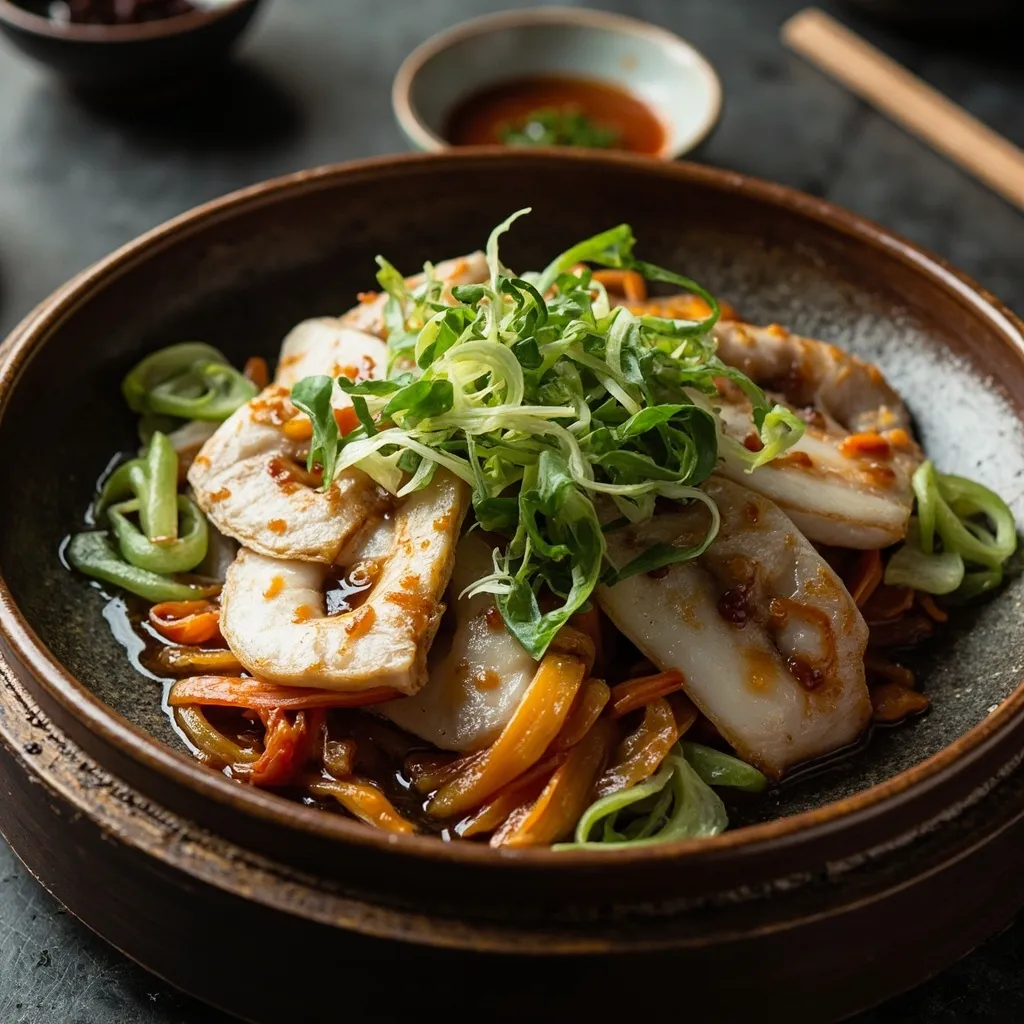
The ideal West Lake Fish has flesh that’s silky-smooth and perfectly steamed—so tender it practically falls off the bone. The sauce provides bright contrast—tangy from the vinegar, sweet from the sugar—with aromatic lift from the scallions and ginger. There’s no frying, no heavy sauce, nothing to mask the delicate flavor of the fish itself. It’s a dish that showcases everything Zhejiang cuisine values: fresh ingredients, precise technique, and balanced, sophisticated flavors.
The dish is also a striking visual presentation. The fish lies on the plate in its original form—head, tail, and all—with the dark sauce glistening over its pale flesh. It’s beautiful in a quiet, elegant way, the kind of dish that makes you understand why Chinese food can be considered an art form.
The Comfort Food of Zhejiang: Noodles and Rice Dishes
Beyond these famous dishes, Zhejiang cuisine has a rich tradition of everyday comfort foods—noodles, rice dishes, and dumplings that people eat regularly and return to again and again.
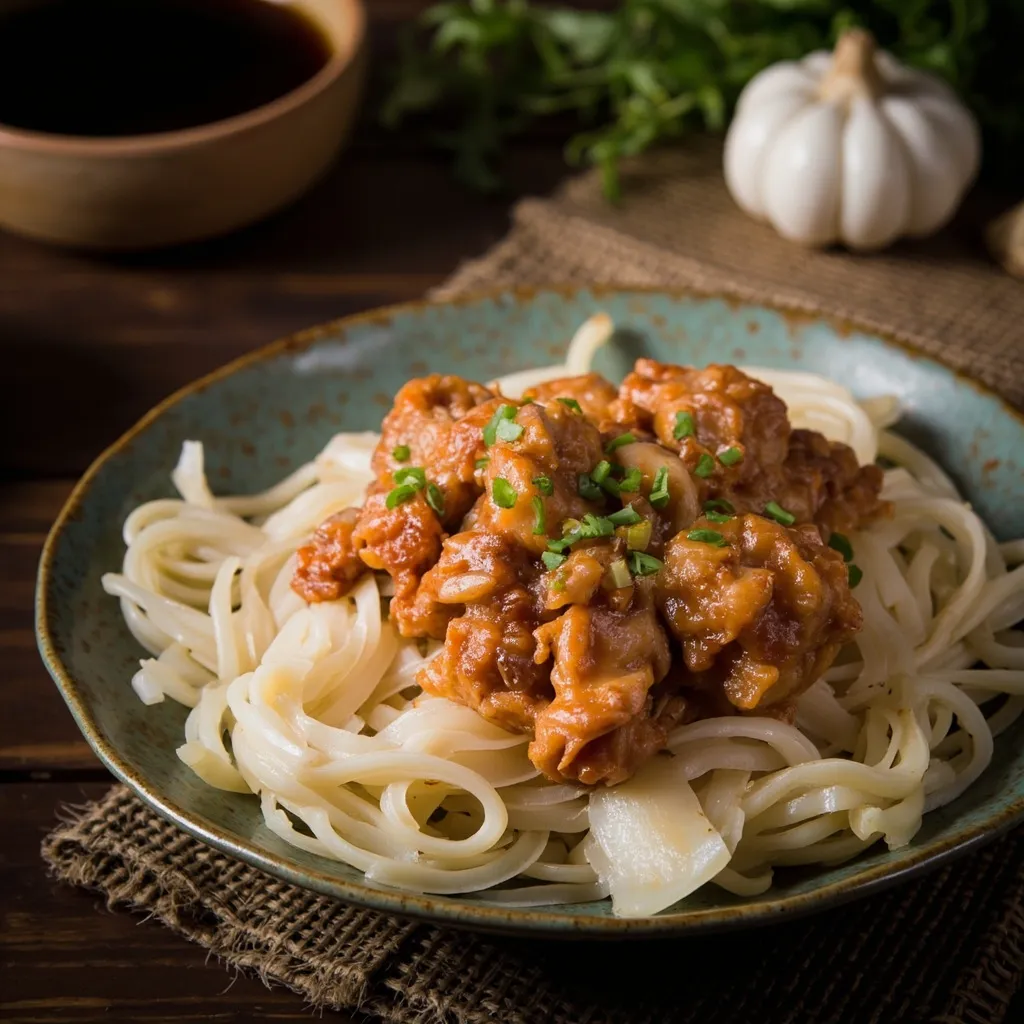
Hangzhou-style Noodles (杭州片儿川, Hángzhōu piàn er chuān) are the signature noodle dish of the region. The name is a bit unusual—“piàn er chuān” is a transliteration of a local dialect term—but the dish itself is deeply satisfying. The broth is made from pork bone and dried shrimp, giving it a rich, slightly sweet flavor. The noodles are thin and smooth, topped with sliced pork, preserved vegetables (usually mustard greens), and bamboo shoots. The combination of chewy noodles, savory broth, and crunchy vegetables is deeply comforting, the kind of dish you’d happily eat every day.
Rice dishes also feature prominently. Clay Pot Rice (煲仔饭, bāo zǐ fàn) is a Cantonese import that’s become popular throughout Zhejiang—a single serving of rice cooked in a clay pot with various toppings, the crispy rice at the bottom being the prize. In Zhejiang, you’ll find variations topped with everything from sausages to chicken to preserved egg.
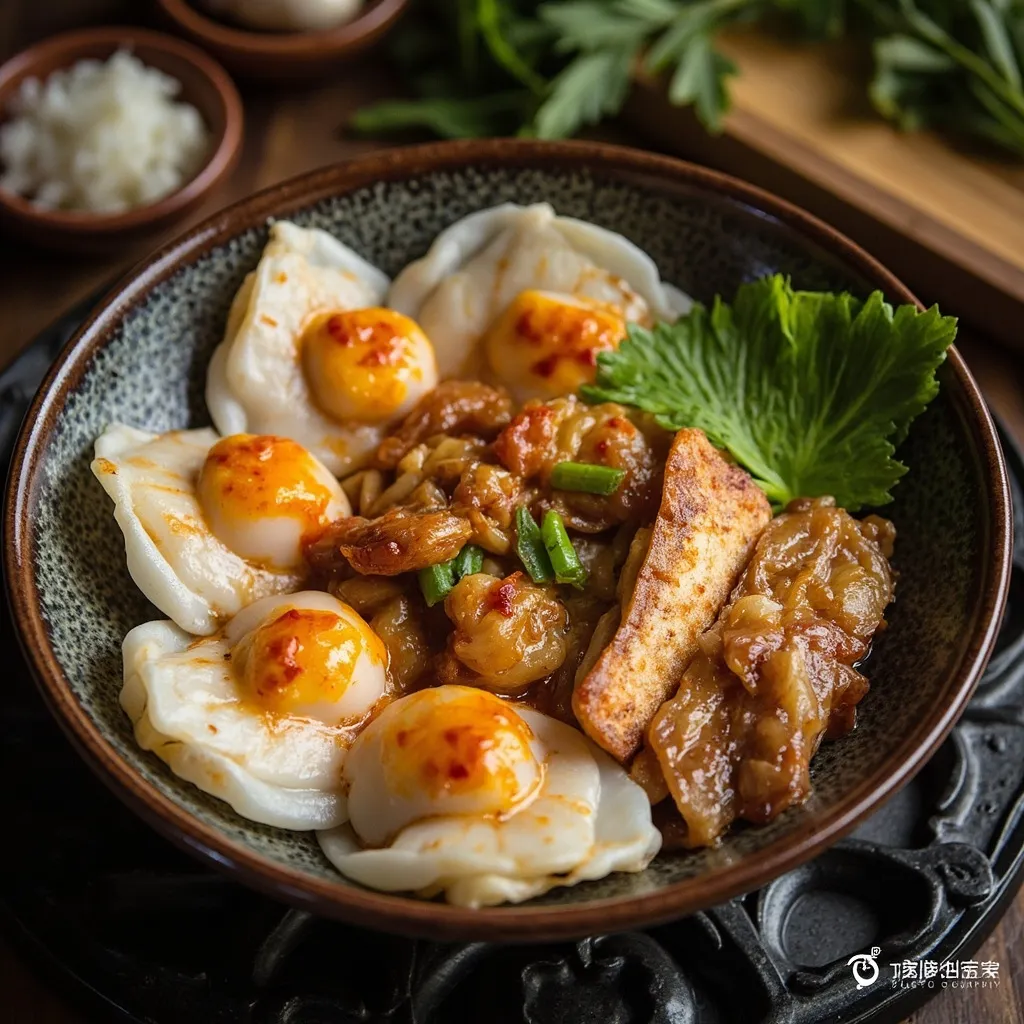
Steamed dumplings (蒸饺, zhēng jiǎo) are another daily staple. Unlike the soup-filled dumplings of Jiangsu or the pan-fried variety of the north, Zhejiang dumplings tend to be simple, delicate, and often filled with just pork and ginger or vegetables. They’re served steaming hot, usually with a small dish of black vinegar for dipping.
The Silk Road of Flavor: Zhejiang’s Seafood Tradition
Given its long coastline and numerous ports, Zhejiang has always had access to excellent seafood. But the cuisine doesn’t drown seafood in heavy sauces or strong spices—instead, it treats ocean flavors with a light touch that lets the natural sweetness of the fish or shellfish come through.
Shaoxing Wine Chicken (绍兴酒鸡, Shàoxīng jiǔ jī) is a classic Zhejiang dish that showcases this approach. Chicken pieces are braised in Shaoxing rice wine (the famous yellow wine from Zhejiang) with ginger and scallions. The wine tenderizes the chicken and imparts a deep, mellow flavor that’s both savory and subtly sweet. The cooking liquid reduces to a sauce that’s used to baste the chicken repeatedly, building up a rich, lacquered surface. The result is chicken that’s incredibly flavorful without being heavy—a dish that seems lighter than its rich taste would suggest.
Stir-fried Shrimp (清炒虾仁, qīng chǎo xiā rén) is another Zhejiang favorite—small river shrimp quickly stir-fried with a minimal amount of seasoning so that their natural sweetness shines through. The shrimp are usually peeled and deveined, then cooked in a very hot wok for just seconds. The key is not to overcook them—they should still have a slight bounce when you bite into them. A final splash of rice wine and a scattering of minced ginger provide aromatic brightness without overwhelming the delicate shrimp flavor.
For the more adventurous, Zhejiang offers silkworm pupae (蚕蛹, cán yǒng). These are considered a delicacy—high in protein and rich, nutty flavor. They’re typically stir-fried with dried chilies and scallions, creating a dish that’s crispy on the outside, soft and creamy inside. The flavor is an acquired taste, but devotees swear by it.
Mastering Zhejiang Cooking at Home
Bringing Zhejiang cuisine into your home kitchen is a rewarding project that doesn’t require exotic ingredients or advanced techniques. The core philosophy is simple: use good ingredients, cook them with care, and let the flavors be balanced and refined.
Start with the basics. Shaoxing rice wine is absolutely essential—it’s the signature flavor of many Zhejiang dishes and can’t be substituted with anything else. You’ll also need good light soy sauce (for seasoning), dark soy sauce (for color), and sesame oil for finishing. A packet of dried shrimp will let you make the rich broths that define the cuisine.
For Dongpo Pork, the most important thing is choosing the right cut. Look for pork belly with a good balance of meat and fat—about 50/50 is ideal. The meat should be fresh (not frozen if possible), with lean meat that’s pinkish-red and fat that’s white and firm. Cut the pork into roughly 2-inch cubes, keeping the skin on—it adds texture and helps the pieces hold together during the long braising.
The cooking process is forgiving in terms of timing but demanding in terms of attention. Don’t rush the braising—let the pork cook until it’s truly tender, which can take 2-3 hours depending on the quality of your meat. The final reduction of the sauce is critical, though: this is where you build the glossy, flavorful coating that makes Dongpo Pork so distinctive.
The Tea of Zhejiang
No discussion of Zhejiang cuisine is complete without mentioning its famous teas. The province is home to two of China’s most celebrated green teas: Dragon Well (龙井, Lóng Jǐng) and Biluo Chun (碧螺春).
Dragon Well, from the hills around Hangzhou, is perhaps the most famous green tea in the world. Its flat, smooth leaves produce a pale golden brew with a distinctive chestnut-like flavor—sweet, mellow, and incredibly refreshing. The best Dragon Well is hand-fired in traditional woks, a labor-intensive process that creates the flat, sword-shaped leaves characteristic of the finest teas.
Biluo Chun, from nearby Suzhou (actually in Jiangsu, but often associated with the broader region), is known for its intensely floral aroma—so powerful that it’s said to be harvested from gardens where peach and plum trees bloom nearby. The leaves are tightly rolled into tiny spirals, and when steeped, they unfurl to release their fragrance.
Either tea makes a perfect accompaniment to Zhejiang cuisine, their clean, refreshing flavors cutting through rich dishes and complementing delicate ones. Brew them properly—water around 175-185°F (80-85°C), not boiling—and serve in glass teaware so you can appreciate the beautiful green color and the slowly unfurling leaves.
A Cuisine of Quiet Excellence
Zhejiang cuisine is an acquired taste, but once acquired, it becomes a lifelong love. There’s no showmanship here, no fireworks of chili or dramatic flame. Instead, there’s an almost Japanese attention to detail, a respect for ingredients that shows in every perfectly executed dish. The melt-in-your-mouth tenderness of Dongpo Pork, the silky elegance of West Lake Fish, the comforting warmth of Hangzhou noodles—these are dishes that reward patience and attention.
For American readers, the challenge with Zhejiang cuisine is learning to appreciate subtlety. We’re surrounded by bold, aggressive flavors—so much so that it can be easy to overlook the quieter pleasures of well-executed Zhe cuisine. But if you give it a chance, if you slow down and really taste what these dishes have to offer, you’ll discover a world of flavor that’s as sophisticated and satisfying as anything else Chinese cooking has to offer.
The next time you have the chance to try authentic Dongpo Pork, or a perfectly steamed fish with its sweet and sour sauce, take a moment to appreciate what’s happening in your mouth. The tender, yielding texture of the meat. The complex interplay of sweet and savory in the sauce. The way the flavors build and linger. This is Zhejiang cuisine at its finest—food that’s designed to be savored, one thoughtful bite at a time.