Zheng He: The Chinese Admiral Who Sailed the Seven Lucky Seas
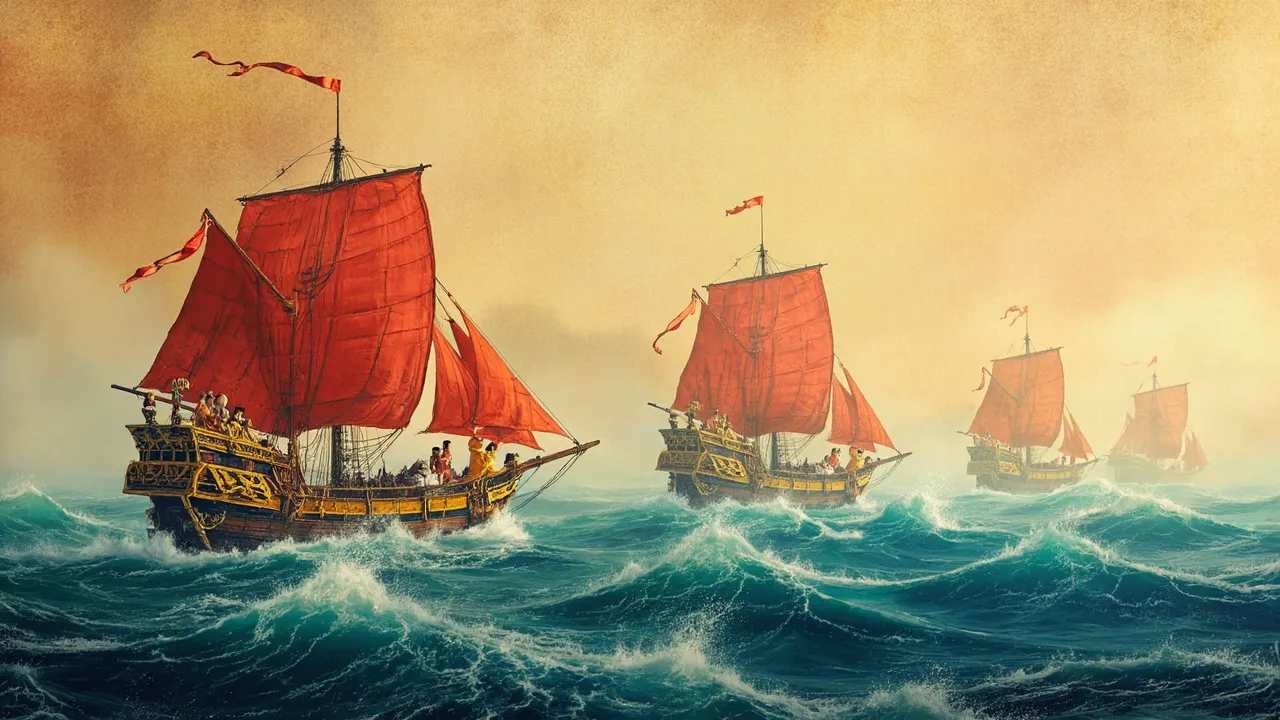
Imagine boarding a wooden ship the length of a football field — nine masts tall, hundreds of sailors shouting orders in multiple languages, and holds packed with silk, porcelain, and gold. Now imagine this vessel launched not in the 20th century, but in the year 1405, nearly a century before Columbus stumbled onto the Americas. That’s exactly what a Ming Dynasty admiral named Zheng He made happen, again and again, on an astonishing series of voyages that remain one of history’s most jaw-dropping feats of seamanship.
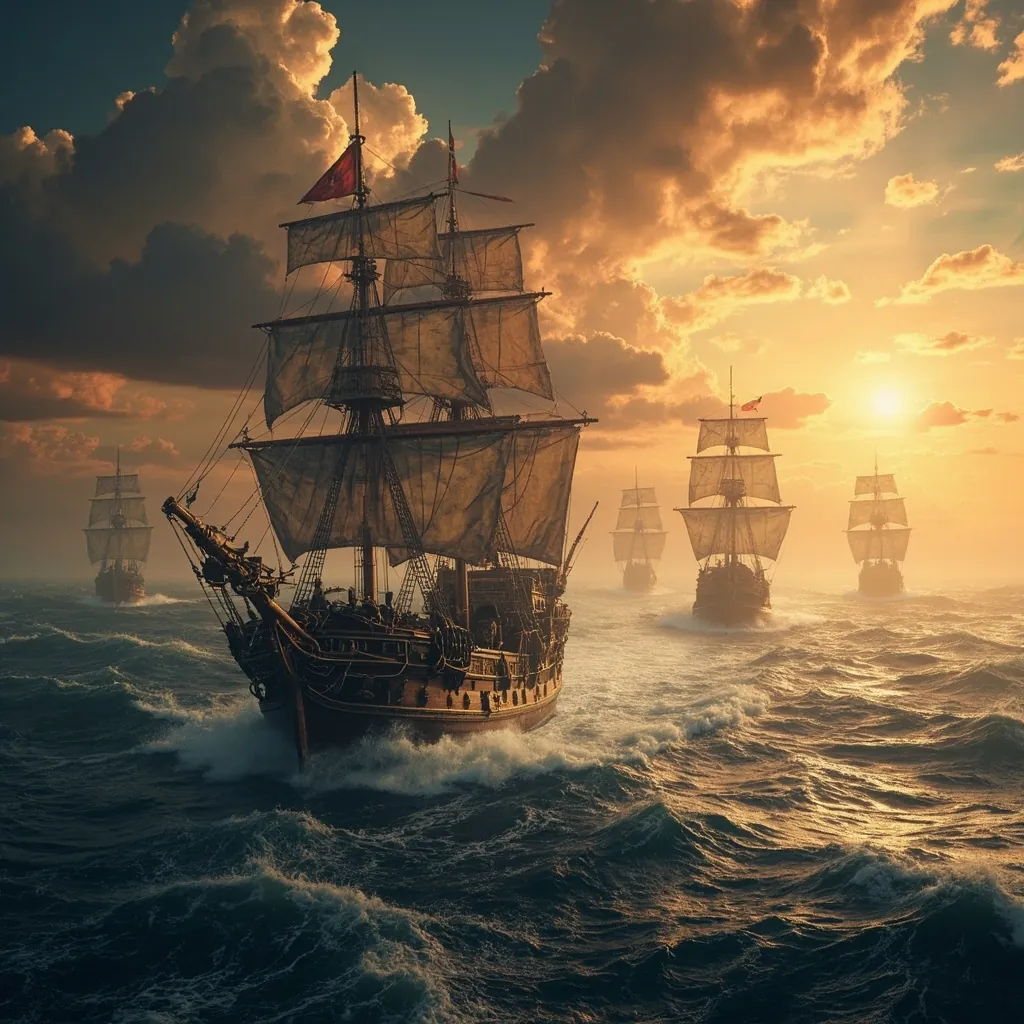
While European schoolbooks often treat Columbus as the标杆 of age-of-exploration heroism, Zheng He was already commanding fleets of over 300 ships and 28,000 men decades earlier. His massive “treasure ships” dwarfed anything the Atlantic world had seen. And unlike Columbus — who was looking for a shortcut to Asia and accidentally bumped into a pair of continents — Zheng He knew exactly where he was going. He was building an empire of trade and diplomacy across the Indian Ocean, and he did it seven times.
What makes his story even more remarkable is what he didn’t do. He didn’t conquer. He didn’t colonize. He didn’t spread disease to unprepared populations. His voyages operated on a fundamentally different philosophy — one that the modern world could still learn from.
Who Was Zheng He?
Zheng He was born in 1371 in Kunyang, Yunnan province, into a Muslim family of Persian or Mongol descent. His original name was Ma He; the surname “Zheng” was granted by the Yongle Emperor after a series of military victories in which he captured a rival prince during a civil war.
As a young man, Zheng He served in the household of the Yongle Emperor — one of China’s most ambitious rulers, the third emperor of the Ming Dynasty and the architect of the Forbidden City in Beijing. The Yongle Emperor had a grand vision: make Ming China the dominant power not just on the Asian mainland, but across the seas.
Zheng He was the man he chose to execute that vision.
There’s something almost improbable about this selection. Zheng He was a eunuch — as were most of the high-ranking officials in the Ming court — which meant he couldn’t have children and was considered socially neutral, ideal for positions that required loyalty without family ambition. He was also an outsider in the Chinese heartland: born in Yunnan, the child of Muslim parents in a region that had only recently been incorporated into the Ming Empire.
Yet the Yongle Emperor saw past these supposed limitations. Zheng He had already proven himself in battle, capturing the rebellious Prince of Yan in 1402. He was tall — some accounts say over six feet — with a powerful voice and commanding presence. He had the physical and mental stamina that overseeing thousands of men across uncharted waters would require.
The Largest Wooden Ships Ever Built
Before diving into the voyages themselves, consider the ships. European accounts describe Zheng He’s “treasure ships” (bao chuan) as staggering in size — Chinese records say they stretched over 120 meters (400 feet) long. Modern naval engineers have debated whether wooden ships of that size were truly feasible, but archaeological evidence from a 15th-century nautical map found in 2002 supports the idea that these were genuine ocean-going giants, not legends.
By contrast, when Columbus set sail in 1492, his largest ship — the Santa María — was about 18 meters long. Zheng He’s fleet carried ships in a hierarchy of sizes: massive nine-masted treasure ships at the center, flanked by smaller combat vessels, horse transports, and supply ships. The entire operation was a floating city.
Here’s something else that puts this in perspective for Americans: imagine an aircraft carrier. Now imagine one built in 1405, made entirely of wood, powered by cotton sails, and crewed by sailors who navigated by stars, wind patterns, and the color of the water.
The treasure ships themselves were engineering marvels. They had multiple watertight compartments — a technology European ships wouldn’t adopt for centuries. Their hulls were built using sophisticated joinery techniques that distributed stress across the frame rather than concentrating it at the keel. They had balanced rudders that could be raised and lowered depending on water depth, allowing them to navigate both deep ocean and shallow coastal waters.
The sails weren’t just simple squares of canvas either. Chinese junk sails were made from sections of reed matting stitched together, reinforced with bamboo ribs, and designed to be partially furled even in heavy winds — a built-in reefing system that European sails wouldn’t develop for another 200 years.
The Seven Voyages
Zheng He commanded seven official expeditions between 1405 and 1433, each one a marvel of organization and ambition.
The First Voyage (1405–1407): Zheng He departed from Nanjing with 317 ships and an estimated 28,000 crew members — sailors, soldiers, officials, translators, and even a veterinarian for the horses aboard. His destination: the ports of Southeast Asia, India, and the Persian Gulf. He returned with foreign dignitaries, exotic goods, and news of kingdoms eager to trade with China.
The Second Voyage (1407–1409): A quick follow-up to deliver gifts to the newly crowned king of Cochin (in modern India) and reaffirm diplomatic ties. Same fleet, same destinations, with envoys returning with tribute.
The Third Voyage (1409–1411): This extended further west, reaching the Persian Gulf and possibly the Arabian Peninsula. Zheng He planted carved stone pillars at key ports declaring Ming imperial authority — a sort of ancient GPS checkpoint.
The Fourth Voyage (1413–1415): One of the longest yet. Zheng He sailed all the way to the Hormuz Strait, then sent emissaries further into the Arabian Peninsula and down the East African coast. Historical records from the Maldives describe Chinese coins found there from this period.
The Fifth Voyage (1416–1419): Primarily diplomatic — escorting 19 foreign kings and princes back to China after they had visited the Ming court. The emperor wanted them to experience Chinese civilization firsthand, hoping they would return home as allies.
The Sixth Voyage (1421–1422): This one took Zheng He to East Africa and the Arabian Peninsula again, with envoys reaching as far as modern-day Kenya. Some historians believe one of his captains, Wang Dayuan, may have even reached Australia.
The Seventh Voyage (1431–1433): By now the Yongle Emperor had died and his successor was more cautious about foreign adventures. But Zheng He convinced the new court that one more voyage would bring prestige and trade. He sailed to the familiar ports one last time, arriving in Mecca and returning with African giraffes (presented as “qilin” — mythical beasts of good omen) that delighted the court.
Zheng He died in 1433, during or just after this final voyage. He was buried at sea, in keeping with Muslim tradition.
The Men Behind the Fleet
Behind every great commander is a team, and Zheng He’s voyages depended on an extraordinarily diverse crew. The 28,000 men on his first voyage weren’t just Chinese sailors — they included Muslims from Yunnan, Persians, Arabs, Indians, Malays, and people from dozens of other cultures along the Indian Ocean’s rim.
This diversity wasn’t accidental. The Ming court understood that trade networks were built on relationships, and relationships were built on understanding. Having multilingual translators, culturally knowledgeable merchants, and people who knew local customs was essential to making the tribute system work.
The navigators aboard these ships were particularly remarkable. They used a combination of techniques that European navigators wouldn’t develop independently for another century: dead reckoning (calculating position based on speed and direction), stellar navigation using the pole star and other constellations, knowledge of monsoon wind patterns that governed Indian Ocean sailing, and reading the color and behavior of the water to detect currents and nearby land.
Some accounts suggest Zheng He’s navigators used a kind of portable chart — strips of wood or bamboo marked with route information that could be rolled up and stored. These weren’t the detailed portolan charts of the Mediterranean, but they served the same purpose: keeping the fleet on course across thousands of miles of open water.
The Tribute System: Empire-Building Without Conquest
Here’s the thing that amazes historians: Zheng He’s voyages didn’t lead to colonization. China had the technology, the ships, and the manpower to conquer half the Indian Ocean. Instead, the Ming approach was fundamentally different — it was a tribute system.
Foreign rulers who submitted to Ming authority received lavish gifts, exclusive trading rights, and imperial protection. In return, they sent “tribute” to Beijing — often goods the Ming court valued. It was empire-building through generosity rather than force.
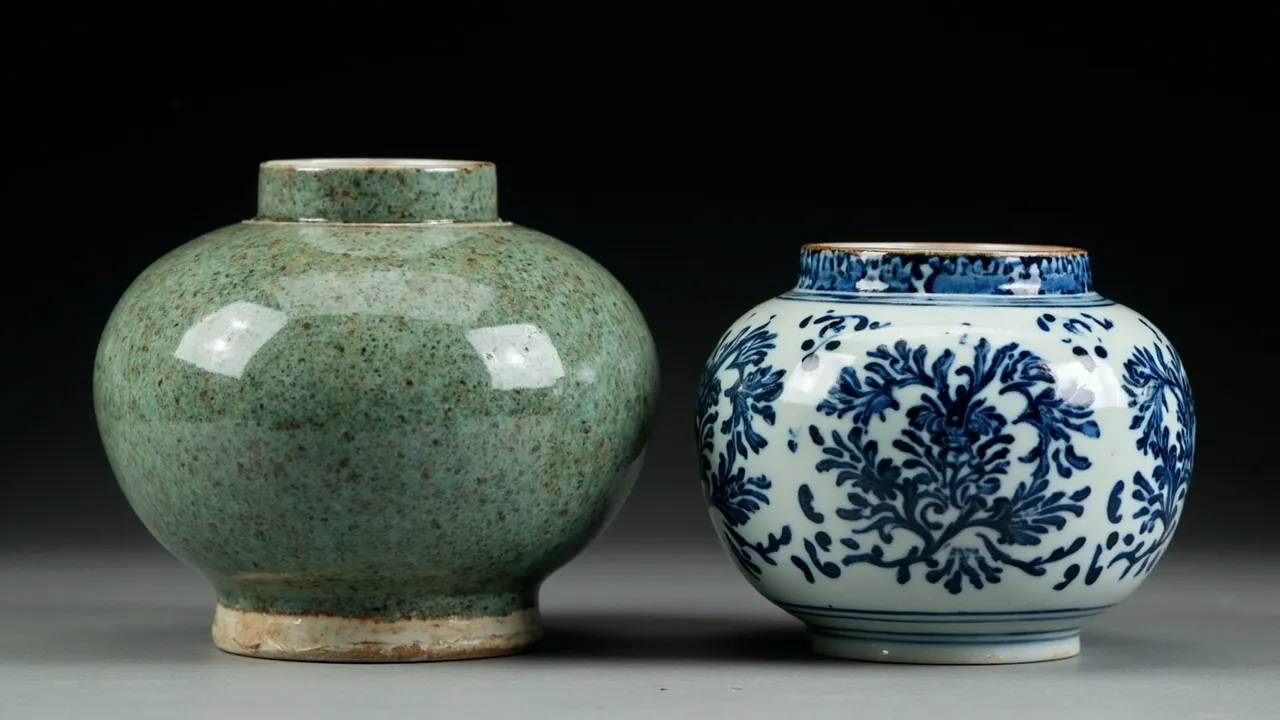
The network of ports Zheng He visited became part of a thriving trading ecosystem. Chinese silk, porcelain, and copper coins circulated across the Indian Ocean. Indonesian and Malay sailors carried Chinese goods to their own regional networks. The economic integration was remarkable.
This was fundamentally different from what European powers would later do. When the Portuguese arrived in the Indian Ocean a few decades after Zheng He’s voyages ended, they established fortified trading posts, demanded tribute, and used naval power to monopolize trade routes. The Spanish and Dutch followed similar patterns. The gentle tribute system Zheng He had built gave way to something much harder and more exploitative.
A quick comparison for American readers: Think of Zheng He’s voyages like if the United States in 1945 had sent massive convoys of manufactured goods to every port city in the world, not to conquer them, but to say “trade with us and be our friends.” The economic and soft-power influence would have been enormous — which is exactly what China achieved.
What makes this particularly striking is what it suggests about alternative paths history could have taken. The technology to dominate the world’s oceans existed in China in 1405. The decision not to use it that way was a choice — one with profound consequences for the next five centuries.
Why Did the Voyages Stop?
This is one of history’s great unanswered questions. Around 1449, the Ming court turned away from the sea. Records were destroyed. Shipyards fell into disuse. The great treasure fleets were never rebuilt.
Several factors played a role: Confucian officials at court argued that the voyages wasted resources and enriched only a powerful few. A civil war in China distracted the government. The cost of maintaining the fleet was enormous. There was also a Japanese pirate crisis in the mid-15th century that made the government suspicious of all maritime activity.
The civil war was particularly significant. In 1449, the Zhengtong Emperor was captured by Mongol forces during a military campaign — a humiliation that shook the Ming court to its foundations. The new emperor who took power afterward was far more inward-looking, focused on defending China’s northern borders rather than projecting power overseas.
Whatever the cause, the result was dramatic. Within decades, European sailors — Portuguese, Spanish, Dutch — filled the vacuum. When they arrived in the Indian Ocean, they came with cannons and trading forts.
There’s a theory, popular among some historians, that Confucian bureaucrats deliberately destroyed the records of Zheng He’s voyages because they contradicted the official narrative of Chinese superiority over “barbarian” cultures. If China had been to the ends of the earth and chosen to come home, the reasoning went, then perhaps those foreign lands weren’t worth knowing about after all. This cultural turning inward may have cost China dearly in the centuries that followed.
Zheng He in Modern Memory
For a man who commanded the largest fleet in history, Zheng He disappeared from memory remarkably thoroughly. Through much of the Qing Dynasty (1644–1912), his voyages were simply not discussed. European-centric history had written him out.
But in the 20th century, Zheng He returned. Chinese nationalists in the early 1900s rediscovered him as evidence that China had been a great maritime power long before European colonialism. In the 1950s and 1960s, Communist historians reframed him as a proto-communist explorer who had spread the benefits of Chinese civilization without exploitation — though this interpretation glossed over the more complicated reality of Ming imperial power.
In the 2000s, a Chinese government eager to project naval power commissioned books, TV dramas, and even a theme park about Zheng He. The message was clear: China was returning to its rightful place as a maritime great power.
This modern revival has its tensions, though. Some historians worry that both Western and Chinese narratives oversimplify Zheng He — the West to diminish European exceptionalism, China to serve contemporary political goals. The truth is more complicated: Zheng He was neither a saint nor a simple tool of imperial expansion. He was a brilliant, ambitious man operating within a system that was both genuinely generous and genuinely hierarchical.
Visiting Zheng He’s Legacy Today
If you want to experience Zheng He’s world, you have options. In Nanjing, the original shipyard where his treasure ships were built has been turned into a museum. You can see massive anchors and wooden timbers recovered from the depths. The exhibits include scale models of what the treasure ships may have looked like, based on the latest archaeological research.
In Malaysia and Indonesia, communities whose ancestors were involved in his voyages still celebrate annual festivals in his honor. In the Malaysian city of Malacca — which Zheng He visited multiple times — you can tour a dedicated museum that chronicles the admiral’s connections to Southeast Asia. The famous stone inscriptions he erected at ports across the Indian Ocean have been preserved and are now displayed in museums from Sri Lanka to Oman.
For those who can’t travel, there are excellent books and documentaries. 1421: The Year China Discovered the World by Gavin Menzies made headlines with its controversial claims — most historians reject its more sensationalist assertions — but it sparked renewed interest in Zheng He that continues to this day. More scholarly works like those by Louise Levathes and Robert Finlay offer rigorous, documented accounts of the voyages.
The Bottom Line
Zheng He wasn’t just an explorer. He was the commander of history’s largest wooden fleet, a diplomat who spoke through trade rather than conquest, and a man who circumnavigated an ocean decades before it became “known” to European maps. His voyages proved that China could be a maritime superpower — and that there was an entire connected world out there waiting to be discovered.
His story also carries a quiet warning: the choices a civilization makes in one generation ripple across centuries. China turned away from the sea, and by the time it looked back, the world had changed. The gentle tribute system he built had been replaced by European forts and colonies. The ships he designed were left to rot.
But his legacy persists. In the ports of Southeast Asia, in the museums of Nanjing, in the renewed interest of a rising China in its own maritime heritage, Zheng He remains — the admiral who sailed seven times across the Seven Lucky Seas and left the world a little more connected than he found it.
Recommended Reading & Exploration
Want to dive deeper into Zheng He’s world? These resources bring his story to life:
- National Geographic Atlas of the World — The maps in this atlas show how much of the world Zheng He potentially charted, giving context to just how vast his voyages were.
- [1444: The Year Chinese Treasure Ships Ruled the Seas] — Documentary films about Zheng He offer visual recreations of his fleet that bring the scale of his operations into focus.
- Maritime History Books Collection — Academic works on Ming Dynasty seafaring give you the scholarly context behind the voyages.
- Antique Compass Replicas — Chinese navigators used sophisticated compasses; replicas let you hold a piece of that technology.
- Ming Dynasty Historical Texts — The original records of Zheng’s voyages, translated and annotated for modern readers.
Ready to explore more of China’s maritime history? Check out our article on The Silk Road — the ancient overland routes that connected China to the West even before Zheng He set sail.