Zhuge Liang: The Sleeping Dragon of Three Kingdoms
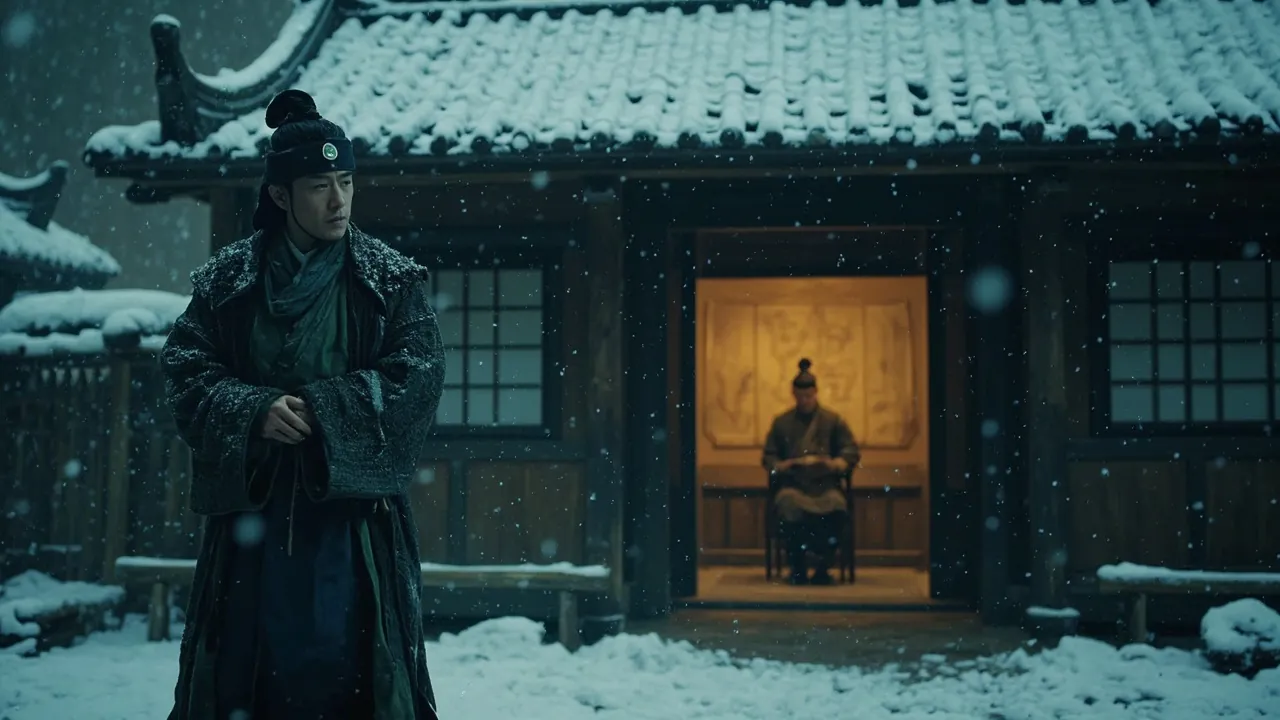
In the winter of 207 CE, a young scholar living in terrible poverty in Yangdu, a remote agricultural village in southern China, received a visitor. Three times the visitor came, and three times the scholar refused to see him — not out of arrogance, but because he wanted to be certain that whoever he served would be worthy of the extraordinary abilities he knew he possessed. When they finally met, the visitor — Liu Bei, a warlord of noble lineage claiming descent from the Imperial Han family — asked the scholar to become his advisor. The scholar rose from his bamboo couch, walked outside, and agreed. His name was Zhuge Liang, and he was twenty-six years old.
What followed was one of the most remarkable partnerships in Chinese history: a relationship that would shape the fate of empires, inspire a thousand stories and legends, and create a template for the brilliant, devoted scholar-official that Chinese culture would venerate for centuries. Zhuge Liang, known throughout the world by his courtesy name Kongming, was a military strategist without equal, a inventor whose creations are still studied today, a poet-philosopher of genuine depth, and a statesman who governed with such fairness and skill that his reputation spread far beyond the kingdom he served. He is also the subject of one of the longest and most beloved novels in Chinese literature, Luo Guanzhong’s Romance of the Three Kingdoms, which has shaped how hundreds of millions of people understand history, loyalty, and strategic brilliance.
The Long March and the Foundation of Shu
When Zhuge Liang agreed to join Liu Bei, he was joining a man who was losing. Liu Bei had been fighting for years to establish himself as a legitimate heir to Han Dynasty power, but he had been repeatedly defeated, driven from one territory to another, and was at this point a warlord with more noble lineage than actual land. He had no money, no stable territory, and no realistic path to the kind of power that would allow him to challenge the dominant warlords of his era — particularly Cao Cao in the north.
Zhuge Liang changed all of that. His first major contribution was a strategic analysis so comprehensive, so far-reaching in its implications, that it is still studied today as one of the foundational texts of Chinese strategic thought. Known as the Long March plan or, more formally, the隆中对 (Longdong pian) — the “Long Slope Strategy” — it was delivered in a single conversation and laid out exactly how Liu Bei could build a competitive position from his current weakness.
The key insight was geographical: China at this moment was divided into three natural power centers. Cao Cao in the north held the most territory and the most people, but his position was not unassailable. Sun Quan in the southeast had built a stable kingdom supported by the wealthy Yangtze River Delta and by a powerful naval tradition. Between these two lay the southwest — modern Sichuan and Yunnan — a region of extraordinary natural defensive advantages, rich agricultural land fed by the Yangtze and its tributaries, and a population that had historically resisted northern domination. Liu Bei should make this region his base, Zhuge Liang argued, forming an alliance with Sun Quan against Cao Cao while building up his own military and economic strength. Once secure in the southwest, he could wait for the right moment to expand outward, eventually matching Cao Cao’s power and, if fortune favored them, reunifying the empire under Liu Bei’s rule.
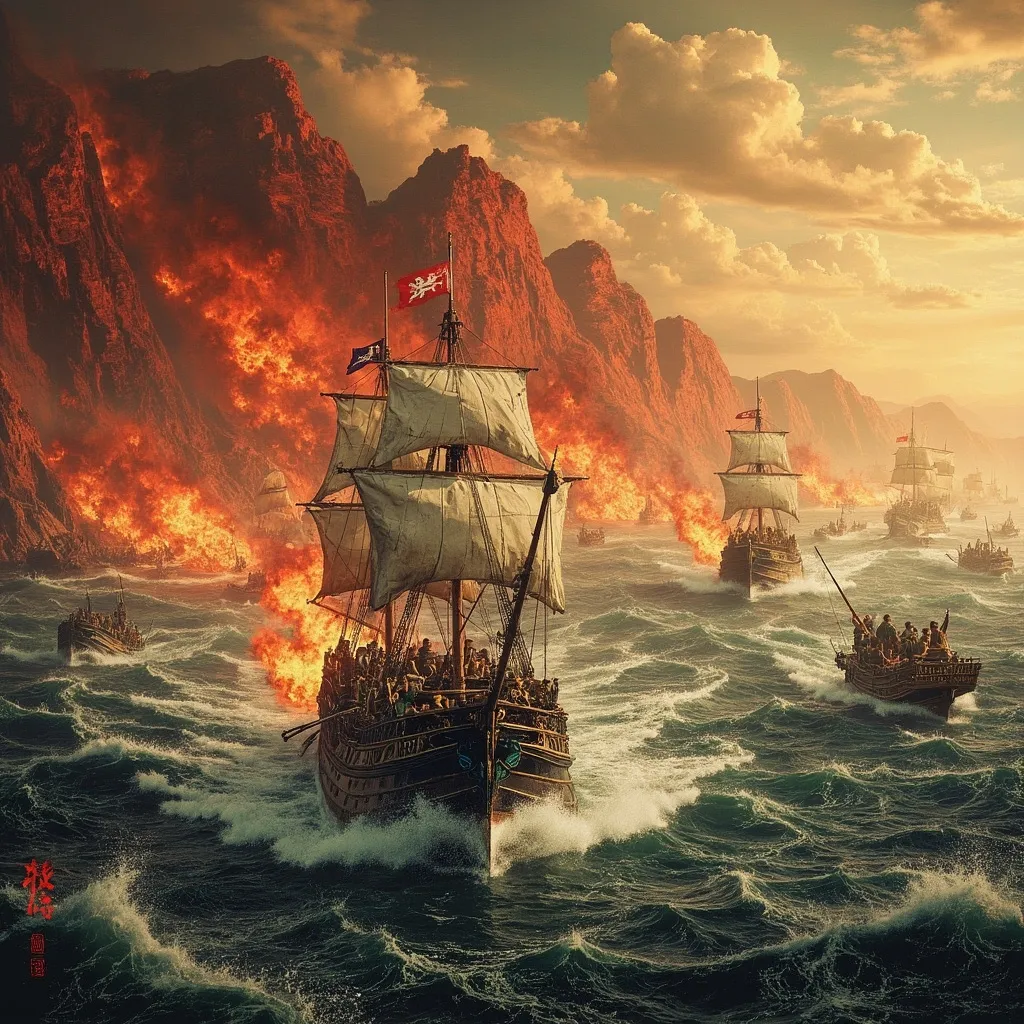
The plan worked, though not exactly as designed. Liu Bei did eventually establish his kingdom of Shu in Sichuan, and he did form the Sun-Liu alliance that defeated Cao Cao at the Battle of Red Cliffs in 208 — a battle that reshaped the map of China and created the three-kingdom structure that would persist for nearly a century. Zhuge Liang’s strategic vision proved sound. The only problem was that Liu Bei’s son and successor, Liu Shan, was not the capable ruler his father had been, and the eventual unification of China under the Jin Dynasty in 265 did not happen under Shu’s banner. But the strategic genius of the original plan has never been seriously questioned.
The Empty Fort Strategy: Masterpiece of Psychological War
If Zhuge Liang’s reputation rested solely on his strategic planning, he would still be famous. But his most legendary episode is something different: a performance of such extraordinary nerve and theatrical brilliance that it has entered the global cultural vocabulary as an example of pure psychological manipulation through perceived strength.
The story, which takes place around 228 CE, finds Zhuge Liang serving as Shu’s chancellor after Liu Bei’s death. He has launched a northern campaign against Wei, the state that succeeded Cao Cao’s power base, and has sent his general Ma Su to hold a critical strategic pass called Jieting. Ma Su, against explicit orders, abandons the pass and camps in the nearby city of Shouchun, where he is quickly surrounded by the Wei forces under the command of the brilliant general Sima Yi.
Sima Yi, recognizing the strategic importance of Jieting and knowing that Ma Su’s forces are vulnerable, marches the Wei army toward the pass at full speed. But when he arrives, he finds the gates open, the city apparently unmanned, and Zhuge Liang himself sitting on the city walls, playing a lute, with two attendants beside him and the city streets seemingly empty behind him. Sima Yi, whose reputation for caution was well-known, stared at this tableau for a long moment and then ordered his forces to retreat. The city was, of course, empty except for Zhuge Liang and his small retinue; the “Empty Fort Strategy” had worked through nothing but the power of suggestion, exploiting Sima Yi’s knowledge of Zhuge Liang’s legendary cleverness to make him see a trap where there was none.
There is some historical debate about whether the Empty Fort Strategy (空城计, Kong Cheng Ji) actually happened as described. The primary historical source, Chen Shou’s Records of the Three Kingdoms, does not include it; it appears first in the Romance of the Three Kingdoms novel, written nearly a thousand years after the events it describes. Nevertheless, the episode has become so central to Zhuge Liang’s legend that separating historical fact from literary elaboration is nearly impossible. What is certain is that Zhuge Liang was renowned for his ability to use psychological warfare, deception, and the manipulation of enemy expectations — skills that made him a uniquely effective commander despite having no military background before joining Liu Bei.
Inventions and Innovations
Zhuge Liang’s contributions to Chinese technology and material culture are often overshadowed by his literary and military reputation, but they are substantial in their own right. He is credited with several inventions that had significant military applications and in some cases influenced Chinese material culture for centuries afterward.
The most famous is the 木牛流马 (mu niu liu ma), the “wooden ox and walking horse” — a type of mechanical transport vehicle that, according to the historical sources, could navigate difficult terrain while carrying heavy loads of grain. The exact nature of this device has been debated for centuries, with theories ranging from a simple wheelbarrow-like vehicle to something closer to a four-legged walking robot. No reliable reconstruction has ever been universally accepted, which has not prevented generations of inventors and engineers from trying. What seems clear is that it was some kind of人力-powered transport device that could move along narrow mountain paths where carts and horses would struggle — essential for keeping the Shu army supplied during its northern campaigns.
Zhuge Liang also modified the traditional crossbow to create the 诸葛连弩 (Zhuge Liannu), or “Zhuge crossbow,” a repeating crossbow that could fire multiple bolts in rapid succession. This was a significant advance in individual weapons technology, dramatically increasing the rate of fire possible for foot soldiers. The original design has been lost, but modern reproductions and historical studies suggest it could fire somewhere between three and ten bolts in a few seconds, depending on the specific design. Combined with the supply advantages of the wooden ox, the repeating crossbow made the Shu military disproportionately effective given its small size compared to the northern kingdoms.
Another contribution was his development of improved methods for conveying military signals — specifically, a system of stone indicator walls and signal fires that allowed rapid communication across the difficult terrain of Shu’s mountain roads. These methods drew on earlier Chinese signal technology but were refined and systematized to meet Shu’s specific strategic needs.
The Memorial on the Most Important Government Matters
Of all Zhuge Liang’s writings, none is more revered or more frequently cited than the 前出师表 (Qian Chu Shi Biao) — the “Memorial on the Most Important Government Matters,” submitted to the emperor Liu Shan in 227 CE, on the eve of his first northern campaign.
The text is at once a state paper, a personal letter, and something like a last will and testament. Zhuge Liang was about to leave the capital Chengdu to lead the army into the north, placing the young emperor in the charge of the palace administration for the first time. He wrote the memorial to explain his strategic reasoning, to urge the young emperor to govern wisely in his absence, and to acknowledge the extraordinary burden he was placing on Liu Shan while also making clear that this burden was necessary for the survival of their kingdom.
What makes the Qian Chu Shi Biao remarkable is its emotional directness. Zhuge Liang begins by reviewing the history of Liu Bei’s struggles, acknowledging how the Han Dynasty had fallen into ruin and how Liu Bei had built Shu from nothing through sheer determination and moral authority. He then analyzes the current situation with cool strategic precision before pivoting to an appeal that is almost paternal in its directness: he asks Liu Shan to listen to the honest counsel of his officials rather than flattering eunuchs, to reward virtue rather than connections, and to remember that the purpose of government is the welfare of the people, not the便利 of those who hold power.
The memorial closes with a passage that has been memorized by Chinese schoolchildren for generations: “I originally wanted to repay the kindness of the empire and to restore the Han Dynasty. But the south has already been subdued, and the northern campaign awaits. In the east, the Wu kingdom remains a threat; in the west, the Qiang people must be appeased. In this moment, the state’s affairs hang by a thread, and I dare not neglect them. May Your Majesty evaluate my words and carry them out — then will the spirits of our ancestors be honored, and the fallen restored.”
There is a famous story about a later Chinese poet, Lu Xun, who is said to have read this memorial and wept, not because it was sad but because it expressed such complete, selfless devotion. Whether or not the story is true, it captures something genuine about how the text is experienced: it presents an ideal of public service so complete, so devoid of self-interest, that it approaches something almost sacred.
The Sleeping Dragon’s Legacy
Zhuge Liang died in 234 CE, at the age of fifty-three, while on campaign in the north. His final years had been consumed by a series of northern campaigns that never achieved their ultimate objective of defeating Wei and restoring the Han — in part because Shu’s resources were simply too limited, in part because the Wei kingdom was competently governed and not easily overcome. But Zhuge Liang’s strategic reputation grew rather than diminished with each campaign, because he consistently achieved remarkable results with inadequate forces, and because he maintained absolute integrity in his conduct of the war.
He was buried, according to his own wishes, on the slopes of the Yangtze River valley in Sichuan, far from the Shu capital. The tomb is modest by the standards of Chinese imperial burials — a reflection of his stated desire for simplicity — and has become a site of pilgrimage for visitors who want to connect with the Sleeping Dragon’s memory.
The Romance of the Three Kingdoms, written by Luo Guanzhong in the 14th century, transformed Zhuge Liang from a famous historical figure into a cultural archetype. The novel adds numerous episodes to his legend — some based loosely on historical sources, others entirely invented — that paint him as almost supernaturally clever: capable of predicting the weather, of controlling the winds, of writing letters that would arrive at precisely the right moment to change events. This literary Zhuge Liang became the template for the wise advisor figure in Chinese culture, appearing in drama, fiction, folklore, and eventually film, television, and video games.
What is perhaps most striking about Zhuge Liang’s legacy is how completely it bridges the gap between the historical and the legendary. The real person — the poor scholar from Yangdu, the military innovator, the honest official, the man who worked himself to death for a kingdom he knew he could not save — is extraordinary enough. The legendary figure who emerged from the novel is something different: a symbol of what human intelligence and dedication can achieve, a reminder that brilliance and virtue can coexist, and an inspiration that has motivated countless Chinese officials, scholars, and military strategists over the centuries. Both are real, in their way, and both continue to matter.
Recommended Products for Exploring Zhuge Liang and Three Kingdoms Culture
1. “Romance of the Three Kingdoms” (Complete Four-Volume Translation) Luo Guanzhong’s epic novel remains one of the most important works of Chinese literature, and the translated version by Moss Roberts is considered the definitive English edition. This four-volume set includes detailed notes, maps of the Three Kingdoms period, and family trees of the major figures. Whether you read it as history, as adventure story, or as a meditation on loyalty and ambition, it is essential reading for anyone interested in Zhuge Liang’s cultural legacy.
2. Three Kingdoms Strategy Board Game A competitive strategy game for two to four players based on the military campaigns and political maneuvering of the Three Kingdoms period. Players manage resources, negotiate alliances, and command armies across a beautifully illustrated map of China. The game includes scenarios focused on key moments like the Battle of Red Cliffs and the Northern Campaigns. Available from specialty board game retailers; look for editions that include historical notes alongside the game rules.
3. “Zhuge Liang: The Strategic Genius of Ancient China” (Illustrated Biography) A well-reviewed illustrated biography in English that draws on both historical sources and the literary tradition. Features full-color portraits, maps, and reproductions of period artifacts. Written by a historian specializing in Three Kingdoms period studies and includes a useful analysis of the “Empty Fort Strategy” and other key episodes. Suitable for general readers as well as students of Chinese history.
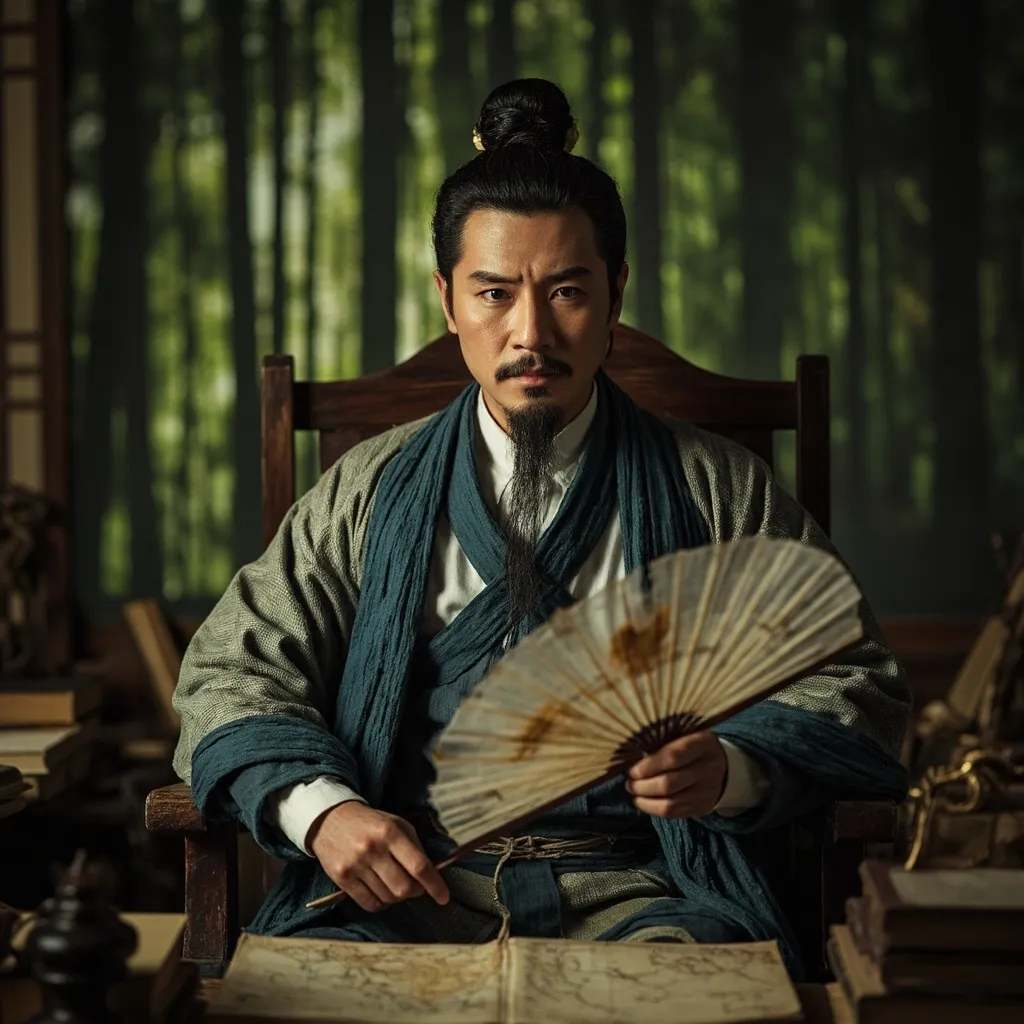
4. Traditional Chinese Fan (Hand-Painted Scholars Design) Zhuge Liang is famously depicted in art holding a feather fan (often a crane-feather fan) — an accessory that became associated with scholarly wisdom and strategic composure. A hand-painted silk fan featuring traditional Three Kingdoms imagery makes both a beautiful display piece and a functional fan for summer use. Look for fans painted by artisans using traditional techniques; several cultural retailers offer collector-quality pieces with authentication certificates.
5. Zhuge Liang Crossbow Replica (Decorative Model) A high-quality decorative model of the legendary repeating crossbow, crafted using traditional techniques and materials. This is not a functional weapon but a detailed replica suitable for display, study, or as a teaching aid. Many versions include historical documentation explaining the probable mechanics and the historical context of Zhuge Liang’s military innovations. Available from specialty historical replica retailers; prices vary by craftsmanship level.